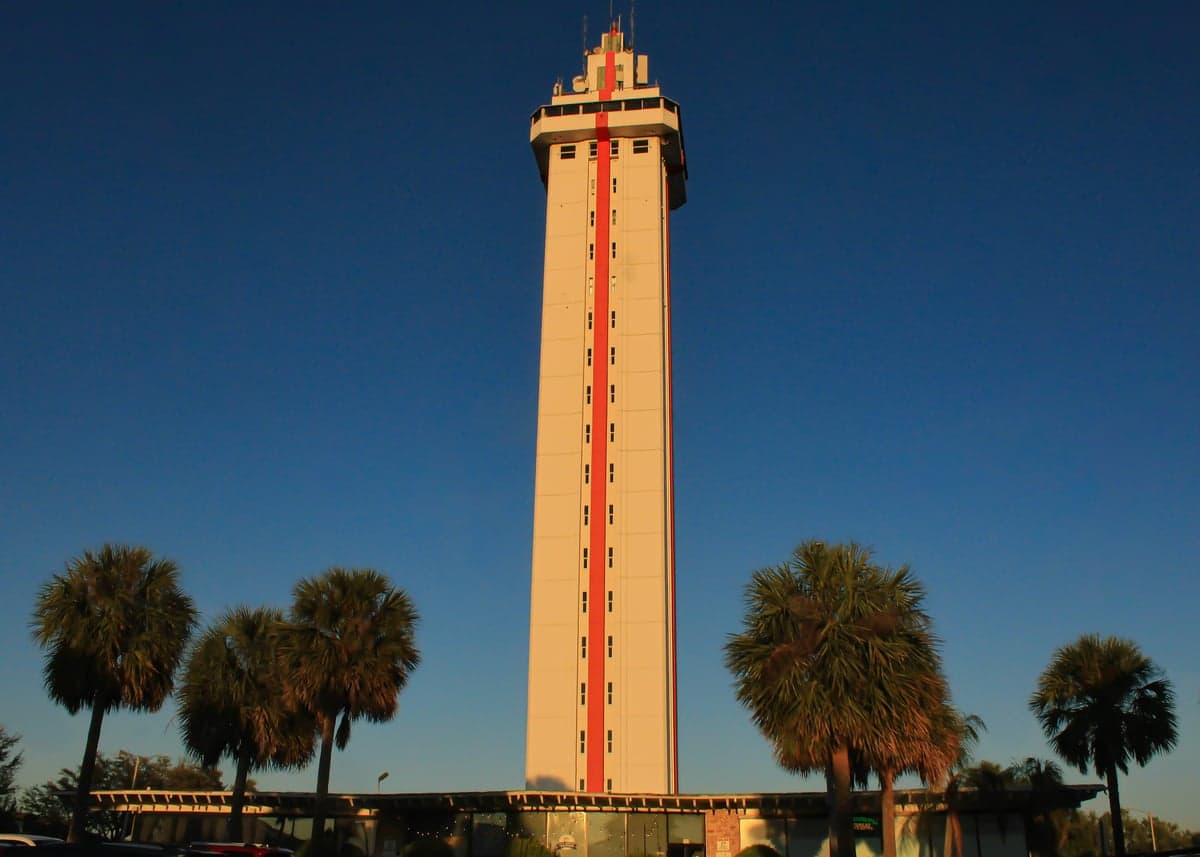
Photo: Wikipedia
Political ClimatePolitical Climate in Clermont, FL
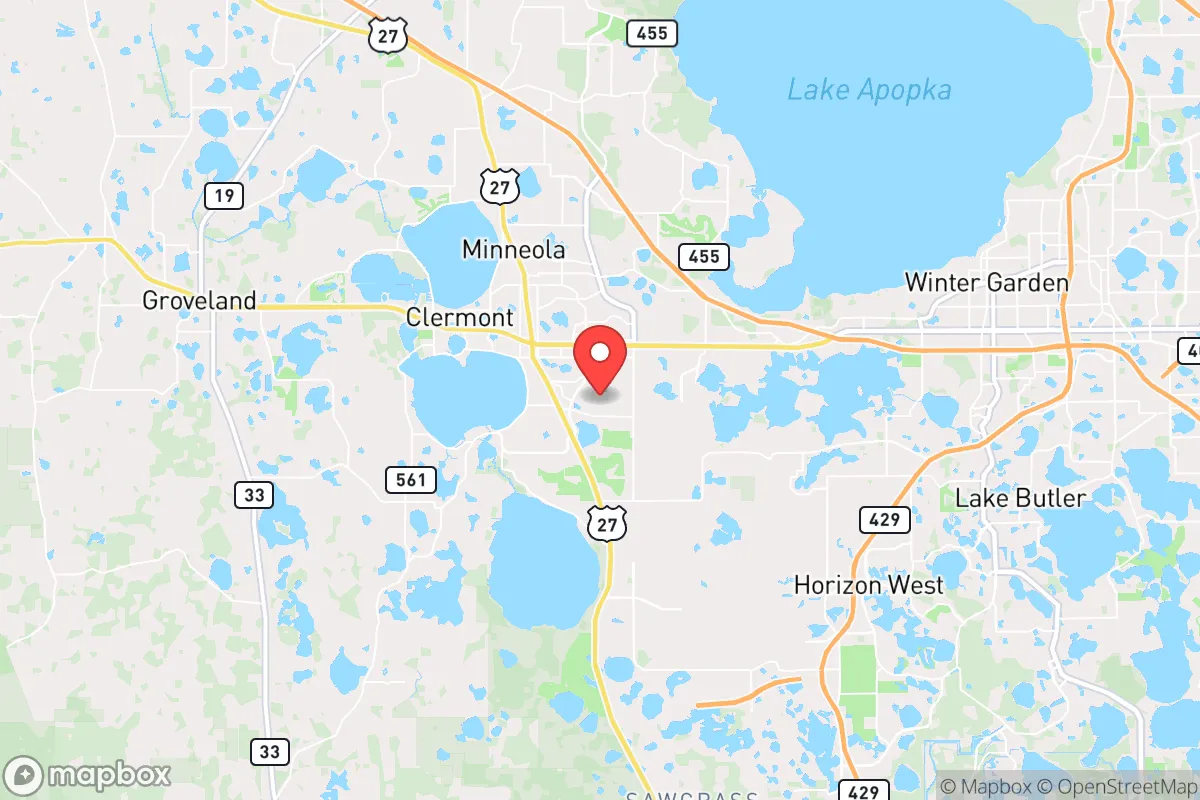
District shown is the primary district for this city’s centroid. Cities may span multiple districts.
Local Political AnalysisPolitical Analysis of Clermont, FL
Clermont leans solidly Republican, with a Cook Partisan Voting Index (PVI) of R+8, meaning the area votes about eight points more conservative than the national average. That’s a pretty clear signal, but the real story is how fast it’s changing. Ten years ago, this was a quieter, more reliably red corner of Lake County. Now, with explosive growth from Orlando spillover, the political ground is shifting under everyone’s feet. You’ll still see plenty of Trump signs in yards off Highway 50, but you’re just as likely to hear a New York or Miami accent at the Publix, and those newcomers don’t always vote the same way.
How it compares
Compared to the rest of Florida, Clermont is noticeably more conservative than the state’s major urban centers. Orlando, just 25 miles east, has a Cook PVI of D+5, making it a blue island in a purple state. Drive west toward Leesburg or The Villages, and you’ll find even deeper red territory—The Villages is a Republican stronghold where turnout is legendary. Clermont sits right in the middle of that spectrum: not as hard-right as rural Lake County, but far from the liberal tilt of downtown Orlando. The state of Florida as a whole is a toss-up, with a Cook PVI of R+3, so Clermont’s R+8 puts it about five points to the right of the state average. That gap has narrowed slightly in recent years as new residents bring more diverse political views, but the area still reliably sends Republicans to Tallahassee and Washington.
What this means for residents
For conservative residents, Clermont feels like home. Local government leans right, school board meetings tend to reflect traditional values, and you’ll find plenty of churches and civic groups that align with your worldview. Taxes are relatively low, and the county’s growth policies have generally favored development over preservation. For liberal residents, it’s a different experience. You’re not going to be ostracized—Clermont is too diverse for that—but you’ll be in the minority. Progressive candidates rarely win local races, and issues like affordable housing or environmental protections can be an uphill battle. That said, the influx of younger families and remote workers is slowly nudging the needle. You’ll see more Harris-Walz yard signs than you did a decade ago, and the local Democratic club has grown from a handful of retirees to a more active, multi-generational group. It’s not a blue wave, but it’s a noticeable ripple.
One cultural distinction worth noting: Clermont’s identity is still tied to its lakes and hills, not to any political machine. The area has a strong libertarian streak—people here value personal freedom, whether that means carrying a gun, homeschooling your kids, or starting a small business. That ethos cuts across party lines. You’ll find conservatives who oppose new development and liberals who love the low regulation. The biggest tension isn’t red vs. blue; it’s old Florida vs. new Florida. Longtime residents worry about traffic on 27 and the loss of rural character, while newcomers want better schools and more walkable downtowns. That’s the real political fault line in Clermont right now, and it’s only going to deepen as the population keeps climbing toward 50,000.

State Political ClimatePolitical Climate in Florida
State Political AnalysisPolitical Environment in the State
Florida has transformed from a quintessential swing state into a solidly Republican-leaning powerhouse over the past decade, driven by a massive influx of conservative-leaning migrants from the Northeast and Midwest. The state now consistently votes +3 to +5 points to the right of the national popular vote in presidential elections, with Republicans holding supermajorities in both chambers of the legislature and every statewide elected office. This shift has been dramatic and sustained since about 2010, when the GOP wave first crested, and it shows no signs of reversing given current migration patterns.
Urban vs. rural divide
The political map of Florida is a study in stark contrasts. The reliably blue strongholds are the dense urban cores of Miami-Dade County, Orlando (Orange County), and Tampa (Hillsborough County), along with the college town of Gainesville (Alachua County). However, even these bastions have shifted rightward — Miami-Dade, once a Democratic firewall, flipped to Trump in 2020 and stayed red in 2024, driven by a massive swing among Cuban-American and Venezuelan-American voters who prioritize anti-socialist foreign policy and economic freedom. The rural Panhandle from Pensacola to Tallahassee is deep red, as are the sprawling exurbs of every major metro — places like The Villages (Sumter County), which routinely votes 70%+ Republican, and Naples (Collier County) in Southwest Florida. The I-4 corridor between Tampa and Orlando remains the ultimate battleground, but even there, fast-growing suburban counties like Polk County and Pasco County have trended sharply right as new housing developments fill with families fleeing blue states.
Policy environment
Florida's policy environment is defined by a low-tax, low-regulation posture that has become a national model for conservative governance. There is no state income tax, a constitutional cap on property tax increases (the Save Our Homes amendment), and a corporate tax rate that has been steadily cut to 5.5%. The state operates under a "right-to-work" labor law, meaning no one can be forced to join a union as a condition of employment. Education policy has shifted dramatically toward school choice: Florida was the first state to create a universal school voucher program (HB 1 in 2023), now available to any family regardless of income. The state also bans sanctuary city policies (SB 4, 2019) and requires all employers to use E-Verify. Election laws have tightened since 2020, with restrictions on drop boxes, stricter voter ID requirements, and a new election police force (Office of Election Crimes and Security). Healthcare policy is notably hands-off: Florida did not expand Medicaid under the ACA, and the state has some of the loosest regulations on telemedicine and direct-primary care arrangements.
Recent policy direction
The last three legislative sessions have accelerated Florida's reputation as a laboratory for conservative policy. On gun and self-defense law, Florida enacted permitless carry (HB 543) in 2023, allowing any law-abiding adult to carry a concealed firearm without a permit, building on the state's long-standing "Stand Your Ground" statute. Parental and education rights saw the passage of the Parental Rights in Education Act (HB 1557, 2022), which restricts classroom instruction on sexual orientation and gender identity through third grade, later expanded to all grades. Speech and privacy law has been reshaped by the Social Media Fairness Act (HB 3, 2024), which bans platforms from deplatforming political candidates and requires content moderation transparency. On medical and bodily autonomy, Florida enacted a 6-week abortion ban (HB 5, 2023) that took effect after the state Supreme Court upheld the 15-week ban in 2024. Property rights were strengthened by the Live Local Act (SB 102, 2023), which preempts local zoning to allow affordable housing development on commercial land. Taxation saw a permanent reduction in the corporate income tax rate and a series of one-year sales tax holidays for disaster supplies, back-to-school items, and tools. Voting and ballot access was tightened by SB 524 (2023), which added new restrictions on third-party voter registration organizations and shortened the window for mail-in ballot requests.
Civil unrest & political movements
Florida has seen its share of political flashpoints, though large-scale civil unrest has been less common than in states like Oregon or Minnesota. The most visible recent movement has been the parental rights activism that coalesced around school board meetings in 2021-2022, particularly in suburban counties like St. Johns County and Sarasota County, where conservative parents organized to challenge mask mandates and critical race theory curricula. On the left, the Dream Defenders and other racial justice groups have maintained a presence, organizing protests after the 2018 Parkland shooting and the 2020 George Floyd protests, which saw significant demonstrations in Miami, Orlando, and Tampa. Immigration politics are a constant undercurrent: the state's aggressive anti-sanctuary law and the 2023 program to transport undocumented migrants to sanctuary states (led by Governor DeSantis) have been both celebrated and condemned. Election integrity remains a live issue — the 2020 and 2022 cycles saw intense scrutiny of mail-in voting, and the new election police unit has made several high-profile arrests for voter fraud, though critics argue the cases are minor. A new resident would notice the ubiquity of political yard signs, the frequency of "Florida Man" political news, and the palpable sense that the state is at the center of the national culture war.
Projection
Over the next 5-10 years, Florida is likely to become more Republican, not less. The dominant demographic trend is domestic in-migration from high-tax, high-regulation states — roughly 1,000 people move to Florida every day, and surveys consistently show they lean conservative. The fastest-growing counties are all red or trending red: Sumter County (The Villages), St. Johns County (suburban Jacksonville), Lee County (Fort Myers), and Polk County. The Hispanic vote, particularly in South Florida, continues to shift rightward, eroding the Democratic base. However, there are countervailing forces: the growing Puerto Rican population in Central Florida (especially Osceola County) tends to vote Democratic, and younger voters in the urban cores are more liberal. The wild card is climate change — as sea-level rise and hurricane risk become more acute, insurance costs may slow migration and reshape the political conversation around resilience spending. For now, the trajectory is clear: Florida will remain a conservative-led state with a policy agenda that prioritizes low taxes, school choice, and individual liberty, with a political culture that is increasingly confident and assertive on the national stage.
For a new resident, the bottom line is straightforward: if you value low taxes, limited government, school choice, and a business-friendly environment, Florida is arguably the most aligned state in the country. If you prefer strong public services, robust labor protections, and a more progressive social safety net, you will find the policy environment frustrating and the political culture adversarial. Either way, the state's political reality is stable and predictable — what you see is what you'll get for the foreseeable future, and the direction of travel is unlikely to change anytime soon.
* Values derived from national, state, county, city and local statistics and may differ in a specific area. Last updated: 2026-11-06T19:39:21.000Z
Narrative content on this page is AI-generated and may contain mistakes. Verify any details that matter before acting on them.
ReloMaps may earn a commission from affiliate links at no extra cost to you.

