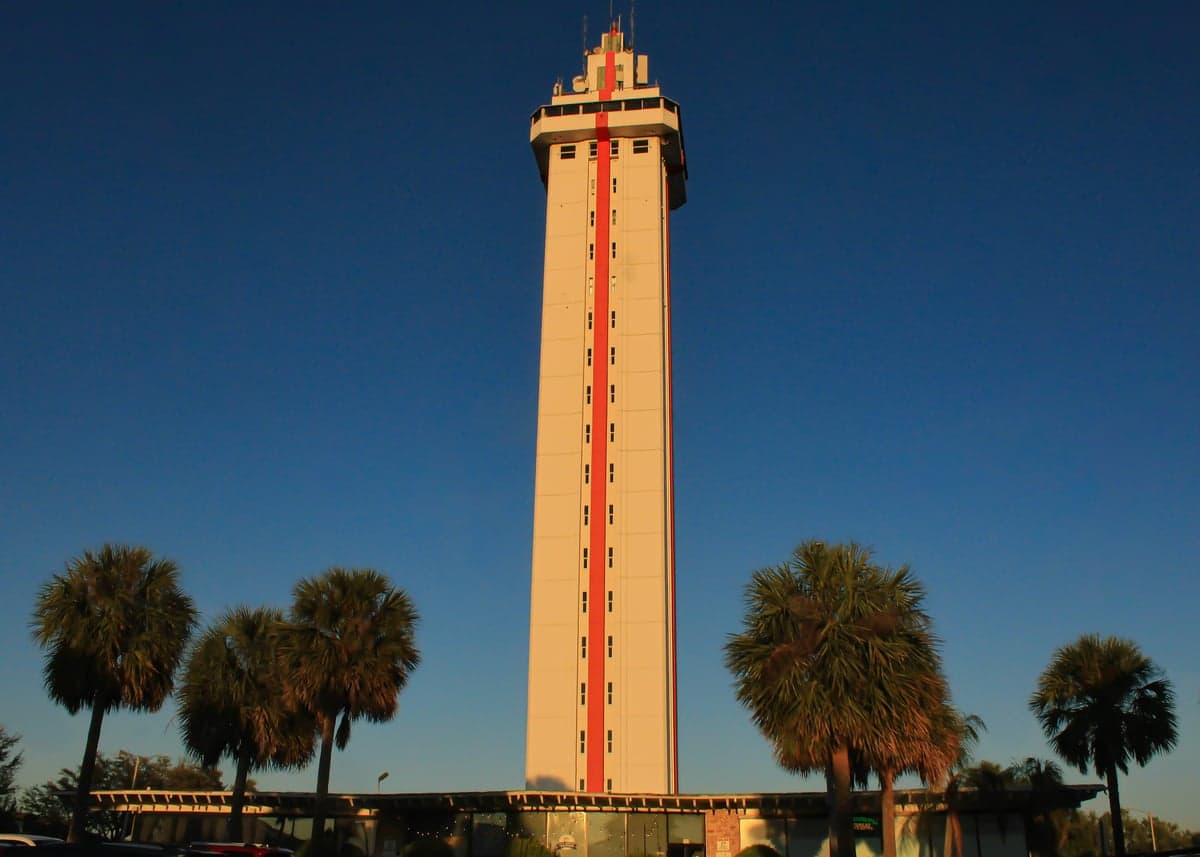
Photo: Wikipedia
Strategic Assessment of Clermont, FL
Meaningful friction. Expect exposure to either population pressure, blast zones, or natural disaster risk. Consider buying a retreat property.
What does the Strategic Assessment tell us?
Our Strategic Assessment grades tactical survivability of an area. Major population centers, military targets, fallout zones, natural disasters, and border exposure all drive risk — lower exposure means a more defensible position in a crisis.
This is heavily inspired by Joel Skousen's Strategic Relocation book. Highly recommended you checkout the book ($)What does this tell us?
Our Strategic Assessment grades tactical survivability of an area. Major population centers, military targets, fallout zones, natural disasters, and border exposure all drive risk — lower exposure means a more defensible position in a crisis.
This is heavily inspired by Joel Skousen's Strategic Relocation book. Highly recommended you checkout the book ($)Strategic Pillars
Key Distances
Regional Safe Places
Below is our recommended "safe zones" in Florida and the surrounding area based on our strategic heuristics. For most people, it's unrealistic to live in a “safe zone” full-time due to work, family or other personal reasons. They tend to be more rural. However, many of these areas are perfect for second homes and retreat properties that double as a vacation home or even a short-term rental.

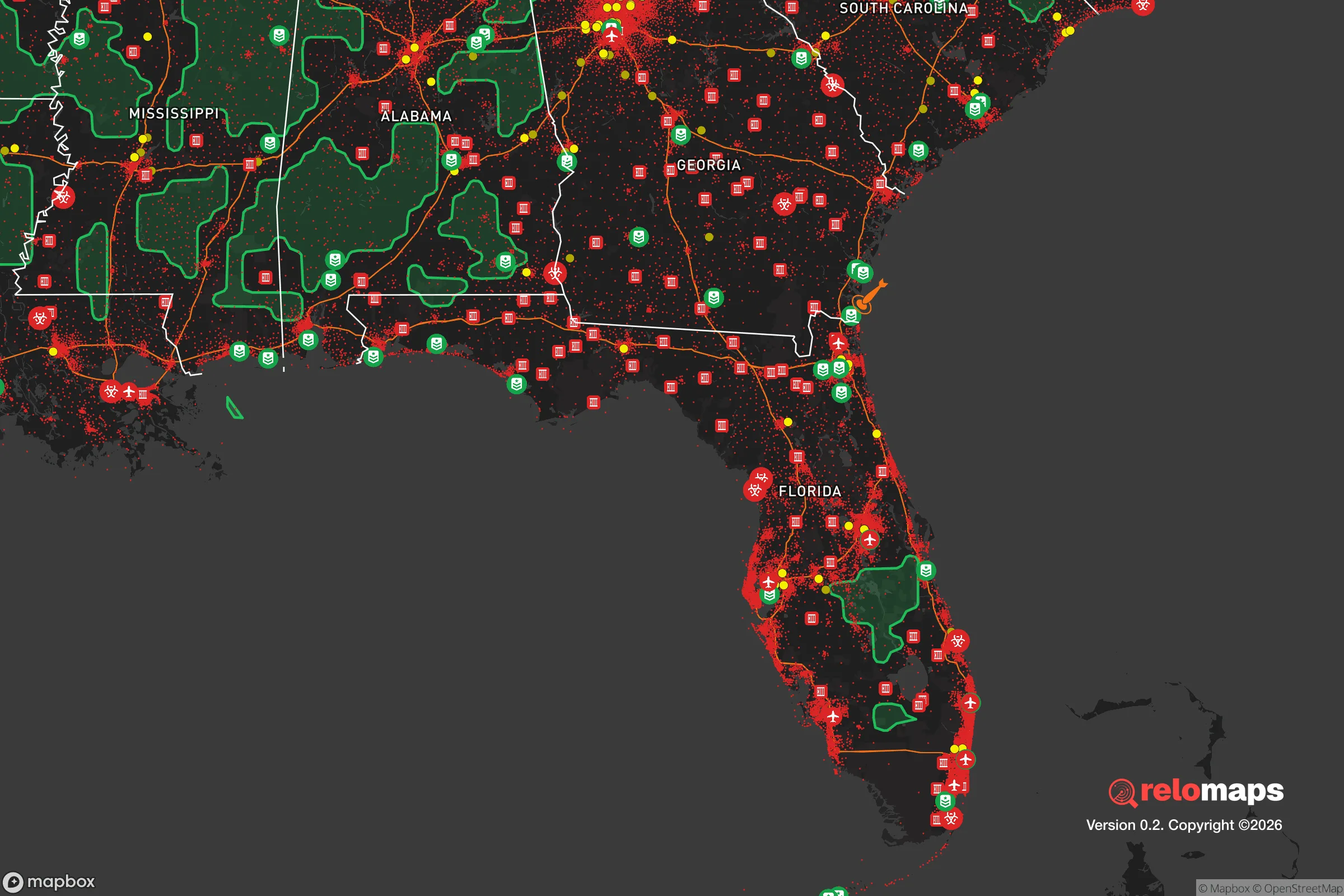


Important Note: For informational purposes only. This does not mean nothing bad ever happens in the green zones. Please use common sense. This is based on public data and modeled with AI. We tried to take a conservative approach but mistakes happen. We update this regularly as new information becomes available.
Solar Generator Recommendations
Backup power matters more here than in safer locations. We've picked three solar generators across budgets and capacity tiers — start with the budget unit if you only need a few essentials, or step up if you want to run a fridge and HVAC for days at a time.
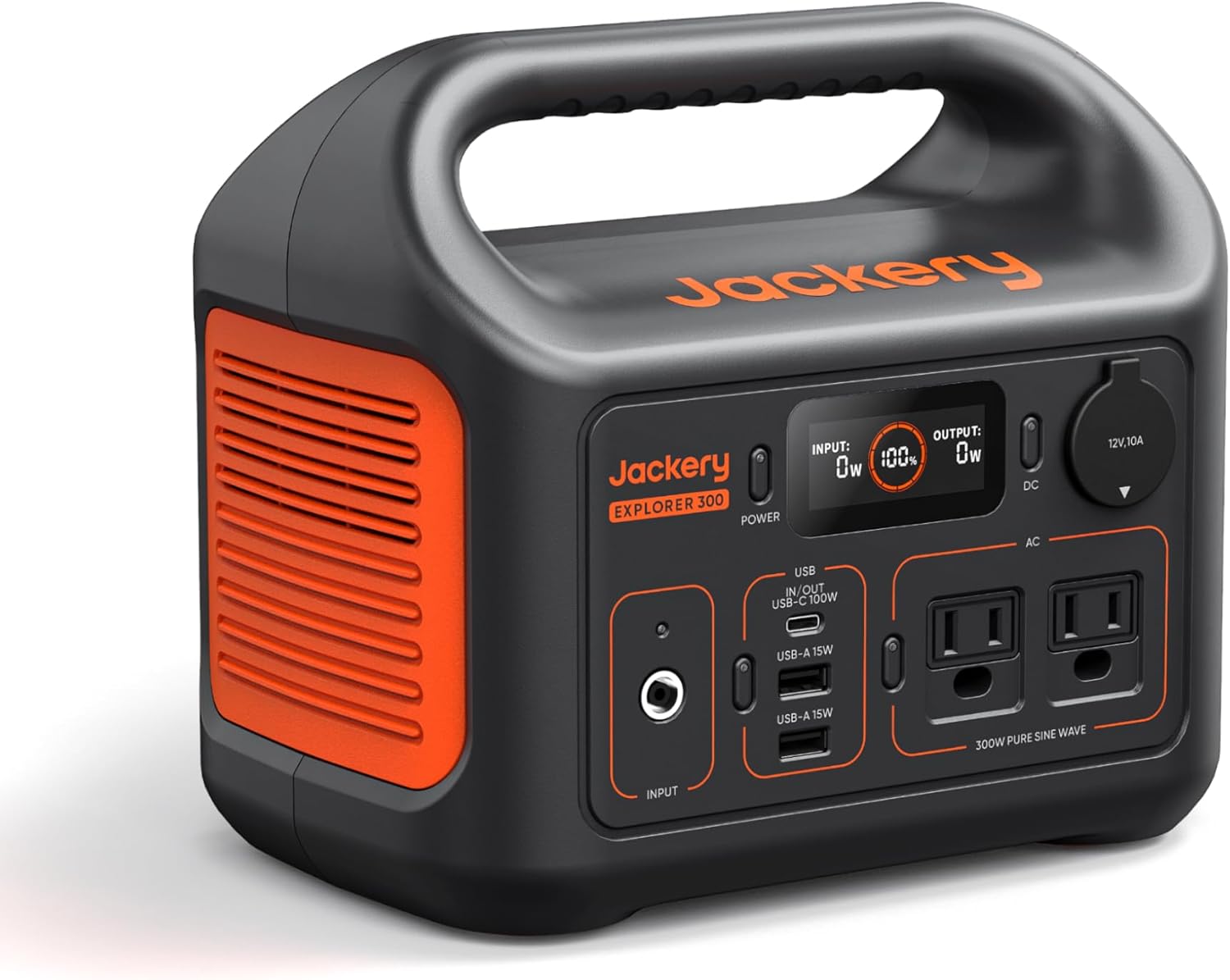
Jackery Portable Power Station Explorer 300
Budget OptionPower on the Go: Weighing only 11 lbs, it's convenient to set up and store with book-sized foldable solar panels

BLUETTI Portable Power Station AC180
Designed for both indoor and outdoor scenarios, AC180 is highly capable as it has a robost capacity and continuous output power.

EF ECOFLOW DELTA Pro Ultra Power Station
Upgraded PickEcoFlow DELTA Pro Ultra is a whole-home energy system designed to grow with your family. Integrated with the Smart Home Panel 2, it scales to meet your evolving energy needs — keeping your home powered, intelligent, and secure through every stage of life.
We earn a commission, at no additional cost to you.
Strategic Assessment Analysis
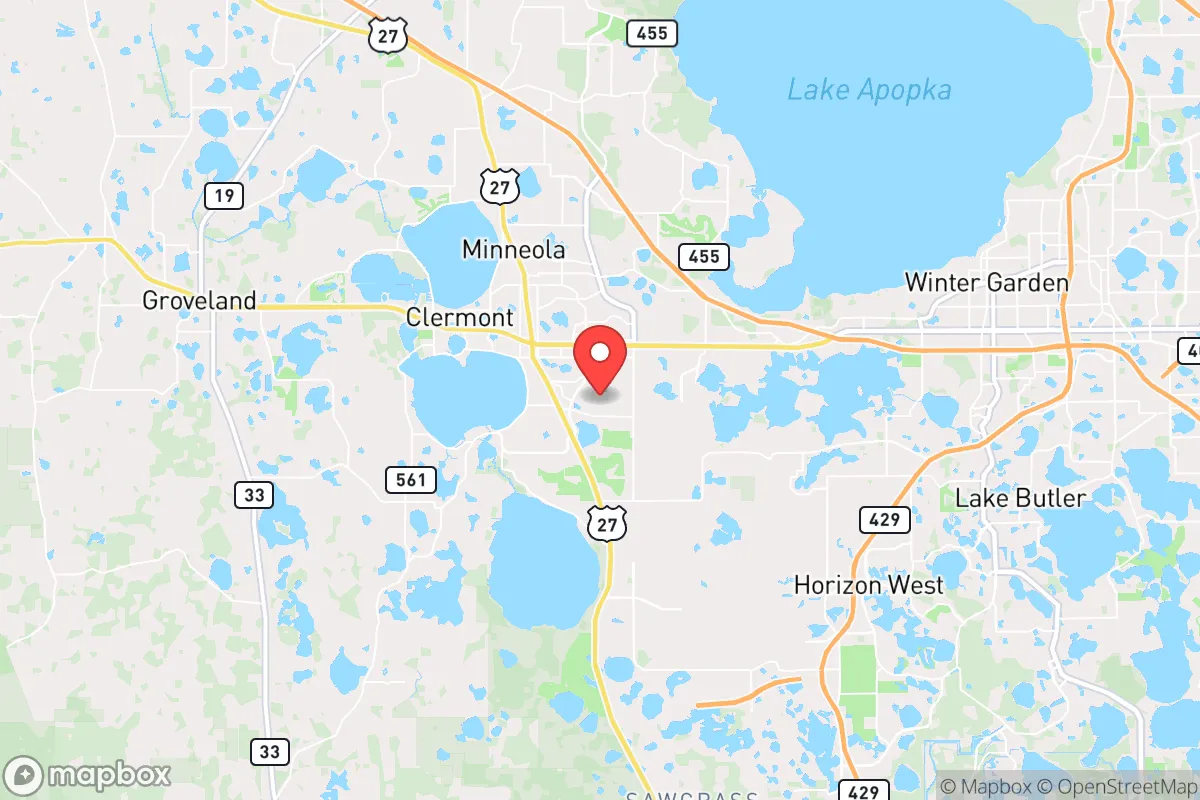
Clermont, Florida, occupies a strategic position in the Lake County ridge region that offers a meaningful blend of geographic insulation and practical self-sufficiency potential, making it a serious consideration for relocators prioritizing resilience. Its location roughly 25 miles west of Orlando and 50 miles from the Gulf Coast places it outside the immediate blast and fallout zones of major metropolitan targets while still providing access to critical infrastructure. The area's elevation—the highest in the Florida peninsula at over 300 feet above sea level—provides a natural buffer against storm surge and flooding that plagues much of the state, a factor that directly supports long-term habitability in disaster scenarios.
Geographic position and natural advantages for disaster readiness
Clermont sits atop the Lake Wales Ridge, a ancient sand ridge that runs through central Florida and offers the highest ground in the region. This elevation is not trivial: during Hurricane Ian in 2022, while coastal communities like Fort Myers Beach saw 10-15 feet of storm surge, Clermont experienced only minor street flooding from rainfall. The city's position on the ridge means it is one of the few places in Florida where a relocator can reasonably expect to avoid catastrophic flooding from hurricanes, storm surge, or sea-level rise. The area is also home to over a dozen natural spring-fed lakes, including the famous "Chain of Lakes" (Minneola, Louisa, and Palatlakaha), which provide a decentralized water source that is less vulnerable to municipal system failures. These lakes are fed by the Floridan Aquifer, one of the most productive freshwater aquifers in the world, meaning groundwater access is reliable even during extended power outages. For a family looking to establish a resilient homestead, the combination of high ground, abundant freshwater, and relatively low population density (Lake County's population density is about 350 people per square mile, compared to Orlando's 2,800) creates a defensible and sustainable base.
Risks, exposures, and proximity to fallout-relevant landmarks
The primary risk for Clermont is its proximity to Orlando, which is a Tier 1 target in any major conflict scenario due to its concentration of tourism infrastructure, military installations (Naval Air Station Orlando, though largely decommissioned, still has associated facilities), and transportation hubs like Orlando International Airport. A nuclear detonation at Orlando would place Clermont within the moderate fallout zone, with prevailing winds typically carrying radioactive debris eastward toward the Atlantic, but a wind shift could expose the area to dangerous levels. The city is also within 50 miles of the Kennedy Space Center at Cape Canaveral, a high-value target for any adversary seeking to disrupt U.S. space operations. On the natural disaster front, while Clermont avoids storm surge, it is still subject to hurricane-force winds—Category 3 or higher storms can cause structural damage, though the ridge's elevation reduces the risk of tornadoes that often form in flat terrain. Wildfire risk is low due to the area's high humidity and lake coverage, but the surrounding pine flatwoods can burn during drought years. The biggest man-made risk is the I-4 corridor, which runs just south of Clermont; a major accident or terrorist event on this highway could disrupt supply chains and evacuation routes. For a relocator, the key takeaway is that Clermont's risks are manageable but not zero—it is not a remote bunker, but a suburban-exurban area with moderate exposure to both natural and man-made threats.
Practical resilience for a relocator: food, water, energy, and defensibility
Clermont offers a surprisingly strong foundation for practical self-sufficiency. The area's agricultural heritage is still visible: Lake County has over 1,000 farms, many producing citrus, blueberries, and vegetables, and the local farmers' markets (like the Clermont Farmers Market at Waterfront Park) operate year-round. For a family wanting to grow their own food, the sandy, well-drained soil of the ridge is ideal for raised-bed gardening, and the long growing season (February through November) allows for multiple harvests. Water is the standout advantage: the Floridan Aquifer is accessible via shallow wells (typically 50-150 feet deep), and the chain of lakes provides a surface water source that can be filtered and treated. The city's municipal water supply is drawn from the aquifer and treated at the Clermont Water Treatment Plant, which has backup generators, but a private well with a hand pump or solar-powered pump offers true independence. Energy resilience is more challenging: Florida Power & Light serves the area, and outages during hurricanes can last 3-7 days, though the grid is being hardened with underground lines in newer developments. Solar is viable—Clermont averages 237 sunny days per year—but net metering policies are state-regulated and subject to change. For defensibility, Clermont's layout is a mix of suburban subdivisions and rural acreage; the older neighborhoods near the downtown core have a grid layout that is harder to secure, while the outlying areas (like the hills around Lake Louisa) offer natural chokepoints and visibility. The local sheriff's office (Lake County Sheriff's Office) has a strong presence, with a response time of about 10-15 minutes in rural areas, but for a relocator serious about security, a property with a long driveway, natural barriers (lakes, ridges), and a clear line of sight is advisable. The community itself is politically moderate to conservative, with a strong church and civic network that could serve as a mutual-aid base in a crisis.
The overall strategic picture for Clermont is that of a moderately resilient location that balances accessibility with natural advantages. It is not a remote survivalist retreat—you are still within an hour of Orlando's hospitals, airports, and supply chains—but it offers a realistic compromise for a family or individual who wants to be prepared without going off-grid. The elevation and water access are genuine assets that few other Florida locations can match, and the agricultural potential is real. The trade-off is proximity to a major metropolitan target and the associated fallout risks, which are non-trivial but manageable with proper planning (a basement or reinforced safe room, which is rare in Florida but possible on the ridge). For a relocator with a conservative leaning who values community, self-sufficiency, and a lower risk profile than coastal or urban areas, Clermont deserves serious consideration—just go in with eyes open about what it is and isn't.

* Values derived from national, state, county, city and local statistics and may differ in a specific area. Last updated: 2026-11-06T19:39:21.000Z
Narrative content on this page is AI-generated and may contain mistakes. Verify any details that matter before acting on them.
ReloMaps may earn a commission from affiliate links at no extra cost to you.

