
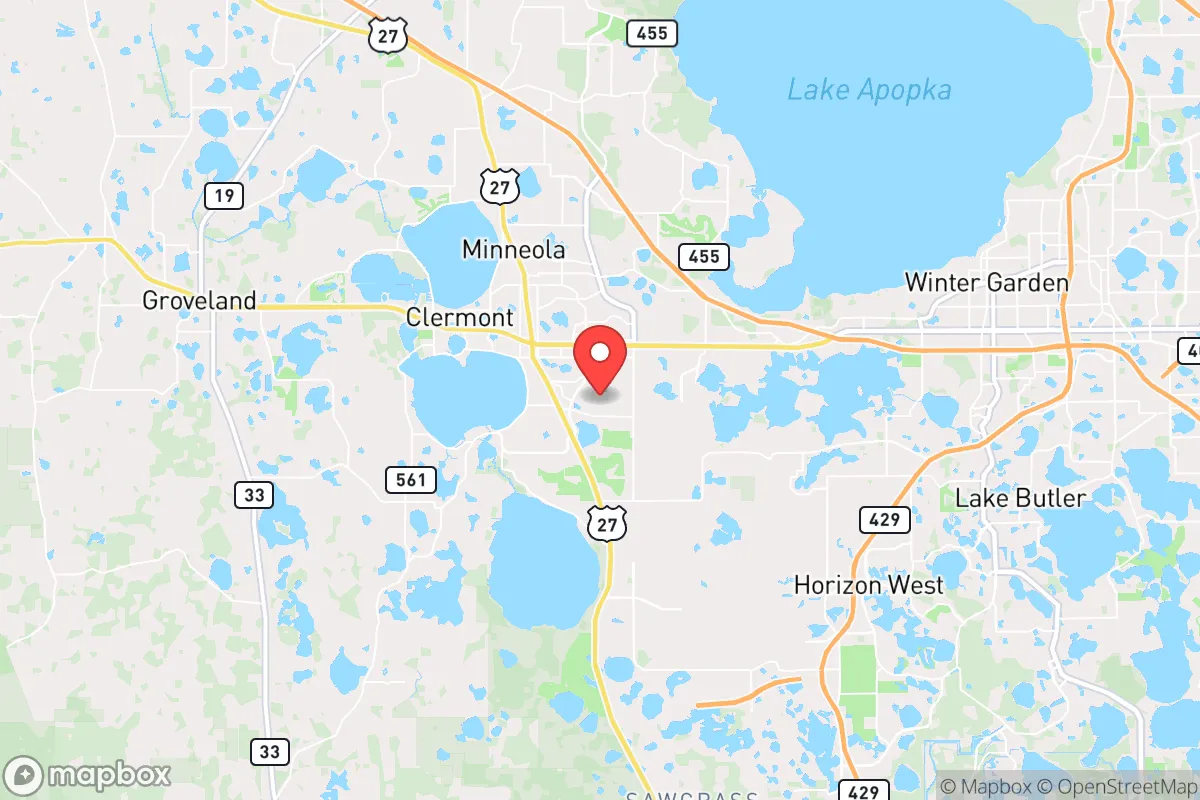
Photo: Wikipedia
Quality of Life in Clermont, FL
A high quality of life with strong walkability, manageable living costs, healthy neighborhood signals, and solid amenity access.
What does Quality of Life tell us?
Quality of Life blends cost of living, nearby amenities, socioeconomic signals, and neighborhood character. City-level scores represent the whole municipality; individual neighborhoods can differ.
What does this tell us?
Quality of Life blends cost of living, nearby amenities, socioeconomic signals, and neighborhood character. City-level scores represent the whole municipality; individual neighborhoods can differ.
Cost of Living
44% above national average
The Real Cost of Living in Clermont, FL for 2026
| Tier | Individual | Family (4) |
|---|---|---|
| Survival | $28k | $52k |
| Comfortable | $72k | $105k |
| Luxury | $115k+ | $178k+ |
| Elite (Top 5%) | $135k+ | $210k+ |
76%
The Area Signal
A metric tracking the socioeconomic signals of the area.
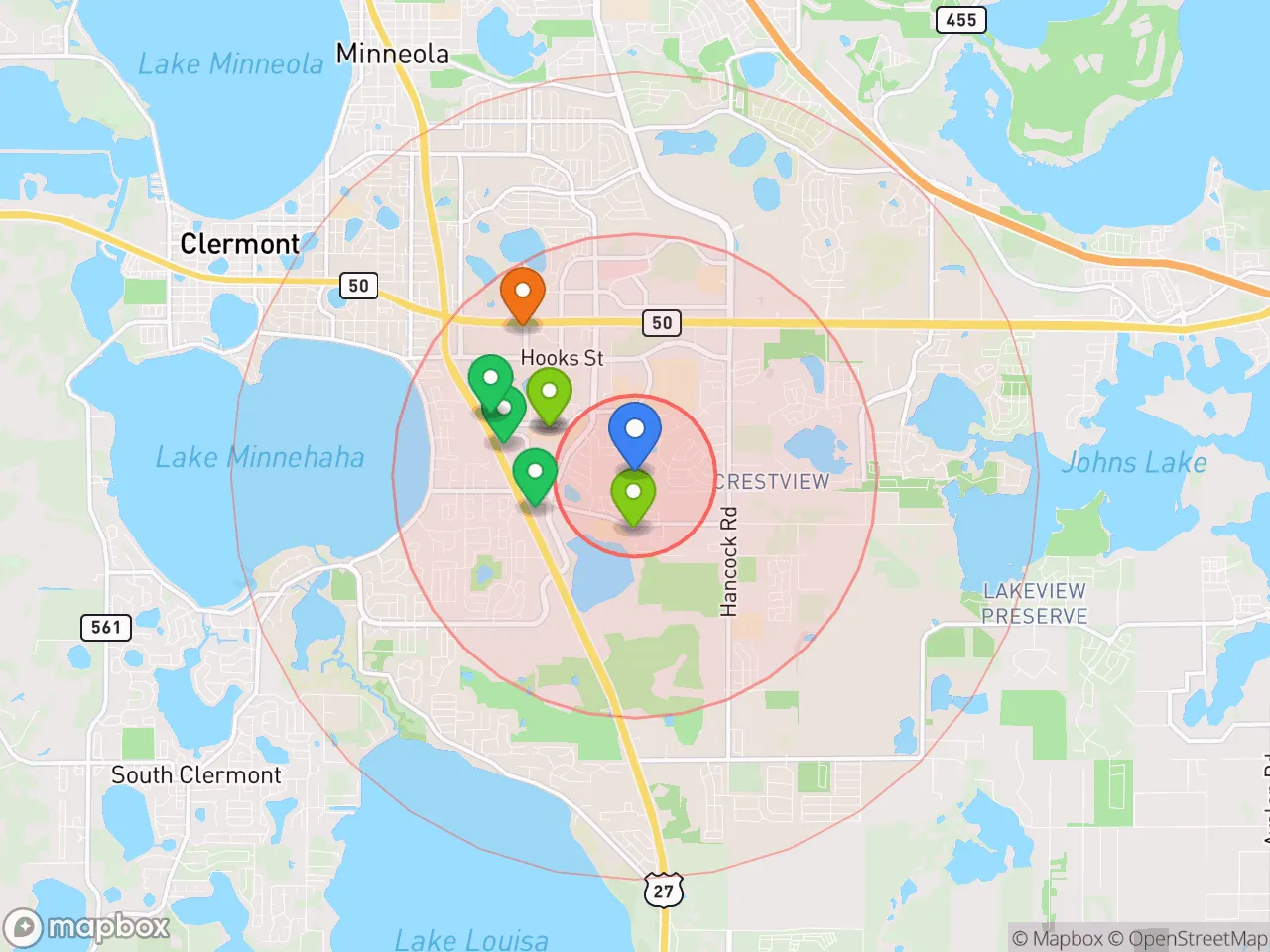
Hobbies
Explore the areaGroceries
0 within 10 miles
Gas
0 within 10 miles
Hospital
0 within 20 miles
Airport
MCO — Orlando International
Post Office
Critical Amenities
Quality-of-Life Analysis
Clermont, Florida, presents a quality of life defined by suburban affluence and a family-oriented atmosphere, attracting a demographic of professionals, remote workers, and retirees who prioritize space and community over urban intensity. With a cost of living index of 144—well above the national average of 100—the city commands a premium for its lakefront setting and proximity to Orlando, yet it remains more affordable than the core metro areas of Winter Park or Windermere. The typical resident is a homeowner or long-term renter who values the slower pace, access to outdoor recreation, and the strong sense of local identity that distinguishes Clermont from the sprawling subdivisions of nearby Four Corners.
Cost of living, housing affordability, and how Clermont compares to nearby areas
Clermont’s cost of living index of 144 reflects housing costs that significantly outpace the national norm but remain competitive within Central Florida’s suburban ring. The median home value sits at $368,600, roughly 15% lower than the median in Winter Garden and about 25% lower than in Windermere, making it a relative value for buyers seeking newer construction and larger lots. Median rent of $1,774 is comparable to Groveland but notably cheaper than the $2,100+ averages seen in downtown Orlando or Lake Nona. The average commute of 32.6 minutes is a key trade-off: residents gain square footage and yard space but spend significant time on the congested Florida Turnpike and State Road 50, especially during peak hours. Property taxes in Lake County are moderate, and no state income tax helps offset the higher housing costs for wage earners. For renters and first-time buyers, the affordability gap versus Orange County is narrowing, but Clermont still offers more square footage per dollar than areas closer to the theme parks.
What daily life is like for families: schools, amenities, and community rhythm
Daily life in Clermont revolves around its strong school system, extensive parks, and a calendar of community events that foster neighborly interaction. Lake County Schools serve the area, with Clermont Elementary and East Ridge High School consistently rated above state averages, though some families opt for nearby private options like Montverde Academy. The city’s defining amenity is the Chain of Lakes, with over a dozen lakes providing boating, fishing, and waterfront parks such as Waterfront Park and Lake Louisa State Park. The downtown historic district, though small, hosts a weekly farmers market and seasonal festivals like the Pig on the Pond barbecue competition. Retail is concentrated along US 27, with big-box stores and chain restaurants dominating, while local dining options are limited compared to Winter Garden’s Main Street. The community rhythm is distinctly suburban: mornings see school drop-offs and commuters heading east, afternoons fill the parks with youth sports, and evenings are quiet, with most entertainment tied to home or neighborhood gatherings. For families, the trade-off is clear: Clermont offers safety, space, and nature access in exchange for a car-dependent lifestyle and a less vibrant nightlife scene.
Clermont is best suited for families, remote workers, and retirees who value a quiet, lake-oriented lifestyle and are willing to accept a longer commute for more affordable housing and lower density. Professionals who work in Orlando but want a detached home with a yard will find the trade-off worthwhile, especially if they prioritize school quality and outdoor recreation over urban amenities. Singles and young professionals without children may find the social scene limited and the car dependency frustrating, while those seeking walkability or cultural density should look closer to downtown Winter Garden or Orlando proper. For the right household, Clermont delivers a stable, family-friendly environment with strong community ties and consistent property value appreciation.

Crime in Clermont, FL
Lower crime rates than 95% of comparable U.S. locations.
Violent CrimeViolent Crime Analysis
Property CrimeProperty Crime Analysis
Crime Analysis
Clermont, Florida, reports a violent crime rate of 58.6 per 100,000 residents and a property crime rate of 364.7 per 100,000, placing it well below both the state and national averages for overall crime. These figures suggest a community that is statistically safer than many of its peers in Central Florida, though the broader context of Lake County’s proximity to the Orlando metro area introduces factors that residents should monitor. As with any city near a large metropolitan hub, the influence of regional criminal justice policies—particularly those from progressive prosecutors in nearby urban centers—can create spillover effects that may challenge local safety.
Crime in context
Clermont’s violent crime rate of 58.6 per 100,000 is roughly one-fifth the national average of 380 per 100,000, while its property crime rate of 364.7 per 100,000 sits about 40% below the U.S. median of 1,954 per 100,000. These numbers reflect a community where serious offenses like homicide, robbery, and aggravated assault are rare events. However, the city lies within commuting distance of Orlando, where progressive district attorneys have implemented policies such as reduced cash bail and diversion programs for repeat offenders. Such approaches, while intended to reduce incarceration, can result in more criminals returning to the streets sooner, potentially increasing the risk of property crimes and low-level offenses in surrounding suburbs like Clermont. Residents should remain aware that regional justice trends can erode local safety gains over time.
What residents experience
Daily life in Clermont is characterized by a low likelihood of encountering violent crime, with most incidents being property-related—primarily theft from vehicles and residential burglaries. The city’s police department maintains a visible presence, and community watch programs are active in many subdivisions. That said, the progressive criminal justice policies common in larger Florida metro areas have been linked to higher recidivism rates, meaning that even a safe suburb like Clermont can see periodic spikes in car break-ins or package thefts when offenders are released without meaningful supervision. For families and retirees, the practical takeaway is that while Clermont is safer than most, it is not immune to the downstream effects of lenient sentencing and early release programs championed by urban prosecutors.
Neighborhood-level variation is notable, with older lakefront communities and gated developments near the downtown core reporting the lowest incident rates, while areas closer to the Florida Turnpike and U.S. Highway 27—particularly around shopping centers and apartment complexes—see slightly higher property crime volumes. Prospective residents should review local crime maps and consider proximity to major transit corridors, as these routes can facilitate quick entry and exit for offenders. Overall, Clermont offers a strong safety profile for a city its size, but the regional justice environment warrants ongoing vigilance.
* Values derived from national, state, county, city and local statistics and may differ in a specific area. Last updated: 2026-11-06T19:39:21.000Z
Narrative content on this page is AI-generated and may contain mistakes. Verify any details that matter before acting on them.
ReloMaps may earn a commission from affiliate links at no extra cost to you.

