Photo: Wikipedia
Find The Best Places To Live
in Alabama
PRO TIP! You can paste a Zillow or Redfin link to get info on that property.
Best Places to Live in Alabama


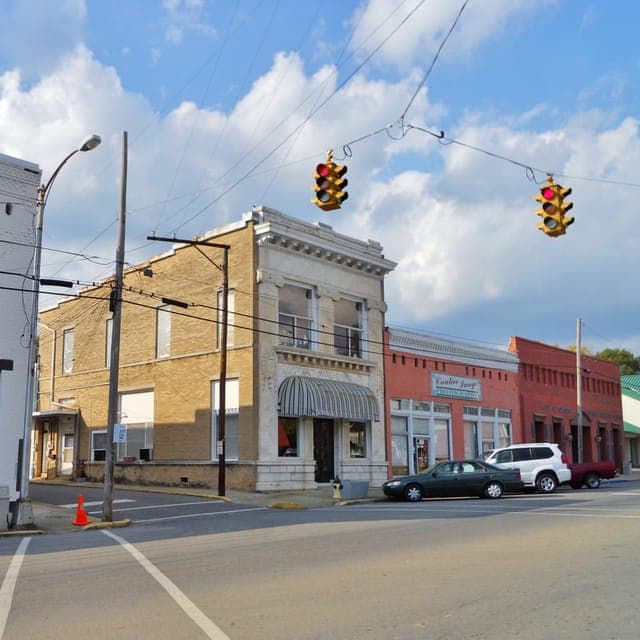
Cities in Alabama
Largest Cities in Alabama
What It's Like Living in Alabama
Alabama is a state where your neighbor will bring you a casserole the day you move in, but also where you keep your car doors locked. It’s a land of deep-rooted traditions, from Friday-night lights in small towns to SEC tailgates in Tuscaloosa that feel like professional holidays. Life here moves at a pace that’s distinctly slower than the national average, yet the cities of Huntsville and Birmingham hum with a growing energy that’s reshaping what it means to be an Alabamian.
The Daily Rhythm: Sweet Tea, Amazon Deliveries, and the Rural-Urban Split
Daily life in Alabama depends heavily on whether you’re in an urban hub or a farm county. In Huntsville, a city of rocket scientists and engineers, your commute might average around 25 minutes—longer than the state’s overall average of 25.4 minutes—because the city has grown so fast. People here shop at Publix for groceries and eat at local staples like Big Bob Gibson’s BBQ in Decatur (a short drive) or Piper & Leaf artisan tea in Huntsville’s historic Five Points. Weekends often involve hiking at Monte Sano State Park or grabbing a beer at Straight to Ale. Contrast that with rural towns like Eufaula or Cullman, where the day’s rhythm is set by the school bus schedule and church services. The median age of Alabamians is 39.3—slightly older than the national median—reflecting many families who’ve stayed put and retirees moving in from Florida and Georgia for the lower cost of living. That cost of living index of 77 (well below the US average of 100) means a median home value of $195,100 can buy you a 2,000-square-foot house with a yard in most areas outside of downtown Mountain Brook.
Sports & Community: Where College Football Is a Religion
If you live in Alabama, you quickly learn that college football isn’t just a pastime—it’s a civic identity. The Iron Bowl between Alabama (Tuscaloosa) and Auburn (Auburn) splits families, congregations, and workplace loyalties. Come fall, every other conversation includes “Roll Tide” or “War Eagle.” High school football is also massive: towns like Hoover (just south of Birmingham) pack 10,000 people into the Hoover Met for Friday-night games, and the state championship games at Bryant-Denny Stadium draw crowds rivaling small-college events. For pro sports, Birmingham hosts the USFL’s Stallions, and you’ll find die-hard Braves (folks drive to Atlanta) or Titans fans. But the real “this is Alabama” moment? A church hosting a fish fry before the big game—where no one cares about your job, just which side of the line you stand on.
What’s There to Do: Festivals, Outdoor Adventures, and a Thing for Music
Alabama’s entertainment punches above its weight. The Alabama Music Hall of Fame in Muscle Shoals draws music pilgrims who want to see where Aretha Franklin and the Rolling Stones recorded. Every spring, Mobile throws the nation’s oldest Mardi Gras celebration—older than New Orleans’—with parades that feel family-friendly and less debaucherous. For outdoors, Gulf Shores offers white-sand beaches and the annual Hangout Music Festival (think: big names, sand in your flip-flops), while the Bankhead National Forest near Lawrence County gives you waterfalls and hiking trails with almost no crowds. A lesser-known gem is the U.S. Space & Rocket Center in Huntsville, where you can touch a Saturn V moon rocket—a major draw for families and space geeks. Locals who love history spend weekends in Montgomery at the Legacy Museum or walking the Civil Rights Trail. The frustration? Many of the best restaurants and live music venues cluster in Birmingham (Sidewalk Film Festival, Avondale Brewery) and Huntsville; drive 30 minutes east of these cities, and your evening options dwindle to a Waffle House and a gas station sushi cooler.
Pros and Cons of Living Here: What You’ll Love and What You’ll Fume About
- Pro: Affordability. A median income of $62,027 covers more here than in almost any other state. You can buy a home in Decatur or Prattville for $180,000 and still save for vacations.
- Pro: Community. People look out for each other. In Florence, a neighbor will plow your driveway after a rare snow event before you even ask.
- Pro: Nature. The Little River Canyon in northeast Alabama is a hidden gem for kayaking, and the Sipsey Wilderness offers backpacking without the crowds of the Smokies.
- Con: Crime and safety. The violent crime rate of 348.1 per 100,000 residents is higher than the national average. Birmingham and Mobile have specific neighborhoods where you don’t walk alone at night, though many suburbs like Vestavia Hills and Madison are very safe.
- Con: Economic inequality. With only 27.8% of adults holding a college degree, the job market is polarized—Huntsville is booming with aerospace, but rural areas struggle with factory closures and limited healthcare access.
- Con: Hot summers. July and August are oppressive—95°F with humidity that makes errands a sweat-soaked ordeal. June through September, you plan outdoor activities before 9 AM or after 6 PM.
Alabama is not for everyone. It’s best suited to people who value roots over novelty, who don’t mind a long drive for a good concert, and who find deep meaning in community rituals—whether that’s church, the local football team, or the annual catfish festival in Greensboro. If you move here, be ready to bake a pie for the new neighbor before they can ask for the Wi-Fi password. It’s that kind of place.

* Values derived from national, state, county, city and local statistics and may differ in a specific area. Last updated: 2026-07-03T04:07:26.000Z
Narrative content on this page is AI-generated and may contain mistakes. Verify any details that matter before acting on them.
ReloMaps may earn a commission from affiliate links at no extra cost to you.

