
Photo: Wikipedia
Demographics of Alabama
Affluence Level in Alabama
A middle-class area roughly in line with national averages across income, home values, education, and employment.
People of Alabama
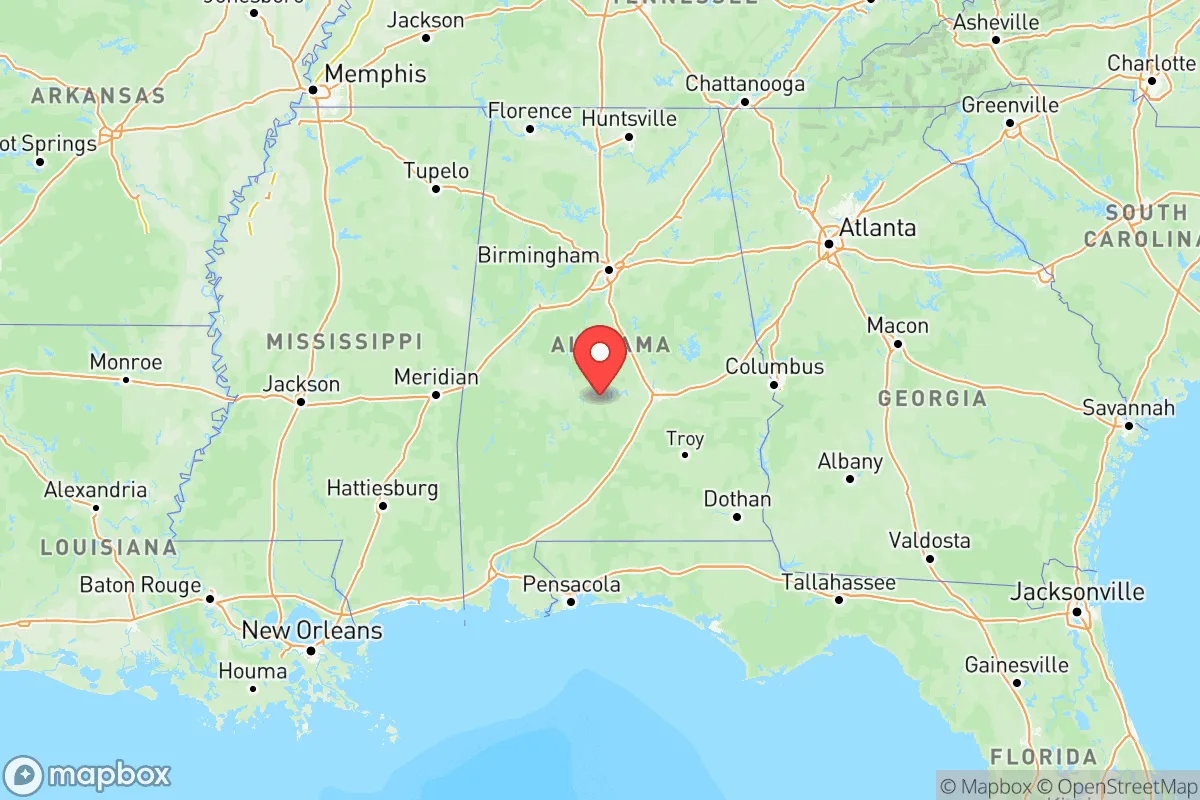
The people of Alabama today number just over 5 million, a population shaped by deep Southern roots, a significant Black Belt heritage, and a growing but still small immigrant presence. The state remains predominantly native-born, with only 2.2% foreign-born residents, and is characterized by a strong sense of regional identity, religious faith, and family ties. Its distinctive markers include a White population of 63.8% and a Black population of 25.9%, one of the highest percentages in the nation, while Hispanic (5.4%) and Asian (1.0%) communities are small but growing, largely in the state's metropolitan centers like Birmingham, Huntsville, and the Gulf Coast. The population is slowly diversifying, especially in its northern and central urban corridors, but remains less ethnically varied than the national average.
Settlement & growth (pre-1960)
Alabama's human history begins with its Indigenous peoples, including the Cherokee, Chickasaw, Choctaw, and Creek (Muscogee) nations, who lived in organized towns and agricultural settlements across the region for centuries before European contact. The first European presence was Spanish, with Hernando de Soto's expedition crossing the area in 1540, but permanent colonization did not begin until the French established Mobile in 1702 as the capital of French Louisiana. The British gained control after the French and Indian War in 1763, bringing English-speaking settlers, many of them Scots-Irish and English, who pushed into the Alabama River basin and the fertile Black Belt soil.
After the American Revolution, Alabama became part of the Mississippi Territory, and the U.S. government systematically removed the remaining Native nations through the 1830s Indian Removal Act, most infamously via the Trail of Tears, which forced the Cherokee and Creek peoples out of northern and eastern Alabama. Cotton cultivation exploded, driving a massive forced migration of enslaved Black people from the Upper South into Alabama, particularly into the Black Belt counties stretching from Montgomery west to Selma and Demopolis. By 1860, enslaved people made up nearly half the state's population, and the plantation economy was concentrated in those central counties.
The post-Civil War period saw the beginnings of industrial growth in the northern part of the state, especially around Birmingham, founded in 1871 as an iron and steel hub. European immigrants — including Irish, Italian, and German workers — came to mine coal and iron ore, but the numbers were modest compared to northern industrial cities. The Great Migration (roughly 1910–1970) saw hundreds of thousands of Black Alabamians leave the rural Black Belt for industrial jobs in Chicago, Detroit, and other northern cities, a demographic drain that reshaped the state. Meanwhile, poor White farmers, many of Scots-Irish descent, continued to populate the hill country of north Alabama and the Wiregrass region in the southeast, with towns like Huntsville, Florence, and Dothan serving as local centers. By 1960, Alabama's population was almost entirely native-born, overwhelmingly Protestant, and deeply segregated by law and custom.
Modern era (post-1965)
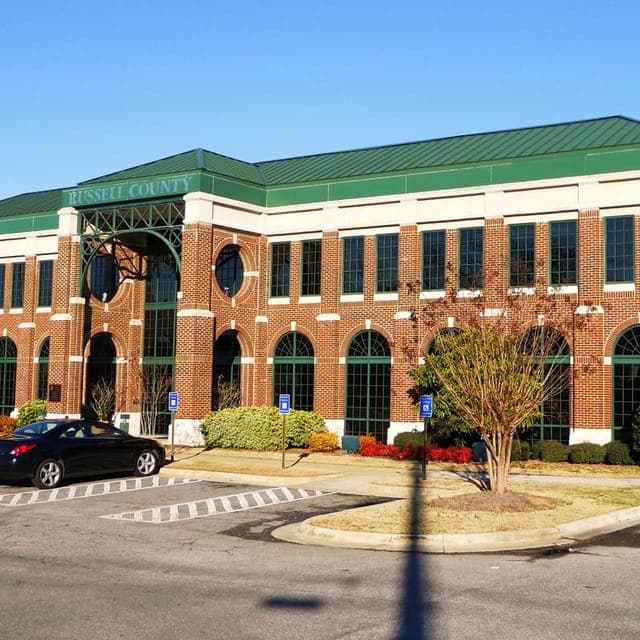
The 1965 Hart-Cellar Act had a limited initial impact on Alabama compared to states like Texas or California, but it opened the door for small but significant new immigrant streams. The largest post-1965 foreign-born group in Alabama has been Hispanic, primarily from Mexico and Central America, who began arriving in the 1990s and 2000s to work in agriculture, poultry processing, and construction. These communities cluster in the Birmingham metro area, as well as in rural counties like Russell County (near Phenix City) and DeKalb County (near Fort Payne), where poultry plants are a major employer. The Hispanic population has grown from less than 1% in 1990 to about 5.4% today, making it the fastest-growing demographic group.
East and Southeast Asian communities, including Vietnamese, Korean, and Chinese immigrants, have also carved out smaller enclaves, primarily in Huntsville and Birmingham, drawn by jobs in engineering, healthcare, and academia. Vietnamese refugees began arriving after 1975, with a notable concentration in the Bayou La Batre area on the Gulf Coast, where they revitalized the shrimping and seafood industry. The Indian-subcontinent population, at just 0.4%, remains tiny but is concentrated in professional roles, particularly in Huntsville's aerospace and defense sectors.
Domestic migration has been a more powerful force than immigration in reshaping Alabama. The post-World War II era saw the rise of Huntsville as a federally driven aerospace hub, attracting engineers and technicians from across the country. The Sun Belt migration of the 1970s onward brought retirees and military families to the Gulf Coast, especially Mobile and Baldwin County (including Gulf Shores and Orange Beach), and to the suburbs of Birmingham and Montgomery. Suburbanization has been stark: the White population has moved from city centers to towns like Hoover, Vestavia Hills, and Madison, while Black and Hispanic residents increasingly occupy older urban neighborhoods and inner-ring suburbs. The state remains one of the most residentially segregated in the U.S., though mixing has slowly increased in metro areas.
The future
The population of Alabama is projected to grow slowly, with the U.S. Census Bureau estimating a 2-3% increase over the next decade, largely driven by natural increase and modest domestic migration. The Hispanic share is expected to rise gradually, potentially reaching 8-10% by 2040, while the Black population share is stable at around 26%. East/Southeast Asian and Indian communities will likely grow in specific professional corridors — Huntsville is poised to be the primary destination, given its booming tech and defense economy, which already attracts a national and international workforce.
However, the state faces a notable challenge: a low college attainment rate of 27.8%, which lags the national average, and an aging population in rural areas, especially the Black Belt counties like Perry and Lowndes, which have seen population declines for decades. The cultural identity of Alabama is evolving but slowly: the state remains deeply conservative and Christian, with a strong rural-urban divide. The growing Hispanic and Asian populations are integrating into local churches and schools, but the state's demographic profile is unlikely to undergo the rapid diversification seen in places like Georgia or North Carolina. For a new resident moving in, Alabama offers a slower pace of change, a tight-knit community feel, and a cost of living well below the national average — but with less ethnic variety and fewer immigrant-rich cultural amenities than many other Sun Belt states.

Most Diverse Cities in Alabama
Most Homogenous Cities in Alabama


* Values derived from national, state, county, city and local statistics and may differ in a specific area. Last updated: 2026-07-03T04:07:26.000Z
Narrative content on this page is AI-generated and may contain mistakes. Verify any details that matter before acting on them.
ReloMaps may earn a commission from affiliate links at no extra cost to you.

