
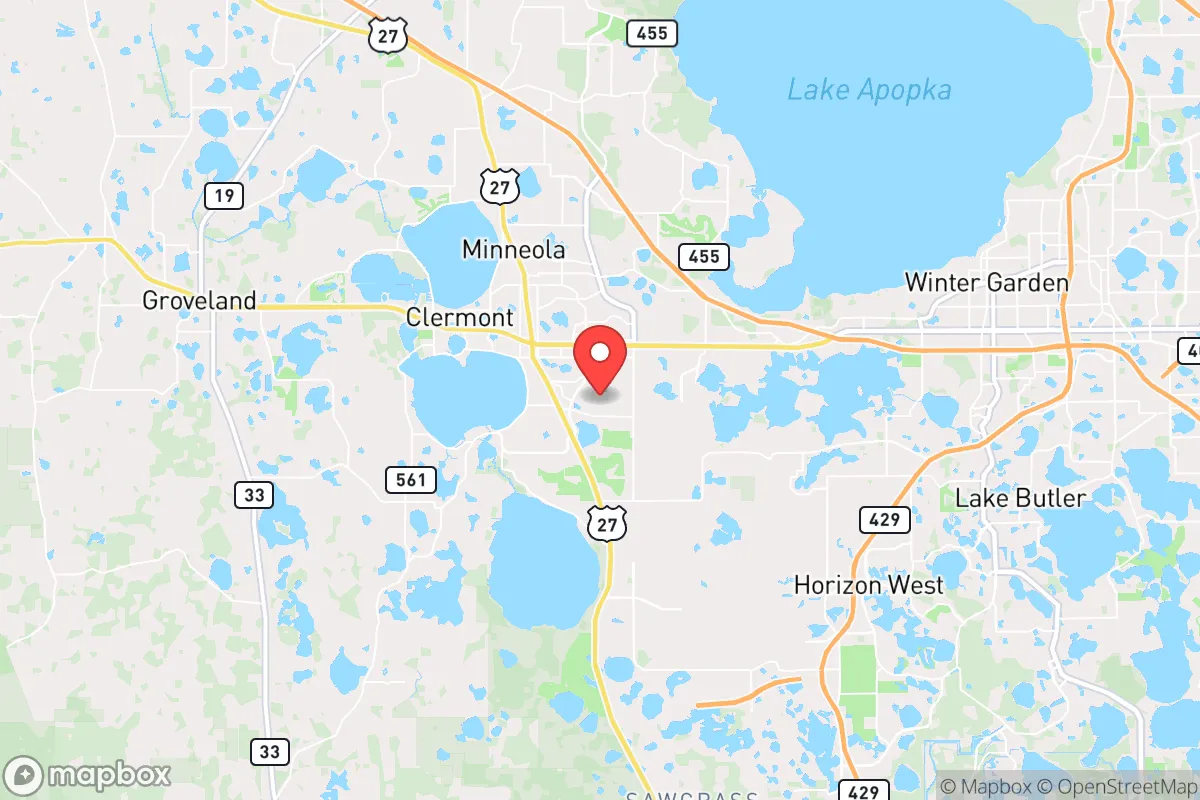
Photo: Wikipedia
Find The Best Places To Live
in Clermont
PRO TIP! You can paste a Zillow or Redfin link to get info on that property.
Compare Clermont with another place
What It's Like Living in Clermont, FL
Clermont feels like a town that grew up fast but held onto its small-town bones. You’ll see it in the way people still wave from their golf carts on the Lake Minneola Scenic Trail, and in the way the Friday night lights at East Ridge High School draw a crowd that fills the bleachers and the nearby parking lots. It’s a place where the rolling hills—rare for Florida—give the landscape a distinct, almost Appalachian feel, and where the commute to Orlando is a daily reality that everyone talks about but few seem to love.
The Daily Rhythm: Hills, Lakes, and the Commute
Most mornings here start with a view of the Clermont hills, a chain of ancient sand dunes that make the area a magnet for cyclists and runners. The average commute of 32.5 minutes is a fact of life for many residents who work in Orlando or the theme-park corridor, but the trade-off is a quieter home base. After work, you’ll find people unwinding at the Waterfront Park on Lake Minneola, where the sunsets over the water are a nightly ritual. Grocery runs often mean a choice between the Publix on US-27 and the newer one on SR-50, and weekend mornings are dominated by the Clermont Farmers Market, where local honey and fresh produce are the main draws. The median age of 42.4 reflects a community heavy on families and empty-nesters, not a college crowd, so the pace is deliberate rather than frantic.
Sports, Community, and Where People Gather
High school sports are a genuine cultural anchor here. East Ridge High School’s football games are the biggest regular events, with the stands packed on Friday nights in the fall. The Clermont Little League and the South Lake YMCA soccer fields are buzzing on weekends, and the annual Clermont Cycling Classic draws competitive riders from across the state. For pro sports, most residents are Orlando Magic or Orlando City SC fans, but the real loyalty is to the local teams. The bars that get the most traffic are places like The Crooked Spoon for craft beer and live music, or Gator’s Dockside for game-day wings. The downtown area along Montrose Street has a handful of local spots—Clermont Brewing Company is a favorite for its trivia nights and outdoor seating—but the scene is low-key, not a nightlife destination.
What’s There to Do: Outdoors, Festivals, and the Quirks
The outdoor life is the main event. The Lake Minneola Scenic Trail is a paved loop that hugs the lake and connects to the South Lake Trail, making it a prime spot for biking, running, and walking dogs. The Clermont Historic Village offers a glimpse of the town’s citrus-farming past, but the real draw is the water: fishing, kayaking, and paddleboarding on the chain of lakes are year-round activities. The annual Pig on the Pond festival in February is the biggest community event, combining a barbecue competition, live music, and a carnival that feels like a throwback. A cultural quirk: Clermont is one of the few Florida towns where you’ll see serious hills, and locals take pride in the “Clermont Climb,” a steep section of US-27 that cyclists treat as a rite of passage. The downsides? Traffic on US-27 is a constant frustration, especially during snowbird season, and the cost of living index of 144 (well above the national average) means housing isn’t the bargain it once was. The median home value of $368,600 puts homeownership out of reach for many younger singles, though the median household income of $79,789 helps families manage.
Pros and Cons of Living Here
- Pro: The natural setting is genuinely unique for Florida—hills, lakes, and trails that make outdoor living easy and attractive. The violent crime rate of 58.6 per 100,000 is well below the national average, and the schools (particularly Grassy Lake Elementary and East Ridge Middle) are a major reason families choose the area.
- Con: The commute is a grind. The 32.5-minute average hides the fact that a trip to downtown Orlando can easily stretch to 45 minutes or more during rush hour. The 35.7% college-educated rate is lower than in nearby Winter Park or Windermere, which means fewer white-collar job opportunities locally—most professionals commute or work remotely.
- Pro: The community is genuinely friendly and civic-minded. The Clermont City Council meetings are well-attended, and neighborhood Facebook groups are active with lost-pet alerts and recommendations for plumbers. The population of 44,984 is large enough to have amenities but small enough that you’ll recognize faces at the grocery store.
- Con: Summer heat and humidity are relentless from June through September, and the afternoon thunderstorms are a daily occurrence. The seasonal rhythm is dominated by “snowbird” season (November through April), when traffic and restaurant wait times spike noticeably.
The kind of person who fits in here is someone who values space and nature over urban convenience. It’s a place for families who want a good school system and a safe yard for kids to play in, or for empty-nesters who want to be near the lakes without the crowds of The Villages. Singles under 30 might find it a bit quiet, but the growing number of breweries and the proximity to Orlando’s job market make it a viable option for those who don’t mind a commute. The local identity is rooted in a kind of proud ordinariness—Clermont isn’t trying to be the next hot spot, and that’s exactly why the people who live here tend to stay.

Similar towns to Clermont



* Values derived from national, state, county, city and local statistics and may differ in a specific area. Last updated: 2026-11-06T19:39:21.000Z
Narrative content on this page is AI-generated and may contain mistakes. Verify any details that matter before acting on them.
ReloMaps may earn a commission from affiliate links at no extra cost to you.

