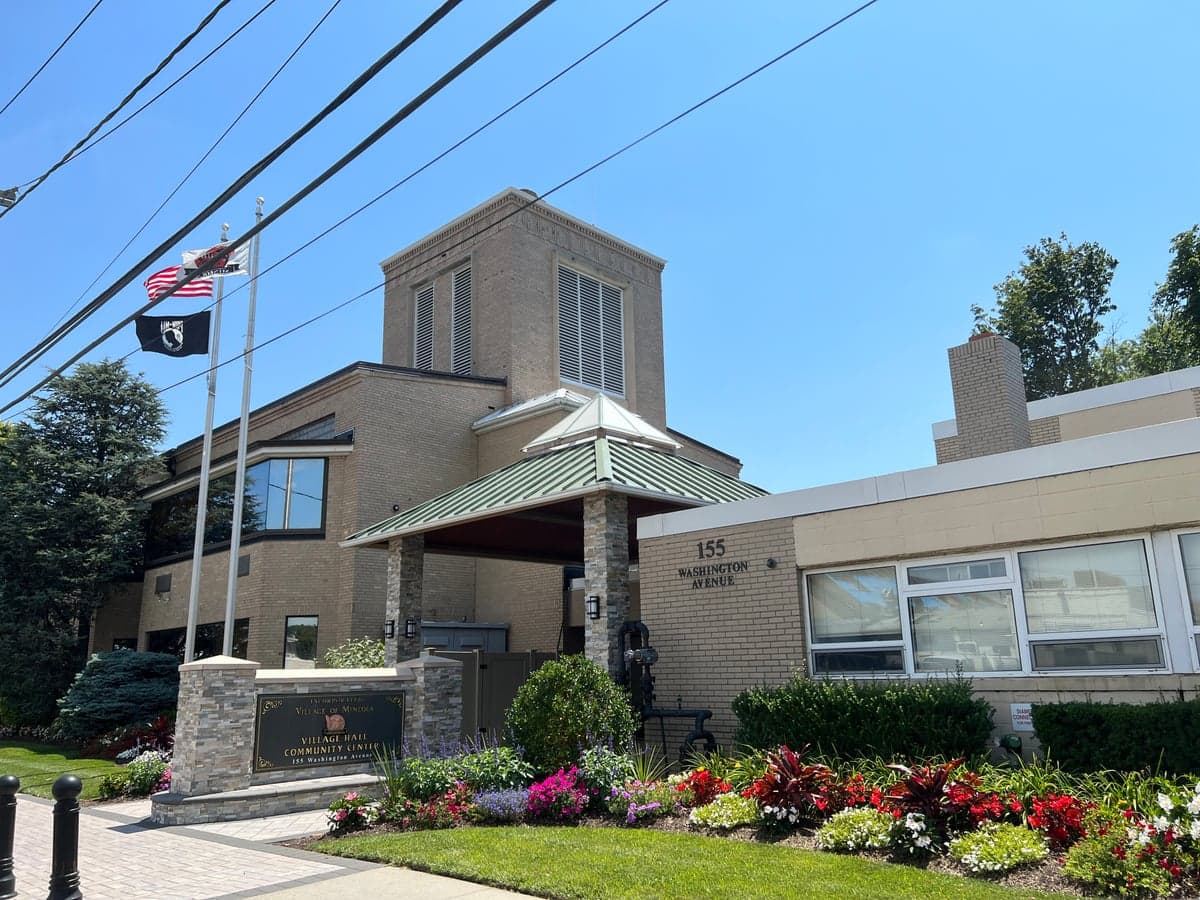
Photo: Wikipedia
Political ClimatePolitical Climate in Mineola, NY
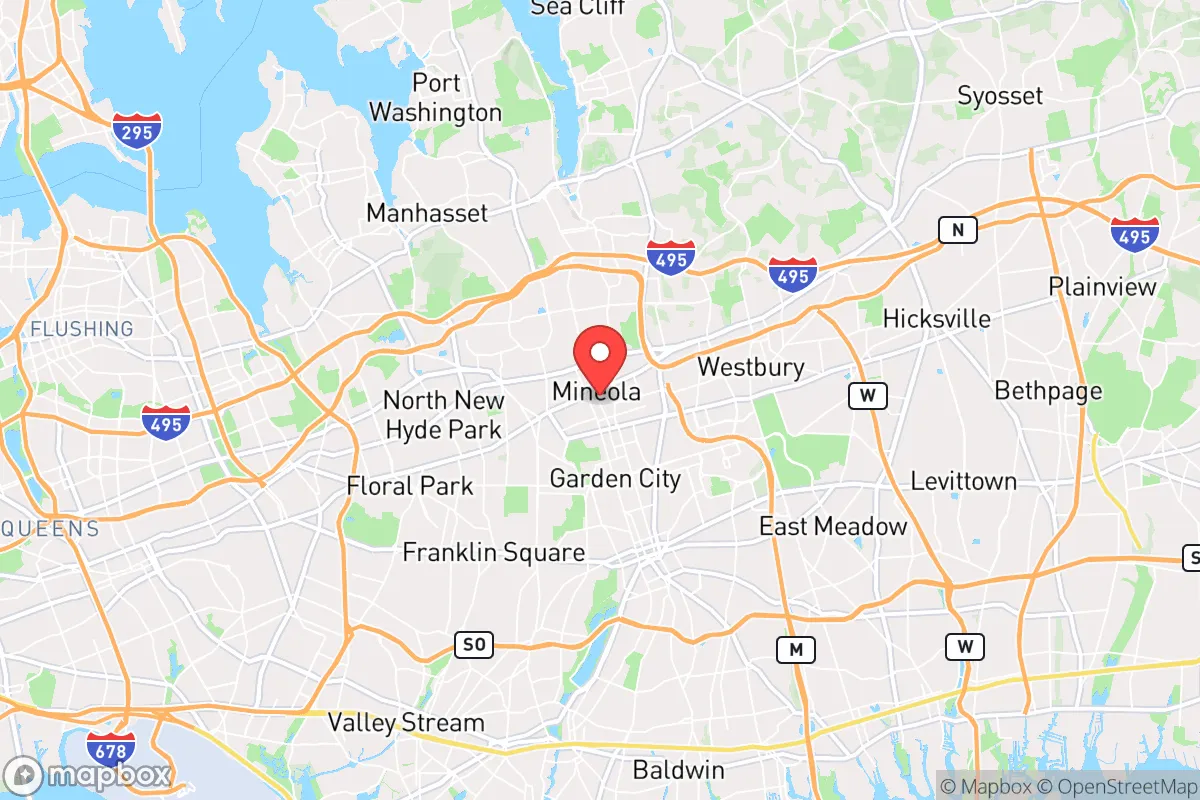
District shown is the primary district for this city’s centroid. Cities may span multiple districts.
Local Political AnalysisPolitical Analysis of Mineola, NY
Mineola is one of those rare spots on Long Island where the political pendulum doesn't swing hard in either direction. With a Cook Partisan Voting Index (PVI) of EVEN, it sits right in the middle—a true battleground precinct in a county that's been trending bluer in recent years. That EVEN rating means the district votes almost exactly as the nation does as a whole, which is a far cry from the deep-blue dominance you see in New York City proper. If you've lived here a while, you've noticed the shift: Mineola used to lean more Republican, especially in local races, but the last decade has seen a steady influx of younger families and commuters from the city, nudging the needle toward the center.
How it compares
New York, NY—Manhattan specifically—is a political universe away from Mineola. While the city's Cook PVI isn't publicly assigned at the borough level, Manhattan consistently votes over 80% Democratic in presidential elections, making it one of the most liberal jurisdictions in the country. Mineola, by contrast, is a swing district where both parties have a real shot. In the 2022 midterms, the congressional race here (NY-03) was decided by just a few thousand votes, flipping from Republican to Democrat. Compare that to nearby towns like Garden City or Williston Park, which lean more Republican, or Hempstead and Uniondale, which are solidly Democratic. Mineola sits right in the middle of that patchwork, reflecting the broader Nassau County trend where suburban moderates hold the balance of power. The difference from the city isn't just in voting patterns—it's in the issues that matter. In Mineola, property taxes, school funding, and local zoning dominate conversations, whereas in New York, NY, the focus is on public transit, rent control, and municipal services.
What this means for residents
For conservatives, Mineola is a place where your vote actually counts. You're not shouting into a void like you might in Manhattan—local Republican candidates have a real path to winning, especially in town council and county legislature races. You'll find a robust GOP presence at community events and in the local Chamber of Commerce. For liberals, the EVEN rating means you're not in a bubble either. You'll need to engage with neighbors who hold different views, especially on taxes and development, but you're also close enough to the city to access its cultural and political energy. The practical upshot is that Mineola's politics tend to be pragmatic rather than ideological. Both parties have to compromise to get things done here, which is why you see things like bipartisan support for the new transit-oriented development around the Mineola LIRR station—a project that would be far more contentious in a deeply partisan district.
Culturally, Mineola feels more like a traditional American suburb than an extension of New York City. The local paper, Mineola American, covers school board meetings and street fairs, not mayoral scandals. Policy-wise, the biggest distinction is on housing: Mineola has embraced upzoning near the train station to create more apartments, a move that aligns with state mandates but has sparked debate among longtime residents worried about density. In New York, NY, such debates are settled by a City Council that's overwhelmingly Democratic. Here, they're fought out in packed community forums where a few swing votes can decide the outcome. That's the Mineola way—every election feels like it could go either way, and that keeps both sides honest.

State Political ClimatePolitical Climate in New York
State Political AnalysisPolitical Environment in the State
New York State has been a solidly Democratic stronghold for decades, but the picture is far more nuanced than the national headlines suggest. The state’s overall partisan lean is a deep blue D+10 at the presidential level, driven overwhelmingly by New York City and its immediate suburbs, while the rest of the state has shifted noticeably redder over the past 10-20 years. In 2024, Kamala Harris won the state by roughly 12 points, but that margin was entirely carried by the five boroughs; outside of the NYC metro area, Donald Trump won the vast majority of counties, often by double digits. For a conservative-leaning relocator, the key takeaway is that New York is not a monolith—your experience will depend almost entirely on whether you land in Manhattan or in the Hudson Valley, the Southern Tier, or the North Country.
Urban vs. rural divide
The political map of New York is a textbook case of the urban-rural split. New York City (Manhattan, Brooklyn, Queens, the Bronx, and Staten Island) accounts for roughly 40% of the state’s population and votes about 75-80% Democratic. The immediate suburbs—Nassau County on Long Island, Westchester County just north of the city, and Rockland County—are also reliably blue, though with more competitive pockets. Drive an hour north or west, and the landscape changes fast. Orange County (just north of Westchester) has been trending redder, flipping from a blue-leaning swing county in 2016 to a solidly Trump county in 2024. Erie County (Buffalo) and Monroe County (Rochester) are Democratic strongholds in their urban cores, but their surrounding suburbs and exurbs are increasingly Republican. The real conservative heartland is upstate: Allegany County voted 70% for Trump in 2024, Lewis County in the North Country hit 68%, and Tioga County in the Southern Tier was around 65%. The divide isn’t just about population density—it’s about economic base, with rural areas dependent on agriculture, manufacturing, and natural resources feeling left behind by the downstate-driven policy agenda.
Policy environment
New York’s state-level policy environment is among the most progressive in the nation, and it has a direct impact on daily life. The tax structure is high: the state income tax tops out at 10.9% for earners over $25 million, but even middle-income households face rates around 5.5-6.5%, and property taxes are among the highest in the country (averaging 1.7% of home value). Sales tax varies by county, typically 8-8.875%. On the regulatory side, New York has some of the strictest environmental and land-use rules in the nation, which can slow development and raise housing costs. Education policy is heavily centralized: the state sets curriculum standards, mandates a “culturally responsive” framework, and funds schools through a complex formula that heavily favors downstate districts. Healthcare is dominated by large hospital systems like Northwell Health and NYU Langone, and the state has expanded Medicaid and runs its own health insurance exchange. Election laws are among the most accessible in the country: no-excuse absentee voting, early voting, same-day registration, and automatic voter registration are all in place. For a conservative relocator, the policy environment means higher taxes and more regulation, but also robust public services and a strong social safety net.
Recent policy direction
Over the past five years, New York has moved decisively left on a range of issues that directly affect personal freedoms. On gun and self-defense law, the state passed the SAFE Act in 2013 (expanded in 2022 after the Bruen decision) requiring universal background checks, a ban on “assault weapons,” and a permit-to-purchase system for handguns that includes a “good moral character” requirement. The 2022 Concealed Carry Improvement Act (CCIA) further restricted where licensed guns can be carried, including “sensitive places” like Times Square and public transit. On parental and education rights, the state has moved to expand LGBTQ+ inclusive curriculum and has resisted “parental rights” bills that would require schools to notify parents about a child’s gender identity—a flashpoint in many upstate districts. Speech and privacy are protected under the state constitution, but the state has passed laws targeting “hate speech” and online harassment that some critics argue chill protected expression. On medical and bodily autonomy, New York has become a safe haven for abortion access, passing the Reproductive Health Act in 2019 and allocating $35 million to support out-of-state patients. Property rights are constrained by rent stabilization in NYC and some suburbs, and by strict environmental regulations that can block development. Voting and ballot access have been expanded, but the state also passed a law requiring all counties to offer early voting, which has been implemented unevenly. For a conservative relocator, the bottom line is that New York is actively moving in a direction that restricts gun rights, expands government oversight of education, and protects abortion access—while leaving property rights and tax burdens largely unchanged.
Civil unrest & political movements
New York has a long history of political activism, and recent years have seen both left- and right-wing movements gain visibility. The Black Lives Matter protests in summer 2020 were among the largest in the nation, particularly in NYC and Buffalo, leading to the passage of police reform laws like the repeal of 50-a (which had shielded police disciplinary records). On the right, the “Second Amendment Sanctuary” movement has gained traction in upstate counties—over 30 counties have passed resolutions declaring themselves “sanctuary counties” for gun rights, though these are symbolic and have no legal force. Immigration politics are a major flashpoint: New York City’s “sanctuary city” policy limits cooperation with federal immigration enforcement, and the state has allocated hundreds of millions to support asylum seekers, straining local budgets in places like Rochester and Albany that have seen influxes. Election integrity controversies have been relatively muted compared to swing states, but the 2020 and 2024 elections saw scattered disputes over mail-in ballot processing and voter roll maintenance. Secession rhetoric has emerged in some upstate counties—in 2021, several counties in the Southern Tier and North Country floated the idea of seceding from New York to form a new state, though it remains a fringe movement. A new resident would notice that political polarization is visible in everyday life: bumper stickers, yard signs, and local news coverage are sharply divided between downstate progressive outlets and upstate conservative ones.
Projection
Over the next 5-10 years, New York’s political trajectory points toward continued Democratic dominance at the state level, but with growing tension between the downstate majority and upstate minority. Demographic shifts are working against the GOP: New York City and its suburbs continue to grow (though slowly), while many upstate counties are losing population. The state’s in-migration patterns are mixed—New York loses residents to Florida and Texas, but gains international immigrants who tend to vote Democratic. The state legislature is likely to remain under Democratic supermajority control, meaning progressive policies on guns, taxes, and social issues will continue. However, local government in upstate counties will become more Republican and more assertive, leading to more “sanctuary county” resolutions and legal challenges to state mandates. The 2026 gubernatorial election could see a more moderate Democrat or a competitive Republican if the economy sours, but the structural advantage for Democrats is strong. For someone moving in now, expect to see a state that is increasingly two separate political entities: a downstate progressive powerhouse and an upstate conservative resistance, with the state government firmly in the hands of the former.
For a conservative-leaning relocator, the practical takeaway is that New York offers a mixed bag. If you choose to live in an upstate county like Allegany or Tioga, you’ll find a community that shares your political values, lower housing costs, and a slower pace of life—but you’ll still pay high state taxes and live under state laws you may disagree with on guns, education, and abortion. If you choose a downstate suburb like Nassau County or Westchester, you’ll be in a blue environment with excellent schools and job opportunities, but you’ll pay a premium for housing and face more regulation. The key is to understand that New York is not a single political entity—it’s a collection of regions with vastly different realities, and your experience will depend on where you land. Do your homework on the specific county and town, not just the state as a whole.
* Values derived from national, state, county, city and local statistics and may differ in a specific area. Last updated: 2026-09-21T01:08:41.000Z
Narrative content on this page is AI-generated and may contain mistakes. Verify any details that matter before acting on them.
ReloMaps may earn a commission from affiliate links at no extra cost to you.

