Photo: Wikipedia
Demographics of Mineola, NY
Affluence Level in Mineola, NY
An upper-middle-class area. Household wealth, education levels, and homeownership run ahead of national benchmarks.
People of Mineola, NY
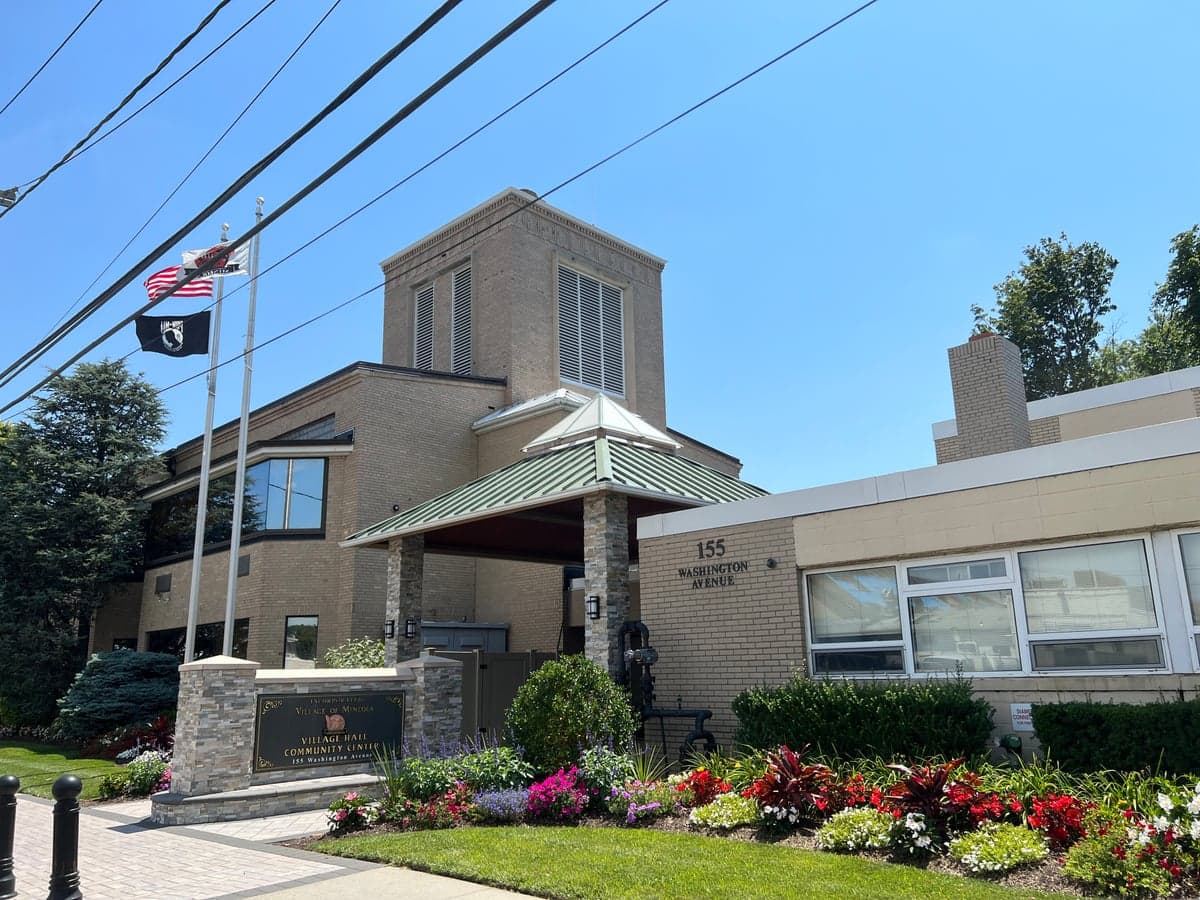
The people of Mineola, New York, today form a dense, diverse, and upwardly mobile community of 21,082 residents, characterized by a strong professional class and a distinctly suburban feel within a compact, walkable downtown. With 55% of adults holding a college degree and a foreign-born population of 7.5%, Mineola is a place where established white-collar families live alongside a growing number of East/Southeast Asian and Indian-subcontinent households. The village’s identity is shaped by its role as the Nassau County seat, giving it a civic and commercial gravity that attracts residents seeking good schools, commuter rail access, and a stable, family-oriented environment.
How the city was settled and grew
Mineola’s original population was built by English and Dutch farmers in the mid-17th century, drawn by the fertile Hempstead Plains. The village’s name itself is derived from a Native American word for “pleasant place,” reflecting the early appeal of the open grassland. The arrival of the Long Island Rail Road in the 1830s transformed Mineola from a farming hamlet into a commuter suburb, and by the late 19th century, the area around Mineola Boulevard and Jericho Turnpike became a commercial and civic hub. The first major wave of residential growth came in the early 1900s, when Irish, German, and Italian immigrants settled in neighborhoods like Williston Park (a hamlet within Mineola’s postal area) and the blocks south of the railroad tracks, working as laborers, tradesmen, and domestic servants for wealthy families in nearby Garden City. The construction of the Nassau County Courthouse and government buildings in the 1920s cemented Mineola’s role as a county seat, drawing a professional class of lawyers, clerks, and civil servants who built the tree-lined streets of Hillside Avenue and Roslyn Road.
Modern era (post-1965)
The 1965 Immigration and Nationality Act reshaped Mineola’s population, though the shift was gradual compared to neighboring Queens. The village’s existing white ethnic base—largely Italian, Irish, and Jewish families—remained dominant through the 1980s, but new arrivals began to cluster in specific areas. East and Southeast Asian families, particularly of Chinese and Korean heritage, began moving into the Herricks school district area, drawn by the district’s top-ranked schools and proximity to the Mineola LIRR station. By the 2000s, this corridor along Herricks Road and Camp Avenue became a visible Asian enclave, with Asian-owned businesses and cultural institutions. Indian-subcontinent families, primarily from India and Pakistan, concentrated in the Garden City Park neighborhood and the area around Old Country Road, attracted by the same school quality and the presence of a growing professional network in healthcare and technology. The Hispanic population, now 15.6% of the village, grew steadily from the 1990s onward, settling in the more affordable apartment stock near Mineola Avenue and the East Williston border, often working in construction, landscaping, and service industries. The white share of the population, while still a majority at 63.1%, has declined from over 80% in 1980, as younger white families have moved to farther-out suburbs and been replaced by these diverse, college-educated newcomers.
The future
Mineola’s population is becoming more diverse, but the change is measured and concentrated. The East/Southeast Asian share (10.2%) and Indian-subcontinent share (4.1%) are both projected to grow, driven by the village’s reputation for excellent public schools and its location on the LIRR’s main line, offering a 35-minute commute to Manhattan. New luxury apartment developments along Jericho Turnpike and First Street are attracting young professionals and empty-nesters, many of whom are Asian or Indian, while the Hispanic population is expected to stabilize as housing costs rise. The white population will likely continue its slow decline, but Mineola is not experiencing the rapid ethnic turnover seen in some inner-ring suburbs—its high property values and strong civic institutions act as a buffer. The cultural identity is evolving from a classic Irish-Italian suburb into a more pan-Asian and professional melting pot, with the Mineola Chamber of Commerce actively promoting multicultural events and the school district offering language programs in Mandarin and Spanish.
For someone moving in now, Mineola is becoming a stable, multi-ethnic, and highly educated suburb where the old guard of white ethnic families coexists with a rising Asian and Indian professional class. It is not a place of dramatic demographic upheaval, but of steady, managed diversification—a village that retains its civic character and family focus while gradually reflecting the broader diversity of Long Island. The bottom line: Mineola offers a safe, school-driven, and commuter-friendly environment for families who value diversity within a traditionally suburban framework.

* Values derived from national, state, county, city and local statistics and may differ in a specific area. Last updated: 2026-09-21T01:08:41.000Z
Narrative content on this page is AI-generated and may contain mistakes. Verify any details that matter before acting on them.
ReloMaps may earn a commission from affiliate links at no extra cost to you.

