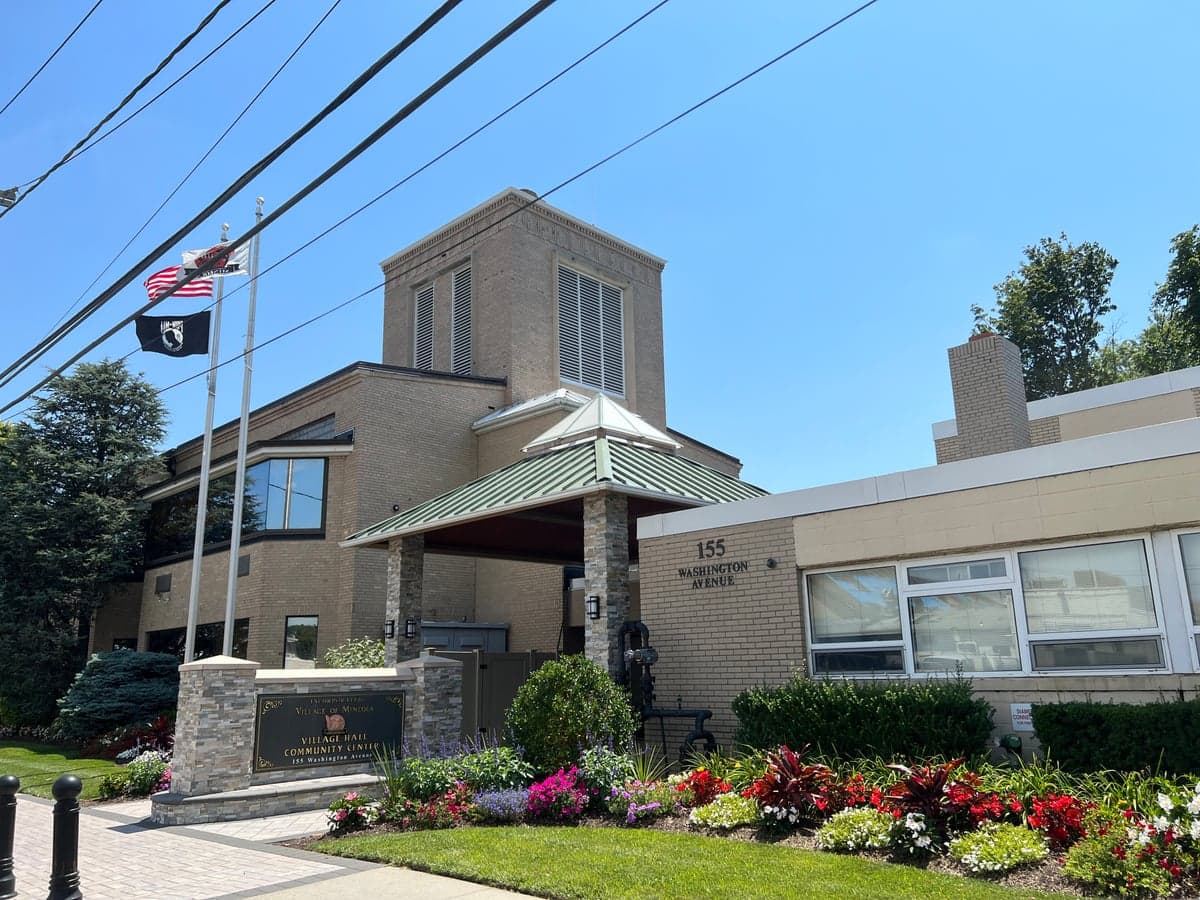
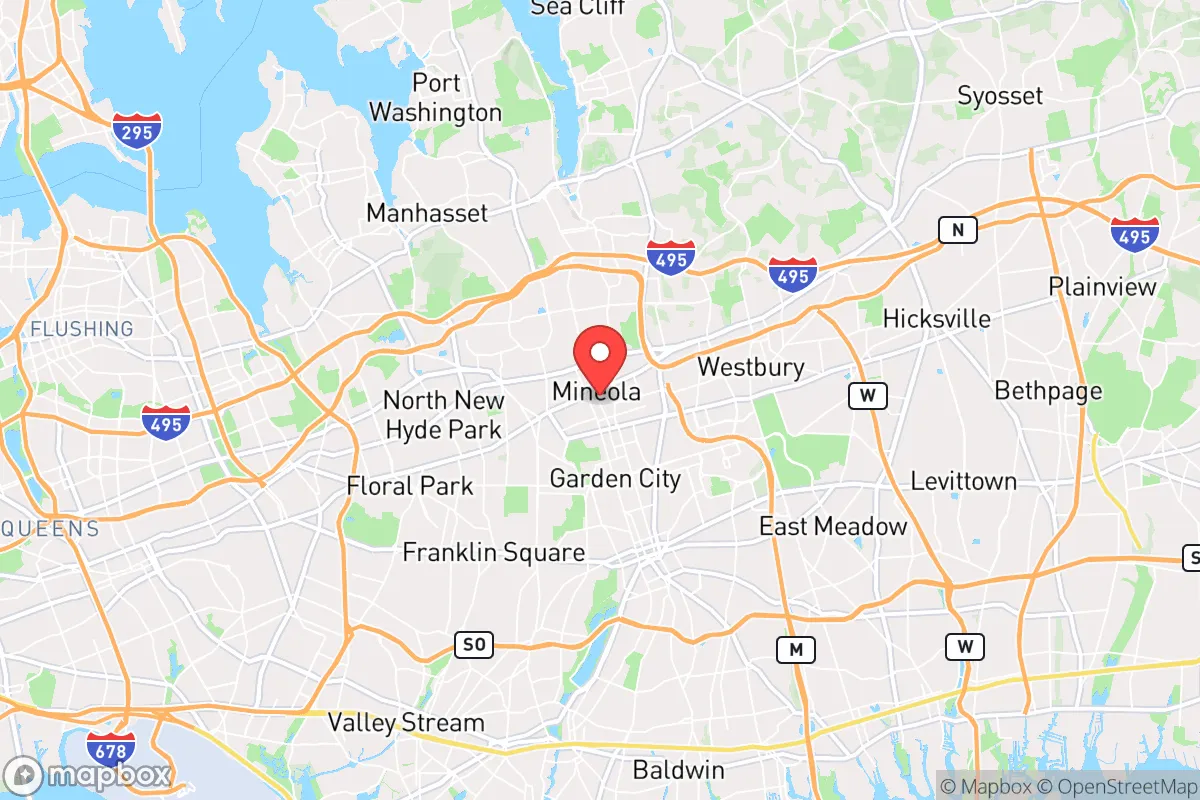
Photo: Wikipedia
Find The Best Places To Live
in Mineola
PRO TIP! You can paste a Zillow or Redfin link to get info on that property.
What It's Like Living in Mineola, NY
Mineola is the kind of place where you’ll see a guy in a suit grabbing a bacon-egg-and-cheese at a bagel shop before hopping the LIRR to Penn Station, and ten minutes later, the same guy is coaching his kid’s soccer game at Memorial Park on a Saturday morning. It’s a dense, walkable village that feels like a small town but sits smack in the middle of Nassau County’s commercial and transit hub. If you’re looking for a place where you can actually walk to the train, the grocery store, and a decent Italian dinner without getting in a car, Mineola delivers — but that convenience comes with a price tag and a pace that isn’t for everyone.
The Daily Rhythm: Walkable, Commuter-First, and Surprisingly Quiet at Night
For a village of about 21,000 people, Mineola punches above its weight in terms of what you can do on foot. The downtown core along Mineola Boulevard and Jericho Turnpike is compact: you’ve got the LIRR station at the center, a few solid delis (Mineola Deli is a local institution), a diner that’s open late, and a handful of bars like Blackthorn Restaurant & Pub and Mineola’s own Croxley’s Ale House that fill up after 5 p.m. with commuters unwinding. The median age here is 41.6, and it shows — the crowd leans toward 30s and 40s professionals, many of them raising kids. On a weekday evening, the streets are calm by 9 p.m. except for the train station crowd. Weekends, you’ll see families pushing strollers to the farmers market at the train station plaza (Sundays, May through November) or grabbing takeout from Kashi Japanese or La Pizzeria.
The average commute is about 32 minutes, which is actually on the shorter side for Long Island. That’s because Mineola is a major LIRR hub — you can be at Penn Station in 35 minutes express, and the station also serves the Oyster Bay, Port Jefferson, and Ronkonkoma branches. If you drive, the Northern State Parkway and Jericho Turnpike are right there, but so is the traffic. Locals will tell you that Mineola’s biggest practical frustration is the congestion on Jericho Turnpike during rush hour — it’s a main artery, and it moves like molasses. The village is also home to the Nassau County government complex, which brings in a steady flow of workers and court visitors, adding to the daytime bustle.
Who Fits In: Professionals, Families, and People Who Value Convenience Over Space
Mineola isn’t a place for someone who wants a big yard and total quiet. The median home value is $624,300, and the cost of living index sits at 206 — more than double the national average. That buys you a modest three-bedroom colonial or a postwar ranch on a 40x100 lot, not a McMansion. The median household income of $138,385 reflects the fact that most residents are dual-income professionals: lawyers, healthcare workers (the area is near NYU Winthrop Hospital and Nassau University Medical Center), and finance types who work in Manhattan. About 55% of adults hold a bachelor’s degree or higher, so the vibe is educated and career-focused. If you’re a single person in your 20s, you might feel a little out of place — the social scene is more “married with kids” than “bar-hopping with friends.” But if you’re a couple or a family who wants a short commute, good schools, and a walkable downtown, Mineola fits like a glove.
Sports, Parks, and the Weekend Playbook
High school sports are a genuine community touchstone here. Mineola High School’s football and lacrosse teams draw solid crowds on Friday nights, and the rivalry with nearby Herricks and New Hyde Park is real. The school district is a major reason families move here — it’s well-regarded, with a strong special education program and a focus on college prep. For outdoor space, Memorial Park is the village’s green heart: it has baseball fields, tennis courts, a playground, and a pool that’s packed in summer. Wilson Park is smaller but has a nice walking path. If you want bigger nature, Eisenhower Park is a 10-minute drive west — it has golf, a driving range, a lake, and the annual Long Island Greek Festival and Italian Festival that draw thousands. For entertainment, the Mineola Theatre (now a banquet hall) is gone, but the Cinema Arts Centre in nearby Huntington is a 20-minute drive for indie films. The Mineola Street Fair in September shuts down the boulevard for vendors, rides, and live music — it’s the one day a year the whole village seems to be out.
The Honest Trade-Offs: What Residents Love and What Grinds Their Gears
- Pros: The walkability is genuine — you can live without a car for errands if you’re near the station. The LIRR access is among the best on Long Island. The schools are solid and the village services (trash pickup, snow removal, parks) are well-funded. The diversity of restaurants — from Portuguese to Salvadoran to Italian — is better than you’d expect for a village this size.
- Cons: The violent crime rate is 363.5 per 100,000, which is higher than the national average of about 380 — but it’s concentrated in a few blocks near the train station and the county complex, not the residential streets. Property crime (car break-ins, package theft) is a more common annoyance. Traffic on Jericho Turnpike is a daily grind. And the cost of living means you’re paying a premium for a relatively small home — if you want space, you’ll get more for your money in Hicksville or Levittown.
One cultural quirk: Mineola has a strong Portuguese community, and you’ll notice it in the bakeries (try Padaria Portugal for pastéis de nata) and the annual Portuguese Feast in June. The village also has a slightly conservative tilt compared to Nassau County as a whole — local elections often turn on taxes and development, not social issues. If you’re looking for a place where you can walk to the train, grab a slice of pizza, and know your neighbors by name, Mineola is that rare Long Island village that actually delivers. Just be ready to pay for the privilege and to share the road with everyone else trying to do the same thing.

Similar towns to Mineola
* Values derived from national, state, county, city and local statistics and may differ in a specific area. Last updated: 2026-09-21T01:08:41.000Z
Narrative content on this page is AI-generated and may contain mistakes. Verify any details that matter before acting on them.
ReloMaps may earn a commission from affiliate links at no extra cost to you.

