Photo: Wikipedia
Find The Best Places To Live
in Hudson
PRO TIP! You can paste a Zillow or Redfin link to get info on that property.
What It's Like Living in Hudson, NY
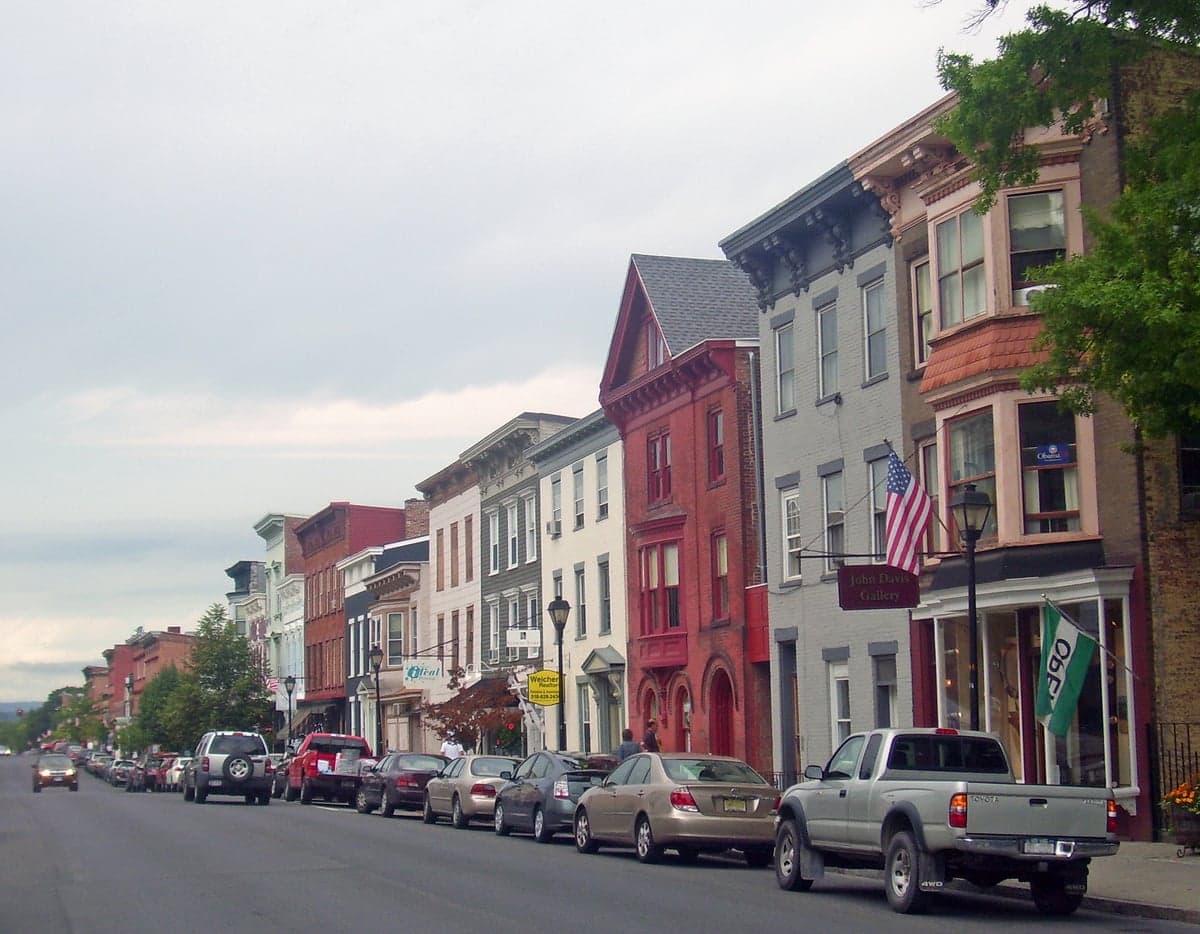
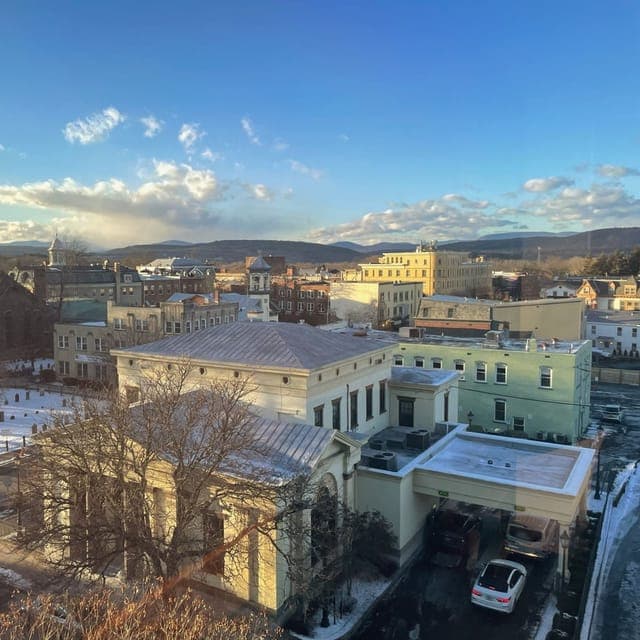
Hudson, New York, is a small city of about 5,900 people that feels like a carefully curated blend of upstate grit and Brooklyn transplant energy. It’s not a suburb, not a resort town, and not a quiet farming community — it’s a historic port city on the Hudson River that reinvented itself through antiques, art galleries, and weekenders from the city, creating a place where a retired electrician and a Manhattan creative director might end up at the same bar on Warren Street. The vibe is less “small-town charm” and more “small-town with an edge,” and that’s exactly what draws people here.
The Daily Rhythm: Antiques, Art, and the Commute Reality
A typical Saturday in Hudson means walking Warren Street, the main drag lined with century-old brick buildings housing high-end antiques shops, indie bookstores, and restaurants that would feel at home in Williamsburg. Locals grab coffee at Verdigris Tea & Chocolate or a pastry at Baba Louie’s, then browse the sprawling Hudson Antique Center or the weekend Hudson Farmers Market at the waterfront. Weeknights are quieter — dinner at Fish & Game (a James Beard-recognized spot) or a beer at The Half Moon bar, a no-frills dive that’s been around for decades. The city’s median age is 40.9, and the median household income sits at $55,394, which tells you something: there’s a real divide between the weekenders and the year-round working population. The cost of living index is 114, noticeably above the national average, and the median home value is $324,400 — high for a city this size, driven by second-home buyers and remote workers from New York City, which is about a two-hour train ride south on Amtrak.
The average commute is about 33 minutes, but that number is misleading. Many residents work locally in retail, hospitality, healthcare, or the growing creative sector, but a significant chunk commutes to Albany (45 minutes north) or works remotely. The Hudson Amtrak station is a lifeline for those who split time between here and the city. Traffic is rarely a problem except during peak summer weekends when leaf-peepers and antique hunters flood Warren Street. Winters are real — expect snow, gray skies, and a slower pace from December through March, which is when the city feels most like itself, for better or worse.
Sports, Festivals, and What People Actually Do for Fun
Hudson is not a sports town in the traditional sense. There’s no minor league team, no college stadium, and high school football at Hudson High School draws a modest but loyal crowd of families and alumni. The real energy goes into the arts and seasonal events. The Hudson Hall performance venue hosts concerts, theater, and the annual Hudson Jazz Festival. The Basilica Hudson, a former factory turned arts center, puts on the Hudson Music Festival and a popular summer flea market. The Hudson Riverfront Park is the main outdoor gathering spot — a green space with river views, a playground, and a boat launch. For hiking, Olana State Historic Site (the former home of painter Frederic Church) is just across the river in Greenport, offering trails with sweeping views of the Hudson Valley. The Hudson Athens Lighthouse is a quirky local landmark you can visit by boat. Outdoor life here is real but not rugged — think river walks, not mountain climbs.
Festivals are a big deal. The Hudson Garlic Festival in September draws thousands, and the Winter Walk in December turns Warren Street into a holiday block party with carolers, fire pits, and late-night shopping. The city’s cultural identity is proudly eccentric — there’s a Puppet Festival, a Film Festival, and a general willingness to try something weird. That’s part of the appeal: Hudson doesn’t take itself too seriously, even as it takes its art seriously.
Who Fits In — and Who Doesn’t
Hudson works best for people who value walkability, culture, and a certain amount of creative chaos. The 39% college-educated population skews artistic, progressive, and entrepreneurial. You’ll find a lot of freelancers, writers, chefs, and retirees who moved here specifically because it’s not a cookie-cutter suburb. Families do live here — the Hudson City School District is small and community-oriented, with strong parent involvement — but the school system is not the main draw; people choose Hudson for the lifestyle, not the school rankings. The violent crime rate is 175.6 per 100,000, which is slightly above the national average but concentrated in specific areas; most residents feel safe walking Warren Street at night, but the city has struggled with property crime and opioid-related issues, which locals will talk about openly.
What frustrates longtime residents? The cost of living, for one. The influx of second-home buyers has pushed up home values and property taxes, making it harder for working-class families to stay. The median home value of $324,400 is steep for a city where the median income is $55,394. There’s also a tension between the “old Hudson” — working-class, diverse, blue-collar — and the “new Hudson” — wealthier, whiter, more transient. That friction is real, and it shows up in local politics and zoning debates. What people love? The walkability, the river, the fact that you can buy a vintage armoire and a farm-to-table dinner on the same block, and the sense that Hudson is still figuring itself out. It’s not polished. It’s not perfect. But for the right person, it’s exactly the right amount of strange.

Similar small towns to Hudson
* Values derived from national, state, county, city and local statistics and may differ in a specific area. Last updated: 2026-09-05T03:09:01.000Z
Narrative content on this page is AI-generated and may contain mistakes. Verify any details that matter before acting on them.
ReloMaps may earn a commission from affiliate links at no extra cost to you.

