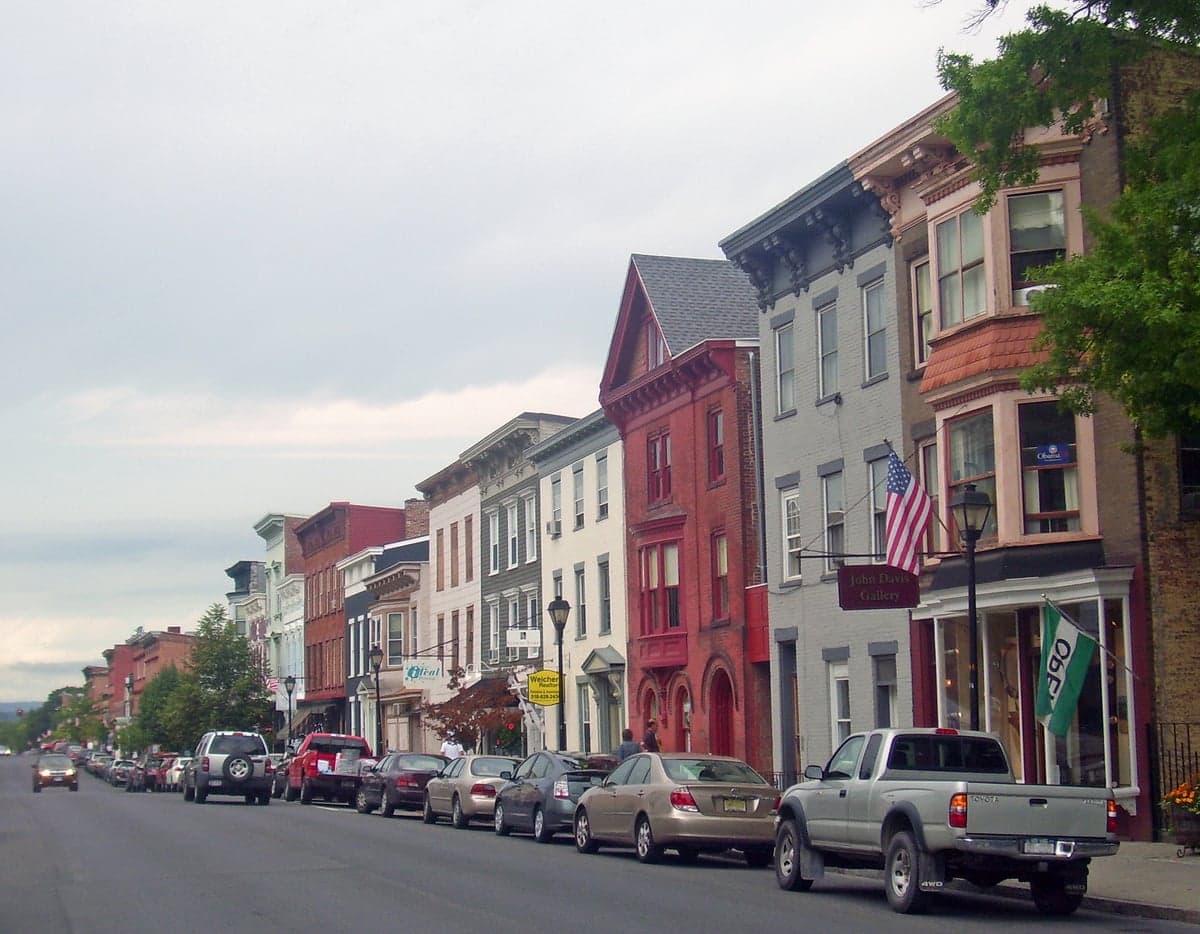
Photo: Wikipedia
Political ClimatePolitical Climate in Hudson, NY
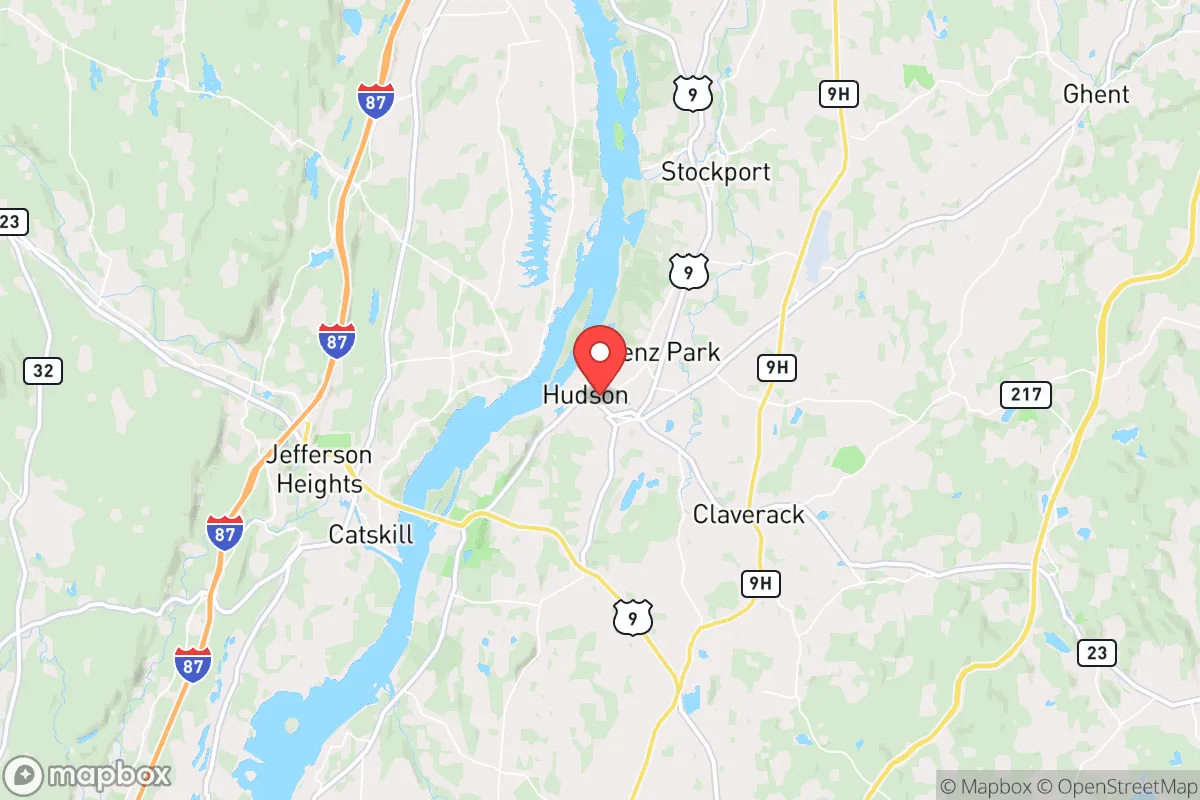
District shown is the primary district for this city’s centroid. Cities may span multiple districts.
Local Political AnalysisPolitical Analysis of Hudson, NY
Hudson, New York, has a political climate that feels more like a small progressive island in a moderately conservative sea. The city itself leans reliably Democratic, with a Cook PVI of D+1, but that number doesn't tell the full story of the sharp divide between the urban core and the surrounding rural Columbia County. In practice, Hudson votes blue by a wide margin in most local and national elections, while the towns just outside the city limits—like Claverack, Ghent, and Kinderhook—tend to swing more conservative, often splitting tickets or leaning red in state and federal races. Over the past decade, the trajectory has been toward a more vocal and organized progressive presence, driven by an influx of artists, remote workers, and second-home buyers from New York City, but the old guard of moderate and conservative landowners still holds significant sway in county-level governance.
How it compares
Compared to New York City, Hudson is both more politically intimate and more visibly divided. In the five boroughs, you can live your whole life in a neighborhood that votes 90% one way and never feel the tension of the other side. In Hudson, the political contrast is in your face every time you drive five minutes outside of town. The city council and mayor's office have been firmly in progressive hands for years, pushing policies like a local plastic bag ban, strong tenant protections, and a police reform task force. Meanwhile, the Columbia County Board of Supervisors, which controls the sheriff's office, road maintenance, and the county budget, has a conservative majority that often pushes back on what they see as Hudson's overreach. That dynamic creates a constant, low-grade friction that you just don't get in a monolithic city like New York, where the political machine is so large that local disagreements rarely feel personal. In Hudson, you know the people on the other side by name, and they live right down the road.
What this means for residents
For liberal residents, Hudson offers a comfortable bubble where your values are reflected in local policy and public discourse. You can shop at the farmers' market, attend city council meetings, and send your kids to a public school that's actively working on equity initiatives, all without feeling like an outsider. The downside is that the county-level resistance can feel frustratingly slow, especially on issues like affordable housing and environmental regulation. For conservative residents, living in Hudson means being in the minority locally but having real influence at the county level. You might feel culturally out of step with the art galleries and farm-to-table restaurants downtown, but your vote carries more weight in a sheriff's race or a county budget vote than it would in a deep-blue city like New York. The practical reality is that both sides have to engage in a level of neighborly negotiation that's rare in larger, more polarized metros. You can't just retreat into an echo chamber; you have to deal with the person across the street who disagrees with you on almost everything.
One of the most telling cultural distinctions is how the two places handle growth and change. New York City absorbs new people and new money with a kind of relentless, impersonal momentum. Hudson, by contrast, has been wrestling with gentrification in a very personal, very public way for the last 15 years. The arrival of high-end boutiques and weekenders from the city has created a palpable tension between "old Hudson" and "new Hudson," a divide that often maps onto political lines. The city's strong rent stabilization laws and community land trust initiatives are direct responses to that pressure, and they're fiercely debated at every town hall. In New York, those same debates happen, but they're abstract and mediated by massive bureaucracies. In Hudson, they happen at the diner, and everyone has an opinion. That's the real difference: the politics here are small enough to feel personal, and that makes them both more intense and more human.

State Political ClimatePolitical Climate in New York
State Political AnalysisPolitical Environment in the State
New York State has been a solidly Democratic stronghold for decades, with Democrats holding every statewide office and a supermajority in the State Assembly, though the State Senate is more narrowly divided. The state’s overall partisan lean is heavily influenced by New York City, which alone accounts for roughly 40% of the state’s vote and delivers margins of 70-80% for Democratic candidates. Over the last 10-20 years, the state has shifted leftward on social and economic policy, driven by the city’s growing progressive activism and the suburbanization of Democratic voters in the downstate region. However, this blue dominance masks a deep urban-rural split that has widened significantly since 2016, with upstate and western New York counties trending Republican as the state’s policy agenda has become more progressive.
Urban vs. rural divide
The political map of New York is a tale of two states. Downstate — New York City, Long Island, and the lower Hudson Valley — is overwhelmingly Democratic. New York City’s five boroughs (Manhattan, Brooklyn, Queens, The Bronx, and Staten Island) are the engine of the state’s Democratic majority, with Staten Island being the only borough that occasionally flips Republican in local races. Westchester County, just north of the city, is reliably blue, while Nassau and Suffolk counties on Long Island have become more competitive but still lean Democratic in statewide elections. In contrast, upstate New York — from the Capital District west to Buffalo and north to the Adirondacks — is largely Republican outside of a few urban centers. Erie County (Buffalo), Monroe County (Rochester), and Onondaga County (Syracuse) are Democratic-leaning due to their cities, but the surrounding rural and exurban areas vote heavily Republican. The Southern Tier, the North Country, and the Finger Lakes region are now reliably red, with counties like Allegany, Wyoming, and Orleans routinely voting 60-70% Republican. The divide has sharpened since 2020, as downstate’s progressive policies on taxes, crime, and education have alienated many upstate voters, while upstate’s cultural conservatism and economic struggles have deepened its GOP loyalty.
Policy environment
New York’s policy environment is shaped by its Democratic supermajority and a tax-and-spend tradition that predates the current progressive era. The state has one of the highest combined state and local tax burdens in the country, with a progressive income tax that tops out at 10.9% for incomes over $25 million, plus high property taxes, especially in the downstate suburbs. The property tax cap, enacted in 2011 and made permanent in 2019, has moderated local tax growth but hasn’t reversed the overall burden. On education, New York spends more per pupil than almost any other state, but the system is highly centralized, with the state’s Board of Regents setting curriculum standards and graduation requirements. The state has also expanded Medicaid under the Affordable Care Act and runs its own health insurance exchange. Election laws are among the most liberal in the nation: no-excuse absentee voting, early voting, automatic voter registration, and same-day registration are all in place. The state also has strict campaign finance laws and a public matching fund system for state-level candidates.
Recent policy direction
Since 2019, when Democrats won full control of state government, New York has enacted a series of progressive laws that have reshaped the state’s policy landscape. On gun control, the state passed the SAFE Act in 2013 and has since added a ban on “ghost guns,” raised the purchasing age to 21, and enacted a concealed carry law that requires a “proper cause” showing — though the Supreme Court’s Bruen decision in 2022 struck down the “proper cause” requirement, leading to a new law that designates “sensitive locations” where guns are banned. On education and parental rights, the state has expanded universal pre-K and increased school funding, but has also faced backlash over its handling of school mask mandates and vaccine requirements during the pandemic. The state’s 2019 Reproductive Health Act codified abortion rights into state law, and a 2022 ballot measure enshrined abortion access in the state constitution. On property rights, the state’s rent stabilization laws have been tightened, and a 2019 law eliminated vacancy decontrol, making it harder for landlords to deregulate apartments. On voting, the state has expanded mail-in voting and early voting, though a 2021 law that would have allowed no-excuse absentee voting was struck down by the courts. On privacy, the state’s SHIELD Act requires businesses to protect personal data, and a 2020 law banned facial recognition in schools. On taxes, the state has raised rates on high earners and corporations, while offering tax credits for low-income families and child care.
Civil unrest & political movements
New York has been a flashpoint for political activism on both sides. The 2020 Black Lives Matter protests in New York City were among the largest in the country, leading to calls to defund the police and the passage of police reform laws, including the repeal of 50-a, which had shielded police disciplinary records. On the right, the upstate region has seen a surge in grassroots conservative activism, particularly around gun rights, school curriculum, and vaccine mandates. The 2021 school board elections in places like Westchester County and Long Island saw conservative slates win seats on platforms opposing critical race theory and mask mandates. The state’s sanctuary policies — which limit cooperation between local law enforcement and federal immigration authorities — have been a source of tension, particularly in upstate communities that have seen an influx of asylum seekers bused from New York City. The 2020 election integrity debate also played out in New York, with the state’s expansion of mail-in voting drawing criticism from Republicans, though no widespread fraud was found. Secession movements, such as the proposal to split New York into two states (downstate and upstate), have gained some traction but remain fringe.
Projection
Over the next 5-10 years, New York’s political trajectory is likely to remain leftward, but with growing friction between the downstate Democratic machine and the upstate Republican resistance. Demographic trends favor the Democrats: New York City continues to attract young, diverse, and college-educated voters, while the upstate population is aging and shrinking. However, the state’s high taxes and cost of living are driving out some middle-class families, particularly from the downstate suburbs, which could shift the balance in some districts. The 2022 redistricting gave Democrats a structural advantage in the U.S. House, but the state’s independent redistricting commission may produce more competitive maps in the future. The biggest wild card is the state’s fiscal health: if a recession hits, the state’s high spending and debt could force tax hikes or service cuts, which could fuel a backlash. For a new resident, the state will likely remain a place where your political experience depends heavily on where you live — a progressive bubble in the city and its close suburbs, and a conservative redoubt in the rural north and west.
For a conservative-leaning relocator, the bottom line is that New York offers a mixed bag. The downstate area is deeply progressive, with high taxes, strict gun laws, and a culture that can feel hostile to traditional values. But upstate and western New York offer a more conservative environment, with lower costs of living, strong gun rights culture, and communities that vote Republican. If you’re moving to New York, your political experience will be defined by your zip code: choose the city or its suburbs if you want progressive policies, or head to the Finger Lakes, the Southern Tier, or the North Country if you want a redder experience. The state’s policy direction is unlikely to change dramatically in the near term, but the urban-rural divide means you can find a community that fits your values — as long as you’re willing to pay the taxes that come with it.
* Values derived from national, state, county, city and local statistics and may differ in a specific area. Last updated: 2026-09-05T03:09:01.000Z
Narrative content on this page is AI-generated and may contain mistakes. Verify any details that matter before acting on them.
ReloMaps may earn a commission from affiliate links at no extra cost to you.

