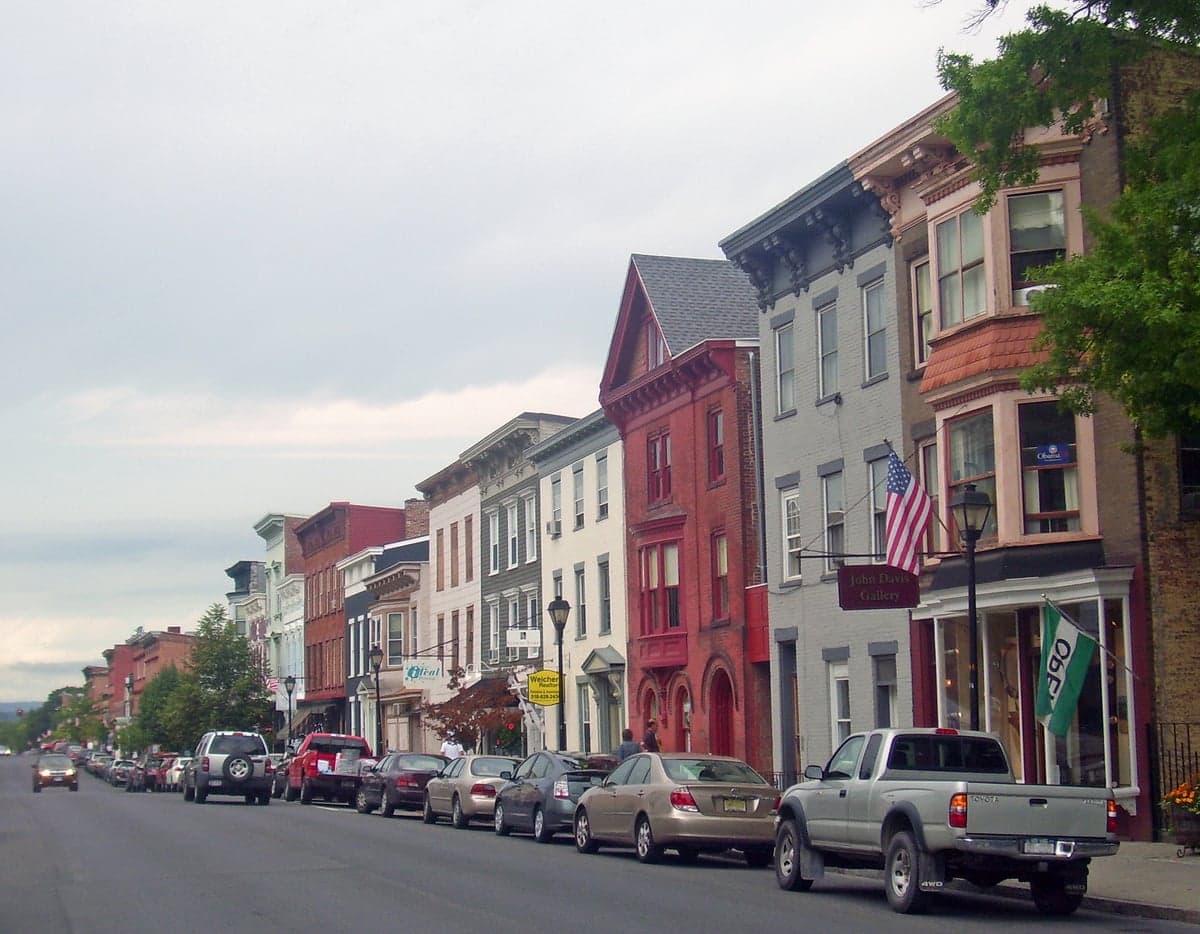
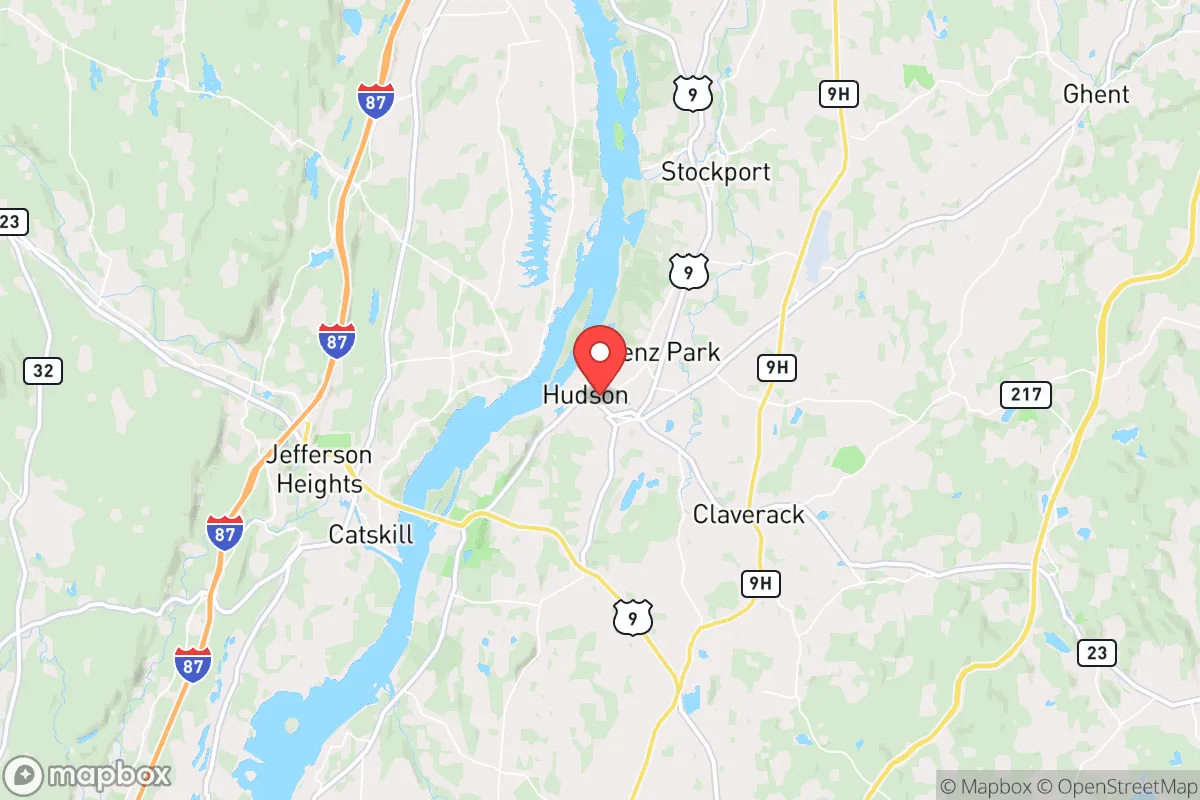
Photo: Wikipedia
Personal Sovereignty in Hudson, NY
Moderate friction. Expect trade-offs in some aspect of personal liberty and independence.
What does Personal Sovereignty tell us?
Personal Sovereignty measures your capacity for self-reliance and independence with minimal government friction. Higher scores mean fewer barriers between you and the way you want to live... but it assumes you have the space you need and good neighbors.
What does this tell us?
Personal Sovereignty measures your capacity for self-reliance and independence with minimal government friction. Higher scores mean fewer barriers between you and the way you want to live... but it assumes you have the space you need and good neighbors.
State Policy
Energy independence: Importer (12% of energy produced in-state)
Personal Liberty
Homesteading

Personal Liberty Analysis
Hudson, New York, presents a complex environment for personal sovereignty, where the city’s progressive local governance sits within a state known for its heavy regulatory and tax burden. For a relocation-minded individual or family prioritizing autonomy, the area offers a mixed picture: a vibrant, walkable community with strong property rights in theory, but constrained by New York State’s high taxes, strict gun laws, and limited off-grid feasibility. The net effect is a low-to-moderate sovereignty environment, best suited for those who value urban amenities and progressive social policies over maximum personal freedom.
Tax burden and regulatory posture in Columbia County
New York State imposes one of the highest combined state and local tax burdens in the nation, and Hudson is no exception. Property taxes in Columbia County average around 2.1% of assessed home value, among the highest in the state, while the state income tax ranges from 4% to 10.9% depending on income bracket. Sales tax in Hudson is 8%, comprising the state’s 4% base plus a 4% county levy. The regulatory environment is heavy-touch: New York’s building codes, environmental review processes (SEQRA), and zoning laws are among the most stringent in the Northeast. For a homeowner or small business, obtaining permits for renovations or new construction can be a months-long process. The city’s own zoning code, updated in 2023, imposes strict design standards in historic districts, limiting exterior modifications. While these rules preserve the city’s character, they reduce the property owner’s freedom to alter their land without bureaucratic approval. For a conservative-leaning reader, the tax and regulatory posture is a significant drag on personal sovereignty, especially compared to states like New Hampshire or Texas.
Self-defense and gun law specifics in New York
New York State has some of the most restrictive gun laws in the country, and Hudson residents must comply fully. The state requires a permit to possess a handgun in the home, issued by the county sheriff after a background check, fingerprinting, and a 16-hour safety course. Since the 2022 Bruen decision, New York’s “proper cause” requirement for concealed carry was struck down, but the state quickly enacted the Concealed Carry Improvement Act (CCIA), which designates “sensitive locations” where firearms are banned — including public parks, bars, and private businesses unless the owner explicitly permits them. Columbia County is generally more permissive than downstate counties, but the legal landscape remains hostile to gun owners. Magazines are limited to 10 rounds, and “assault weapons” (defined broadly) are banned. For a self-defense-minded individual, the process to legally carry a firearm is expensive, time-consuming, and subject to ongoing litigation. The practical result is that most residents do not carry, and home defense is the primary legal option. This is a low-sovereignty environment for Second Amendment advocates.
Self-reliance and homesteading viability in the Hudson Valley
Hudson itself is a dense, historic city with small lots — typically 0.05 to 0.25 acres — making traditional homesteading impractical within city limits. Zoning permits backyard chickens in some residential districts, but livestock, beekeeping, and large gardens are restricted. Off-grid living is effectively impossible: the city requires connection to municipal water and sewer, and building codes mandate grid-tied electrical systems. However, the surrounding towns of Claverack, Ghent, and Livingston offer a different story. Outside the city, lot sizes increase to 1–10 acres, and county zoning is more permissive. Rainwater collection is legal for non-potable uses, and solar panels are allowed with a permit. The state’s Agricultural Districts Law provides tax breaks for active farms, but the property tax burden remains high. For a family seeking self-reliance, the best strategy is to buy land outside Hudson proper, where you can keep livestock, grow food, and install solar without city interference. Even then, New York’s building codes and environmental regulations add cost and complexity to any off-grid project. The area is viable for moderate self-reliance, but not for full independence.
Personal liberties: parental rights, medical autonomy, speech, and property
New York State has strong protections for individual rights in some areas and heavy restrictions in others. Parental rights are relatively robust: parents can homeschool without excessive oversight, and the state does not mandate vaccines for school attendance (though exemptions require a medical or religious reason). Medical autonomy is more constrained: New York has broad vaccine mandates for healthcare workers and school settings, and the state’s public health law gives the health commissioner significant emergency powers. Medical marijuana is legal with a prescription, and recreational cannabis is legal for adults 21+, but home cultivation is limited to three mature plants per person. Free speech is protected under the First Amendment, but New York’s hate speech laws and social media regulations are more restrictive than in many states. Property rights are strong in theory, but the state’s eminent domain authority and environmental regulations (e.g., the Freshwater Wetlands Act) can limit land use. For a conservative-leaning reader, the balance is mixed: parental rights and cannabis freedom are positives, but medical mandates and regulatory overreach are negatives. The overall personal liberties environment is moderate, with significant state-level constraints.
Compared to other areas in the Northeast, Hudson offers a moderate level of personal sovereignty — better than New York City or Westchester, but far below rural New Hampshire or Pennsylvania. The city’s progressive local politics and New York’s high taxes and strict gun laws create a heavy-touch environment for those seeking maximum autonomy. However, the surrounding Columbia County countryside provides more room for self-reliance, and the state’s protections for parental rights and cannabis use offer some freedoms. For a relocation-minded conservative, Hudson is best approached as a compromise: a culturally rich, walkable city with limited personal sovereignty, best suited for those who prioritize community and convenience over independence. If full autonomy is the goal, look to the Adirondacks or the Midwest.

* Values derived from national, state, county, city and local statistics and may differ in a specific area. Last updated: 2026-09-05T03:09:01.000Z
Narrative content on this page is AI-generated and may contain mistakes. Verify any details that matter before acting on them.
ReloMaps may earn a commission from affiliate links at no extra cost to you.

