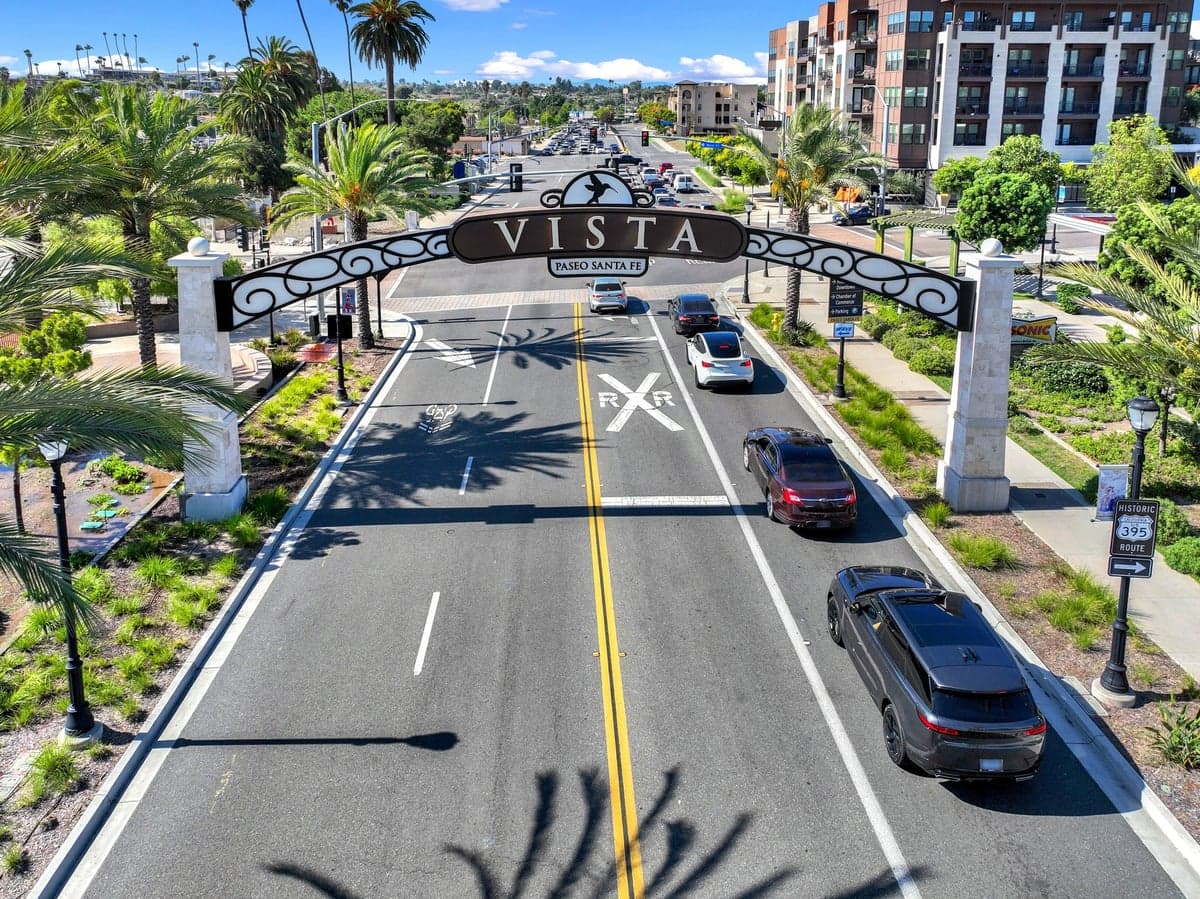
Photo: Wikipedia
Political ClimatePolitical Climate in Vista, CA
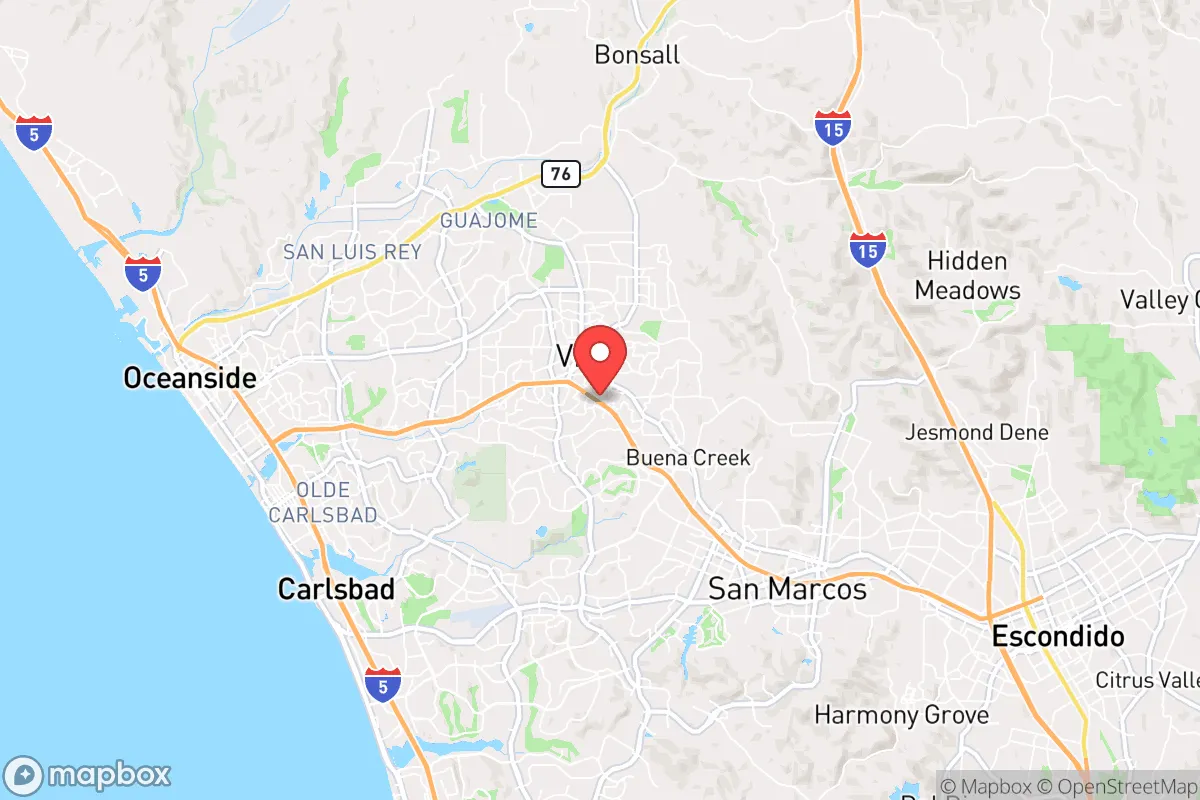
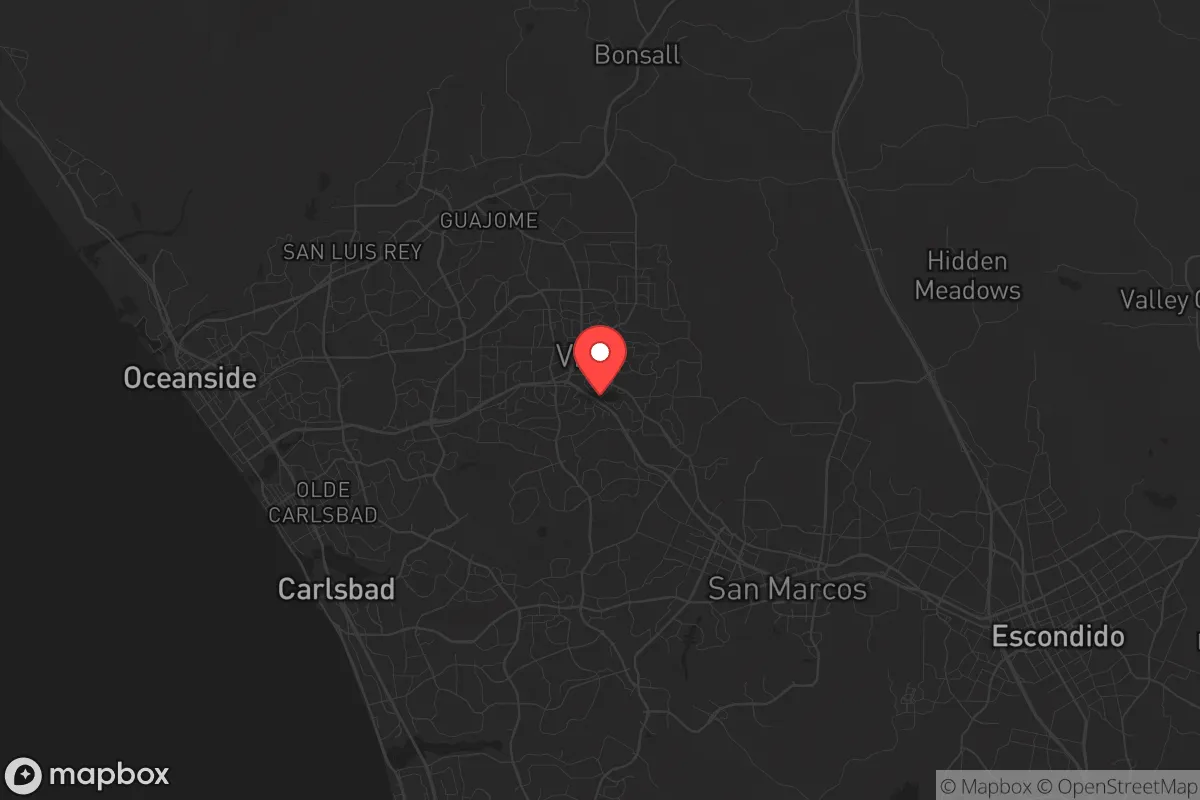
District shown is the primary district for this city’s centroid. Cities may span multiple districts.
Local Political AnalysisPolitical Analysis of Vista, CA
Vista, California, leans solidly Republican, with a Cook Partisan Voting Index (PVI) of R+7, making it one of the more conservative pockets in deep-blue San Diego County. This isn’t a recent shift—the area has long been a GOP stronghold, but the margin has tightened slightly over the last decade as the county’s overall Democratic trend has crept north from the coast. In the 2024 presidential election, Vista’s precincts voted roughly 54% Republican, a few points softer than the 2016 split, reflecting a slow but steady drift toward purple territory. The city’s politics are shaped by a mix of military veterans, suburban families, and small-business owners who prioritize lower taxes and public safety, though younger residents and new arrivals from coastal cities are gradually nudging the needle left.
How it compares
Vista’s R+7 PVI stands in stark contrast to California’s statewide lean, which is roughly D+13—a 20-point gap that makes Vista one of the most Republican-leaning cities in the county. Neighboring Oceanside, just west, is more competitive (roughly D+1), while Carlsbad to the south leans slightly Democratic (D+2). Head east into Escondido, and you’ll find a similar R+6 vibe, but drive 20 minutes north to Fallbrook, and the GOP edge widens to R+10. The real contrast is with coastal San Diego: downtown and La Jolla are D+20 or more, meaning a Vista resident’s political experience is almost the inverse of a San Diegan’s. Statewide, California’s Cook PVI isn’t officially calculated for the whole state, but its consistent Democratic dominance in presidential races (winning by 20+ points since 2008) means Vista’s voters are effectively a minority voice in state politics, even as they dominate local city council and school board races.
What this means for residents
For conservatives, Vista offers a rare sense of political home in California. Local elections are reliably GOP, with the city council currently holding a 4-1 Republican majority, and the Vista Unified School Board often split 3-2 conservative. This means policies like lower business license fees, a focus on law enforcement funding, and resistance to state housing mandates are common. For liberals, the experience is more of a daily reality check—you’ll see more Trump signs than Harris signs in yards, and local Democratic clubs are small but active, often feeling like an island. That said, the political divide isn’t hostile; most residents describe it as a “live and let live” atmosphere, with the biggest friction points being growth and development rather than culture wars. The city’s large Latino population (roughly 40%) leans moderately Democratic but often votes more conservatively on economic issues, creating a nuanced middle ground that keeps the overall tone pragmatic rather than ideological.
Culturally, Vista stands out for its strong sense of local identity—the annual Vista Strawberry Festival and the downtown “Vista Village” feel more small-town than suburban. Policy-wise, the city has been slower than coastal neighbors to adopt strict rent control or sanctuary city ordinances, and it’s more aggressive on code enforcement for short-term rentals. The biggest practical difference for residents is the tax burden: Vista’s sales tax is 8.25%, lower than San Diego’s 8.75%, and property tax rates are slightly below the county average due to older Prop 13 bases. Looking ahead, the political trajectory is a slow drift leftward, driven by in-migration from higher-cost coastal areas, but the R+7 lean is likely to hold for at least another decade—Vista’s housing stock is mostly single-family homes, which tends to anchor conservative voting patterns. For anyone moving here, the key takeaway is that you’ll find a politically engaged community where your vote matters more locally than it does statewide, and where the biggest debates are about traffic and water rates, not national headlines.

State Political ClimatePolitical Climate in California
State Political AnalysisPolitical Environment in the State
California is a deeply blue state, with Democrats holding every statewide office and supermajorities in both legislative chambers, but that monolithic label hides a fractured reality. The state’s overall partisan lean is roughly D+23 in presidential elections, a margin that has widened from D+10 in 2000, driven almost entirely by the explosive growth of the coastal metros. For a conservative relocator, the practical takeaway is that you’ll be living under one-party rule at the state level, but your day-to-day experience can vary wildly depending on whether you land in downtown Los Angeles or the high desert of Kern County.
Urban vs. rural divide
The political map of California is a tale of two nations. The entire coast from San Diego up through Los Angeles, the Bay Area, and into Sacramento is solidly Democratic, with precincts in San Francisco and West Hollywood routinely hitting 85-90% for the Democratic presidential candidate. These metros generate the state’s massive tax base and drive its policy agenda. In contrast, the Central Valley, the Sierra foothills, and the far north are deeply Republican. Bakersfield in Kern County voted +27 for Trump in 2024, while neighboring Tulare County went +20. The Inland Empire is a true battleground: San Bernardino County flipped from Obama to Trump and back to Biden, and in 2024 it went for Trump by a razor-thin margin. Orange County, once a GOP stronghold, has shifted blue in presidential years but still elects Republican House members in its northern and coastal districts. The most striking example of suburban divergence is Simi Valley in Ventura County, which remains a reliably Republican enclave surrounded by blue territory, while Palm Springs in Riverside County is a liberal oasis in a purple desert region.
Policy environment
California’s policy environment is defined by high taxes, heavy regulation, and expansive government services. The state has a progressive income tax with a top marginal rate of 13.3% on income over $1 million, and a state sales tax that can exceed 10% in some cities. Property taxes are capped at 1% of assessed value plus inflation under Proposition 13, but recent ballot measures have chipped away at commercial property protections. The regulatory posture is aggressive: California has its own environmental agency (CalEPA) that sets emissions standards stricter than federal ones, and the California Air Resources Board (CARB) effectively dictates auto emissions policy for the entire U.S. market. On education, the state spends roughly $23,000 per pupil, but outcomes are middling, with only about half of students meeting state standards in math and English. Healthcare is heavily regulated, with the state running its own insurance exchange (Covered California) and expanding Medi-Cal to cover all low-income adults regardless of immigration status. Election laws are among the most liberal in the nation: universal vote-by-mail, same-day registration, and no voter ID requirement at the polls.
Recent policy direction
The last five years have seen California accelerate its progressive agenda across nearly every dimension a relocator might care about. On gun rights, the state passed SB 2 in 2023, which effectively bans carrying a firearm in most public places, and AB 1598, which imposes strict liability on gun manufacturers. These laws are being challenged in court but remain in effect. On parental and education rights, the state passed AB 1078 in 2023, which prohibits school boards from banning books or curricula that discuss race, gender, or sexuality, and AB 1955 in 2024, which bars schools from requiring parental notification when a child changes their gender identity. On speech, California has enacted the nation’s strongest anti-SLAPP laws to protect against frivolous lawsuits, but also passed AB 587 in 2023, which requires social media platforms to disclose their content moderation policies—a move critics call a backdoor to government speech regulation. On privacy, the California Privacy Rights Act (CPRA) of 2020 gives residents broad control over their personal data, including the right to delete it and opt out of its sale. On medical and bodily autonomy, the state has codified abortion rights into law and passed SB 57 in 2022 to create safe injection sites for drug users. On property rights, the state passed SB 9 in 2021, which allows homeowners to split their lots and build duplexes, effectively ending single-family zoning in many areas. On taxation, voters rejected Proposition 15 in 2020, which would have raised commercial property taxes, but the legislature continues to explore wealth taxes on high-net-worth individuals. On voting, the state expanded ballot access with universal mail-in ballots and automatic voter registration at the DMV.
Civil unrest & political movements
California has been a flashpoint for political movements on both sides. The 2020 George Floyd protests in Los Angeles and Oakland were among the largest and most destructive in the nation, with looting and arson causing over $1 billion in damages. The state’s sanctuary law, SB 54, limits local law enforcement cooperation with federal immigration authorities, and the state has sued the Trump administration multiple times over immigration policy. On the right, the “Recall Gavin Newsom” movement in 2021 gathered over 1.6 million signatures and came within 4 points of ousting the governor, a sign of deep dissatisfaction even in a blue state. The state has seen a rise in secessionist rhetoric, with the “Calexit” movement pushing for independence, though it has never gained serious traction. Election integrity has been a persistent controversy: the state’s universal vote-by-mail system, while popular, has led to allegations of ballot harvesting and voter roll inaccuracies, though no widespread fraud has been proven. A new resident would notice the visible homelessness crisis in cities like San Francisco and Los Angeles, which has become a political flashpoint, with voters in 2024 passing Proposition 1 to fund mental health treatment and housing for the homeless.
Projection
Over the next 5-10 years, California’s political trajectory is likely to remain blue, but the intensity of that blue may moderate. The state is losing population for the first time in its history, with net domestic out-migration of roughly 300,000 people per year, many of them middle-class families and conservatives moving to Texas, Arizona, and Idaho. The people replacing them are younger, more diverse, and more liberal, which will likely keep the state’s partisan lean intact. However, the housing crisis is forcing the legislature to embrace some market-oriented reforms, like SB 9 and SB 10, which allow more density in single-family neighborhoods. The state’s budget deficit, which hit $68 billion in 2024, will force tough choices on taxes and spending, potentially moderating the pace of new programs. A conservative moving in now should expect to live in a state where the Democratic supermajority remains in place, but where local control in red counties like Kern, Tulare, and Shasta will continue to provide a buffer against the most progressive policies.
For a new resident, the bottom line is that California offers a stark choice: you can live in a blue city with all the amenities and costs that entails, or you can live in a red county where your local government reflects your values but you still pay state taxes that fund policies you oppose. The state’s political climate is not monolithic, and your experience will depend heavily on which zip code you choose. If you’re a conservative looking for a place where your vote matters locally, consider Bakersfield, Simi Valley, or Redding. If you’re a liberal, San Francisco, Los Angeles, or Berkeley will feel like home. Either way, you’ll be paying some of the highest taxes in the nation and living under one of the most regulated state governments, but you’ll also have access to the world’s fifth-largest economy and some of the most diverse natural landscapes on the planet.
* Values derived from national, state, county, city and local statistics and may differ in a specific area. Last updated: 2026-10-05T23:57:58.000Z
Narrative content on this page is AI-generated and may contain mistakes. Verify any details that matter before acting on them.
ReloMaps may earn a commission from affiliate links at no extra cost to you.

