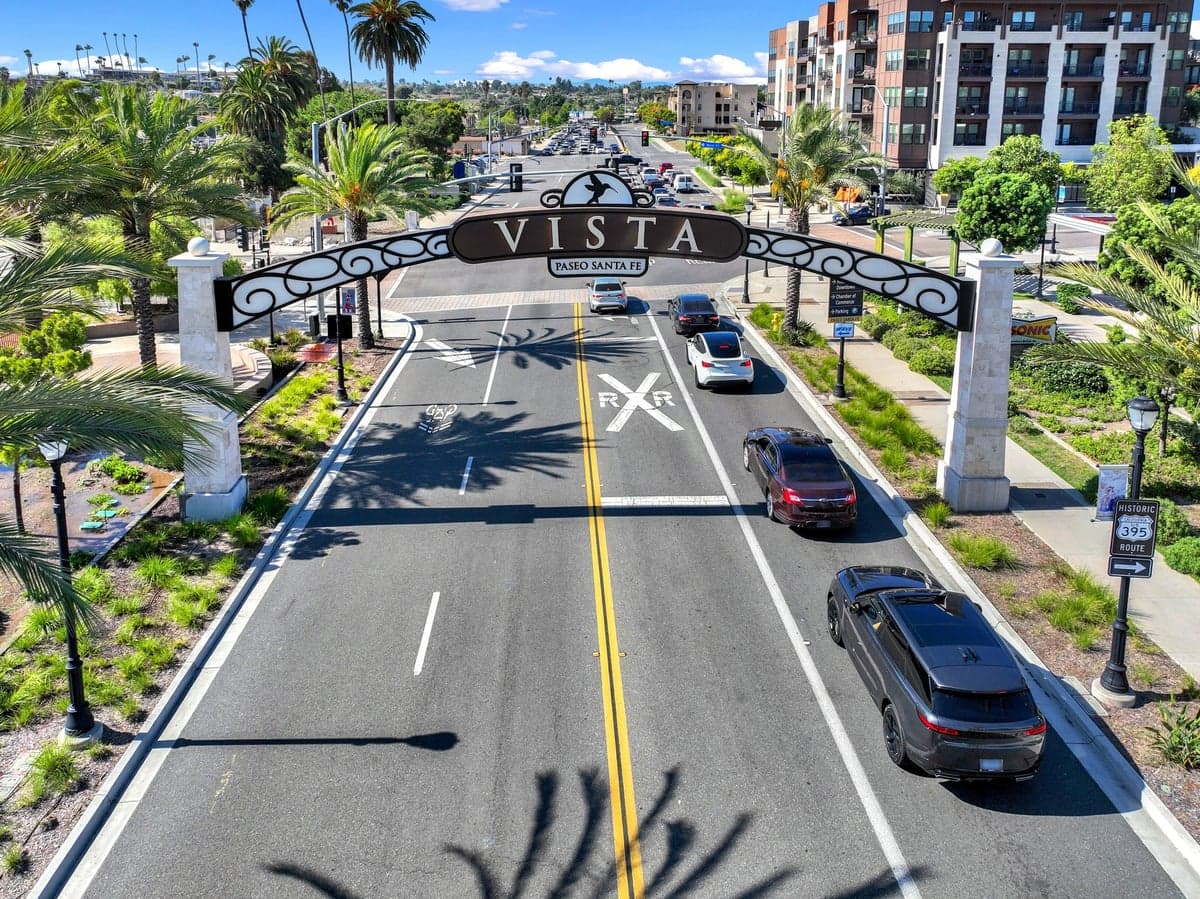
Photo: Wikipedia
Strategic Assessment of Vista, CA
Multiple tactical vulnerabilities. Population density, target proximity, or disaster risk are likely compounding. A retreat property and exit planning is required.
What does the Strategic Assessment tell us?
Our Strategic Assessment grades tactical survivability of an area. Major population centers, military targets, fallout zones, natural disasters, and border exposure all drive risk — lower exposure means a more defensible position in a crisis.
This is heavily inspired by Joel Skousen's Strategic Relocation book. Highly recommended you checkout the book ($)What does this tell us?
Our Strategic Assessment grades tactical survivability of an area. Major population centers, military targets, fallout zones, natural disasters, and border exposure all drive risk — lower exposure means a more defensible position in a crisis.
This is heavily inspired by Joel Skousen's Strategic Relocation book. Highly recommended you checkout the book ($)Strategic Pillars

Key Distances
Regional Safe Places
Below is our recommended "safe zones" in California and the surrounding area based on our strategic heuristics. For most people, it's unrealistic to live in a “safe zone” full-time due to work, family or other personal reasons. They tend to be more rural. However, many of these areas are perfect for second homes and retreat properties that double as a vacation home or even a short-term rental.

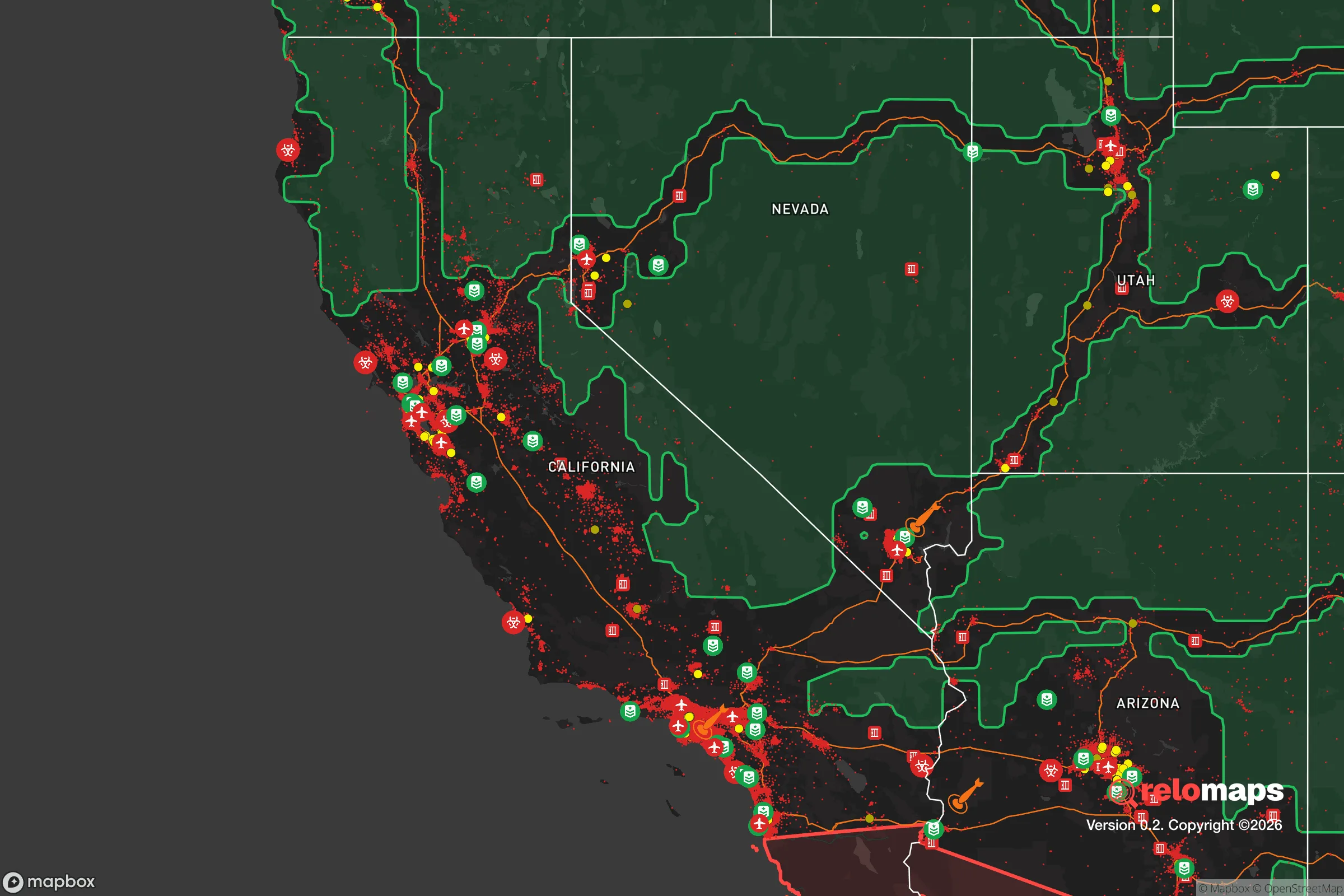


Important Note: For informational purposes only. This does not mean nothing bad ever happens in the green zones. Please use common sense. This is based on public data and modeled with AI. We tried to take a conservative approach but mistakes happen. We update this regularly as new information becomes available.
Solar Generator Recommendations
Backup power matters more here than in safer locations. We've picked three solar generators across budgets and capacity tiers — start with the budget unit if you only need a few essentials, or step up if you want to run a fridge and HVAC for days at a time.

Jackery Portable Power Station Explorer 300
Budget OptionPower on the Go: Weighing only 11 lbs, it's convenient to set up and store with book-sized foldable solar panels

BLUETTI Portable Power Station AC180
Designed for both indoor and outdoor scenarios, AC180 is highly capable as it has a robost capacity and continuous output power.

EF ECOFLOW DELTA Pro Ultra Power Station
Upgraded PickEcoFlow DELTA Pro Ultra is a whole-home energy system designed to grow with your family. Integrated with the Smart Home Panel 2, it scales to meet your evolving energy needs — keeping your home powered, intelligent, and secure through every stage of life.
We earn a commission, at no additional cost to you.
Strategic Assessment Analysis
Vista, California, offers a mixed strategic picture for the relocation-minded reader focused on resilience and self-sufficiency. Its position in northern San Diego County provides a buffer from the immediate urban density of San Diego proper while still being close enough to major infrastructure to be a concern in a crisis. The area's real strength lies in its inland climate and topography, which reduce some natural disaster risks, but its proximity to high-value military and economic targets in the region introduces vulnerabilities that a serious planner cannot ignore.
Geographic position and natural advantages for long-term stability
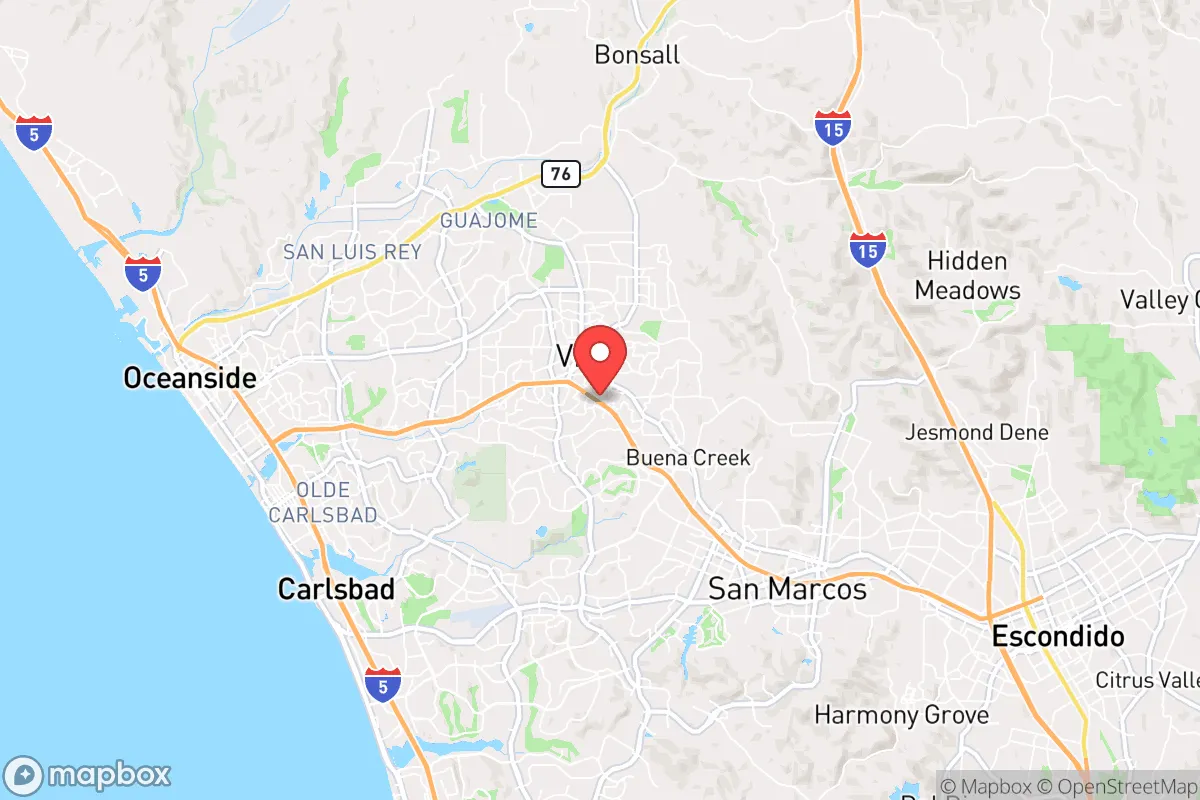
Vista sits roughly seven miles from the Pacific coast, placing it in a semi-arid inland valley that avoids the worst of coastal fog and tsunami risk while still benefiting from marine influence that moderates extreme temperatures. The elevation ranges from about 300 to 600 feet, which keeps it above the immediate floodplains of the San Luis Rey River but still low enough to avoid the severe wildfire behavior seen in the higher chaparral zones of nearby Fallbrook or Escondido. The area's Mediterranean climate means mild winters and dry summers, which is favorable for extended outdoor living and low-tech food production like home gardening and small-scale livestock. The local geology is relatively stable, with no major fault lines running directly through Vista itself—the Rose Canyon and Elsinore faults are distant enough that seismic risk is moderate rather than severe. Water supply is a legitimate concern, as Vista relies on imported water from the Colorado River and State Water Project, but the area's position in the region means it is not the first to lose pressure in a drought scenario. The surrounding agricultural land in North County, including avocado and citrus groves, provides a local food buffer that many suburban areas lack entirely.
Risks, exposures, and proximity to fallout-relevant landmarks
The most significant vulnerability for Vista is its proximity to high-value military and infrastructure targets in the San Diego region. Camp Pendleton Marine Corps Base is roughly 15 miles west, and Naval Base San Diego and Naval Air Station North Island are about 30 miles south. In a conflict scenario involving strategic strikes, these are primary targets. Vista's location places it within the fallout plume zone for a ground burst at Pendleton, depending on wind direction, and within the blast overpressure zone for a large-yield airburst over downtown San Diego. The area is also within 20 miles of the San Onofre Nuclear Generating Station (now decommissioned but still containing spent fuel), which presents a radiological hazard if the dry cask storage were compromised by earthquake or sabotage. Wildfire risk is moderate but real—the 2007 Witch Creek Fire came within a few miles of Vista's northern edge, and the 2014 Cocos Fire burned into San Marcos just south. The region's Santa Ana wind events can turn any ignition into a fast-moving threat, and evacuation routes out of Vista are limited: the main arteries are Highway 78 and Sycamore Avenue, both of which can gridlock quickly. Crime rates in Vista are slightly above the national average, with property crime being the primary concern, but violent crime is concentrated in specific pockets and is not a general threat to a prepared resident.
Practical resilience for a relocator: food, water, energy, and defensibility
For someone serious about self-sufficiency, Vista offers a workable but not ideal environment. Water is the single biggest constraint. The area averages about 13 inches of rain per year, which is insufficient for dry farming. Rainwater catchment is feasible but requires significant tank storage to get through the dry months, and well water is limited by the region's groundwater basin management. The Vista Irrigation District provides municipal water, but a grid-down scenario would cut supply quickly. A relocator should plan for at least two weeks of stored water per person, with a long-term strategy involving a well or a rainwater system with at least 5,000 gallons of storage. Food production is more promising. The growing season is long—essentially year-round for cool-season crops—and the soil in the valley areas is decent loam. Backyard chickens, rabbits, and even a small goat are legal in most residential zones, though HOAs may restrict livestock. The local farmers' markets and the proximity to the Fallbrook and Valley Center agricultural areas mean that bulk food purchasing from local growers is practical. Energy resilience is mixed. Solar potential is excellent, with over 260 sunny days per year, but net metering policies in California have become less favorable, and the grid itself is vulnerable to Public Safety Power Shutoffs during high fire risk. A battery backup system is almost mandatory for anyone wanting true off-grid capability. Defensibility is a weak point. Vista is a suburban grid of tract homes and cul-de-sacs, not a rural homestead with natural chokepoints. The terrain is gentle, and the area is surrounded by other developed communities, making it hard to secure a perimeter. However, the community is relatively tight-knit, and there are active preparedness groups and CERT (Community Emergency Response Team) programs in the area that a relocator can plug into for mutual support.
The overall strategic picture for Vista is one of moderate resilience with clear trade-offs. It is not a remote survival retreat, nor is it a high-risk urban core. For a relocator who wants a balance of access to coastal resources, a long growing season, and a community that is not entirely disconnected from modern infrastructure, Vista is a defensible choice—provided they take water storage and wildfire evacuation planning seriously. The proximity to military targets is a real but low-probability risk that most residents ignore, but a serious planner should factor it into their decision. If you are looking for a place that allows you to build a self-sufficient lifestyle while still being within an hour of San Diego's medical and economic resources, Vista deserves a spot on your short list. Just do not expect it to be a bug-out location; it is a place to live prepared, not to hide from the world.

* Values derived from national, state, county, city and local statistics and may differ in a specific area. Last updated: 2026-10-05T23:57:58.000Z
Narrative content on this page is AI-generated and may contain mistakes. Verify any details that matter before acting on them.
ReloMaps may earn a commission from affiliate links at no extra cost to you.

