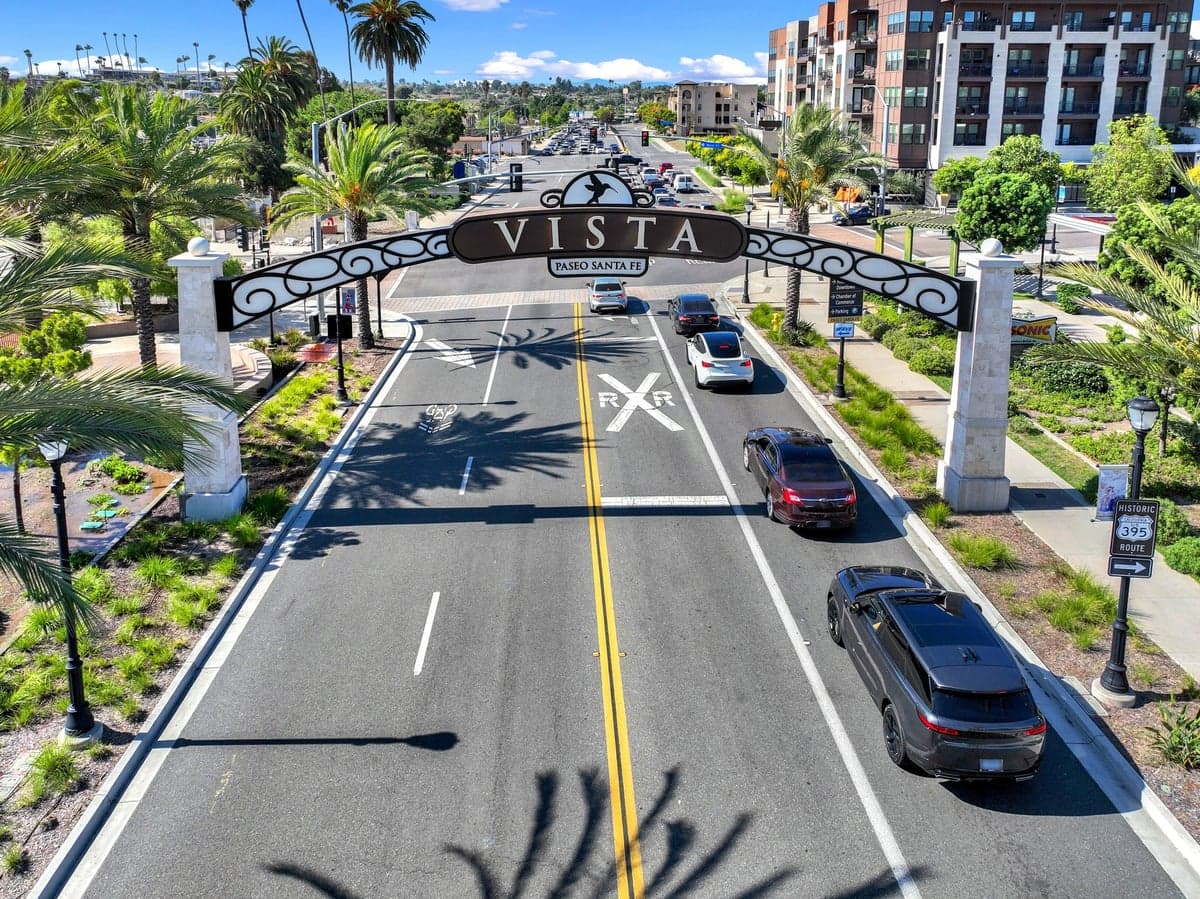
Photo: Wikipedia
Quality of Life in Vista, CA
A high quality of life with strong walkability, manageable living costs, healthy neighborhood signals, and solid amenity access.
What does Quality of Life tell us?
Quality of Life blends cost of living, nearby amenities, socioeconomic signals, and neighborhood character. City-level scores represent the whole municipality; individual neighborhoods can differ.
What does this tell us?
Quality of Life blends cost of living, nearby amenities, socioeconomic signals, and neighborhood character. City-level scores represent the whole municipality; individual neighborhoods can differ.
Cost of Living
107% above national average
The Real Cost of Living in Vista, CA for 2026
| Tier | Individual | Family (4) |
|---|---|---|
| Survival | $34k | $64k |
| Comfortable | $109k | $160k |
| Luxury | $160k+ | $248k+ |
| Elite (Top 5%) | $188k+ | $292k+ |
57%
The Area Signal
A metric tracking the socioeconomic signals of the area.
Hobbies
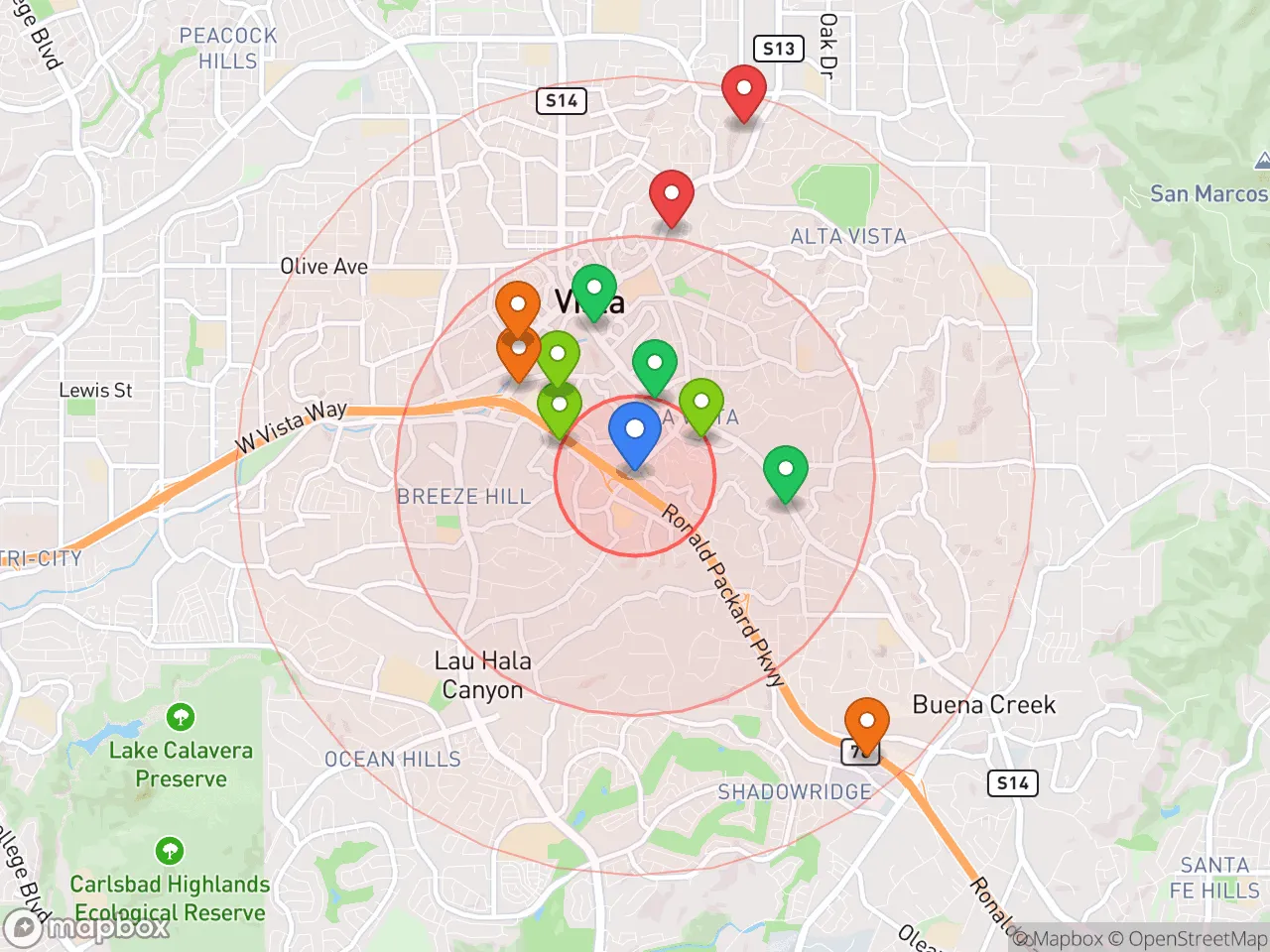
Explore the areaGroceries
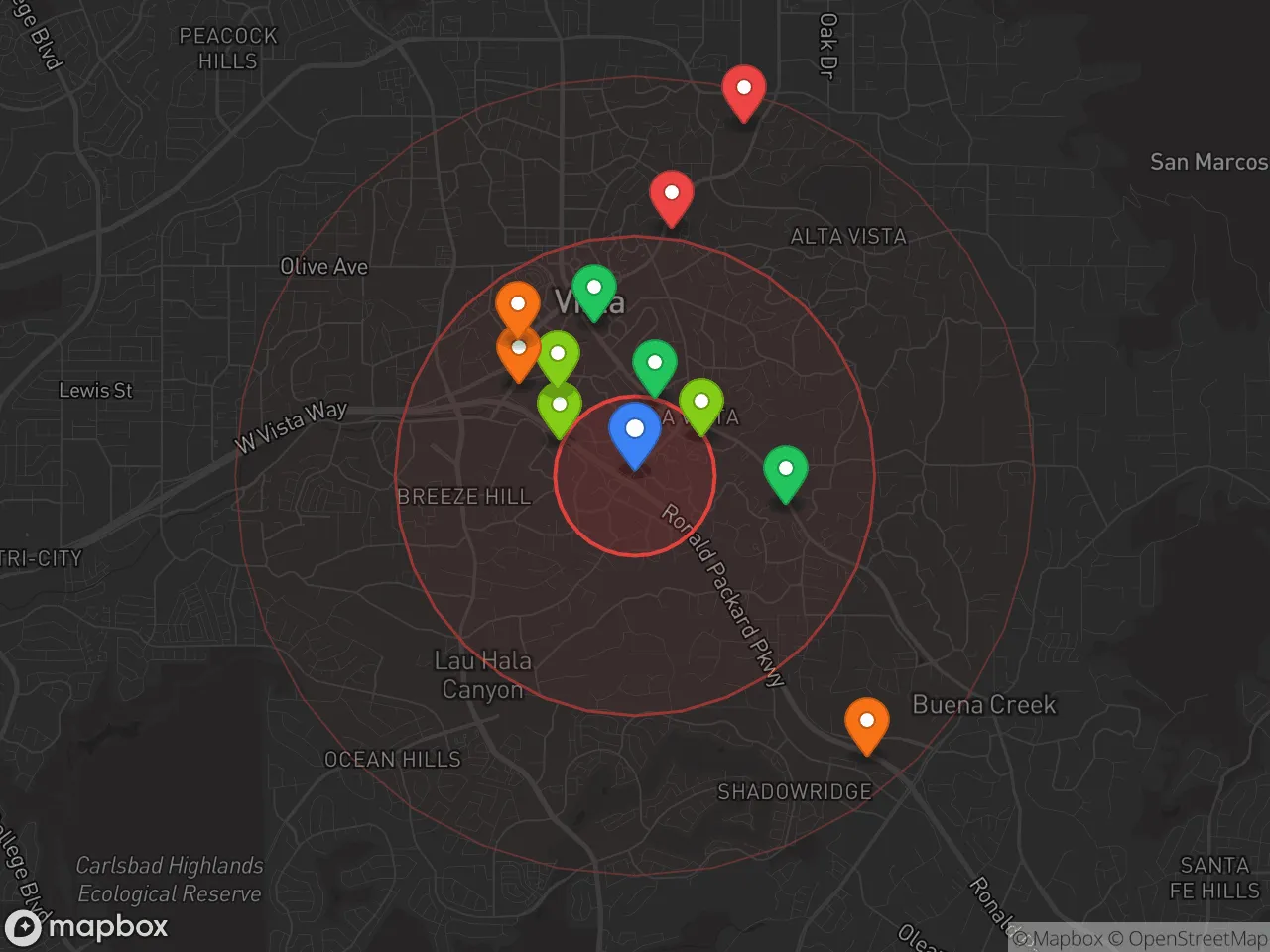
9 within 10 miles
Gas
20 within 10 miles
Hospital
6 within 20 miles
Airport
SAN — San Diego International
Post Office
USPS — Vista, CA
Critical Amenities
Quality-of-Life Analysis
Vista, California, presents a quality of life defined by its position as a more attainable alternative within the affluent North San Diego County corridor, attracting a mix of young families, military personnel connected to Camp Pendleton, and long-term residents who value suburban space over coastal proximity. With a cost of living index of 207—more than double the national average—the city demands a significant financial commitment, yet it offers a distinctly different lifestyle than the pricier beach communities of Carlsbad and Encinitas just a few miles west. The population of roughly 100,000 is notably diverse, with a strong Latino community and a growing number of professionals who commute to biotech and tech hubs in northern San Diego County.
Cost of living, housing, and affordability compared to coastal San Diego
Vista’s housing market is the central factor in its quality-of-life equation, with a median home value of $674,400 and a median rent of $2,148. While these figures are steep by national standards, they represent a meaningful discount compared to neighboring Carlsbad (where median home values routinely exceed $1 million) and Oceanside (where comparable homes often run 15-20% higher). The trade-off is a longer average commute of 26.6 minutes, as many residents travel west on State Route 78 to coastal jobs or south toward Sorrento Valley’s tech corridor. Renters face a particularly tight market, with vacancy rates below 3% in 2025, making the $2,148 median rent a baseline rather than a bargain. For buyers, the inventory skews toward older single-family homes built in the 1970s and 1980s, with newer construction concentrated in the Shadowridge and Rancho Vista neighborhoods. Property taxes in Vista are governed by California’s Proposition 13, meaning long-term owners often pay far less than newcomers, which can create a two-tiered affordability landscape within the same block.
Schools, parks, and the daily rhythm of life in Vista
Daily life in Vista revolves around its extensive park system and the Vista Unified School District, which operates 25 schools and has seen modest academic improvement since 2020, with Vista High School earning a 7/10 GreatSchools rating. The city’s 40+ parks include the 465-acre Guajome Regional Park, which offers hiking, fishing, and equestrian trails, and the popular Brengle Terrace Park with its community gardens and sports fields. The downtown area along Main Street has undergone a revitalization, anchored by the Vista Village shopping center, the historic Avo Theatre, and a weekly farmers’ market that draws residents from across the county. For families, the daily rhythm includes school drop-offs, afternoons at the Wave Waterpark, and evenings at local breweries like Belching Beaver or Mother Earth. The city’s inland location means summer temperatures regularly hit the high 80s, a notable contrast to the coastal fog of Carlsbad, but winters remain mild. Healthcare access is solid, with Tri-City Medical Center in nearby Oceanside and several urgent care clinics within city limits.
Vista is best suited for those who prioritize space, community, and a slower pace over the cachet of a coastal address. Military families from Camp Pendleton find the commute manageable and the housing more affordable than Encinitas, while young professionals willing to trade a longer drive for a yard and a garage will find Vista offers a genuine suburban foothold in an otherwise expensive region. Retirees on fixed incomes may struggle with the cost of living unless they purchased years ago, but for dual-income households earning above $100,000 annually, Vista provides a balanced, family-oriented lifestyle with solid schools and ample recreation. The city’s diversity and ongoing downtown investment suggest it will continue to attract those priced out of the coast but unwilling to leave San Diego County entirely.

Crime in Vista, CA
Generally safer than 72% of comparable U.S. locations.
Violent CrimeViolent Crime Analysis
Property CrimeProperty Crime Analysis
Crime Analysis
Vista, California, presents a mixed safety profile for prospective residents. While its violent crime rate of 208.2 incidents per 100,000 residents is notably lower than the national average, its property crime rate of 550.1 per 100,000 sits above the national benchmark, indicating a heightened risk for theft and burglary. The city's location within San Diego County, a large metro area with a progressive district attorney and judiciary, introduces a significant concern: a justice system that prioritizes offender rehabilitation over public safety can lead to higher recidivism and a greater number of criminals on the street, directly impacting victims and the broader community.
Crime in context
Vista's violent crime rate of 208.2 per 100,000 is roughly 40% lower than the national average of approximately 366 per 100,000, placing it in a safer tier for serious offenses like homicide, rape, and aggravated assault. However, the property crime rate of 550.1 per 100,000 is about 15% higher than the national average of roughly 480 per 100,000. This disparity means residents face a greater-than-average risk of property theft, vehicle break-ins, and burglary. The broader context of San Diego County's liberal prosecutorial policies is critical: progressive district attorneys often implement diversion programs and reduced sentencing, which, while sympathetic to offenders, can result in more criminals cycling back onto the streets and eroding public safety for law-abiding residents.
What residents experience
Daily life in Vista involves navigating a community where violent confrontations are uncommon but property crime is a persistent annoyance. Residents commonly report package thefts from porches, catalytic converter thefts, and vehicle break-ins, particularly in areas with easy freeway access. The city's police department is active, but the effectiveness of enforcement is undermined by a county-level justice system that frequently releases non-violent offenders on zero-bail or diverts them to treatment programs. This creates a frustrating cycle where repeat property offenders are quickly back on the street, a direct consequence of progressive ideology that prioritizes the offender's circumstances over the victim's loss. For families, this means investing in security cameras, neighborhood watch groups, and comprehensive home insurance is a practical necessity rather than an option.
Neighborhood-level variation is significant. Areas east of the I-15 freeway, including the gated communities near Shadowridge and Rancho Vista, generally report lower crime rates due to higher property values and private security. In contrast, the downtown core and neighborhoods west of the I-15, particularly around the Civic Center and along South Santa Fe Avenue, experience higher concentrations of property crime and occasional gang-related incidents. Prospective renters and homebuyers should prioritize properties in the eastern neighborhoods and verify local crime maps, as the city's overall statistics can mask the sharp divide between safer enclaves and higher-risk zones. The progressive policies of the county's justice system mean that even in safer neighborhoods, residents remain vulnerable to property crime from offenders who cycle through the system with minimal consequences.
* Values derived from national, state, county, city and local statistics and may differ in a specific area. Last updated: 2026-10-05T23:57:58.000Z
Narrative content on this page is AI-generated and may contain mistakes. Verify any details that matter before acting on them.
ReloMaps may earn a commission from affiliate links at no extra cost to you.

