Photo: Wikipedia
Find The Best Places To Live
in Redding
PRO TIP! You can paste a Zillow or Redfin link to get info on that property.
What It's Like Living in Redding, CA
Redding is a place that feels like it’s perpetually caught between two worlds: the rugged, self-reliant frontier spirit of far Northern California and the practical, family-focused rhythms of a mid-sized city. You’ll see lifted trucks and kayaks on roof racks in the same parking lot, and conversations at the local coffee shop swing from wildfire season prep to which stretch of the Sacramento River is running best for trout. It’s a community where people know their neighbors, but also one where you’re expected to pull your own weight—and where the outdoors isn’t a weekend hobby, it’s the main event.
The Daily Rhythm: Work, Commute, and the River
For most people, a typical day in Redding starts early. The average commute clocks in at just over 16 minutes—one of the shortest for a city its size in California—which means you can live in a quiet neighborhood off Lake Boulevard and still be at your desk in town by 8:05. The major employers are a mix of healthcare (Mercy Medical Center, Shasta Regional Medical Center), government (Shasta County, the city itself), and retail/logistics (Walmart distribution, Costco). You won’t find a tech campus or a Fortune 500 headquarters here; the economy is more about steady, blue-collar and service-sector work. The median household income is $69,443, which goes further than you’d think because housing, while not cheap, is still a relative bargain compared to the rest of the state—median home value sits at $363,800. That’s a price point that feels almost impossible in the Bay Area, and it’s a big reason families and remote workers have been trickling in.
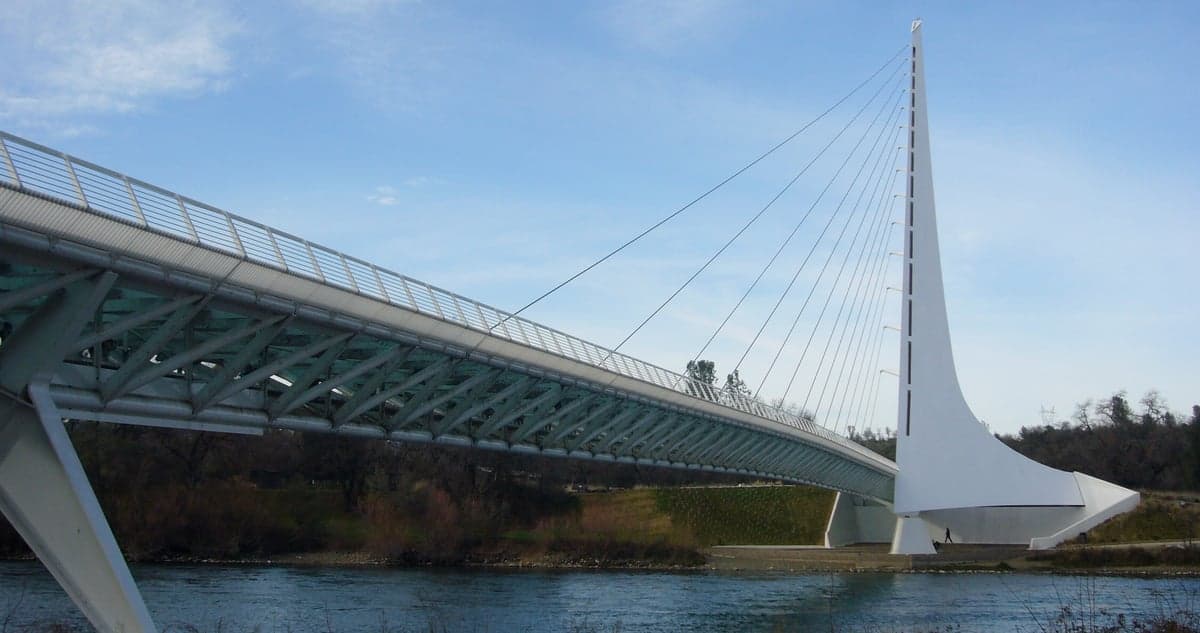
After work, the river is the unofficial town square. The Sacramento River Trail, a paved path that hugs the water for miles, is packed with runners, cyclists, and parents pushing strollers. In summer, people float the river in inner tubes or kayaks, launching from the Posse Grounds and pulling out at the Sundial Bridge—a striking glass-and-steel pedestrian bridge that’s become the city’s most photographed landmark. The weather enforces a seasonal rhythm: summers are brutally hot, often topping 105°F, so life slows down from noon to 4 p.m., then picks back up in the evening. Winters are mild and rainy, with occasional snow dusting the nearby Shasta-Trinity peaks, and that’s when locals head to the mountains for skiing or snowshoeing at Mt. Shasta Ski Park, about an hour away.
Sports, Community, and the Local Identity
Redding doesn’t have a major pro sports team, and nobody pretends otherwise. What it does have is a deep, almost tribal attachment to high school sports. Friday night football at Enterprise High or Shasta High draws crowds that rival small-college games, and the rivalry between those two schools is the closest thing the city has to a civic religion. The Redding Rodeo, held every May, is another anchor—it’s been running for over 70 years and brings in competitors from across the West. For a more low-key scene, the Redding Colt .45s (a collegiate summer baseball team) play at Tiger Field, and games are cheap, family-friendly, and often end with kids running the bases. The vibe is less “we’re a sports town” and more “we’ll show up for anything that gets us outside and together.”
That outdoor-first identity shapes everything. The Sundial Bridge isn’t just a photo op; it’s the gateway to the Turtle Bay Exploration Park, which has a museum, gardens, and a butterfly house that’s a hit with young families. On weekends, you’ll find people at Whiskeytown Lake (20 minutes west) swimming, paddleboarding, or hiking to Brandy Creek Falls. The local food scene is modest but improving—standouts include Woody’s Brewing Co. for craft beer and burgers, Jack’s Grill for a classic steakhouse experience that’s been around since 1938, and Buz’s Crab Stand for no-frills seafood. The nightlife is thin; a handful of bars like The Dip and The Post Office Saloon cater to a 30s-and-up crowd, but if you’re looking for a club scene, you’ll be driving to Sacramento (2.5 hours south) or Chico (1.5 hours).
Pros and Cons of Living Here
The upsides are tangible and easy to list. Cost of living is 20% above the national average (index of 120), but that’s still dramatically cheaper than most of California—your dollar buys a house with a yard, not a condo. The outdoor access is world-class: within an hour you have Shasta Lake (the largest reservoir in the state), Lassen Volcanic National Park, and the Trinity Alps. The commute is a genuine luxury, and the community is friendly in a way that feels genuine, not performative. People wave. They hold doors. Your neighbors will bring you a casserole when you move in.
The downsides are real and worth weighing. The violent crime rate is 735.3 per 100,000 residents—roughly double the national average—and while much of it is concentrated in specific areas (the downtown core and some older neighborhoods near the railroad tracks), it’s a fact that gives some newcomers pause. Property crime, especially vehicle break-ins and theft from sheds, is a persistent annoyance. The heat from June through September is oppressive for anyone not accustomed to it; air conditioning isn’t optional, it’s survival. And the city’s political culture leans conservative in a way that can feel isolating if you don’t share those views—Trump signs are common in yards, and the local talk radio is reliably right-leaning. The median age is 38.7, and only 26.1% of adults hold a bachelor’s degree, which reflects a workforce that’s more trade-oriented than college-focused. That’s a strength for some and a limitation for others.
Ultimately, Redding works best for people who value space, solitude, and the outdoors over urban amenities and cultural diversity. It’s a place where you can own a home, raise kids who play in the creek, and still be within a day’s drive of the ocean or the Bay Area. The trade-off is that you’ll need to drive for concerts, museums, or a truly diverse restaurant scene. For the right person—someone who doesn’t mind 105-degree summers and wants a slower, more self-sufficient life—it’s a surprisingly good fit.

Similar small cities to Redding


* Values derived from national, state, county, city and local statistics and may differ in a specific area. Last updated: 2026-10-05T17:06:14.000Z
Narrative content on this page is AI-generated and may contain mistakes. Verify any details that matter before acting on them.
ReloMaps may earn a commission from affiliate links at no extra cost to you.

