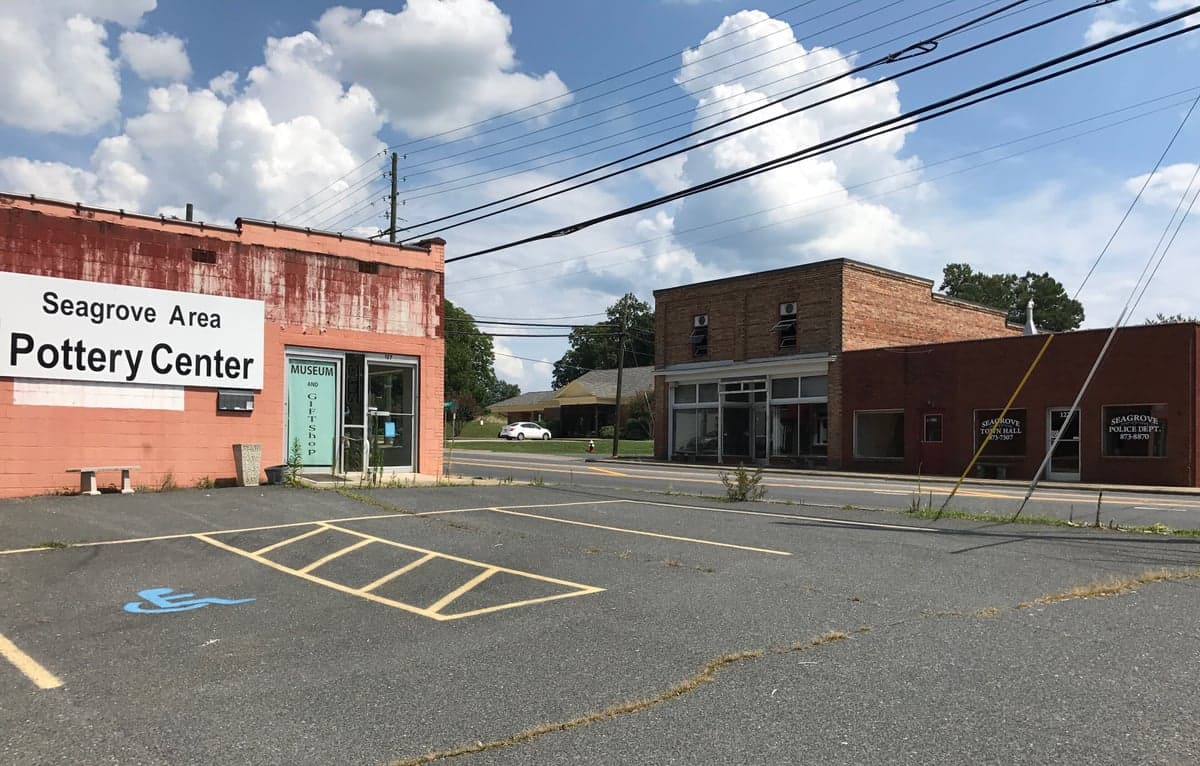
Photo: Wikipedia
Political ClimatePolitical Climate in Seagrove, NC
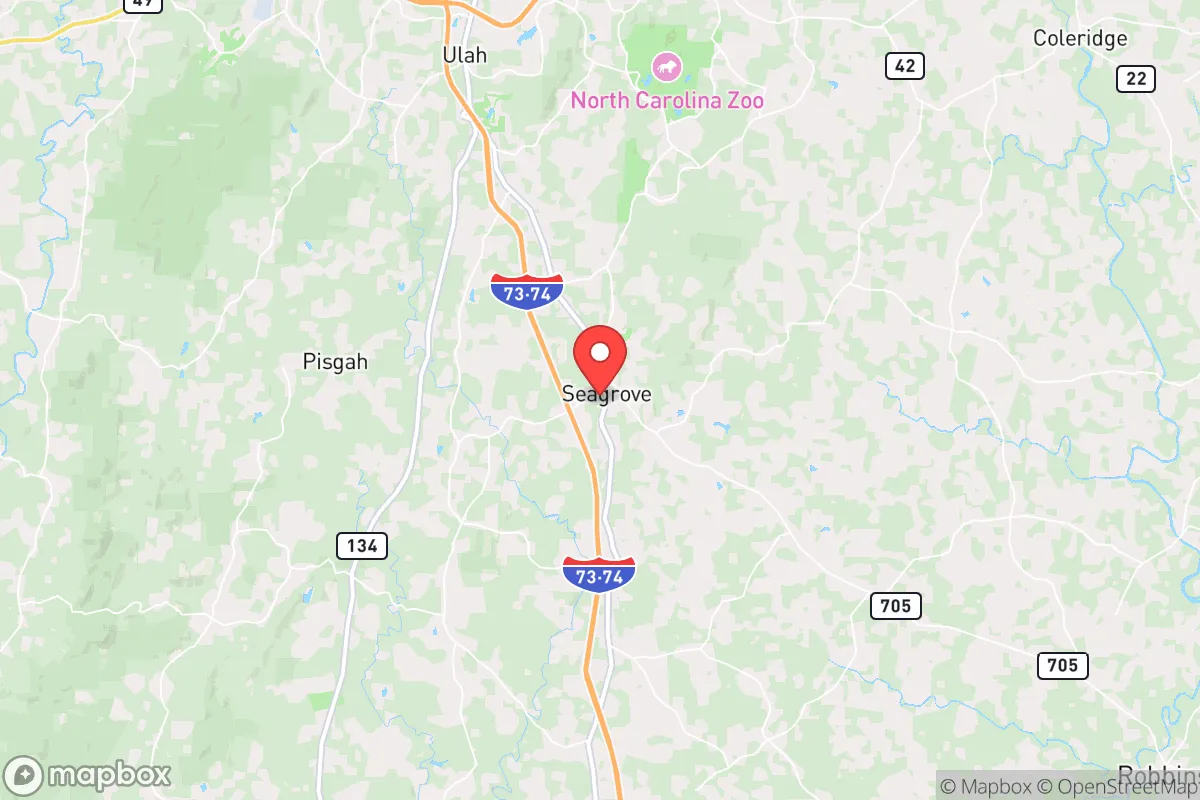
District shown is the primary district for this city’s centroid. Cities may span multiple districts.
Local Political AnalysisPolitical Analysis of Seagrove, NC
If you've spent any time in Seagrove, you know the politics here run deep red. The area sits in the heart of Randolph County, which carries a Cook Partisan Voting Index of R+8—meaning Republicans typically win by eight points more than the national average. That's a full seven points redder than North Carolina as a whole, which sits at R+1. In the 2024 presidential race, Randolph County went for Trump by roughly 65–35, a margin that's held steady for the past three cycles. The trajectory is stable: new arrivals from the Piedmont Triad have nudged the county slightly less conservative over the last decade, but Seagrove itself remains a reliably Republican stronghold with little sign of flipping anytime soon.
How it compares
Seagrove's R+8 lean puts it in a different political universe from the state's competitive swing status. North Carolina as a whole is a true purple state—R+1 means statewide races are decided by razor-thin margins, and Democrats have won the governorship and a U.S. Senate seat in recent years. But that statewide balance doesn't trickle down to Seagrove. The town sits in the 9th Congressional District, which has a similar R+8 rating, and local elections in Randolph County are almost always decided in the Republican primary. For contrast, drive 30 minutes north to Greensboro in Guilford County (D+5) or 45 minutes east to Raleigh in Wake County (D+4), and you'll find a completely different political climate—more competitive races, more visible Democratic organizing, and local policies that reflect a progressive tilt. Even nearby Asheboro, the county seat, is slightly more moderate than Seagrove, but still solidly red.
What this means for residents
For conservative residents, Seagrove's political climate is a comfortable fit. Local government leans Republican, tax rates are low, and gun rights are broadly supported. You'll find plenty of like-minded neighbors at community events, churches, and the annual Seagrove Pottery Festival. For liberal residents, the reality is more isolating. There's no active Democratic party presence in town, and progressive viewpoints can feel out of place in casual conversation. However, the nearby cities of Greensboro, Durham, and Chapel Hill offer vibrant liberal communities within an hour's drive, and many Seagrove liberals make the commute for work or social outlets. The practical effect of the R+8 lean is that local policy—from school board decisions to zoning—tends to reflect conservative priorities, and statewide ballot measures (like the 2024 amendment on voter ID) pass easily here even when they're contested elsewhere.
Culturally, Seagrove's politics are woven into its identity as a rural pottery hub with deep roots in traditional Southern values. The town's small size and tight-knit community mean that political disagreements rarely turn into open conflict—people tend to avoid the topic at the dinner table or the feed store. One notable policy distinction: Randolph County has consistently resisted expanding Medicaid and has kept property taxes among the lowest in the Piedmont region, a direct reflection of the local electorate's preference for limited government. As the Piedmont Triad continues to grow, some residents worry that newcomers from more

State Political ClimatePolitical Climate in North Carolina
State Political AnalysisPolitical Environment in the State
North Carolina sits in a unique political sweet spot: a classic swing state with a Cook PVI of R+1, meaning it leans slightly Republican but has been decided by razor-thin margins in every presidential election since 2008. Over the past 15 years, the state has shifted from a true toss-up (Obama won it by 0.3% in 2008) to a consistent but narrow Republican lean in presidential races — Trump won by 3.7% in 2016 and 1.3% in 2020, while down-ballot races remain fiercely competitive. What makes North Carolina distinctive is that both parties have genuine strongholds: the Research Triangle and Charlotte metros drive Democratic gains, while rural eastern counties and the western foothills anchor the Republican base. The result is a state where neither side can rest, and where policy often reflects a tense compromise between a Republican legislature and a Democratic governor.
Urban vs. rural divide
The political map of North Carolina is a textbook study in geographic polarization. Mecklenburg County (Charlotte) and Wake County (Raleigh) are the Democratic engine rooms, each delivering 60-70% of their vote to Democratic candidates. Add in Durham and Orange County (Chapel Hill), and you have a solid blue bloc that accounts for roughly a quarter of the state's vote. These metros are driven by finance, tech, and higher education — Charlotte is the nation's second-largest banking center, while the Research Triangle Park anchors a massive tech and biotech workforce. Meanwhile, the rural east — counties like Robeson, Columbus, and Pitt — vote heavily Republican, as do the Appalachian counties like Mitchell and Yancey. The suburbs are the real battleground: Cary, Apex, and Wake Forest have trended blue over the past decade, while exurbs like Johnston County and Union County remain reliably red. Guilford County (Greensboro) is a perennial swing county, often mirroring the statewide result. Buncombe County (Asheville) is an island of blue in the western mountains, driven by a liberal arts and tourism economy.
Policy environment
North Carolina's policy landscape reflects its divided government. The state has a flat income tax rate of 4.75%, scheduled to drop to 3.99% by 2027 under a 2021 law. There is no state estate tax, and the sales tax averages around 6.75% with local add-ons. The state is right-to-work and has a generally pro-business regulatory posture. On education, the state has aggressively expanded school choice: the Opportunity Scholarship Program now provides vouchers for private school tuition to all families regardless of income, and charter schools have proliferated. In 2023, the legislature finally passed Medicaid expansion (HB 76), covering roughly 600,000 additional low-income adults — a major shift after a decade of resistance. Election laws include a voter ID requirement (passed in 2018, implemented in 2023), no-excuse absentee voting, and early voting. Gun laws are among the most permissive in the South: permitless carry became law in 2023 (SB 20), the state has a stand your ground statute, and there is no red flag law. Abortion is restricted to 12 weeks (with exceptions for rape, incest, and life endangerment) under a 2023 law that overrode Governor Roy Cooper's veto. LGBTQ rights are a flashpoint: the infamous HB 2 (2016) bathroom bill was repealed in 2017 but replaced with a compromise that limited local anti-discrimination ordinances; in 2023, the legislature passed HB 8, restricting transgender youth participation in sports and access to gender-affirming medical care.
Recent policy direction
The 2023 legislative session, with a Republican supermajority in both chambers, marked a sharp rightward turn. Key laws include SB 20 (permitless carry), SB 20 (12-week abortion ban), HB 8 (transgender youth restrictions), and SB 747 (election law changes tightening absentee ballot rules and reducing the time for curing provisional ballots). The legislature also overrode Governor Cooper's veto on a bill that limits the governor's authority over elections boards, shifting control to a partisan commission. On property rights, the state preempts local rent control and has strong protections for landowners against eminent domain abuse. On privacy and surveillance, North Carolina has no comprehensive data privacy law, but a 2023 law restricts the use of facial recognition by law enforcement without a warrant. On voting and ballot access, the state has maintained early voting and no-excuse absentee, but the new voter ID law and reduced cure period have drawn legal challenges
* Values derived from national, state, county, city and local statistics and may differ in a specific area. Last updated: 2026-10-11T22:42:40.000Z
Narrative content on this page is AI-generated and may contain mistakes. Verify any details that matter before acting on them.
ReloMaps may earn a commission from affiliate links at no extra cost to you.

