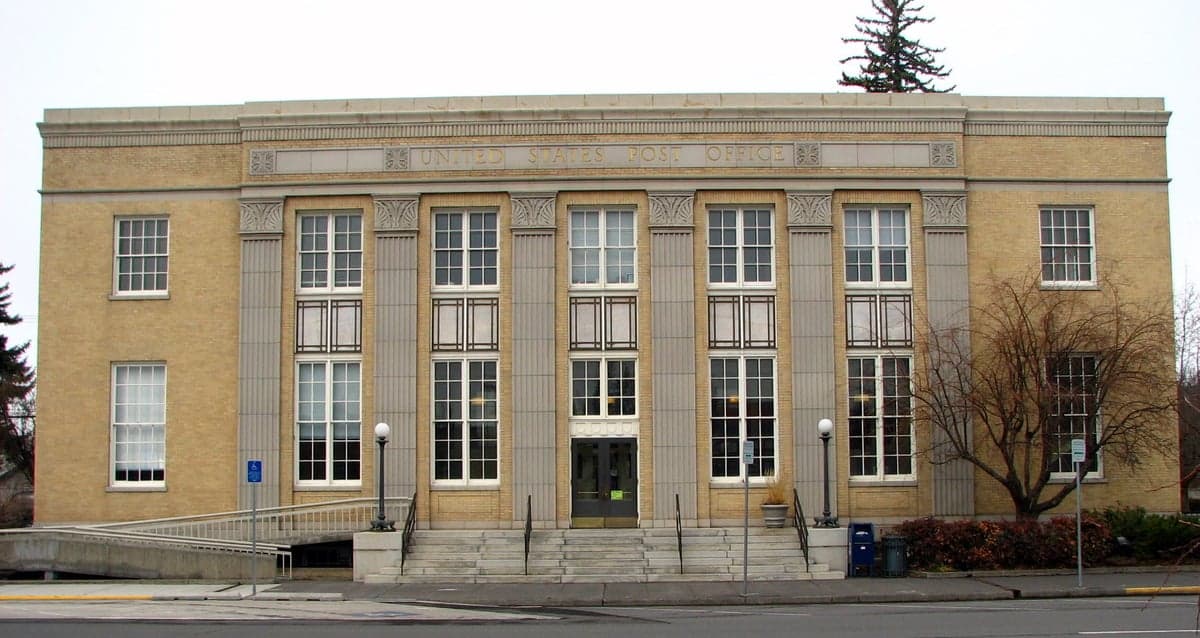
Photo: Wikipedia
Political ClimatePolitical Climate in Deschutes County
Showing district-level results — no local-only data available.
Local Political AnalysisPolitical Analysis of Deschutes County
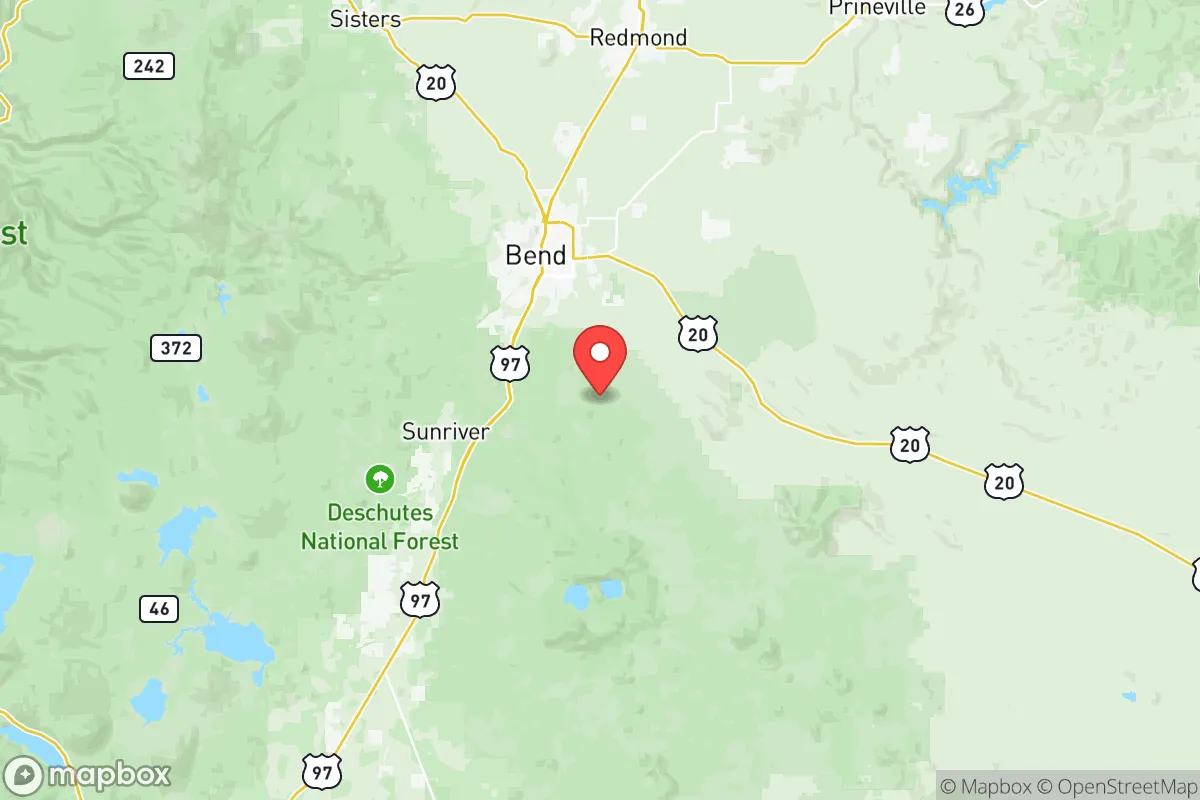
Deschutes County is a classic example of a rapidly changing Western community where the old political order is being reshuffled in real time. The county carries a Cook PVI of R+14, which on paper makes it a solidly Republican place, but that number tells only part of the story. The reality on the ground is far more nuanced, with the city of Bend acting as a blue island in a red sea, while smaller towns like Redmond, Sisters, and La Pine anchor the conservative vote. The county has been trending slightly less red over the past decade as California transplants and remote workers pour into Bend, but the rural precincts still turn out heavily for GOP candidates, keeping the overall tilt firmly to the right.
How it compares
The contrast between Deschutes County and Oregon as a whole is stark. Oregon statewide carries a Cook PVI of D+8, driven by the massive Democratic margins in Multnomah County (Portland) and the Willamette Valley. Deschutes County, sitting east of the Cascades, votes about 22 points more Republican than the state average. But the county isn't monolithic. In Bend's west side precincts near the Old Mill District and the university, Democratic candidates often win by 10-15 points, while in the rural areas outside Sisters and along the Highway 20 corridor toward La Pine, Republican margins can exceed 30 points. Redmond, the county's second-largest city, is a bellwether: it leans Republican but has swing precincts near the new tech park and the airport, where younger families and remote workers are starting to shift the needle. The county's political geography is essentially a tug-of-war between Bend's growing progressive population and the deeply conservative ranching and timber communities that have been here for generations.
What this means for residents
For conservative residents, Deschutes County remains a comfortable place to live politically. Local government in the unincorporated areas and in Redmond, Sisters, and La Pine is reliably Republican, and the county commission has a conservative majority. Gun rights are broadly respected, property taxes are relatively low compared to the Portland metro area, and there's little appetite for the kind of land-use restrictions that dominate western Oregon politics. For liberal residents, especially in Bend, the experience is different. Bend's city council is progressive, and the city has passed its own climate action plans and housing density measures, but those policies often clash with the county's more hands-off approach. The cultural divide is real: Bend's craft breweries and outdoor recreation scene attract a younger, more liberal crowd, while the rural parts of the county still fly Trump flags and hold rodeos. The practical effect is that residents learn to navigate two different political worlds depending on whether they're inside Bend city limits or out on the county roads.
One of the most telling cultural distinctions is how the county handles growth. Bend has embraced urban growth boundaries and transit-oriented development, mirroring Portland's approach, while the rest of the county resists what they see as overreach from the state land-use planning system. This tension plays out in every local election, from school board races to county commission seats. The near-term trajectory suggests Deschutes County will continue to purple up slowly, especially as Bend's population grows and the tech sector expands, but the rural vote is deeply entrenched and unlikely to flip anytime soon. For anyone moving here, the key takeaway is that your experience of the political climate will depend almost entirely on which side of the Deschutes River you live on.

State Political ClimatePolitical Climate in Oregon
State Political AnalysisPolitical Environment in the State
Oregon is a politically complex state that leans reliably Democratic at the statewide level, with a Cook PVI of D+8, but that number masks a deep and growing urban-rural chasm. The Democratic coalition is anchored in the Portland metro area—Multnomah, Washington, and Clackamas counties—which together cast roughly half the state’s votes and have driven the state’s leftward drift over the past two decades. However, the rest of Oregon, particularly the vast interior east of the Cascades and much of the southern coast, has moved sharply in the opposite direction, creating one of the most polarized political landscapes in the country. For a conservative-leaning relocator, the practical reality is that state policy is set by Portland and its suburbs, but daily life in many towns and counties can feel very different.
Urban vs. rural divide
The political map of Oregon is essentially a story of two states. The Willamette Valley corridor—from Portland through Salem to Eugene—is the Democratic stronghold. Multnomah County (Portland) alone gave Joe Biden 78% of the vote in 2020, while Washington County (suburban Beaverton and Hillsboro) and Lane County (Eugene) also vote reliably blue. In contrast, the rest of the state is deeply red. Deschutes County (Bend) is the most notable swing area—it voted for Trump in 2020 by a narrow 51-46 margin, but its rapid growth from California and Washington transplants is slowly shifting it leftward. East of the Cascades, counties like Malheur (Ontario), Lake, and Harney routinely vote 75-80% Republican. The southern Oregon counties of Jackson (Medford) and Josephine (Grants Pass) are reliably red, though Medford’s growing Latino population and college presence are beginning to nudge Jackson County toward purple. The coast is mixed: Lincoln County (Newport) and Tillamook lean Democratic, while Coos and Curry counties are solidly Republican. For a conservative family, towns like Redmond, Prineville, or La Grande offer a political environment that feels much closer to Idaho than to Portland.
Policy environment
Oregon’s state-level policy is shaped by a Democratic trifecta (governor, House, Senate) that has held power for most of the last decade. The tax structure is notable for having no state sales tax, which is a major draw for many relocators, but it is offset by relatively high personal income taxes (top marginal rate of 9.9%) and property taxes that are capped at 3% annual growth under Measure 50 (1997). The regulatory posture is among the most progressive in the nation: Oregon has a statewide land-use planning system (Senate Bill 100, 1973) that tightly controls urban growth boundaries, which keeps sprawl in check but also drives up housing costs in desirable areas. Education policy is mixed—Oregon consistently ranks near the bottom nationally in high school graduation rates (around 80%), but per-pupil spending is above average. Healthcare is heavily regulated, with a state-run insurance exchange (Cover Oregon) and a Medicaid expansion that covers roughly one in four residents. Election laws are among the most accessible in the country: Oregon was the first state to vote entirely by mail (1998), and it automatically registers voters when they get a driver’s license. For conservatives, the lack of voter ID requirements and the prevalence of ballot drop boxes are frequent points of concern, though no major fraud has been documented.
Recent policy direction
Over the past five years, Oregon’s legislature has passed a series of laws that define the state’s trajectory. On gun policy, Measure 114 (2022), passed by a narrow 50.7% vote, requires a permit to purchase a firearm, a completed background check before transfer, and bans magazines over 10 rounds. It is currently blocked in court, but the direction is clear. On education, the Student Success Act (2019) poured $1 billion annually into K-12 schools, but parental rights have become a flashpoint: in 2023, the legislature passed a law requiring schools to notify parents if a student requests a name or pronoun change, but it was vetoed by Governor Tina Kotek. On property rights, Oregon’s land-use system remains one of the most restrictive in the West, and a 2023 bill (HB 2001) effectively ended single-family zoning in cities over 10,000, allowing duplexes and triplexes on most residential lots. On medical and bodily autonomy, Oregon has some of the nation’s most permissive laws: the Death with Dignity Act (1997) allows physician-assisted suicide, and in 2023 the legislature passed a shield law protecting providers who prescribe abortion or gender-affirming care from out-of-state prosecution. On voting, Measure 113 (2022) amended the state constitution to bar legislators with 10 or more unexcused absences from running for reelection, a direct response to a 2019 Republican walkout over a carbon cap bill. For a conservative relocator, the cumulative effect is a state that is actively moving left on nearly every front, with the notable exception of property tax caps and the lack of a sales tax.
Civil unrest & political movements
Oregon has a long history of political activism, from the 1934 West Coast waterfront strike to the 2020 Portland protests. The 2020 racial justice protests in Portland were among the most sustained and visible in the nation, with nightly demonstrations for over 100 days, federal intervention, and significant property damage. This created a lasting political scar: the “defund the police” movement led to a 2021 ballot measure (Measure 110) that decriminalized possession of small amounts of all drugs, which has since been widely blamed for a surge in fentanyl overdoses and public drug use. In 2024, the legislature partially rolled back Measure 110, recriminalizing possession. On the right, the Oregon Republican Party has become increasingly militant, with walkouts in 2019, 2020, 2021, and 2023 to block Democratic bills. The Greater Idaho movement, which proposes moving the Oregon-Idaho border to include 13 eastern Oregon counties, has gained traction in rural areas—11 counties have passed measures in support, though it has no realistic path to federal approval. Immigration politics are also a flashpoint: Portland and Multnomah County are sanctuary jurisdictions, and in 2023 the legislature passed a law (HB 3264) limiting local law enforcement cooperation with federal immigration authorities. For a new resident, the most visible sign of this tension is the contrast between Portland’s visible homelessness and drug crisis and the quiet, orderly feel of towns like West Linn or Lake Oswego.
Projection
Over the next 5-10 years, Oregon’s political trajectory is likely to remain leftward at the state level, but with increasing friction. The Portland metro area continues to grow, driven by tech and healthcare jobs, while many rural counties are losing population. This demographic shift will likely keep the Democratic trifecta intact, though the margin may narrow if in-migration from California slows or if housing costs push people to more affordable red areas like Klamath Falls or Pendleton. The Greater Idaho movement will remain a symbolic protest but will not succeed, and the rural-urban divide will likely deepen. On policy, expect further gun restrictions, continued expansion of abortion and transgender rights, and a slow but real crackdown on public drug use as the fentanyl crisis forces even liberal legislators to act. The wild card is housing: if the state’s land-use rules are loosened significantly, it could bring in more moderate voters; if not, the affordability crisis may push younger, more liberal voters out of Portland and into previously red suburbs like Beaverton and Gresham, shifting those areas further left.
For a conservative-leaning relocator, the bottom line is that Oregon offers a beautiful, livable state with no sales tax and strong property rights protections, but you will be living under a state government that is actively moving in a direction you likely disagree with on guns, education, and social policy. The practical workaround is to choose your county carefully: Deschutes, Jackson, and Union counties offer a more balanced political environment, while Malheur and Lake counties feel almost like Idaho. You will have to accept that your vote for president or governor will not matter much, but your local school board and city council elections will. If you can live with that trade-off, Oregon’s natural beauty and relatively low crime in most rural areas make it a compelling choice.
* Values derived from national, state, county, city and local statistics and may differ in a specific area. Last updated: 2026-07-10T12:03:55.000Z
Narrative content on this page is AI-generated and may contain mistakes. Verify any details that matter before acting on them.
ReloMaps may earn a commission from affiliate links at no extra cost to you.

