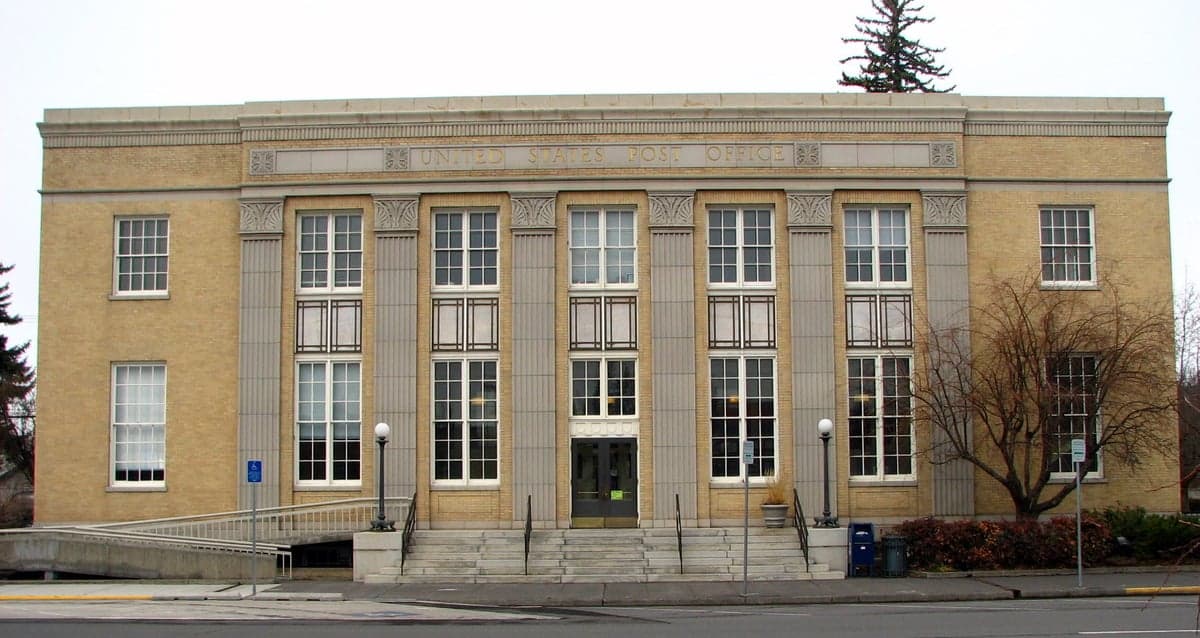
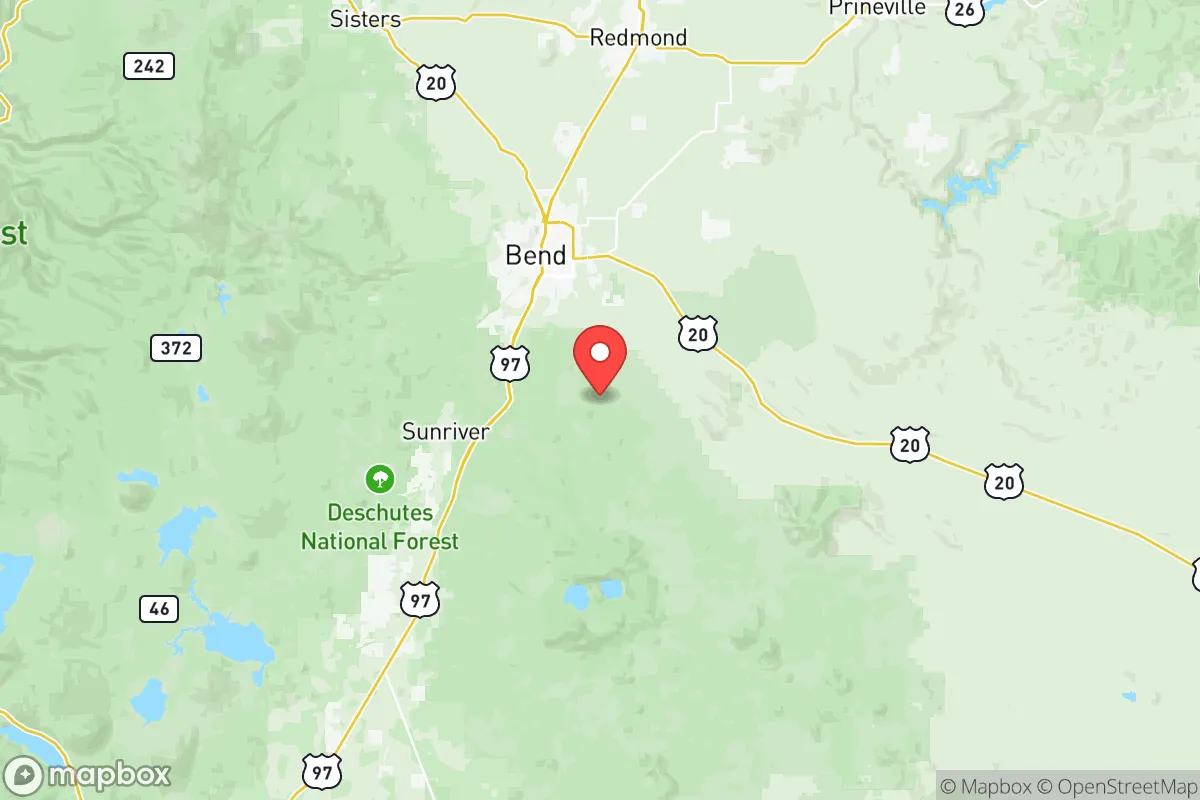
Photo: Wikipedia
Demographics of Deschutes County
Affluence Level in Deschutes County
An upper-middle-class area. Household wealth, education levels, and homeownership run ahead of national benchmarks.
People of Deschutes County
The people of Deschutes County, Oregon, today number roughly 203,000 and are overwhelmingly white (84.3%), with a small but growing Hispanic population (8.9%) and a notably low foreign-born share of just 2.7%. The county’s identity is shaped by its dramatic post-1970 growth—from a timber-and-railroad outpost to a recreation-and-retirement magnet—and by a population that is highly educated (43.4% college graduates) and politically conservative relative to the state’s urban centers. Bend, Redmond, and Sisters anchor a region where newcomers are drawn to outdoor lifestyle and relative affordability, while longtime residents maintain a ranching and logging heritage that still defines much of the rural east.
Settlement & growth (pre-1960)
Before Euro-American settlement, the Deschutes River basin was home to the Northern Paiute and the Tenino bands of the Columbia Plateau, who followed seasonal salmon runs and gathered roots and berries. The first non-Native presence was sparse: fur trappers and explorers passed through in the early 1800s, but the rugged volcanic terrain and arid climate discouraged permanent settlement. The 1855 Treaty of Wasco forced the Paiute onto the Warm Springs Reservation, which borders Deschutes County to the north, and opened the land to homesteaders.
The first significant wave of American settlers arrived in the 1870s and 1880s, drawn by the Donation Land Claim Act and later the Homestead Act. These were primarily Anglo-American farmers and ranchers from the Midwest and Upper South—Missouri, Iowa, and Illinois—who established small communities along the Deschutes River and its tributaries. The town of Sisters, founded in 1888 as a stagecoach stop, became a hub for sheep and cattle ranchers, while Redmond, platted in 1905, grew around a railroad depot and a flour mill. The completion of the Oregon Trunk Railway in 1911 connected the county to the transcontinental rail network, triggering a land boom that brought speculators and homesteaders to places like Bend, incorporated in 1905, which quickly became the county’s commercial center.
Timber drove the economy from the 1910s through the 1950s. The arrival of the Shevlin-Hixon and Brooks-Scanlon lumber mills in Bend attracted workers from the Pacific Northwest and the Upper Midwest—many of Scandinavian and German descent—who formed the core of the county’s working class. By 1920, Bend’s population had reached 5,000, and the county was overwhelmingly white, with fewer than 50 Black residents and a tiny Hispanic population. The Great Depression slowed growth, but World War II brought a temporary influx of workers to the lumber mills and the nearby U.S. Army’s Camp Abbot (now the Sunriver resort area). The post-war housing boom kept the mills running through the 1950s, but the county remained a sparsely populated, resource-dependent region: in 1960, Deschutes County had just 23,100 residents.
Modern era (post-1965)
The 1965 Hart-Cellar Act had little direct effect on Deschutes County, which attracted almost no international immigration for decades. Instead, the county’s modern demographic story is one of domestic migration—first from other parts of Oregon and California, then from across the West. The decline of the timber industry in the 1980s and early 1990s, driven by federal logging restrictions and mill closures, devastated the old economy but cleared the way for a new one based on recreation, tourism, and retirement. Bend reinvented itself as a destination for mountain biking, skiing at Mount Bachelor, and craft brewing, drawing a wave of educated, affluent migrants from California, Washington, and Colorado.
This influx accelerated sharply after 2000. Between 2000 and 2020, the county’s population more than doubled, from 115,000 to over 200,000. The new arrivals were overwhelmingly white and native-born, but the Hispanic share grew from about 4% in 2000 to 8.9% today, driven by labor demand in construction, hospitality, and agriculture. Hispanic residents are concentrated in Redmond and the rural areas around Terrebonne and La Pine, where they work in nurseries, farms, and service jobs. The East/Southeast Asian population (1.0%) and Indian subcontinent population (0.1%) remain tiny, mostly professionals in Bend’s healthcare and tech sectors. The Black population (0.3%) is negligible, and the county remains one of the least diverse in Oregon.
Suburbanization has reshaped the built environment. Bend’s west side, near the Deschutes River and the Cascade foothills, has become the most desirable and expensive area, while the east side and the city of Redmond have absorbed much of the lower-cost housing growth. Sisters has transformed from a ranching town into a tourist-oriented bedroom community, with median home prices rivaling Bend’s. Sunriver, a planned resort community developed in the 1960s, is now a year-round retirement and vacation destination with a heavily seasonal population.
The future
Deschutes County is projected to continue growing, though at a slower pace than the 2000–2020 boom. The Oregon Office of Economic Analysis forecasts the county will reach roughly 250,000 residents by 2040, driven by continued domestic migration from California and the Pacific Northwest. The population is likely to become slightly more diverse, with the Hispanic share potentially rising to 12–14% as younger families settle in Redmond and La Pine, but the county will remain predominantly white and native-born. The foreign-born share, currently 2.7%, is unlikely to rise above 5% given the lack of established immigrant enclaves or industries that attract international labor.
The cultural identity of the county is evolving from its ranching-and-logging roots toward a more amenity-driven, outdoors-oriented character. Tensions between longtime residents and newcomers—often framed as “Oregonians vs. Californians”—are real but softening as the economy diversifies. The political lean of the county, which voted for Donald Trump by 11 points in 2020, reflects its conservative rural base in the east and the more moderate, libertarian-leaning newcomers in Bend. The biggest demographic challenge is housing affordability: Bend’s median home price has surpassed $700,000, pushing younger workers and service employees into Redmond, Prineville (in neighboring Crook County), and La Pine.
For someone moving in now, Deschutes County offers a high quality of life for those who can afford it, with strong schools, low crime, and world-class recreation. The trade-off is a relatively homogeneous social environment and a housing market that increasingly excludes lower-income families. The county is becoming a place where the educated and affluent can thrive, while the working class—both white and Hispanic—is being pushed to the periphery. That dynamic will define the next decade of growth.

* Values derived from national, state, county, city and local statistics and may differ in a specific area. Last updated: 2026-07-10T12:03:55.000Z
Narrative content on this page is AI-generated and may contain mistakes. Verify any details that matter before acting on them.
ReloMaps may earn a commission from affiliate links at no extra cost to you.

