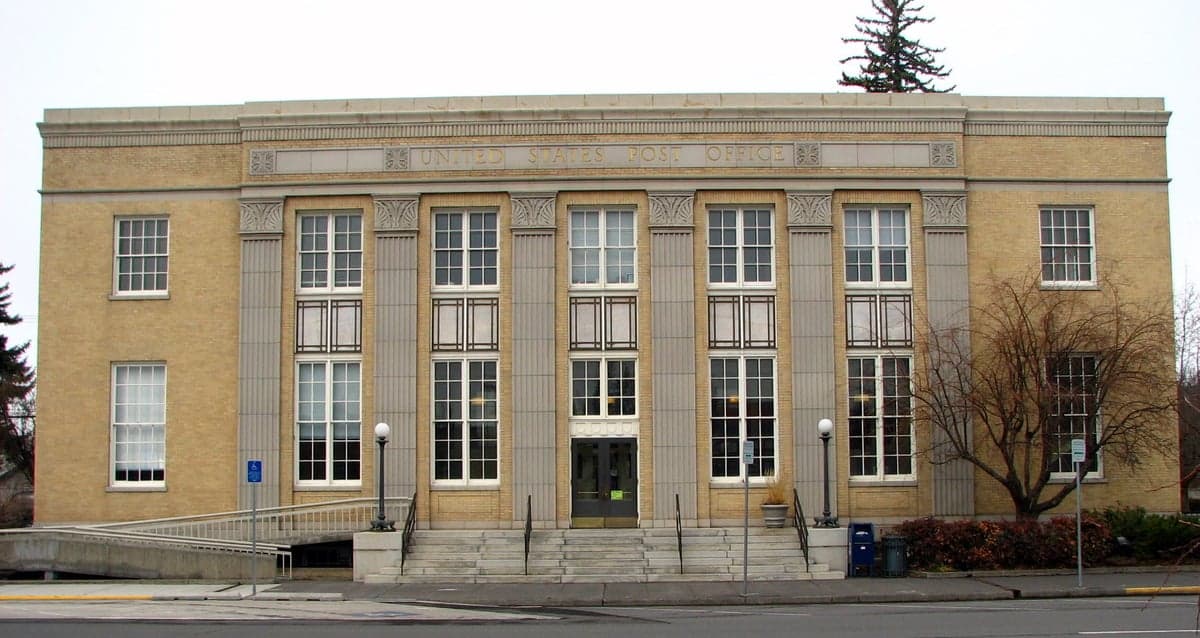
Photo: Wikipedia
Personal Sovereignty in Deschutes County
Viable for self-reliance. Generally workable, though some barriers may limit total independence.
What does Personal Sovereignty tell us?
Personal Sovereignty measures your capacity for self-reliance and independence with minimal government friction. Higher scores mean fewer barriers between you and the way you want to live... but it assumes you have the space you need and good neighbors.
What does this tell us?
Personal Sovereignty measures your capacity for self-reliance and independence with minimal government friction. Higher scores mean fewer barriers between you and the way you want to live... but it assumes you have the space you need and good neighbors.
State Policy
Energy independence: Importer (35% of energy produced in-state)
Personal Liberty
Homesteading

Personal Liberty Analysis
Deschutes County, Oregon, offers a notably high degree of personal sovereignty relative to the Portland metro area, but it is not a libertarian free-for-all. The county’s autonomy environment is best described as a pragmatic balance: residents enjoy low property taxes, a strong gun culture, and significant land-use flexibility in unincorporated areas, while still operating under Oregon’s statewide land-use planning system and a moderate income tax burden. For a conservative-leaning individual or family prioritizing self-reliance, the key is choosing the right location within the county, as regulatory posture and homesteading viability vary dramatically between the urban core of Bend and the rural expanses of La Pine, Sisters, and Terrebonne.
Tax burden and regulatory posture: how Deschutes County compares to the rest of Oregon
Oregon has no sales tax, which is a clear win for personal financial autonomy, but it imposes a state income tax that is among the highest in the nation—top marginal rate of 9.9% on income over $125,000 for single filers. Property taxes in Deschutes County are relatively low by national standards, with an effective rate around 0.87% of assessed value, thanks to Measure 5 (1990) and Measure 50 (1997) which cap annual increases at 3%. However, the county’s regulatory posture is shaped by Oregon’s strict land-use laws, particularly the Urban Growth Boundary (UGB) around Bend. Within the UGB, development is tightly controlled, with minimum lot sizes of 5,000–7,000 square feet in most residential zones and significant permitting hurdles for accessory dwelling units or home-based businesses. Outside the UGB—in areas like La Pine, Terrebonne, and Redmond—regulation is far lighter. These unincorporated zones allow for larger lots (often 1–5 acres), fewer building restrictions, and more freedom to operate small farms or workshops without county interference. The county’s overall posture is moderate: it respects property rights in rural areas but enforces urban planning rules that can frustrate those seeking maximum autonomy within city limits.
Self-defense and gun law specifics: what the Second Amendment landscape looks like in Deschutes County
Oregon is a shall-issue state for concealed carry, meaning Deschutes County residents who pass a background check and complete a safety course receive a permit without discretionary denial. The county sheriff’s office processes applications efficiently, with typical wait times of 30–45 days. Open carry is legal without a permit, though it is uncommon in Bend and more visible in rural towns like Sisters and La Pine. Oregon’s Measure 114, passed in 2022, introduced a permit-to-purchase requirement and a ban on magazines over 10 rounds, but it remains blocked by court injunction as of early 2026. This legal uncertainty means that, for now, Deschutes County gun owners can still purchase standard-capacity magazines and complete private transfers without a state permit. The county itself is strongly pro-Second Amendment: the Deschutes County Board of Commissioners passed a resolution in 2023 declaring the county a “Second Amendment Sanctuary,” directing local resources away from enforcing any future state-level gun bans deemed unconstitutional. Shooting ranges are plentiful, including the Central Oregon Shooting Sports Association range near Bend and the La Pine Gun Club, both offering public access. For self-defense in the home, no special restrictions apply beyond state law, and stand-your-ground principles are recognized under Oregon’s common law. The practical takeaway: Deschutes County is one of the most gun-friendly jurisdictions in Oregon, but residents must stay alert to ongoing state-level legal battles that could shift the landscape.
Self-reliance and homesteading viability: lot sizes, zoning, and off-grid feasibility across the county
Homesteading viability in Deschutes County is highly location-dependent. In the unincorporated areas outside the UGB, zoning allows for a wide range of self-reliant activities. La Pine, in the southern part of the county, is the epicenter of off-grid living: lots of 1–20 acres are common, and many properties operate on well water and septic systems. The county does not require a building permit for structures under 200 square feet, making small cabins or workshops feasible without bureaucratic overhead. Solar panels are permitted without special county approval, and rainwater catchment is legal for outdoor use. In Terrebonne and the Crooked River Ranch area, zoning is similarly permissive, with agricultural exemptions allowing for livestock, beekeeping, and small-scale farming on parcels as small as 2.5 acres. However, within Bend’s city limits and UGB, homesteading is effectively impossible: minimum lot sizes are small, backyard chickens are limited to six hens (no roosters), and any structure over 200 square feet requires a full building permit with inspections. Redmond and Sisters occupy a middle ground—Redmond allows chickens and small livestock on lots of 10,000 square feet or more, while Sisters’ rural residential zones permit up to two horses or cows on 1-acre parcels. Off-grid living—defined as no connection to municipal water or power—is legal in unincorporated zones but requires a county-approved septic system and proof of a legal water source (well or hauled water). The county does not enforce building codes on uninhabited structures like barns or sheds, but any dwelling must meet state structural standards. For a family seeking true self-reliance, La Pine and Terrebonne offer the most freedom; Bend and its suburbs are far more restrictive.
Personal liberties: parental rights, medical autonomy, speech, and property rights in Deschutes County
Parental rights in Deschutes County are generally respected, with the county’s school districts—Bend-La Pine, Redmond, and Sisters—allowing parents to opt out of sex education and requiring parental consent for most medical procedures on minors. Oregon’s state-level vaccine mandate for school attendance remains in effect, but medical and religious exemptions are available and processed without undue delay. Medical autonomy is a mixed bag: Oregon has legalized physician-assisted suicide (Death with Dignity Act) and recreational marijuana, both of which are widely available in Deschutes County. However, the state’s strict vaccine requirements and mask mandates during public health emergencies have been a point of contention for some residents. Free speech is robustly protected; the county has no local ordinances restricting political signage or public assembly, and the city of Bend has not enacted any hate-speech or “bias incident” ordinances beyond state law. Property rights are the strongest in the rural areas: outside the UGB, there are no rent control laws, no short-term rental bans (though Bend has a cap on new STR permits), and no restrictions on building fences, storing vehicles, or operating a home business. Inside Bend, property rights are more constrained: the city enforces a strict noise ordinance, limits the number of unrelated adults who can live in a single dwelling (no more than three), and requires permits for any home-based business that generates customer traffic. For a reader prioritizing personal liberties, the clear recommendation is to avoid Bend’s city limits and instead focus on La Pine, Terrebonne, or the unincorporated areas around Redmond and Sisters, where local government interference is minimal.
Overall, Deschutes County offers a level of personal sovereignty that is significantly higher than the Portland metro area or Eugene, but lower than rural counties in Idaho or Montana. The county’s tax burden is moderate (no sales tax, low property taxes, high income tax), its gun culture is strong and legally protected, and its rural areas provide genuine opportunities for off-grid homesteading and self-reliant living. The trade-off is that residents must navigate Oregon’s statewide land-use and income tax systems, which can feel intrusive to those accustomed to Texas or Florida’s lighter regulatory touch. For a conservative-leaning individual or family willing to choose a rural location like La Pine or Terrebonne over Bend’s urban core, Deschutes County represents one of the best autonomy-to-amenity ratios in the Pacific Northwest.

* Values derived from national, state, county, city and local statistics and may differ in a specific area. Last updated: 2026-07-10T12:03:55.000Z
Narrative content on this page is AI-generated and may contain mistakes. Verify any details that matter before acting on them.
ReloMaps may earn a commission from affiliate links at no extra cost to you.

