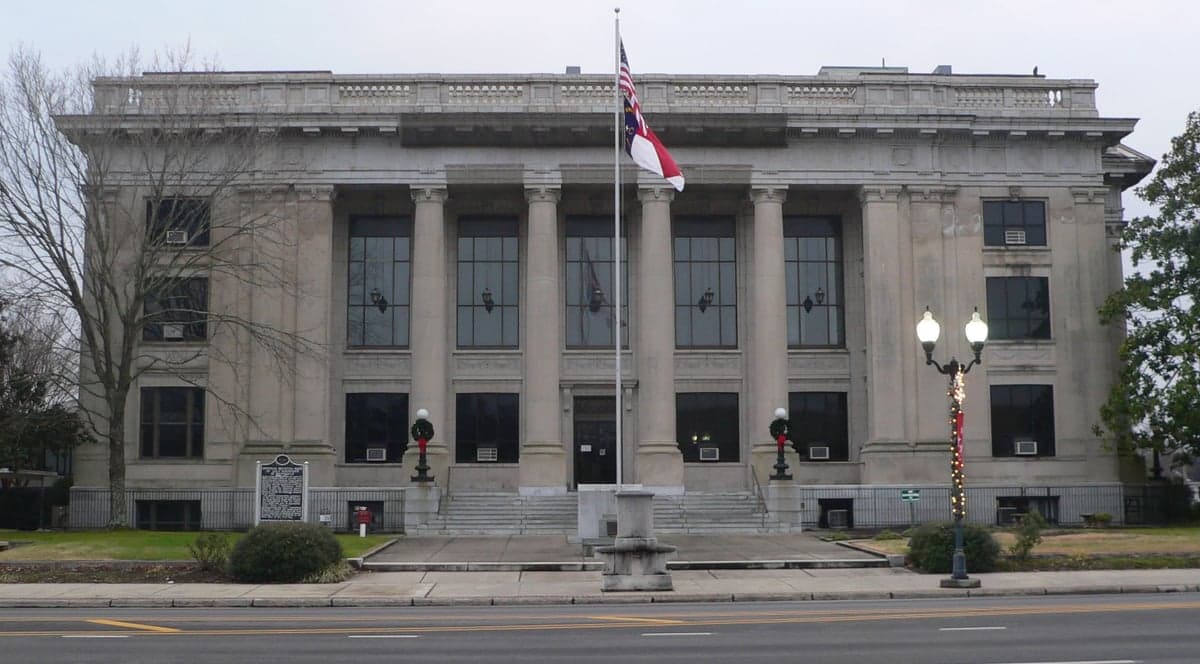
Photo: Wikipedia
Political ClimatePolitical Climate in Johnston County
Showing district-level results — no local-only data available.
Local Political AnalysisPolitical Analysis of Johnston County
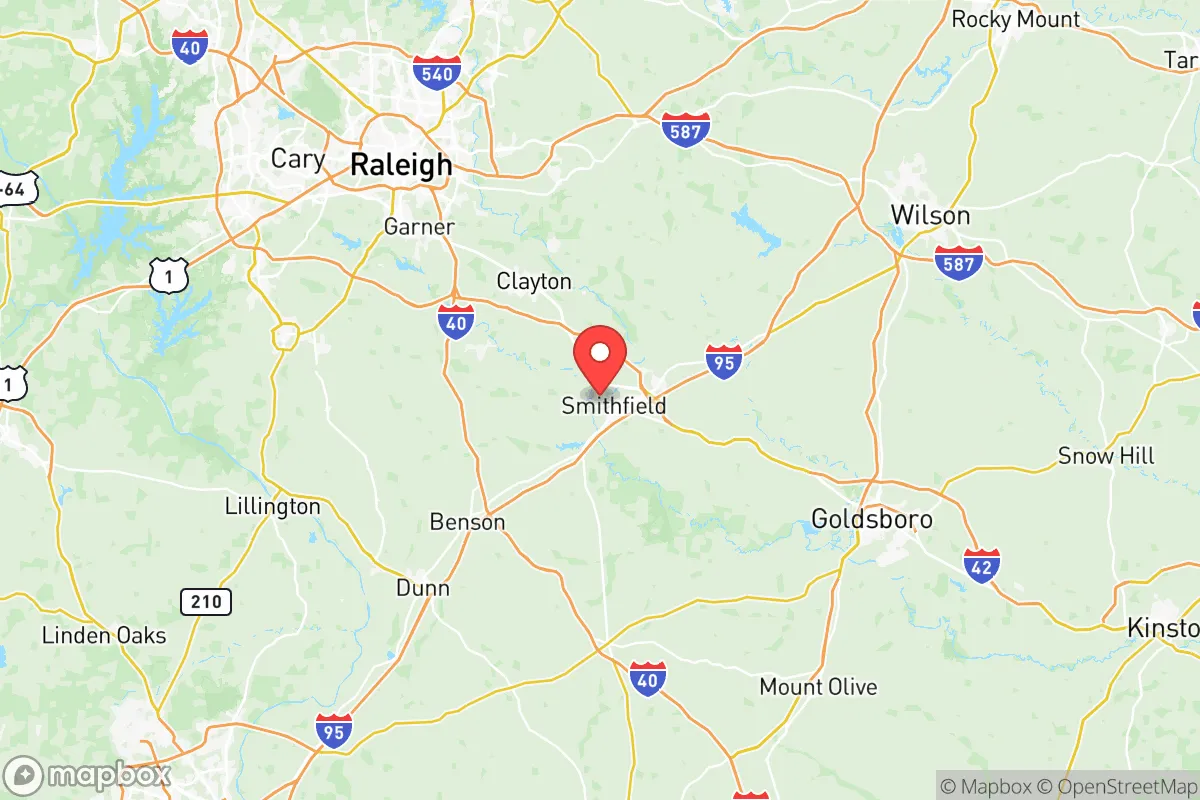
Johnston County has been a reliably Republican stronghold for decades, and that hasn't changed much even as the rest of North Carolina has become a true battleground. The county’s Cook Partisan Voting Index (PVI) sits at R+8, meaning it votes about eight points more Republican than the national average, while the state as a whole is a much tighter R+1. In practice, that means a Republican presidential candidate can expect to carry Johnston County by roughly 15 to 20 points, even in years when the statewide race is decided by a single point or two. But the story isn't uniform across the county—there are real pockets of blue, especially in the fast-growing towns closest to Raleigh, and the overall trajectory is slowly shifting toward purple.
How it compares
Compared to North Carolina’s razor-thin R+1 statewide PVI, Johnston County is a deep red outlier in a state that’s increasingly competitive. The county’s Republican lean is most pronounced in the rural and exurban areas: towns like Smithfield and Selma consistently deliver 65-70% of the vote for GOP candidates, while Benson and Four Oaks are even more conservative. On the flip side, Clayton has become the county’s most notable blue-leaning town, with precincts near the Wake County line often voting Democratic by 5-10 points, thanks to an influx of younger families and tech workers priced out of Raleigh. Garner, which straddles the Johnston-Wake border, is a true swing area—its precincts can flip between parties depending on the cycle, making it the bellwether for the county’s future. The key difference from the state: while North Carolina’s urban centers (Charlotte, Raleigh, Durham) and rural east are pulling in opposite directions, Johnston County is still overwhelmingly rural and exurban, with only Clayton and Garner showing signs of the urbanizing trend that’s reshaping the state’s politics.
What this means for residents
For conservative residents, Johnston County feels like a safe harbor. Local elections are almost always decided in Republican primaries, and the county commission and school board have been reliably GOP-controlled for years. That means lower property tax rates compared to Wake County, a strong emphasis on Second Amendment rights, and a general resistance to zoning changes that would bring denser development. For liberal residents, it can feel isolating—there’s no real Democratic infrastructure outside of Clayton and Garner, and progressive candidates rarely break 40% countywide. However, the rapid growth is slowly changing the calculus: new subdivisions in West Johnston (near the Wake line) are bringing in younger, more diverse voters who lean left on issues like school funding and transit. The practical effect is that a liberal resident in Clayton can find like-minded neighbors and a decent local Democratic party chapter, while someone in Selma or Benson will likely be the only one on their block with a yard sign.
The cultural and policy distinctions are subtle but real. Johnston County has resisted the kind of rapid urbanization seen in Wake County—there’s no light rail coming, no major transit expansions, and the county’s land-use policies still favor large-lot rural development. The school system, while well-regarded, is more traditional in its curriculum and less likely to adopt progressive policies on things like gender identity or critical race theory. At the same time, the county’s agricultural roots mean a strong local food scene and a slower pace of life that appeals to both conservatives and liberals who want to escape the hustle of Raleigh. The bottom line: Johnston County is still a red county in a purple state, but the purple is creeping in from the north and west, and within a decade, it may look more like a lean-red county than a deep-red one—especially if Clayton and Garner keep growing at their current pace.

State Political ClimatePolitical Climate in North Carolina
State Political AnalysisPolitical Environment in the State
North Carolina is a classic swing state with a slight Republican lean, carrying a Cook PVI of R+1, but its political reality is far more nuanced than that simple label suggests. Over the last 20 years, the state has shifted from a reliably conservative stronghold to a fiercely competitive battleground, driven by explosive growth in the Research Triangle and Charlotte metros, while rural and small-town areas have hardened their Republican loyalties. The result is a state where statewide elections are regularly decided by less than 2 points, yet the legislature remains firmly under GOP control due to aggressive gerrymandering, creating a unique tension that defines daily life for both conservatives and liberals.
Urban vs. rural divide
The political map of North Carolina is essentially a story of three booming urban islands surrounded by a sea of red. Mecklenburg County (Charlotte) and Wake County (Raleigh) are the Democratic strongholds, each delivering 60-65% of their votes to Democratic candidates in recent cycles, powered by transplants from the Northeast and Midwest, tech and finance workers, and a growing diverse population. Durham County is even more lopsided, routinely hitting 80% Democratic, driven by the Research Triangle Park workforce and a historically Black political tradition. Meanwhile, Buncombe County (Asheville) has become a liberal mountain enclave, flipping from purple to deep blue over the past decade. Outside these islands, the picture is starkly different. Rural counties like Stokes, Yadkin, and Alleghany routinely vote 75-80% Republican, driven by gun culture, evangelical Christianity, and economic anxiety over the decline of manufacturing and tobacco. The suburban counties tell a more interesting story: Cabarrus and Union (outside Charlotte) have shifted rightward as Charlotte sprawl pushes conservative families outward, while Guilford County (Greensboro) and Cumberland County (Fayetteville) remain competitive swing areas. The key battleground is now the exurban ring around the major metros — places like Johnston County (southeast of Raleigh), which flipped from reliably red to narrowly competitive in 2020 as Raleigh commuters moved in.
Policy environment
North Carolina's policy landscape reflects its divided government. The state has a flat income tax rate of 4.5%, which is scheduled to decline to 3.99% by 2027 under legislation passed in 2021, making it increasingly attractive for high-earners relocating from high-tax states. The corporate tax rate is already a low 2.5% and is set to phase out entirely by 2030. Sales tax is 4.75% at the state level, with local add-ons pushing it to around 7% in most counties. On education, the state has a robust charter school sector and a growing school voucher program (the Opportunity Scholarship Program), which now serves over 30,000 students and was expanded in 2023 to be universally available regardless of income. Higher education remains a political flashpoint, with the UNC Board of Governors shifting rightward in recent appointments, leading to controversies over tenure reform and diversity initiatives. Healthcare policy is dominated by the state's refusal to expand Medicaid under the Affordable Care Act until 2023, when a bipartisan deal finally passed — expansion took effect in December 2023, covering roughly 600,000 low-income adults. Election laws have been a perennial battleground: the state requires photo ID to vote (implemented for the 2024 cycle after years of litigation), has strict absentee ballot rules, and was the subject of a high-profile gerrymandering case that the state supreme court reversed after flipping to a Republican majority in 2022.
Recent policy direction
The last five years have seen North Carolina lurch rightward on most policy fronts, even as Democrats have won three of the last four gubernatorial elections. The Republican supermajority in the legislature (achieved after the 2022 elections) has been aggressive. On gun rights, the state enacted permitless carry (constitutional carry) in March 2023, allowing any adult who can legally possess a firearm to carry it concealed without a permit — a major win for Second Amendment advocates. On parental rights and education, the legislature passed the Parents' Bill of Rights in 2023, requiring schools to notify parents about instructional materials involving sexuality and prohibiting instruction on gender identity and sexual orientation in K-4 classrooms (similar to Florida's law). On abortion, the state enacted a 12-week ban in May 2023, down from the previous 20-week limit, with exceptions for rape, incest, and fetal anomalies — a compromise that disappointed both pro-life advocates who wanted a total ban and pro-choice activists who saw it as a rollback. On voting and ballot access, the legislature tightened absentee ballot rules, shortened the early voting period, and implemented stricter voter ID requirements, all of which have been upheld by the state's conservative supreme court. On property rights and taxation, the trend is clearly pro-property owner: no state property tax, low assessment growth caps in many counties, and a homestead exemption for seniors that freezes property tax values. On medical and bodily autonomy, the state has not expanded transgender medical protections for minors, and the legislature is considering restrictions on gender-affirming care for minors in 2024. The overall direction is toward a more traditional conservative policy framework, but moderated by the veto power of Democratic Governor Roy Cooper (in office until 2024) and the state's competitive electoral environment.
Civil unrest & political movements
North Carolina has a history of visible political activism on both sides. The Moral Monday movement, which began in 2013 as protests against the legislature's conservative agenda, has evolved into a sustained progressive organizing force, with regular rallies at the state capitol. The Confederate monument controversy reached a flashpoint in 2020, when protesters in Raleigh toppled statues and the legislature responded by passing a law making it nearly impossible to remove monuments without a supermajority vote. Immigration politics are less heated than in border states, but Charlotte and Durham have declared themselves sanctuary cities, while the legislature has passed laws prohibiting sanctuary policies and requiring sheriffs to cooperate with ICE. The election integrity debate is intense: the 2020 election in North Carolina was closely contested but ultimately certified without major irregularities, yet the state has become a national test case for voting restrictions, with both parties pouring resources into litigation. The LGBTQ+ rights battle remains active, with the legacy of HB2 (the 2016 "bathroom bill") still shaping political discourse, though that specific law was repealed in 2017. A new resident would notice that political yard signs, bumper stickers, and local activism are more visible here than in many states — this is a place where people are politically engaged and not shy about it.
Projection
Over the next 5-10 years, North Carolina is likely to become even more competitive, with a slight trend toward the center-right on policy even as the electorate becomes more diverse. The key demographic driver is in-migration: the state is adding roughly 100,000 new residents per year, and these newcomers are disproportionately coming from blue states (New York, California, New Jersey) but are often moderate or conservative on fiscal issues. The Research Triangle and Charlotte will continue to grow and diversify, pushing those areas further left, but the exurbs and smaller cities like Wilmington, Greenville, and Hickory are also growing and trending red. The wild card is the 2024 gubernatorial election, which will determine whether the next governor is a Republican (likely to be more conservative than Cooper) or a Democrat (who would continue to moderate the legislature's agenda). If Republicans win the governorship and maintain their legislative supermajority, expect a more aggressive conservative agenda on abortion, education, and tax cuts. If Democrats win the governorship, the state will remain in its current pattern of divided government. The most likely scenario is continued partisan gridlock with incremental policy shifts, making North Carolina a state where your experience depends heavily on which county you live in — a conservative family in Union County will feel very different political winds than a liberal family in Orange County.
For a new resident, the practical takeaway is that North Carolina offers a genuinely mixed political environment. Conservatives will find a state that has moved decisively right on guns, taxes, and education policy, with a legislature that is reliably conservative and a legal environment that respects property rights and religious liberty. Liberals will find a state where their votes matter — statewide elections are genuinely competitive — and where urban areas provide a progressive oasis with strong schools, cultural amenities, and diverse communities. The key is choosing your location carefully: the political character of your county will shape your daily experience more than the state's overall lean. If you want a conservative environment, look at the exurbs and rural counties; if you want a liberal environment, stick to the urban cores. Either way, you'll be living in a state that is politically engaged, growing fast, and likely to remain a national bellwether for the foreseeable future.
* Values derived from national, state, county, city and local statistics and may differ in a specific area. Last updated: 2026-07-12T15:56:22.000Z
Narrative content on this page is AI-generated and may contain mistakes. Verify any details that matter before acting on them.
ReloMaps may earn a commission from affiliate links at no extra cost to you.

