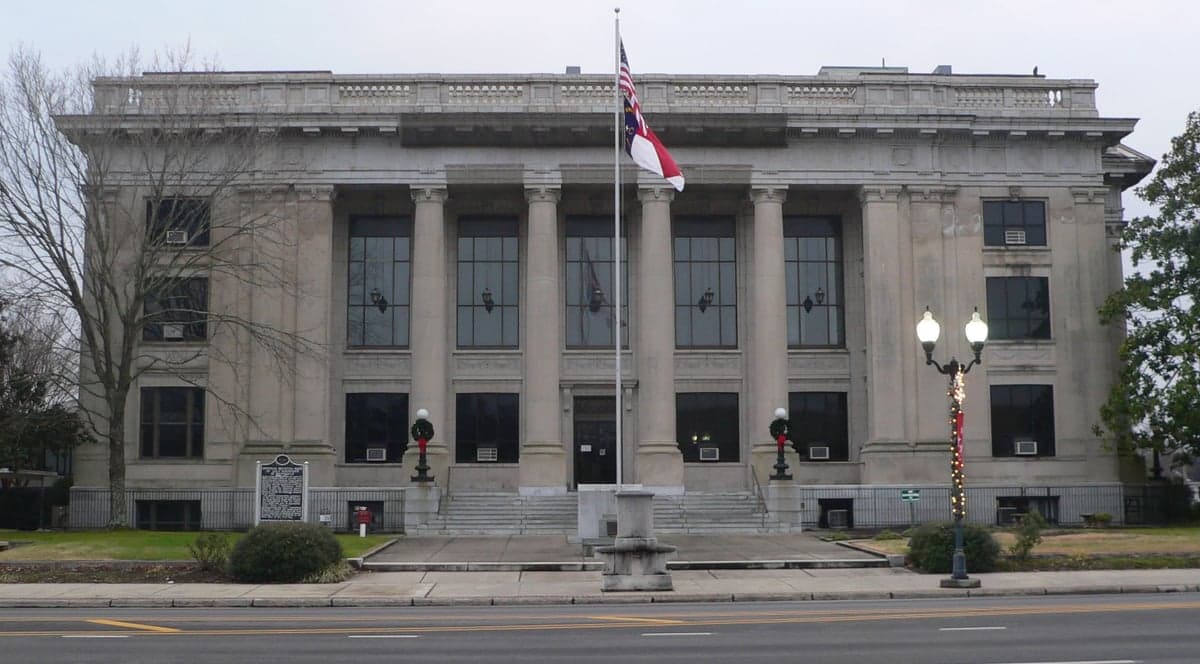
Photo: Wikipedia
Quality of Life in Johnston County
A livable area that tracks near national norms for affordability, walkability, and neighborhood health.
What does Quality of Life tell us?
Quality of Life measures an area by evaluating factors like cost of living, nearby amenities, country club access, airport proximity, socioeconomic signals and neighborhood character. For large states, this is a general average — quality of life can vary dramatically between metro areas, suburbs, and rural communities within the same state.
What does this tell us?
Quality of Life measures an area by evaluating factors like cost of living, nearby amenities, country club access, airport proximity, socioeconomic signals and neighborhood character. For large states, this is a general average — quality of life can vary dramatically between metro areas, suburbs, and rural communities within the same state.
Cost of Living
10% below national average
104%
The Real Cost of Living in Johnston County for 2026
| Tier | Individual | Family (4) |
|---|---|---|
| Survival | $16k | $30k |
| Comfortable | $52k | $76k |
| Luxury | $123k+ | $191k+ |
| Elite (Top 5%) | $145k+ | $224k+ |
Quality-of-Life Analysis
Johnston County, North Carolina, offers a broad quality-of-life spectrum that ranges from the bustling, amenity-rich town of Clayton to the quiet, unincorporated crossroads of Powhatan and the rural farmlands surrounding Micro. With a cost of living index of 90 (well below the national average of 100), the county attracts a mix of Raleigh-Durham commuters seeking affordable housing, families looking for small-town schools, and agricultural workers tied to the region's historic tobacco and sweet potato farms. The county's character shifts noticeably as you move from its western edge, which feels like an exurban extension of the Triangle, eastward toward the more isolated, slower-paced communities near the Neuse River.
Largest town(s) & population centers
The primary population anchor is Clayton, a fast-growing town of roughly 30,000 residents that serves as Johnston County's commercial and retail hub. Daily life in Clayton centers on the intersection of US 70 and NC 42, where big-box shopping centers, chain restaurants, and medical offices cluster. The town has invested heavily in parks and greenways, including the 85-acre Clayton Community Park and the Neuse River Trail, making it popular with young families who work in Raleigh (a 30- to 40-minute commute) but want a suburban yard and lower housing costs. Smithfield, the county seat, is smaller and more historic, with a walkable downtown anchored by the Neuse River and the Ava Gardner Museum. Its daily rhythm is quieter than Clayton's, with a stronger presence of local government jobs and the Johnston Health hospital system. Benson, located along I-95, has a working-class feel and a historic downtown that hosts the annual Mule Days festival; its economy is tied to logistics and agriculture. The average commute across the county is 32.5 minutes, a figure driven by the many residents who travel west into Wake County for employment.
Smaller towns & rural pockets
Beyond the three main towns, Johnston County contains a scattering of unincorporated communities and small municipalities that offer a distinctly rural lifestyle. Four Oaks, with a population under 2,000, sits at the intersection of US 301 and NC 96 and functions as a bedroom community for Smithfield and Raleigh; its downtown consists of a few antique shops and a hardware store. Selma, just north of Smithfield, has a historic railroad depot and a growing Hispanic population, but its housing stock is older and more affordable than in Clayton. Further east, Micro and Pine Level are tiny towns (fewer than 500 residents each) surrounded by soybean and tobacco fields, where the nearest grocery store may be a 15-minute drive. Powhatan, an unincorporated area near the Nash County line, has no downtown at all — just scattered homes, a volunteer fire department, and a post office. These rural pockets offer deep quiet, larger lots (often 1 to 5 acres), and the lowest property prices in the county, but they lack public water and sewer infrastructure, requiring well and septic systems.
Cost & lifestyle range
The cost spread across Johnston County is significant. At the high end, Clayton's newer subdivisions (such as Flowers Plantation or the Riverwood area) have median home values around $350,000 to $400,000, with HOA-managed amenities like pools and playgrounds. At the low end, rural properties near Micro or Powhatan can still be found for under $200,000, though they often need significant repairs or lack modern finishes. Countywide, the median home value is $267,600 and median rent is $1,007 — both well below Wake County's medians of roughly $450,000 and $1,400, respectively. Renters in Clayton and Smithfield pay a premium for proximity to retail and highways, while renters in Selma or Four Oaks get more square footage for less money but face longer drives to services. Property taxes in Johnston County are moderate (around 0.78% of assessed value), and there is no city tax in unincorporated areas, which further lowers the carrying cost for rural homeowners. The trade-off is clear: Clayton offers walkable parks, a YMCA, and a Target within five minutes, but a three-bedroom house there costs $1,300 a month to rent; a similar house in rural Pine Level might rent for $850 but sits 20 minutes from the nearest supermarket.
Johnston County works best for people who want a clear trade-off: lower housing costs and a slower pace in exchange for longer commutes and fewer walkable amenities. Families who prioritize a large yard and a good school system (the county's schools are generally rated average to above-average by state standards) will find the western towns appealing. Retirees and remote workers who value quiet and space often gravitate to the rural eastern half, where a $250,000 budget buys a house on multiple acres. The county's diversity of settlement patterns — from the I-40 corridor's exurban sprawl to the Neuse River's farm country — means that a buyer or renter can choose their exact position on the urban-to-rural continuum without leaving the same school district or tax base.

Crime in Johnston County
Crime rates similar to the national median for U.S. locations.
Violent CrimeViolent Crime Analysis
Property CrimeProperty Crime Analysis
Crime Analysis
Johnston County, North Carolina, presents a mixed safety profile for potential residents. With a violent crime rate of 310.5 per 100,000 residents and a property crime rate of 1,694.6 per 100,000, the county sits above the national average for property offenses but below many urban centers in the state. The county's proximity to Raleigh and its rapid suburban growth have created distinct safety dynamics that vary significantly between its towns and unincorporated areas.
Crime in context
Johnston County's violent crime rate of 310.5 per 100,000 is notably lower than North Carolina's statewide average of approximately 370 per 100,000 and well below the rates seen in major metro counties like Wake County (Raleigh) or Mecklenburg County (Charlotte). However, the property crime rate of 1,694.6 per 100,000 exceeds both the state average (roughly 1,550) and the national average (approximately 1,950), placing the county in a moderate-to-high range for theft and burglary. Selma and Smithfield historically report higher crime volumes per capita than the county average, driven by their positions along the I-95 corridor and higher population density. In contrast, Clayton and Benson tend to report lower crime rates, particularly for violent offenses, benefiting from newer housing stock and stronger community policing presence. The county's judicial district, part of the 11th Prosecutorial District, operates under a district attorney whose office has maintained a generally conservative approach to prosecution, which correlates with the county's lower violent crime figures compared to more progressive jurisdictions in the Triangle region.
What residents experience
For daily life in Johnston County, property crime is the more tangible concern. Vehicle break-ins, package thefts, and burglaries of unoccupied homes are the most common incidents reported across the county. Selma sees elevated rates of larceny and motor vehicle theft, partly due to its interstate access and transient population. Smithfield experiences similar issues concentrated near the downtown commercial district and the Carolina Premium Outlets area. Residents in Clayton and Four Oaks report fewer property incidents, though the rapid construction of new subdivisions in Clayton has led to occasional thefts from construction sites and model homes. Violent crime is less frequent in daily life but does occur, with aggravated assault being the most common violent offense. Archer Lodge, a smaller town in the northern part of the county, consistently reports the lowest crime rates across all categories, making it a frequent recommendation for families prioritizing safety. The county sheriff's office and local police departments maintain active neighborhood watch programs and social media alert systems, which residents cite as helpful for staying informed about recent incidents.
Neighborhood-level variation in Johnston County is pronounced and directly tied to development patterns. Newer subdivisions in Clayton and Benson — particularly those built after 2015 — show significantly lower crime rates than older downtown areas in Smithfield and Selma. Rural areas along the county's eastern edge, near Pine Level and Kenly, experience very low violent crime but face occasional agricultural theft and trespassing issues. The I-95 corridor running through Selma and Smithfield acts as a crime corridor, with property crimes concentrated near exits and motels. For prospective residents, choosing a home in the western half of the county — closer to the Wake County line — generally correlates with lower crime statistics, though property taxes are slightly higher in those areas to fund expanded law enforcement services.
* Values derived from national, state, county, city and local statistics and may differ in a specific area. Last updated: 2026-07-12T15:56:22.000Z
Narrative content on this page is AI-generated and may contain mistakes. Verify any details that matter before acting on them.
ReloMaps may earn a commission from affiliate links at no extra cost to you.

