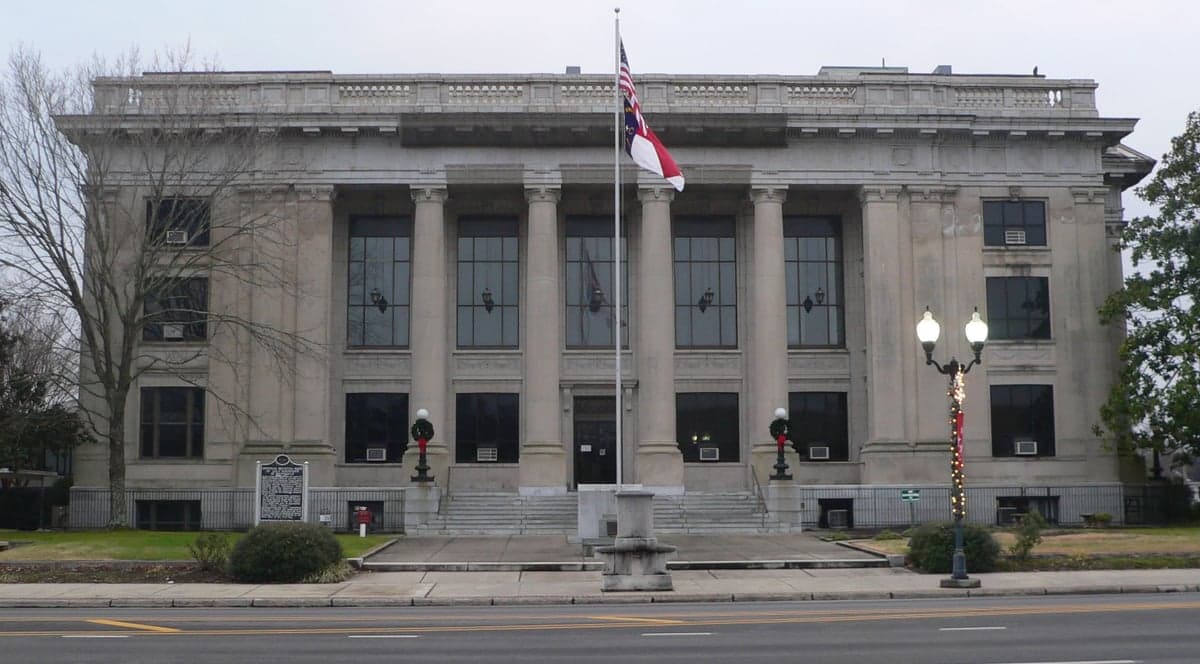
Photo: Wikipedia
Personal Sovereignty in Johnston County
Viable for self-reliance. Generally workable, though some barriers may limit total independence.
What does Personal Sovereignty tell us?
Personal Sovereignty measures your capacity for self-reliance and independence with minimal government friction. Higher scores mean fewer barriers between you and the way you want to live... but it assumes you have the space you need and good neighbors.
What does this tell us?
Personal Sovereignty measures your capacity for self-reliance and independence with minimal government friction. Higher scores mean fewer barriers between you and the way you want to live... but it assumes you have the space you need and good neighbors.
State Policy
Energy independence: Importer (15% of energy produced in-state)
Personal Liberty
Homesteading

Personal Liberty Analysis
Johnston County, North Carolina, offers a notably high degree of personal sovereignty relative to the state's urban centers, with a regulatory environment that generally favors individual choice in taxation, self-defense, and land use. The county's rural character and conservative governance create a setting where residents often experience fewer restrictions on daily life than in nearby Wake County (Raleigh) or Durham. For individuals and families prioritizing autonomy, the trade-off involves accepting a slower pace of life and fewer municipal services in exchange for greater personal latitude and lower costs.
Tax burden and regulatory posture in Johnston County
Johnston County maintains a light-touch regulatory posture that appeals to those seeking to minimize government interaction. The county's property tax rate is $0.72 per $100 of assessed value (2025-2026), significantly lower than Wake County's $0.637 rate when factoring in municipal taxes in Raleigh. No county-level income tax exists, as North Carolina levies a flat state income tax of 4.5%. Sales tax in Johnston County totals 7%, with no local option add-ons beyond the state and county base. Business regulation is minimal: the county does not impose zoning in unincorporated areas, meaning property owners in places like Micro, Pine Level, and Kenly can operate home-based businesses, keep livestock, or build structures without county planning board approval. Incorporated towns like Smithfield and Clayton have their own zoning codes, but these are generally less restrictive than those in the Triangle's core. The county's approach to development permits is streamlined, with most residential permits issued within 30 days.
Self-defense and gun law specifics in Johnston County
North Carolina is a shall-issue state for concealed carry permits, and Johnston County's sheriff's office processes applications efficiently, typically within 45-60 days. The county has a strong gun-friendly culture, with multiple indoor and outdoor shooting ranges near Benson and Four Oaks. Open carry is legal without a permit for anyone 18 or older who can legally possess a firearm. Stand-your-ground laws apply statewide, with no duty to retreat in any place where the individual is lawfully present. Johnston County's district attorney's office has a record of not prosecuting lawful self-defense cases; no high-profile prosecutions of defensive gun uses have occurred in the county in recent years. The county does not impose any local firearm ordinances beyond state law, meaning no additional waiting periods, magazine capacity limits, or storage requirements. Private firearm sales between individuals require no background check or paperwork, though federal law prohibits sales to known prohibited persons.
Self-reliance and homesteading viability across Johnston County
Homesteading and self-reliance are highly viable in Johnston County, particularly in its unincorporated areas. Minimum lot sizes in the county's rural zoning districts are 1 acre for a single-family home, with no maximum lot size. In towns like Selma and Princeton, agricultural zoning allows for livestock, poultry, and crop production on parcels as small as 3 acres. Off-grid living is feasible but requires attention to state building codes: the county does not require connection to municipal water or sewer in unincorporated areas, and private wells and septic systems are standard. Solar panels are permitted without special county approval, and rainwater collection is legal for non-potable uses. The county's extension service offers workshops on small-scale farming and food preservation, reflecting local interest in self-sufficiency. However, incorporated towns like Clayton have stricter ordinances: Clayton requires connection to municipal water and sewer within its extraterritorial jurisdiction, and limits the number of chickens to six per household with no roosters allowed.
Personal liberties in Johnston County: parental rights, medical autonomy, speech, and property
Johnston County's governance reflects a strong emphasis on parental rights and limited government intervention in family matters. The county school board has adopted policies that require parental notification for any health services provided to students, and parents can opt their children out of any curriculum materials they find objectionable. Medical autonomy is generally respected: no county-level vaccine mandates exist, and the health department does not enforce any requirements beyond state law for school attendance. Free speech protections are robust, with no local ordinances restricting public assembly or protest beyond standard time-place-manner regulations. Property rights are protected by North Carolina's Property Protection Act, which requires just compensation for any regulatory taking that reduces property value by more than 20%. The county's planning department does not conduct warrantless inspections of private property, and building code enforcement is complaint-driven rather than proactive in unincorporated areas.
Overall, Johnston County ranks among the more sovereignty-friendly areas in North Carolina's Piedmont region, offering a balance of low taxes, permissive gun laws, and minimal land-use regulation that appeals to those prioritizing personal freedom. While it lacks the extreme libertarian posture of some rural western counties, it provides a practical middle ground where residents can exercise significant autonomy without the isolation of remote mountain communities. For families and individuals moving from more regulated states like California or New York, the county represents a substantial increase in personal latitude across all measured dimensions of sovereignty.

* Values derived from national, state, county, city and local statistics and may differ in a specific area. Last updated: 2026-07-12T15:56:22.000Z
Narrative content on this page is AI-generated and may contain mistakes. Verify any details that matter before acting on them.
ReloMaps may earn a commission from affiliate links at no extra cost to you.

