Photo: Wikipedia
Demographics of Johnston County
Affluence Level in Johnston County
A middle-class area roughly in line with national averages across income, home values, education, and employment.
People of Johnston County
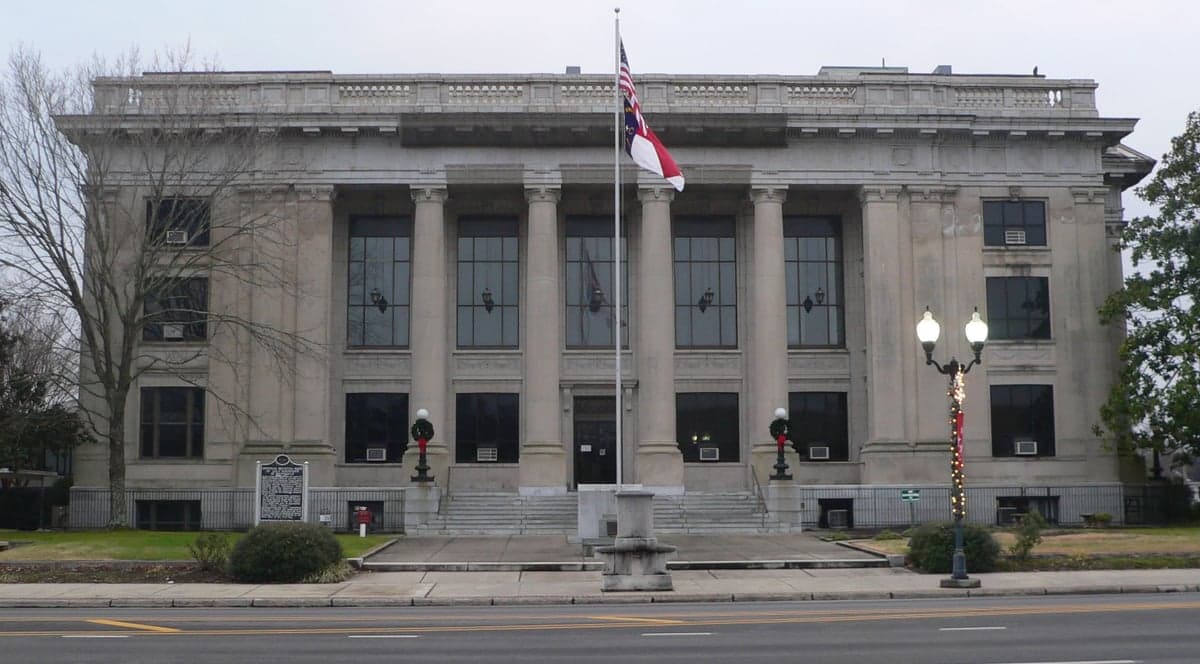
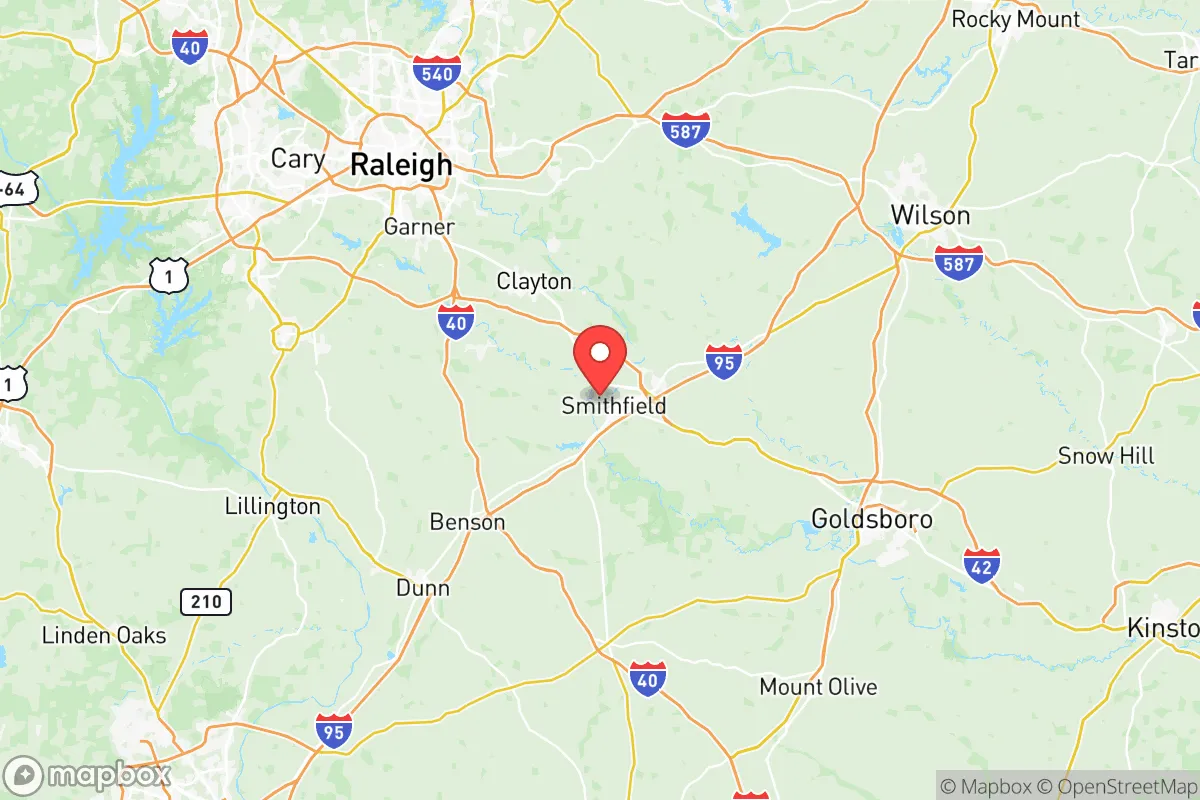
Johnston County, North Carolina, is a rapidly growing exurban county of 226,623 residents where a historically rural, agricultural identity is giving way to a more diverse, commuter-oriented population. The county's character remains distinctly Southern and family-centric, anchored by the county seat of Smithfield and the growing town of Clayton, but it is increasingly shaped by Hispanic families drawn to construction and agriculture, and by Black professionals and families moving from Raleigh and eastern North Carolina. With a foreign-born population of 5.6% and a Hispanic share of 16.2%, Johnston County is more ethnically diverse than its Deep South reputation suggests, yet it retains a conservative, church-going, and land-owning culture that appeals to families seeking affordable housing within commuting distance of the Research Triangle.
Settlement & growth (pre-1960)
Before European settlement, the area now known as Johnston County was inhabited by the Tuscarora people, an Iroquoian-speaking nation whose villages lined the Neuse River. The Tuscarora were largely displaced or killed during the Tuscarora War (1711–1715), after which English and Scots-Irish settlers from the Virginia Tidewater and coastal North Carolina began moving inland. The county was formally created in 1746 from Craven County, named for Royal Governor Gabriel Johnston, and its early economy was built on tobacco and naval stores harvested from the vast longleaf pine forests.
The dominant early settlers were Scots-Irish Presbyterians and English Anglicans who took up small farms along the Neuse River and its tributaries. They established the earliest communities at Smithfield (founded 1777 as the county seat), Clayton (settled in the 1840s along the North Carolina Railroad), and Benson (incorporated 1887 as a railroad depot town). A smaller wave of German Lutherans arrived in the mid-1700s, settling in the northeastern part of the county near what is now Pine Level and Princeton, where their descendants still attend historic Lutheran churches. The county remained overwhelmingly rural and agricultural through the 19th century, with cotton and tobacco as cash crops worked by a large enslaved Black population — by 1860, enslaved people made up roughly one-third of the county's residents.
After the Civil War and Reconstruction, freed Black families established independent farming communities and small settlements across the county, including Selma (a railroad and market town) and the rural crossroads of Micro and Kenly. These communities formed the backbone of Johnston County's Black population, which remained stable at around 25-30% of the total through the early 1900s. The early 20th century brought a modest influx of Scots-Irish and English families from the Virginia Piedmont, drawn by the expanding bright-leaf tobacco market, but the county saw little immigration from outside the South. By 1950, Johnston County's population was roughly 65,000, still overwhelmingly native-born, rural, and dependent on tobacco farming and textile mills in Smithfield and Clayton.
Modern era (post-1965)
The 1965 Hart-Cellar Act had a delayed but significant impact on Johnston County. Unlike the Research Triangle's urban core, which saw immediate waves of Asian and Indian professionals, Johnston County's foreign-born population remained small through the 1980s. The major demographic shift began in the 1990s, when Mexican and Central American immigrants arrived in large numbers to work in tobacco and sweet-potato agriculture, poultry processing, and construction. These families concentrated in Smithfield and Selma, where they formed Spanish-speaking enclaves served by Catholic parishes and Hispanic grocery stores. Today, the Hispanic share of the county's population stands at 16.2%, the highest of any county in the Raleigh-Durham metro area outside of the urban core.
Domestic migration has reshaped the county even more dramatically. Since the 1990s, families from the Rust Belt — especially New York, New Jersey, and Ohio — have moved to Johnston County for lower housing costs, lower taxes, and a slower pace of life. They have concentrated in Clayton, which has grown from a town of 4,000 in 1990 to over 30,000 today, and in the new subdivisions spreading across the Cleveland and McGee's Crossroads areas. At the same time, Black families from eastern North Carolina and the urban Northeast have moved to the county, drawn by affordable land and proximity to Raleigh's job market. The Black population now stands at 16.5%, a share that has remained stable even as the county has grown rapidly. The East/Southeast Asian population remains small at 0.7%, and the Indian-subcontinent population is negligible at 0.1%, reflecting the county's limited draw for the high-skilled professional immigration that has transformed nearby Wake and Durham counties.
Suburbanization has been the dominant force since 2000. Johnston County is now part of the Raleigh-Cary metropolitan statistical area, and over 40% of employed residents commute to jobs in Wake County. This has transformed the county from a collection of tobacco-market towns into a bedroom community with strip-mall commercial corridors, new schools, and sprawling subdivisions. The college-educated share of the population is 27.6%, well below the state average of 34%, reflecting the county's continued reliance on blue-collar and service-sector employment.
The future
Johnston County is projected to continue growing rapidly, with the state demographer estimating a population of over 300,000 by 2040. The county is becoming more diverse, but not dramatically so. The Hispanic share is expected to rise to around 20-22% as existing families grow and new immigrants continue to arrive for agricultural and construction work. The Black share is likely to remain stable or increase slightly as more Black professionals move from Raleigh and eastern North Carolina to the county's affordable subdivisions. The White share, currently 62.7%, will continue to decline gradually as the county diversifies, but Johnston County will remain majority White and culturally Southern for the foreseeable future.
New development is concentrating in Clayton, which is becoming a self-contained exurban city with its own employment base, and along the Interstate 40 and U.S. 70 corridors, where new subdivisions are filling in the gaps between Smithfield, Selma, and the Wake County line. The county's cultural identity is evolving from a tobacco-farming past to a commuter-oriented present, but it retains a conservative political character, strong church attendance, and a family-oriented lifestyle that continues to attract migrants from the Northeast and Midwest. For someone moving in now, Johnston County offers affordable housing, good schools in the Clayton and West Johnston areas, and a slower pace of life within 30-45 minutes of Raleigh's urban amenities — a trade-off that is increasingly attractive to families priced out of Wake County.
Johnston County is becoming a more diverse, more suburban, and more connected version of its rural past — a place where the old tobacco economy has given way to commuter life, but where the values of land ownership, family, and community remain central. For the relocating family, it offers a middle ground between the high costs of the Research Triangle and the isolation of deeper rural North Carolina, with a population that is growing younger and more diverse even as it holds onto its Southern roots.

* Values derived from national, state, county, city and local statistics and may differ in a specific area. Last updated: 2026-07-12T15:56:22.000Z
Narrative content on this page is AI-generated and may contain mistakes. Verify any details that matter before acting on them.
ReloMaps may earn a commission from affiliate links at no extra cost to you.

