Photo: Wikipedia
Political ClimatePolitical Climate in Monroe County
Showing district-level results — no local-only data available.
Local Political AnalysisPolitical Analysis of Monroe County
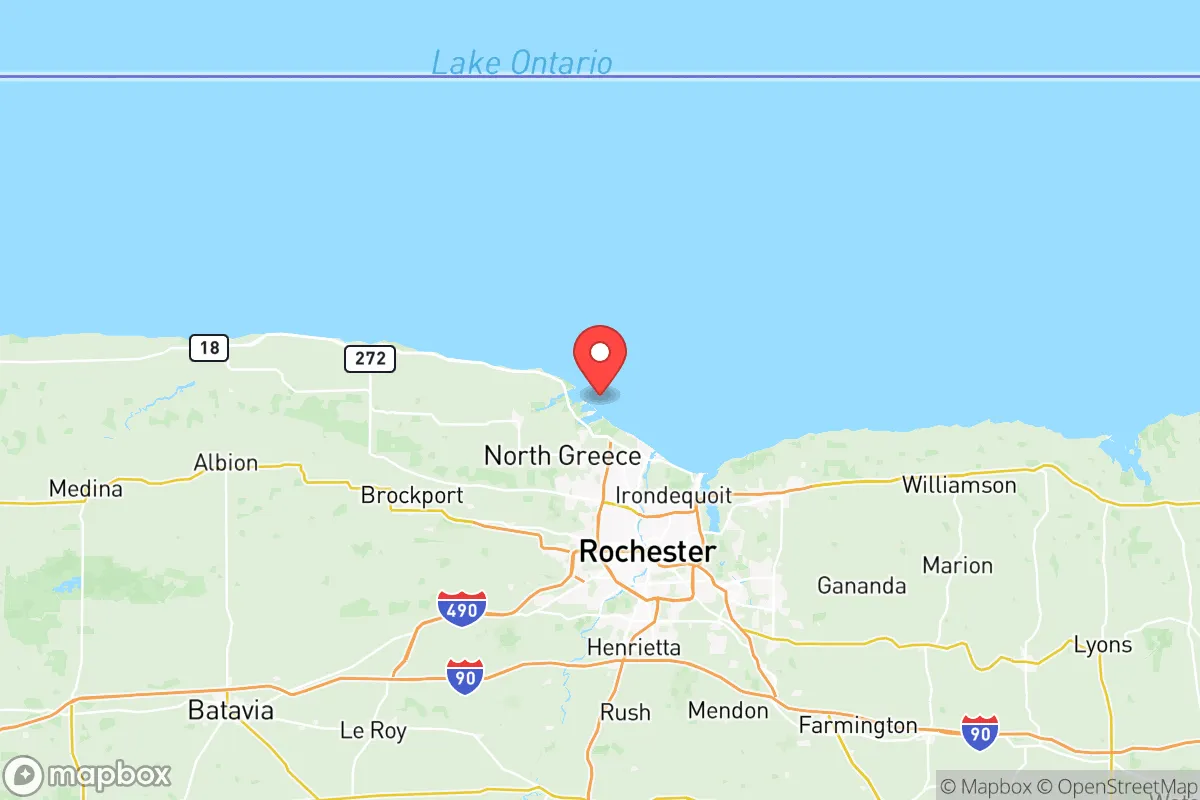
Monroe County, New York, has a Cook Partisan Voting Index of D+10, meaning it leans about ten points more Democratic than the national average, but that number hides a deeply divided local landscape. The county's political center of gravity is the city of Rochester, a reliably blue stronghold, while the surrounding suburbs and rural townships create a patchwork of red, purple, and blue precincts. Over the past decade, the county has shifted leftward overall, driven by population growth in the city and inner-ring suburbs like Brighton and Irondequoit, but the outer towns—such as Penfield, Webster, and especially the more rural communities like Rush and Mendon—have held steady or moved right, making Monroe a true battleground within a blue state.
How it compares
Compared to New York City, Monroe County is far more politically mixed and less uniformly liberal. While Manhattan and Brooklyn routinely deliver margins of 70-80% for Democratic candidates, Rochester's city vote is closer to 65-70% Democratic, and the county as a whole often votes around 55-60% Democratic in presidential races. In the 2022 gubernatorial election, for example, Monroe County gave Kathy Hochul about 56% of the vote, while New York City's five boroughs collectively gave her over 70%. The key difference is the suburban and exurban vote: towns like Pittsford and Fairport have competitive races, with some precincts swinging between parties depending on the candidate, whereas most NYC suburbs (like Westchester or Nassau) are more consistently Democratic. The county's rural towns—especially those east of Rochester like Perinton and east of the Genesee River—are where you'll find the strongest Republican turnout, often matching the reddest parts of Upstate New York.
What this means for residents
For conservative residents, living in Monroe County means being part of a vocal minority that still holds real power in local government, especially in town boards and the county legislature. The Monroe County Legislature has a Republican majority as of 2026, which means property tax policy and road funding often reflect suburban priorities, even as the city pushes for more progressive social spending. For liberal residents, the county's D+10 lean means they can reliably win countywide races (like district attorney or county executive) but must work to turn out the city vote to offset suburban and rural opposition. In practice, this creates a moderate-to-liberal tilt on issues like public transit funding and environmental policy, but with enough conservative pushback to keep things like zoning reform or new housing development from moving too fast. The result is a political climate that feels less polarized than NYC's—people from different parties still talk to each other at town hall meetings—but with real stakes in every election.
Culturally, Monroe County residents often describe the area as "blue-collar blue" or "pragmatic purple." Unlike New York City, where political identity is often tied to lifestyle and media consumption, here it's more about geography and economic interest. The city of Rochester has a strong union tradition and a growing progressive activist scene, while the suburbs are home to many moderate Republicans and independents who vote on taxes and school quality. A notable policy distinction: Monroe County has a higher property tax rate than New York City (around 3.5% of assessed value vs. NYC's roughly 1.5%), which fuels constant debate over spending priorities—a debate that rarely gets the same airtime in the five boroughs. If you're moving here, expect local politics to feel more immediate and less abstract than in NYC, with town board meetings and school budget votes having a direct impact on your daily life.

State Political ClimatePolitical Climate in New York
State Political AnalysisPolitical Environment in the State
New York State has long been a solidly Democratic stronghold, with a statewide partisan lean of roughly D+10 to D+15 in presidential elections over the past two decades, a shift from its more competitive status in the 1980s and early 1990s when it voted Republican in three consecutive presidential contests. The dominant coalition today is anchored by New York City’s five boroughs—Manhattan, Brooklyn, Queens, the Bronx, and Staten Island—which together cast roughly 40% of the state’s votes and deliver overwhelming Democratic margins. Outside the city, the balance is starkly different: upstate and western New York have trended red, especially in non-metro counties, but not enough to offset the city’s numbers. The result is a state that feels like two different political countries, with a statewide government that leans heavily left, even as many local communities remain conservative or moderate.
Urban vs. rural divide
The political map of New York is essentially a story of density versus space. New York City, along with its immediate suburbs in the lower Hudson Valley—Westchester, Rockland, and Nassau Counties—is the engine of Democratic dominance. In 2024, for example, Manhattan and Brooklyn together delivered over 1.2 million votes for Kamala Harris, while the rest of the state’s 57 counties outside the NYC metro combined for a net Republican margin of about 200,000 votes. Upstate cities like Buffalo, Rochester, Syracuse, and Albany are reliably Democratic, but their influence is diluted by the sprawling rural and exurban counties around them. Meanwhile, Staten Island remains a notable outlier: heavily Italian and Irish, it swung Republican in 2024, reflecting its working-class, law-and-order lean. The rural north country—counties like Lewis, Oswego, and St. Lawrence—votes Republican by 20-30 point margins, driven by gun rights, agricultural interests, and distrust of Albany. The divide is most visible in the Catskills and Hudson Valley beyond the commuter zone: counties like Greene and Columbia are purple, but the trend is redward as New York City transplants seeking cheaper land clash with longtime locals over taxes and regulation.
Policy environment
New York’s state-level policy is a study in progressive ambition. The tax structure is the most progressive in the nation: a graduated income tax with rates from 4% to 10.9% for top earners (over $25 million), and some of the highest property taxes in the U.S., averaging around 1.7% of home value, though they vary wildly by school district. The regulatory posture is aggressive, particularly in housing, environmental, and labor law. For example, the state mandates paid family leave, a $16.50 minimum wage (as of 2025-2026, indexing to inflation), and strict rent stabilization in NYC and select upstate cities. Education policy is centralized: the state controls curriculum standards, including a mandate for ethnic studies and LGBTQ+ inclusive materials in public schools, which has sparked resistance in conservative districts like Saratoga Springs and parts of Dutchess County. Healthcare is heavily regulated, with a state-run health exchange (NY State of Health) and Medicaid expansion that covers about 5 million residents. Election laws are among the most accessible: no-excuse absentee voting, early voting (10 days), and same-day registration, though voter ID is not required—a point of concern for some on the right who fear fraud. A conservative moving here would find a state that actively taxes high earners, mandates expensive labor practices, and centralizes education, but also offers robust public services and infrastructure in exchange.
Recent policy direction
Over the last five years, New York has accelerated leftward on multiple fronts. On gun and self-defense law, the state passed the 2022 Concealed Carry Improvement Act after the Bruen decision, requiring a new permitting process that includes character references, a 16-hour training course, and a list of “sensitive places” where firearms are banned—including hospitals, parks, and theaters. This is widely considered the strictest post-Bruen law in the country, and legal challenges continue. On parental and education rights, the 2023 Executive Law §296 amendment prevents discrimination based on gender identity and sexual orientation in schools, and the Board of Regents in 2024 issued guidance that effectively bars schools from notifying parents if a child changes their name or pronouns without the child’s consent—a flashpoint in many suburban districts. On speech, the state has no specific anti-SLAPP law strong enough to deter lawsuits against political speech, though a 2020 reform attempted to widen protections; still, critics note that speech on social media and public campuses is increasingly regulated under harassment policies. Medical and bodily autonomy is protected by a 2019 Reproductive Health Act, which codified abortion rights up to viability and allows late-term procedures for health reasons; the state also funds gender-affirming care through Medicaid. Property rights are significantly limited by rent stabilization and strict zoning laws, especially in the five boroughs, where tenants have strong protections against eviction and rent increases. Taxation has trended upward: the top rate was raised in 2021 from 8.82% to 10.9% for multi-millionaires, and a 2024 budget proposal sought a pied-à-terre tax on high-value second homes. Voting and ballot access include automatic voter registration via the DMV and early mail-in ballots, but the 2024 election saw controversy over a statewide ballot measure to expand anti-discrimination protections to immigrants regardless of status—a flashpoint for those concerned about election integrity. For a relocator, these policies mean a state where personal freedom is expansive in some domains (reproductive, LGBTQ) but highly constrained in others (guns, property, speech on campus).
Civil unrest & political movements
New York has a history as a bellwether for activism. The 2020 George Floyd protests in New York City, Buffalo, and Rochester were among the largest nationally, with curfews and property damage in midtown and the city’s outskirts. In response, the state passed the 2021 Eric Garner Anti-Chokehold Act and a police reform bill that eliminated 50-a, the law shielding police disciplinary records. Immigration politics is a major fault line: New York is a sanctuary state under 2017 executive orders, and NYC spent over $4 billion on migrant services in 2023-2024, which fueled backlash in suburban counties like Suffolk and Nassau, where local officials sued the state to block the “right to shelter” mandate. Right-wing movements are organized mainly in the upstate and rural regions: the New York State Rifle and Pistol Association is a powerful lobby, and a “scattered site” effort to repeal the SAFE Act remains a rallying issue. A small but vocal secessionist movement exists in northern counties (e.g., Jefferson, St. Lawrence) where “Restore the Republic” sentiment flares during tax season, though it has no serious legislative path. Election integrity has been a recurring flashpoint: in 2020, the state was the epicenter of the “ballot harvesting” debate when the court allowed counting of absentee ballots postmarked after Election Day, a change later codified. A new resident in liberal Brooklyn might see weekly protests outside Mayor Adams’ office over migrant policy, while a conservative in Livingston County might attend monthly town halls where state mandates are decried. The polarization is physical and palpable.
Projection
Over the next 5-10 years, New York’s political trajectory is likely to remain leftward, driven by demography and economic gravity. The state is losing population—down about 500,000 since 2020, mostly from upstate and some suburban counties—while the city is replenished by international immigration and internal migration of young professionals who lean left. The result is a slow but steady increase in the Democratic share of the vote, especially as the Hispanic and Asian populations in Queens and Brooklyn, which lean blue but with moderate economic views, potentially shift the party’s internal calculations. A relocator moving to Buffalo or Syracuse in 2026 will find that upstate cities are stabilizing their populations, but the rural exodus means those areas actually lose political weight in the legislature. The state’s fiscal health is a looming issue: the hit to commercial real estate from remote work could cause a budget crisis within 5 years, potentially forcing a tax increase that even some Democrats might resist. A moderate or conservative newcomer should expect that their vote in state elections will be marginalized—but local elections in many towns, particularly in the Hudson Valley (e.g., New Paltz) and Finger Lakes (e.g., Canandaigua), remain competitive. The policy direction suggests more regulations on housing (rent control expansion), higher taxes on the wealthy, further restrictions on gun ownership, and continued expansion of state-funded social programs. The 2024 ballot measure on employment discrimination for immigrants hints at a future where undocumented residents gain more rights, a flashpoint for fiscal conservatives.
For a conservative or moderate relocator, New York offers a mixed bag: high taxes and liberal state policy, but also world-class cities, strong public infrastructure, and the ability to live in communities that feel far from Albany’s orbit—like Adirondack towns or Wayne County farmland—where life remains deeply conservative. The practical takeaway is that your vote in state elections will rarely tip the scale, but your local school board and town council races are where you’ll have real influence. If you prioritize low taxes, gun rights, and local control, the state will feel increasingly adversarial with each passing legislative session. But if you value strong public services, cultural diversity, and a safety net, New York remains a robust place to build a life—just know that the state capital in Albany is not representing your small-town values, and that’s by design.
* Values derived from national, state, county, city and local statistics and may differ in a specific area. Last updated: 2026-06-29T00:14:24.000Z
Narrative content on this page is AI-generated and may contain mistakes. Verify any details that matter before acting on them.
ReloMaps may earn a commission from affiliate links at no extra cost to you.

