Photo: Wikipedia
Political ClimatePolitical Climate in Gwinnett County
Showing district-level results — no local-only data available.
Local Political AnalysisPolitical Analysis of Gwinnett County
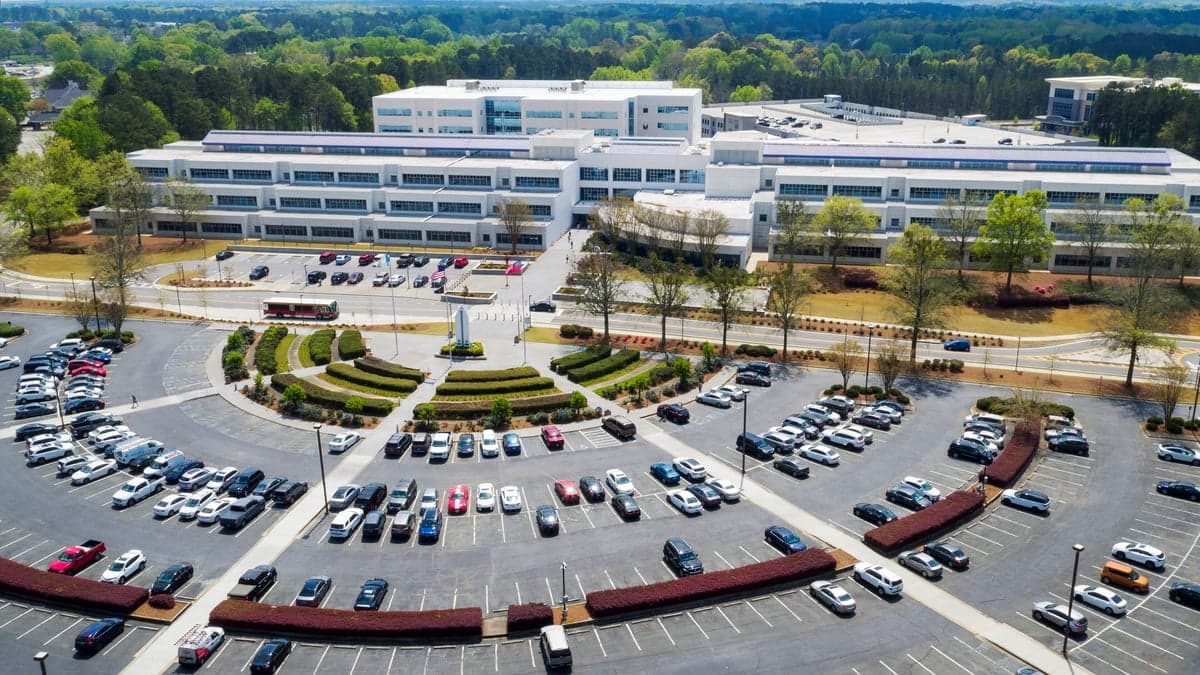
Gwinnett County has undergone one of the most dramatic political shifts in the United States over the past two decades, transforming from a reliably Republican suburban stronghold into a solidly Democratic bastion with a Cook Partisan Voting Index (PVI) of D+21. This isn't a subtle lean — it's a deep blue tilt that now rivals urban cores like DeKalb County. The change is driven by rapid demographic diversification, explosive population growth, and a steady influx of transplants from more liberal areas, particularly along the I-85 corridor. In the 2024 presidential election, Gwinnett voted for the Democratic candidate by a margin of roughly 20 points, a far cry from the 2004 race when George W. Bush carried the county by 16 points. The county's political center of gravity has shifted so decisively that local Republicans now focus on holding onto a handful of commission seats and school board positions rather than winning countywide races.
How it compares
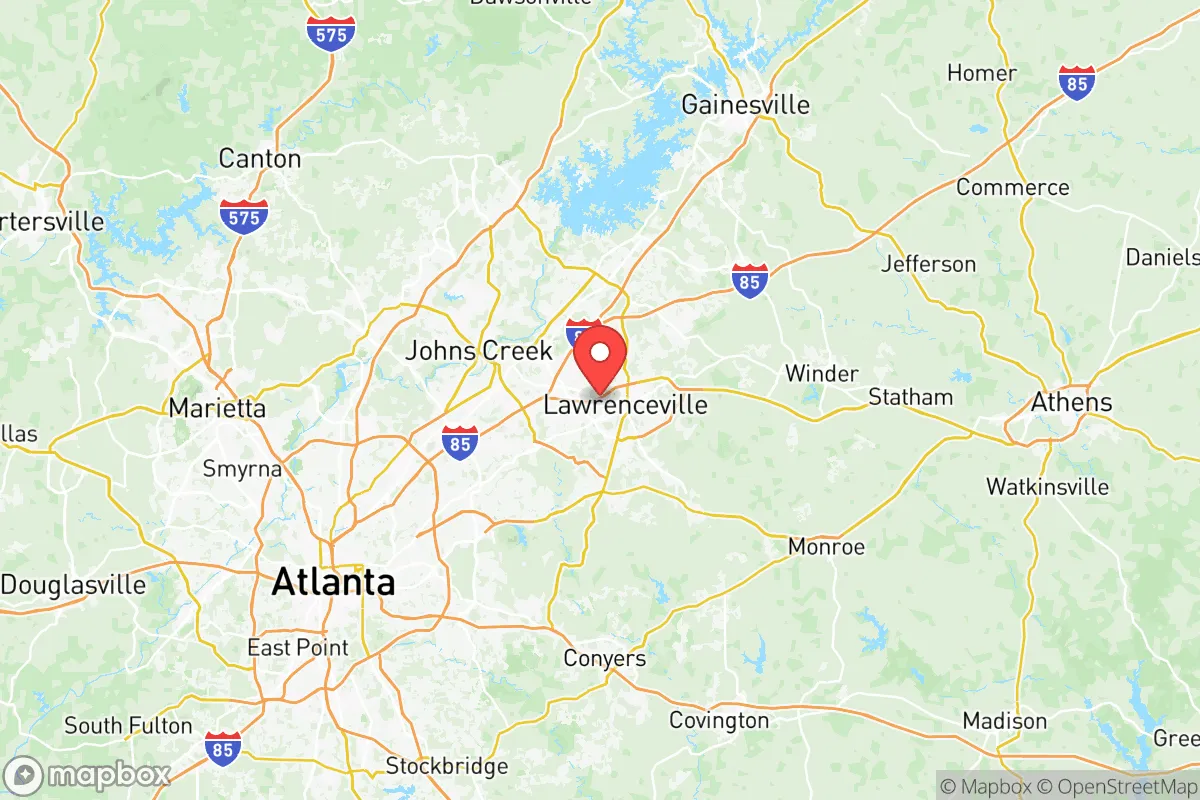
Compared to the rest of Georgia, Gwinnett is an outlier in both direction and intensity. While the state of Georgia as a whole has become a competitive battleground — with a Cook PVI that is effectively neutral (D+0 or R+0 depending on the cycle) — Gwinnett is now one of the most reliably Democratic counties in the entire Southeast. The contrast is stark: in 2024, Gwinnett voted D+21 while the state overall was decided by less than 2 points. This means Gwinnett's Democratic margin is roughly 20 points more liberal than the state average. Within the county itself, there's meaningful variation. The northern suburbs like Suwanee and Buford still lean more conservative, with precincts in those areas often voting Republican by 5-10 points. Meanwhile, central and southern Gwinnett — cities like Lawrenceville, Lilburn, and Norcross — are deep blue, often delivering Democratic margins of 30 points or more. The swing precincts are concentrated in the rapidly diversifying middle ring around Duluth and Peachtree Corners, where Asian American and Hispanic voters have become the decisive voting blocs.
What this means for residents
For liberal residents, Gwinnett's political climate means their votes carry weight in local elections and that county-level policies — from transit funding to affordable housing initiatives — generally align with progressive priorities. The county commission and school board are firmly Democratic, which has led to investments in public transportation expansion (like the Gwinnett County Transit system) and inclusive nondiscrimination ordinances. For conservative residents, the reality is more about adaptation. While they are outnumbered countywide, they still hold influence in northern precincts and can elect Republicans to the state legislature in districts that haven't been redrawn yet. Many longtime conservative families have simply accepted that Gwinnett is no longer the GOP stronghold it was in the 1990s and early 2000s, and they focus their energy on state-level races where their votes still matter. The practical effect is a county government that is stable and predictable in its Democratic leadership, but not radical — Gwinnett's Democratic establishment tends to be moderate and business-friendly, more akin to a northern suburb than a progressive urban center.
Culturally, Gwinnett's political shift has been accompanied by a notable policy distinction: the county has become a testing ground for immigrant integration and multicultural governance. Over 40% of residents are foreign-born or the children of immigrants, and the county government actively funds language access services, cultural festivals, and community outreach in Spanish, Korean, Vietnamese, and Chinese. This is a sharp contrast to more rural parts of Georgia, where such initiatives are often controversial. The county's Democratic leadership has also pushed for transit-oriented development and higher density zoning in areas like Doraville and Chamblee (both technically in DeKalb but part of Gwinnett's economic orbit), which has drawn criticism from some longtime residents who prefer the old suburban character. Looking ahead, Gwinnett's political trajectory seems locked in: as the county continues to grow and diversify, its Democratic lean will likely deepen, making it a reliable anchor for Democratic statewide candidates in Georgia for the foreseeable future.

State Political ClimatePolitical Climate in Georgia
State Political AnalysisPolitical Environment in the State
Georgia has transformed from a reliably conservative Southern state into one of the most hotly contested battlegrounds in the nation, with a partisan lean that is effectively a coin flip at the presidential level — Joe Biden won it by 0.2% in 2020, and Donald Trump lost it by a similar margin in 2024. The state’s political trajectory over the last 20 years is a story of rapid suburbanization, an influx of voters from other states, and a growing coalition of Black, white, and Asian voters in the Atlanta metro that has pulled the state leftward, while rural and exurban counties have hardened their Republican margins. For a conservative-leaning relocator, this means you’re moving into a state where your vote genuinely matters, but where the policy environment still reflects a Republican-controlled legislature and governorship — a tension that defines daily life.
Urban vs. rural divide
The political map of Georgia is a classic urban-rural split, with the Atlanta metro — including Fulton, DeKalb, Cobb, Gwinnett, and Clayton counties — generating the bulk of Democratic votes. Fulton County alone gave Biden over 400,000 votes in 2020, more than the entire population of many rural counties. Outside the metro, counties like Murray, Gilmer, and Union in the north Georgia mountains routinely vote 80%+ Republican, while the Black Belt counties in the southwest — such as Randolph, Terrell, and Early — are heavily Democratic but shrinking in population. The real story is the suburbs: Cobb and Gwinnett counties, once reliably red, flipped blue in 2016 and 2020, driven by diverse, college-educated voters. Meanwhile, exurban counties like Forsyth and Cherokee remain deep red, with Forsyth County giving Trump over 70% in 2024. Savannah (Chatham County) and Augusta (Richmond County) are Democratic-leaning urban islands, while Columbus (Muscogee County) is a purple swing county. Macon (Bibb County) leans Democratic, but the surrounding rural counties are solidly Republican.
Policy environment
Georgia’s state-level policy is firmly conservative, with a Republican governor and supermajorities in both legislative chambers. The state has a flat income tax rate of 5.49% (down from 5.75% in 2024, with further cuts scheduled), a relatively low corporate tax rate, and no estate tax. Georgia is a right-to-work state with a 4.9% unemployment rate as of early 2025, and its regulatory posture is business-friendly. Education policy includes a school choice program (the Georgia Promise Scholarship Act, passed in 2024) that provides $6,500 for private school or homeschooling expenses for students in low-performing schools. Healthcare is a mixed bag: the state did not expand Medicaid under the Affordable Care Act, leaving roughly 300,000 residents in the coverage gap, though a limited Medicaid waiver program (Georgia Pathways) launched in 2023 with work requirements. Election laws were tightened with SB 202 (2021), which added voter ID requirements for absentee ballots, limited drop boxes, and restricted out-of-precinct provisional voting. Gun laws are among the most permissive in the country: no permit required for concealed carry (constitutional carry enacted in 2022), no state-level assault weapons ban, and a strong “stand your ground” law.
Recent policy direction
The last five years have seen Georgia’s legislature push consistently rightward on cultural and economic issues. The 2024 session passed a parental rights bill (HB 1104) requiring schools to notify parents of any changes to a child’s “mental, emotional, or physical health”, effectively a “don’t say gay” law for K-12. A 2023 law (SB 140) banned gender-affirming care for minors. On property rights, the state passed a 2024 law limiting local governments’ ability to regulate short-term rentals. Tax policy is on a downward trajectory: the flat income tax is scheduled to drop to 4.99% by 2026, and the state eliminated the marriage penalty in 2023. On voting, SB 202 remains in effect after surviving court challenges, though a 2024 federal ruling struck down parts of it (the ban on giving food and water to voters in line), which the state is appealing. On privacy and surveillance, Georgia has no comprehensive data privacy law, though a 2023 law (SB 36) requires law enforcement to obtain a warrant for cell phone location data. Medical freedom saw a 2024 law (HB 133) expanding access to telehealth and allowing out-of-state physicians to treat Georgia patients without a state license. The state also passed a 2023 law (HB 19) banning “sanctuary city” policies and requiring local law enforcement to cooperate with federal immigration authorities.
Civil unrest & political movements
Georgia has been a flashpoint for political activism on both sides. The 2020 election aftermath saw massive “Stop the Steal” protests at the state capitol, and the 2021 runoffs drew national attention. The Atlanta area has seen recurring protests over police brutality and voting rights, including the 2020 killing of Rayshard Brooks and the 2023 “Cop City” protests against the Atlanta Public Safety Training Center, which turned violent and led to the passage of a state law (SB 44) increasing penalties for protest-related offenses. Immigration politics are heated: the 2023 “sanctuary city” ban was a direct response to Atlanta’s more welcoming policies, and local sheriffs in counties like Hall (Gainesville) and Whitfield (Dalton) actively cooperate with ICE. Election integrity remains a live issue, with the Georgia State Election Board (controlled by Trump-aligned Republicans) passing new rules in 2024 that were later blocked by courts. Secession or nullification rhetoric is minimal, but the state has seen a rise in “constitutional sheriff” movements in rural counties like Floyd and Stephens. A new resident in Atlanta will see occasional protests downtown, while in rural areas, the political climate is quieter but deeply polarized.
Projection
Over the next 5-10 years, Georgia is likely to remain a competitive swing state, but with a slight rightward drift in state-level policy. In-migration from blue states (California, New York, Illinois) is concentrated in the Atlanta suburbs, which will continue to push the metro area leftward, but the state legislature’s Republican supermajority is protected by gerrymandered maps that are unlikely to change before the 2030 census. The state’s population is projected to grow by 1.5 million by 2035, with most growth in exurban counties like Forsyth, Paulding, and Jackson — areas that vote Republican. The rural vote will continue to shrink as a share of the electorate, but the Republican base in the exurbs is expanding. Expect continued battles over abortion (a 6-week ban is currently in effect), school choice expansion, and election laws. The state’s economy — driven by film production, logistics (the Port of Savannah), and data centers — will keep attracting new residents, but housing affordability in the Atlanta area is deteriorating. For a conservative relocator, the state’s policy direction is likely to stay favorable, but the political environment will remain contentious, with close elections and high-stakes legislation every session.
For a new resident, the bottom line is this: Georgia offers a low-tax, business-friendly environment with strong gun rights and school choice, but you’ll be living in a state where every election is a battleground and where the cultural divide between Atlanta and the rest of the state is stark. If you’re moving to the suburbs of Atlanta, expect a politically mixed neighborhood where your vote is contested. If you’re moving to a rural or exurban area, you’ll find a deeply conservative community that feels insulated from the state’s leftward drift. Either way, Georgia is a state where your political engagement — or lack thereof — will have real consequences.
* Values derived from national, state, county, city and local statistics and may differ in a specific area. Last updated: 2026-06-22T03:37:16.000Z
Narrative content on this page is AI-generated and may contain mistakes. Verify any details that matter before acting on them.
ReloMaps may earn a commission from affiliate links at no extra cost to you.

