
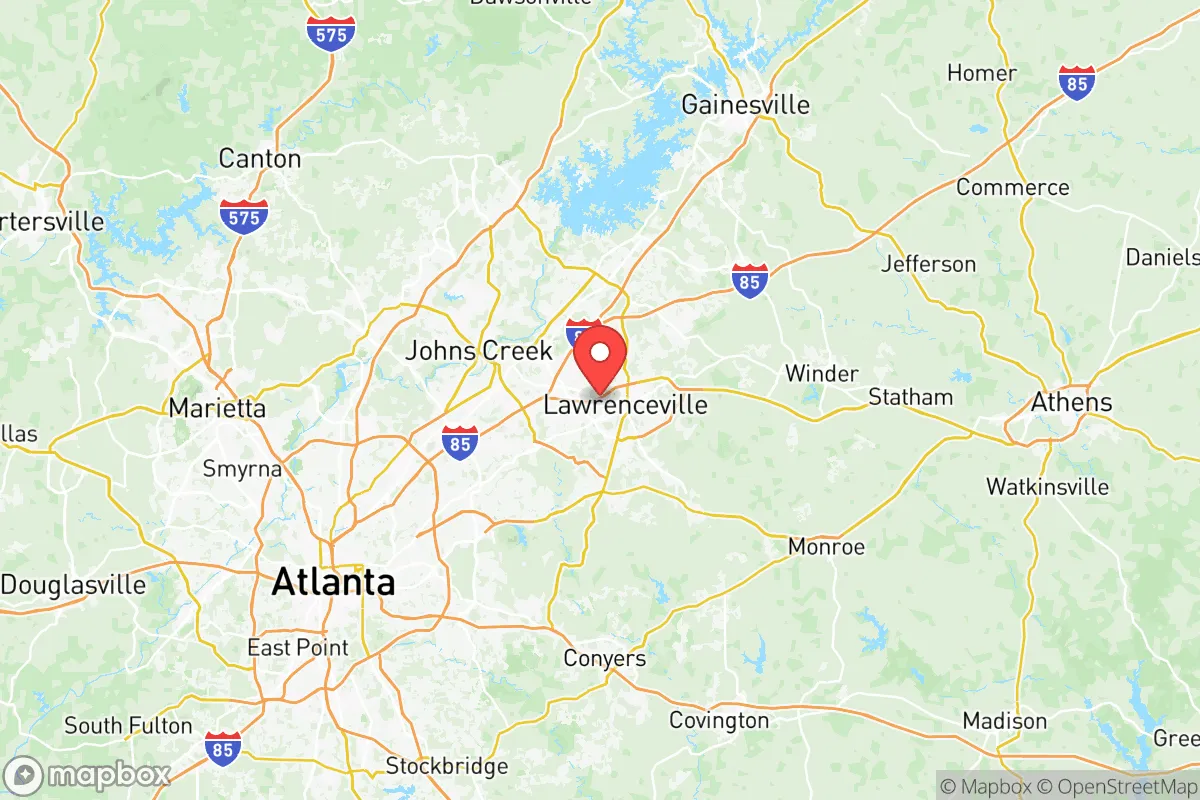
Photo: Wikipedia
Personal Sovereignty in Gwinnett County
Viable for self-reliance. Generally workable, though some barriers may limit total independence.
What does Personal Sovereignty tell us?
Personal Sovereignty measures your capacity for self-reliance and independence with minimal government friction. Higher scores mean fewer barriers between you and the way you want to live... but it assumes you have the space you need and good neighbors.
What does this tell us?
Personal Sovereignty measures your capacity for self-reliance and independence with minimal government friction. Higher scores mean fewer barriers between you and the way you want to live... but it assumes you have the space you need and good neighbors.
State Policy
Energy independence: Importer (12% of energy produced in-state)
Personal Liberty
Homesteading

Personal Liberty Analysis
Gwinnett County, Georgia presents a mixed personal sovereignty environment where state-level protections for gun rights and parental authority coexist with a growing local regulatory footprint that can feel restrictive to residents accustomed to rural autonomy. As metro Atlanta’s second-most populous county, Gwinnett balances a historically conservative state framework with increasingly progressive county-level governance, creating a sovereignty landscape that varies significantly depending on which of its 16 incorporated cities you call home.
How the tax burden and regulatory posture affect your freedom
Georgia’s state-level tax structure is among the most favorable in the Southeast for personal sovereignty, with a flat 5.39% income tax rate and no state-level property tax on vehicles or intangible assets. Gwinnett County’s property tax millage rate of approximately 13.5 mills for unincorporated areas is moderate by metro Atlanta standards, though residents in cities like Suwanee and Sugar Hill pay additional municipal levies that can push the effective rate above 15 mills. The county’s regulatory posture has tightened notably since 2020, particularly around short-term rentals and home-based businesses. Unincorporated Gwinnett requires a business license for any home-based enterprise, with annual fees ranging from $50 to $400 depending on the business type, and the county enforces strict parking and signage restrictions that limit how visibly you can operate from your property. In contrast, Dacula and Auburn maintain lighter regulatory touch, with fewer zoning restrictions on home occupations and no additional short-term rental ordinances beyond state requirements. The county’s development regulations also impose minimum lot sizes of 0.5 acres in most residential zones, which limits the ability to subdivide property for family compounds or accessory dwelling units without variance approval. For the sovereignty-minded individual, the tax burden is manageable but the regulatory creep in unincorporated areas and larger cities like Lawrenceville and Duluth requires careful attention to local ordinances before purchasing property.
Self-defense and gun law specifics in Gwinnett County
Georgia is a constitutional carry state, meaning no permit is required to carry a handgun openly or concealed for any law-abiding adult 21 or older. Gwinnett County fully recognizes this state preemption, and local law enforcement cannot impose additional restrictions beyond state law. The county’s sheriff’s office issues weapons carry licenses for reciprocity purposes, with a typical processing time of 30-60 days. However, the practical experience of gun ownership in Gwinnett differs sharply between its northern and southern halves. In Buford and Grayson, where rural character persists, residents report few issues with shooting on private property or transporting firearms. In Norcross and Lilburn, denser suburban development has led to noise ordinance complaints against backyard shooting ranges and more frequent police contacts for open carry in public spaces. The county’s gun ranges, including the popular Wilson Shoals WMA range in neighboring Hall County and the private Gwinnett Gun & Archery Club in Buford, remain accessible but require membership or daily fees. Georgia law prohibits local governments from regulating firearm possession, transport, or carrying, which provides a strong baseline for self-defense rights. The practical limitation in Gwinnett is not legal but spatial: on lots under one acre, which constitute roughly 60% of residential parcels in the county’s southern and central areas, discharging a firearm is effectively impossible without violating safety or noise ordinances. For the self-reliant individual, the legal framework is robust, but the suburban density of much of Gwinnett means that target practice and home defense training often require a drive to less developed areas.
Self-reliance and homesteading viability across Gwinnett’s communities
Homesteading and off-grid living in Gwinnett County require strategic property selection, as zoning and lot size restrictions vary dramatically by jurisdiction. The county’s agricultural zoning districts allow for keeping livestock, beekeeping, and market gardening on parcels as small as two acres, but these zones are concentrated in the northern and eastern fringes. In Dacula and Auburn, where minimum lot sizes in agricultural-residential zones start at one acre, residents can legally keep chickens, goats, and up to two head of cattle without special permits. By contrast, in Lawrenceville and Duluth, residential lots under 0.75 acres prohibit livestock entirely, and beekeeping requires a $50 annual permit and neighbor notification. Off-grid water and power systems face significant hurdles. Gwinnett County requires connection to municipal water and sewer where available, which covers over 85% of developed parcels. Private wells are permitted only on lots of one acre or more in unincorporated areas, and solar panel installations must comply with the county’s building code and homeowner association covenants, which in planned communities like those in Suwanee’s Old Town district often restrict visible panels. Rainwater harvesting for irrigation is allowed without permit, but systems for potable use must meet Georgia’s strict plumbing codes and undergo county health department approval. The county’s solid waste ordinances require subscription to a county-approved hauler, effectively banning on-site waste disposal or composting toilets for primary residences. For the serious homesteader, the viable areas are limited to the northern tier—Buford, Dacula, and Auburn—where lot sizes and zoning allow meaningful self-reliance. Even there, the regulatory overhead for off-grid systems is higher than in rural Georgia counties like Banks or Jackson, where county governments take a more hands-off approach.
Personal liberties: parental rights, medical autonomy, speech, and property
Georgia law provides strong statutory protections for parental rights, including the Parental Rights in Education Act and the ability to opt children out of sex education and certain health screenings. Gwinnett County Public Schools, the largest school system in Georgia, has implemented these state mandates with generally consistent compliance, though some parents in Lilburn and Norcross have reported friction with school administrators over curriculum transparency and library book content. The county’s school board meetings have become venues for vigorous debate on these issues, reflecting the broader cultural tensions between the county’s growing progressive population and its traditionalist base. Medical autonomy in Gwinnett is shaped by state law: Georgia prohibits mandated vaccination for adults and allows religious exemptions for school vaccine requirements, but the county’s healthcare system, dominated by Northside Hospital and Emory Healthcare, follows standard protocols that may not accommodate alternative treatment preferences. Speech and assembly rights are fully protected under the First Amendment, and Gwinnett’s public spaces, including the Gwinnett County Fairgrounds and numerous city parks, host a wide range of political and cultural events without content-based restrictions. Property rights are generally strong, with Georgia’s eminent domain laws requiring just compensation and a demonstrated public purpose. However, Gwinnett’s active use of tax allocation districts for redevelopment in areas like Lawrenceville’s downtown corridor has raised concerns among property owners about the county’s willingness to use condemnation powers for private development projects. The county’s tree preservation ordinance, which requires permits for removing trees over six inches in diameter on lots over one acre, adds a layer of environmental regulation that can frustrate landowners seeking to clear land for gardens or structures.
Overall, Gwinnett County offers a sovereignty profile that is strongest in its legal foundations—constitutional carry, parental rights, and property protections—but increasingly constrained by local regulations and suburban density. For the individual or family prioritizing maximum personal autonomy, the northern and eastern communities of Buford, Dacula, and Auburn provide the most favorable environment, with larger lots, lighter zoning, and a more rural character. The southern and central cities of Norcross, Lilburn, and Duluth present a more regulated experience that may feel restrictive to those accustomed to rural self-reliance. Compared to deeply rural Georgia counties like Banks or Union, Gwinnett’s regulatory overhead is higher and its off-grid possibilities more limited. Compared to core Atlanta or DeKalb County, however, it offers substantially greater freedom in gun rights, school choice, and property use. The county’s sovereignty environment is best understood as a transitional one—state law provides a strong baseline, but local ordinances and demographic trends are steadily tightening the regulatory framework, making property selection within the county the decisive factor for those who value personal independence.

* Values derived from national, state, county, city and local statistics and may differ in a specific area. Last updated: 2026-06-22T03:37:16.000Z
Narrative content on this page is AI-generated and may contain mistakes. Verify any details that matter before acting on them.
ReloMaps may earn a commission from affiliate links at no extra cost to you.

