
Photo: Wikipedia
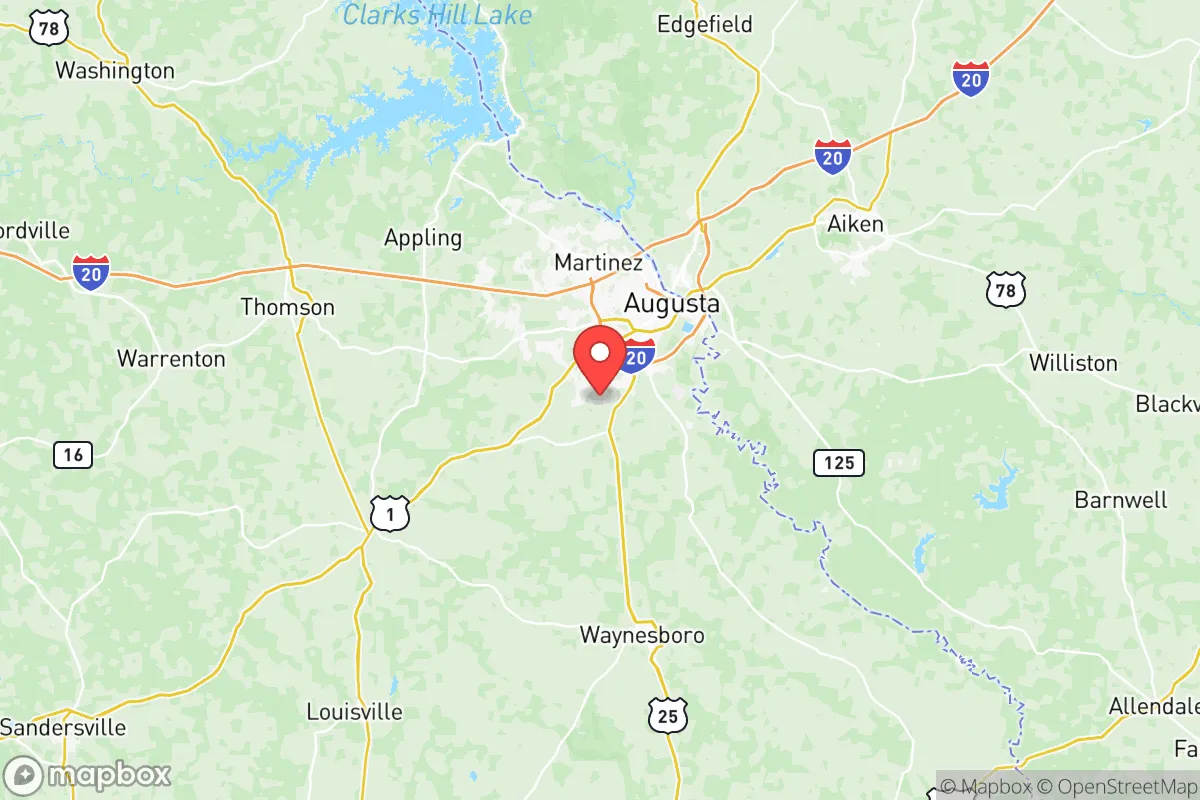
Find The Best Places To Live in Richmond County
PRO TIP! You can paste a Zillow or Redfin link to get info on that property.
Best Places to Live in Richmond County
Cities & Towns in Richmond County
Cities in Richmond County
What It's Like Living in Richmond County, GA
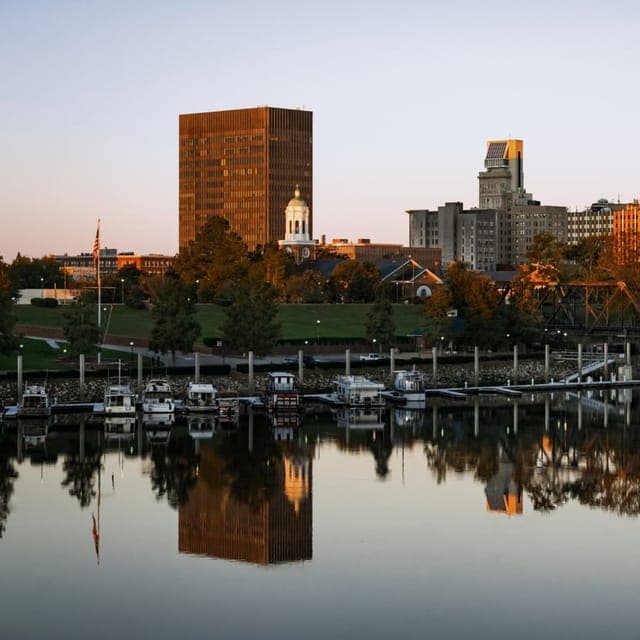
Living in Richmond County means planting a flag in Georgia’s second-oldest city, where the Savannah River bends history into everyday life. Most people land in the county seat of Augusta, but the feel shifts quickly as you move into towns like Hephzibah or Blythe, where the pace slows to a rural drawl. It’s a place where you can grab a crawfish po’boy at a downtown Augusta po-boy shop on a Thursday night and then spend Saturday morning looking at property lines out in McBean—a contrast that defines the region.
The Quiet Rhythm of County Life
Daily life in Richmond County doesn’t revolve around a single hub. The average commute clocks in at just under 21 minutes, which means people actually see their front doors during daylight hours. In Augusta, morning traffic stacks up on Washington Road near the medical district and around I-20 exits, but it clears fast—nothing like the grinding jams of Atlanta or Charlotte. Outside city limits, in areas like Hephzibah or Blythe, a ten-minute drive to the grocery store is standard, and neighbors wave from their trucks. The median age here is 35, which leans younger than much of rural Georgia, driven largely by the medical and military communities. With a cost of living index of 79—well below the national average—a median home value of $163,300 puts a decent three-bedroom ranch firmly within reach for a couple earning the median household income of $53,197.
Where the County Gathers: Sports, Festivals, and Friday Nights
Sports are the social glue. The Augusta GreenJackets, the Single-A affiliate of the Atlanta Braves, play at SRP Park in North Augusta, just across the river, and the ballpark genuinely packs in families and retirees on $2 beer nights. High school football is a serious matter—Hephzibah High’s rivalry games against Glenn Hills draw crowds that outnumber the town’s population. The area’s biggest cultural event, the Masters Tournament, drops in every April and briefly turns Augusta into an international destination, but locals mostly avoid the traffic and watch from home. Beyond golf, the county’s outdoor life centers on the river: people paddle at Savannah Rapids Pavilion, hike the Palmetto Trail segments, and fish off the banks near Lock and Dam Park. For music and nightlife, downtown Augusta’s Sky City venue books indie acts, while the Riverwalk Augusta offers a slower evening stroll under the oaks.
What You Gain, and What You Trade Away
The honest upsides hinge on space and affordability. People who move here from pricier states—especially those priced out of coastal Georgia or Florida—find they can actually own a home without a six-figure salary. The area’s anchor employers, Augusta University Health and the Fort Eisenhower military base, provide stable work for doctors, nurses, and civilian contractors. Only 24.1% of adults here hold a college degree, which means the job market doesn’t reward advanced credentials as heavily as in college towns, but tradespeople and healthcare workers do well. On the downside, the violent crime rate of 262 per 100,000 remains a real concern—it’s above the national average, and while it’s concentrated in specific Augusta neighborhoods, it colors perceptions for the whole county. Longtime residents also gripe about the lack of regional entertainment beyond Augusta; if you want a major concert or a significant airport hub, you’re driving two and a half hours to Atlanta or two hours to Columbia, SC. Summer heat runs from May through September with high humidity, and while the river provides some breeze, air conditioning is non-negotiable.
Schools, Seasons, and Local Identity
The Richmond County School System is a talking point at every cookout. It serves the entire county—including Hephzibah and Blythe—and isn’t universally praised. Test scores lag behind the state average, which pushes some families toward private or charter options, though magnet programs at Davidson Fine Arts Magnet School and A.R. Johnson Health Science and Engineering Magnet School are legitimately competitive and well-regarded. Seasonal rhythms here are unhurried: fall brings the fair at the Augusta Common, spring explodes with azaleas during Masters week, and summer is dominated by pool passes and sweet tea. What binds the county together is a kind of stubborn practicality—people know the history, from the Cotton Exchange to James Brown’s legacy, and they don’t try to be Atlanta. If you’re looking for a place where your dollar stretches, your commute stays short, and you can own a piece of land with a creek in the back, Richmond County deserves a real look. Just come ready for the humidity and willing to drive an hour for a big-city show.

* Values derived from national, state, county, city and local statistics and may differ in a specific area. Last updated: 2026-06-25T10:45:44.000Z
Narrative content on this page is AI-generated and may contain mistakes. Verify any details that matter before acting on them.
ReloMaps may earn a commission from affiliate links at no extra cost to you.

