Photo: Wikipedia
Find The Best Places To Live
in Palmetto
PRO TIP! You can paste a Zillow or Redfin link to get info on that property.
What It's Like Living in Palmetto, GA
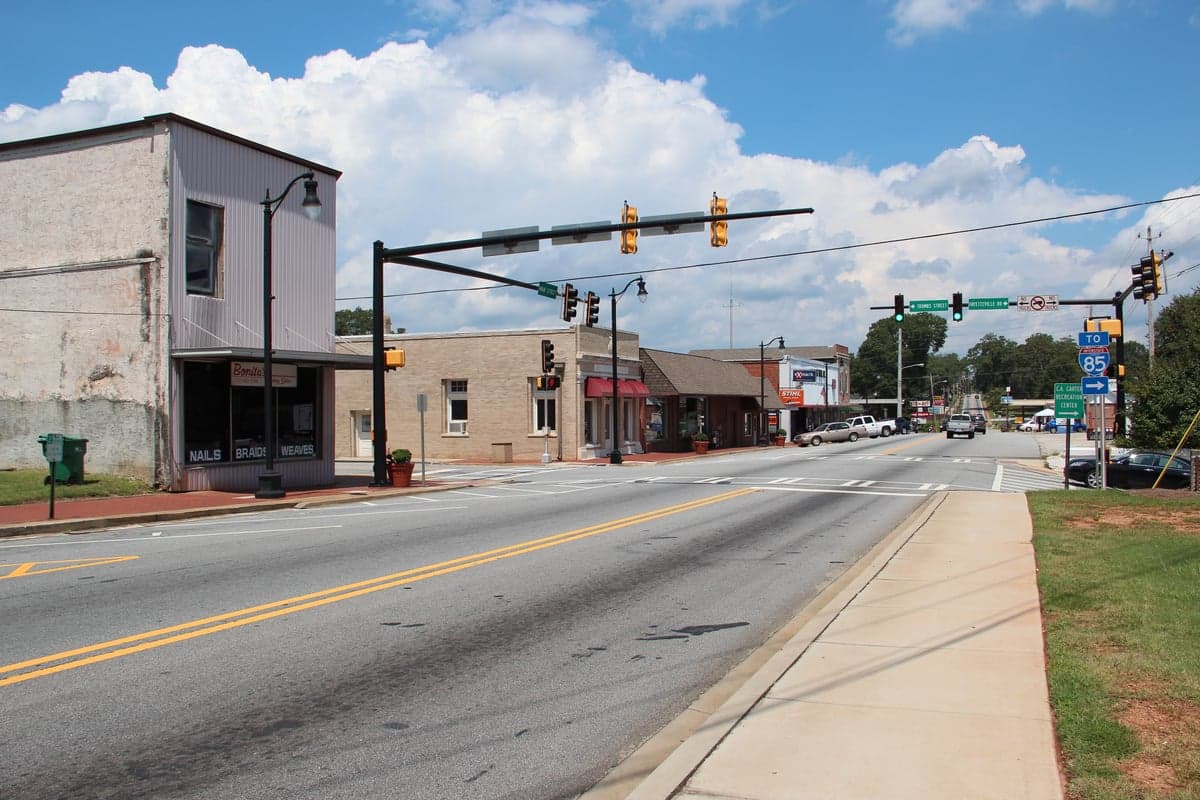
Palmetto, Georgia, feels like a small-town holdout that’s just close enough to Atlanta to keep things interesting. With a population just shy of 4,700, it’s the kind of place where you’ll recognize the same faces at the gas station and the Friday night lights are a genuine community event, not just a backdrop. Life here moves at a slower, more deliberate pace than the metro sprawl to the north, but the trade-off is a strong sense of place and a cost of living that actually lets you breathe.
The Daily Rhythm: Slow Mornings and Commute Realities
For most residents, the day starts early. The median age here is 42.8, so you’re looking at a population that’s settled into routines—families getting kids ready for school, folks heading out for work. The average commute clocks in at about 28 minutes, which is a very real number for a town this size. That’s the price of living in a quieter spot while still working in the broader Atlanta metro or the industrial hubs along I-85. You’ll see a lot of pickup trucks and sensible sedans on the road, and the morning coffee crowd at the local spots like the Palmetto Diner tends to be a mix of retired neighbors and folks grabbing a quick bite before the drive. Weekends are slower: yard work, a trip to the local Dollar General or the Piggly Wiggly in nearby Fairburn, and maybe a cookout with neighbors. It’s not a place for a bustling nightlife, but for those who value space and quiet, that’s the whole point.
Sports, Community, and the Friday Night Anchor
If there’s one thing that genuinely unites Palmetto, it’s the local high school sports scene. Palmetto High School football games are the social calendar highlight from August through November. The stands are packed with families, former students, and local business owners. It’s not just about the game—it’s where you catch up on town news, see who’s coaching this year, and support the kids. For college sports, you’ll find a split allegiance between Georgia and Georgia Tech, but the real passion is local. Beyond the gridiron, the town has a few small parks and the Cochran Mill Park just south offers decent hiking and a waterfall that’s a favorite for weekend afternoon trips. There isn’t a major music venue or a big festival in town proper, but the proximity to Atlanta means you’re never more than 30-40 minutes from a concert or a Braves game at Truist Park. The lack of a major local festival is something some residents wish was different, but the community does rally for the annual Palmetto Christmas Parade and a few church-hosted events.
What You’re Actually Paying For: The Honest Trade-Offs
Let’s talk numbers, because they tell the real story. The median home value sits at $203,600, which is dramatically lower than what you’d find inside the Perimeter or even in many close-in suburbs. The cost of living index is 92, meaning your dollar goes further here than in most of the country. The median household income is $54,745, which is modest, but the housing affordability makes it workable for many families and single individuals who don’t need to be in the city every night. The trade-off is that only 13.2% of adults hold a college degree, and the job base is heavily tilted toward trades, logistics, and service work. This isn’t a bedroom community for tech executives—it’s a working-class town where people fix things, drive trucks, and work in the warehouses that line the nearby interstates. The violent crime rate is 272.9 per 100,000, which is higher than the national average and something to be aware of, though most residents will tell you it’s concentrated in specific pockets and that the day-to-day feel is safe, especially in the established neighborhoods.
Pros and Cons of Living Here
- Pro: Genuine affordability. You can buy a decent single-family home for under $250,000, which is almost unheard of in the broader metro area. This is the biggest draw for families and first-time buyers.
- Pro: Small-town community feel. People know each other. Neighbors watch out for each other. If you want to be anonymous, this isn’t the place.
- Con: Limited local amenities. There’s no major grocery store in town, no movie theater, and very few sit-down restaurants beyond a couple of diners and fast-food spots. You’ll drive to Fairburn, Newnan, or Peachtree City for most errands.
- Con: The commute is real. That 28-minute average is a best-case scenario. If you’re heading into Atlanta during rush hour, expect 45 minutes to an hour each way. The traffic on Highway 29 and I-85 can be grinding.
- Con: Schools are a mixed bag. The local schools are part of the Fulton County system, which is large and uneven. Many families who can afford it look into private options or charter schools in nearby communities.
Weather-wise, you get the full Georgia experience: hot, humid summers where the air feels thick, and mild winters where a light jacket usually suffices. Spring and fall are genuinely beautiful, with the trees changing and the humidity dropping. The seasonal rhythm here is tied more to school calendars and football than to any major weather shifts. For the right person—someone who values space, affordability, and a slower pace over urban convenience—Palmetto offers a solid, unpretentious life. It’s not for everyone, but the people who love it here tend to stay.

Similar small towns to Palmetto


* Values derived from national, state, county, city and local statistics and may differ in a specific area. Last updated: 2026-10-14T23:20:11.000Z
Narrative content on this page is AI-generated and may contain mistakes. Verify any details that matter before acting on them.
ReloMaps may earn a commission from affiliate links at no extra cost to you.

