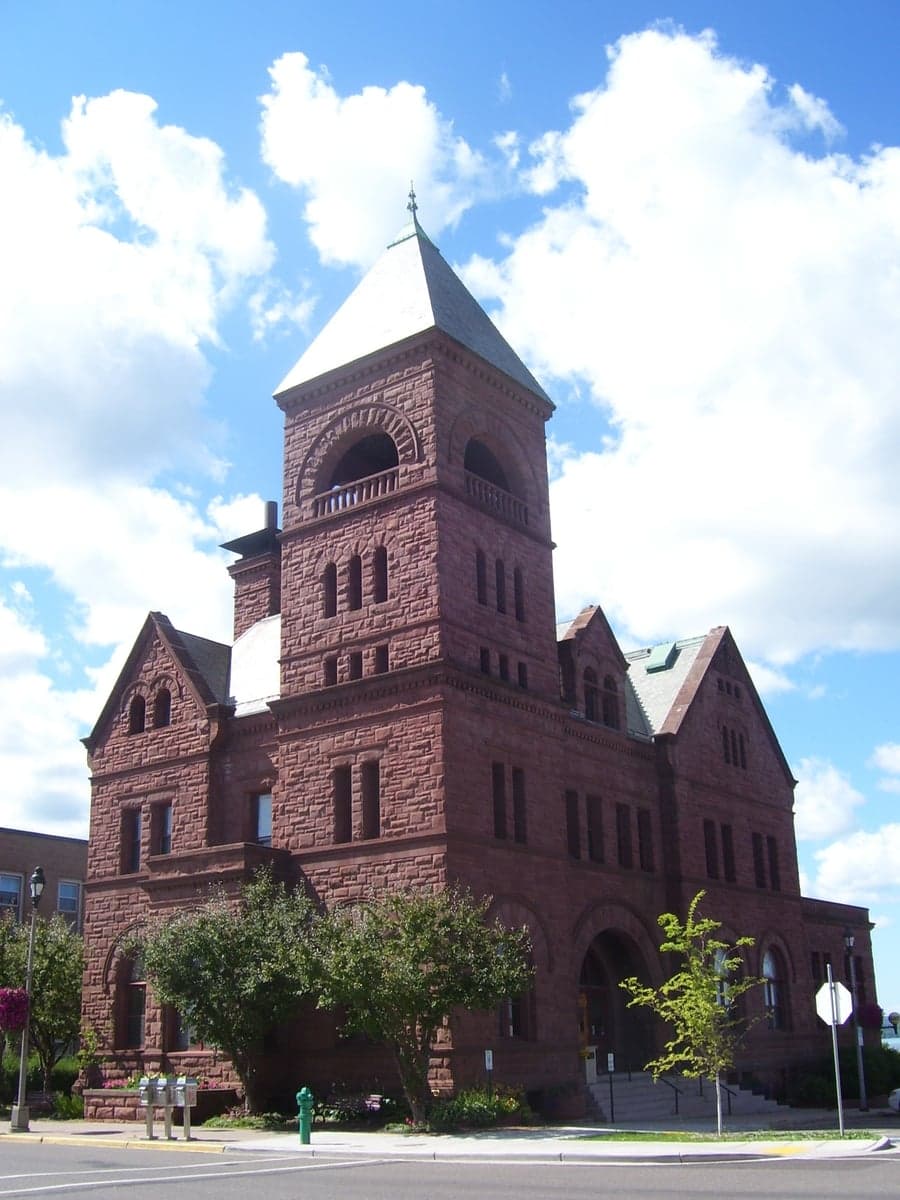
Photo: Wikipedia
Political ClimatePolitical Climate in Ashland, WI
District shown is the primary district for this city’s centroid. Cities may span multiple districts.
Inherited from parent county — no local data available.
* Lean and PVI are calculated from Ashland, WI’s own 2020 presidential results (precinct returns summed to the city), with 2024 estimated from the surrounding county’s 2020–2024 shift, Cook-style. Sources: state election offices; VEST 2020 precinct results (CC BY 4.0).
Political rankings in Wisconsin
- Most Conservative Cities in Wisconsin
- Most Liberal Cities in Wisconsin
- Best Liberal-Leaning Towns in the Midwest
- Safest Liberal-Leaning Towns in the Midwest
- Safest Conservative-Leaning Towns in the Midwest
- Affordable Small Towns for Conservatives
- Most Affordable Liberal-Leaning Small Towns in the U.S.
- Safest Conservative-Leaning Cities in the U.S.
- Most Conservative Counties in Wisconsin
- Most Liberal Counties in Wisconsin
Local Political AnalysisPolitical Analysis of Ashland, WI
Ashland, Wisconsin, leans reliably Democratic, carrying a Cook Partisan Voting Index of D+3, which means it votes about three points more Democratic than the national average. This stands in contrast to the state of Wisconsin as a whole, which has a Cook PVI of EVEN—a perfect toss-up that has decided presidential elections by razor-thin margins. Over the past decade, Ashland has held steady for Democrats, but the surrounding rural areas and smaller towns like Mellen and Glidden have shifted harder to the right, creating a familiar urban-rural split that defines much of the Northwoods.
How it compares
Ashland’s D+3 lean makes it a blue island in a sea of red. Drive 20 miles south to Mellen, and you’ll find a town that voted for Donald Trump by roughly 20 points in 2020. Head east toward the Apostle Islands, and the political vibe stays conservative until you hit Bayfield, which leans left but not as strongly as Ashland. The contrast is stark: Ashland’s city council and county board have a Democratic majority, while the surrounding Ashland County as a whole is more purple, often splitting tickets in state races. Statewide, Wisconsin’s EVEN rating means the state legislature is gerrymandered to favor Republicans, so even though Ashland sends a Democrat to Madison, the district’s influence is diluted in the Assembly. This dynamic has been stable since the early 2000s, and I don’t see it changing much—Ashland’s base is anchored by the university (Northland College) and a strong public-sector workforce, while the exurbs keep trending red.
What this means for residents
For liberal residents, Ashland feels like a safe space where progressive policies on environmental protection, tribal relations (the Bad River Band of Lake Superior Chippewa is nearby), and local food systems get real traction. You’ll see "Black Lives Matter" signs in yards and a farmers market that’s practically a community meeting. For conservative residents, it can feel like you’re in the minority, but it’s not hostile—most folks just disagree on taxes and logging regulations. The practical impact is that local elections matter more here than in a deep-red county. A conservative candidate can win a city council seat if they focus on potholes and snow removal, but they won’t get far on culture-war issues. The trajectory is toward a slight leftward drift, driven by younger people moving in for the outdoor lifestyle and remote work, but the overall population is shrinking, so the political balance is more about who stays than who arrives.
Culturally, Ashland stands out for its strong environmentalist streak—the city banned plastic bags in 2019, and there’s a vocal push for renewable energy cooperatives. That’s a sharp contrast with the rest of the county, where hunting, fishing, and snowmobiling are the dominant pastimes and "government overreach" is a common complaint. Policy-wise, Ashland’s school board has been more willing to fund arts and diversity programs than neighboring districts, but the tax base is thin, so budgets are tight. For both sides, the biggest shared frustration is the economy: high property taxes, limited job growth, and a reliance on tourism and healthcare. The political divide doesn’t stop people from grabbing a beer at the Deepwater Grille or hitting the ice fishing shanties on Chequamegon Bay—it’s more of a background hum than a daily fight. If you’re moving here, expect to hear about local issues like the ore dock redevelopment or the hospital’s future more than national politics, but know that the town’s blue lean shapes everything from zoning to school funding.

State Political ClimatePolitical Climate in Wisconsin
State Political AnalysisPolitical Environment in the State
Wisconsin is the ultimate swing state, and if you’re moving here, you need to understand that it’s not red or blue—it’s purple, and it’s been trending a shade darker red over the last decade. The state’s Cook PVI is EVEN, meaning it votes almost exactly with the national average, but the real story is the 2024 election where Donald Trump carried the state by about 1 point, flipping it back after Joe Biden’s narrow 2020 win. Over the last 20 years, the state has shifted from a reliable blue-leaning battleground (voting for Democrats in every presidential election from 1988 to 2012) to a true toss-up, driven by a massive urban-rural split and a growing conservative base in the WOW counties—Waukesha, Ozaukee, and Washington—that now anchor the GOP’s statewide coalition.
Urban vs. rural divide
The political map of Wisconsin is a tale of two worlds. The Democratic stronghold is Milwaukee County, which delivered about 70% of its vote to Biden in 2020, powered by the city of Milwaukee itself and its diverse, union-heavy workforce. Dane County, home to Madison and the University of Wisconsin, is even more liberal, routinely giving Democrats 75%+ of the vote. These two counties alone account for roughly a third of the state’s population, and they’re the engine of the Democratic coalition. But the rest of the state is a different story. The WOW counties—Waukesha, Ozaukee, and Washington—are the GOP’s suburban fortress, with Waukesha County alone delivering over 60% of its vote to Trump in 2024. These are the classic “collar counties” that have shifted hard right since the 1990s, driven by white-collar professionals, small business owners, and a strong Catholic and evangelical presence. The rural northwoods and western Wisconsin, including counties like Vilas, Oneida, and St. Croix, have also trended red, with Trump winning many of these areas by 20-30 points. The divide is stark: if you live in Milwaukee or Madison, you’re in a blue bubble; if you’re in Waukesha, Green Bay, or the Driftless Region, you’re in deep red territory. The swing counties that decide elections are places like Brown County (Green Bay), Racine County, and Kenosha County—working-class, mixed-ethnicity areas that have been trending red but remain competitive.
Policy environment
Wisconsin’s policy environment is a patchwork of conservative and moderate elements, reflecting its divided government. The state has a flat income tax of 4.4% (down from 7.65% in 2011), and property taxes are moderate, averaging about $2,500 per $100,000 of home value, though they vary widely by district. The state is a “right-to-work” state (passed in 2015), which has weakened union power, particularly in manufacturing and public schools. Education policy is a battleground: the state has a robust school choice program, including vouchers for private and religious schools in Milwaukee, Racine, and the statewide program, which conservatives love and teachers’ unions hate. Healthcare is mixed—Wisconsin expanded Medicaid under the Affordable Care Act in 2014, but the state’s marketplace is stable, and there’s no state-level individual mandate. Election laws are a flashpoint: Wisconsin has no-excuse absentee voting, same-day voter registration, and voter ID requirements (strict photo ID law passed in 2011). The state’s election administration is decentralized, with 1,800+ local clerks, which has led to both high turnout and controversy. Gun laws are relatively permissive: Wisconsin is a “shall-issue” state for concealed carry (passed in 2011), no permit needed for open carry, and there’s no “red flag” law, though a 2023 law did allow for temporary firearm seizure under certain domestic violence orders.
Recent policy direction
The last few years have seen Wisconsin lurch rightward on several fronts, even with a Democratic governor (Tony Evers) in office until 2023. The 2023-2025 legislative session, with a Republican supermajority in the Assembly and a near-supermajority in the Senate, passed a flurry of conservative bills, many of which were vetoed by Evers. Key enacted laws include: a 2023 law banning transgender athletes from girls’ and women’s sports (K-12 and college), a 2024 law expanding school choice eligibility to all families regardless of income, and a 2023 law requiring parental consent for minors to access social media. On guns, a 2024 law allowed for the carrying of firearms in churches and other places of worship without a license. On abortion, the state is in legal limbo: a 1849 law banning nearly all abortions was struck down by a Dane County judge in 2023, but the case is pending before the state Supreme Court, which flipped to a 4-3 liberal majority in 2023. That court has also upheld the state’s heavily gerrymandered legislative maps, though a 2024 ruling ordered new maps for 2024, which are expected to be less skewed. On voting, a 2024 law banned private funding for election administration (the “Zuckerbucks” ban), and a 2023 law tightened absentee ballot drop box rules. For conservatives, this direction is a win on education, guns, and election integrity; for liberals, it’s a loss on abortion access, LGBTQ rights, and voting convenience.
Civil unrest & political movements
Wisconsin has a long history of political activism, and the last decade has been no exception. The 2011 Act 10 protests in Madison, which drew over 100,000 people to the Capitol to oppose Governor Scott Walker’s union restrictions, were a defining moment—they were the largest state-level protests in U.S. history at the time. Since then, the state has seen periodic flare-ups: the 2020 Kenosha unrest after the Jacob Blake shooting, which included riots, arson, and the Kyle Rittenhouse shooting, remains a flashpoint for both sides. Immigration politics are less intense than in border states, but there’s a growing debate over sanctuary policies: Milwaukee County has a “welcoming city” ordinance that limits cooperation with ICE, while conservative counties like Waukesha have passed resolutions opposing it. Election integrity controversies have been persistent: the 2020 election saw Trump’s campaign challenge results in Milwaukee and Dane counties, and a 2022 audit by the nonpartisan Legislative Audit Bureau found no widespread fraud but did highlight administrative errors. The state also has a strong “secession” rhetoric in the northwoods, with some counties like Vilas and Oneida passing resolutions in 2021 calling for a “constitutional convention” to limit federal power, though this is more symbolic than practical. For a new resident, you’ll notice the political divide in everyday life: bumper stickers, yard signs, and local news coverage are sharply partisan, especially in the WOW counties and Dane County.
Projection
Over the next 5-10 years, Wisconsin is likely to remain a swing state, but the demographic trends favor a slight rightward tilt. The state’s population is aging and stagnating—growth is near zero, with net out-migration to Sun Belt states—and the fastest-growing counties are the conservative WOW counties and exurban areas like St. Croix County (near the Twin Cities). In-migration is modest, but the people moving in tend to be retirees and remote workers from Illinois and Minnesota, many of whom are drawn by lower taxes and conservative politics. The liberal strongholds of Milwaukee and Madison are growing slowly, and their influence is diluted by the state’s gerrymandered maps (though new maps in 2024 may shift a few seats). The state Supreme Court’s 4-3 liberal majority is a wild card: it could uphold abortion rights, strike down the school choice program, or order new congressional maps, which would shift the state leftward. But the legislature is likely to remain Republican-controlled through 2030, given the geographic concentration of Democratic voters. For a conservative relocator, the trajectory is promising: lower taxes, stronger school choice, and a culture war tilt toward parental rights and gun rights. For a liberal, it’s a holding action: the state is unlikely to turn blue anytime soon, but the courts and local governments in Milwaukee and Madison offer some protection.
Bottom line for a new resident: Wisconsin is a state where your political experience will depend heavily on where you live. If you’re conservative, you’ll feel at home in the WOW counties, Green Bay, or the northwoods, with low taxes, good schools (especially private/choice), and a strong sense of community. If you’re liberal, you’ll find your tribe in Milwaukee or Madison, with vibrant urban life, progressive policies, and strong union and activist networks. The state’s divided government means that neither side gets everything it wants, but the trend is toward conservative governance on taxes, education, and guns, while the courts and cities hold the line on abortion and voting. Expect a politically charged environment, especially during election years, but also a place where people are generally friendly and neighborly—just don’t bring up politics at the bar unless you’re ready for a debate.
* Values derived from national, state, county, city and local statistics and may differ in a specific area. Last updated: 2026-11-22T17:27:39.000Z
Narrative content on this page is AI-generated and may contain mistakes. Verify any details that matter before acting on them.
ReloMaps may earn a commission from affiliate links at no extra cost to you.

