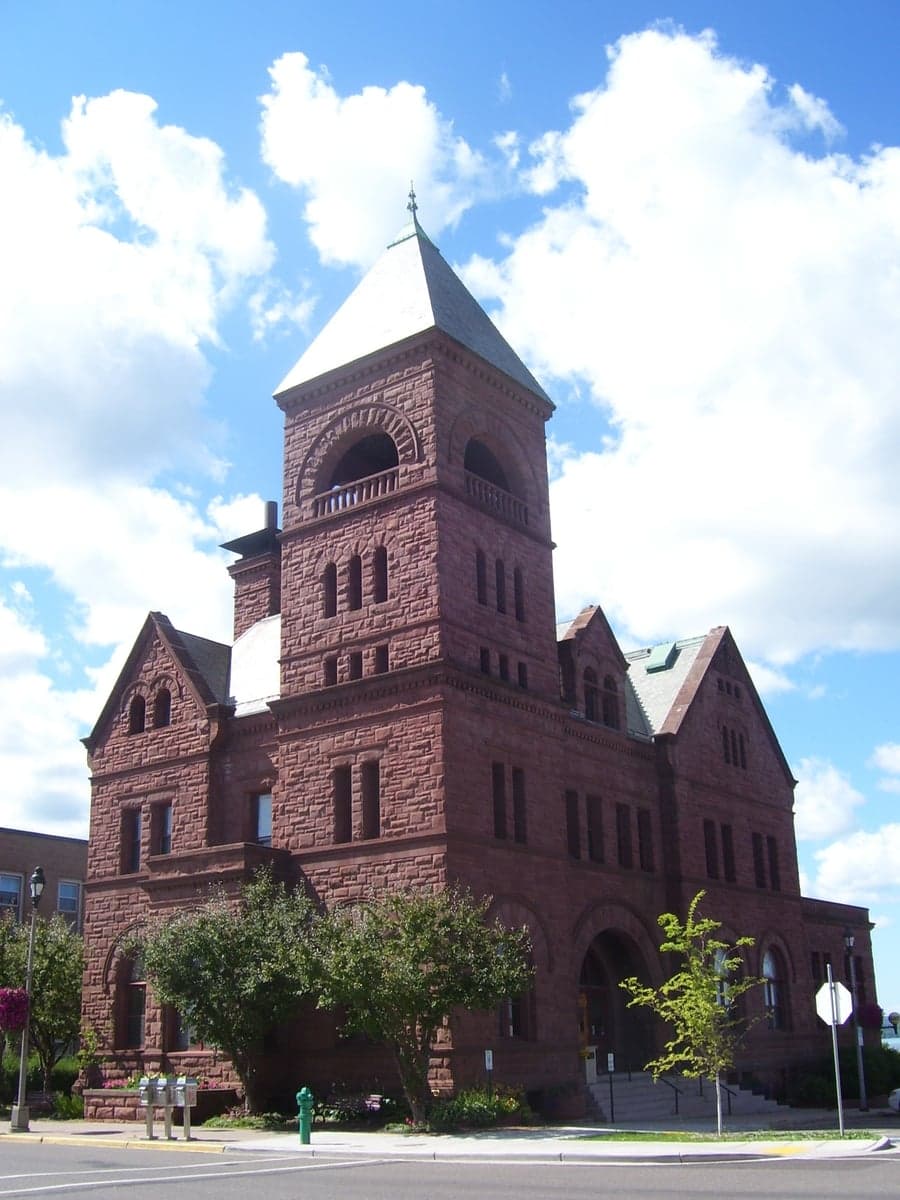
Photo: Wikipedia
Demographics of Ashland, WI
Affluence Level in Ashland, WI
A below-average socioeconomic profile. Incomes, home values, and educational attainment trail the U.S., with higher poverty and unemployment.
People of Ashland, WI
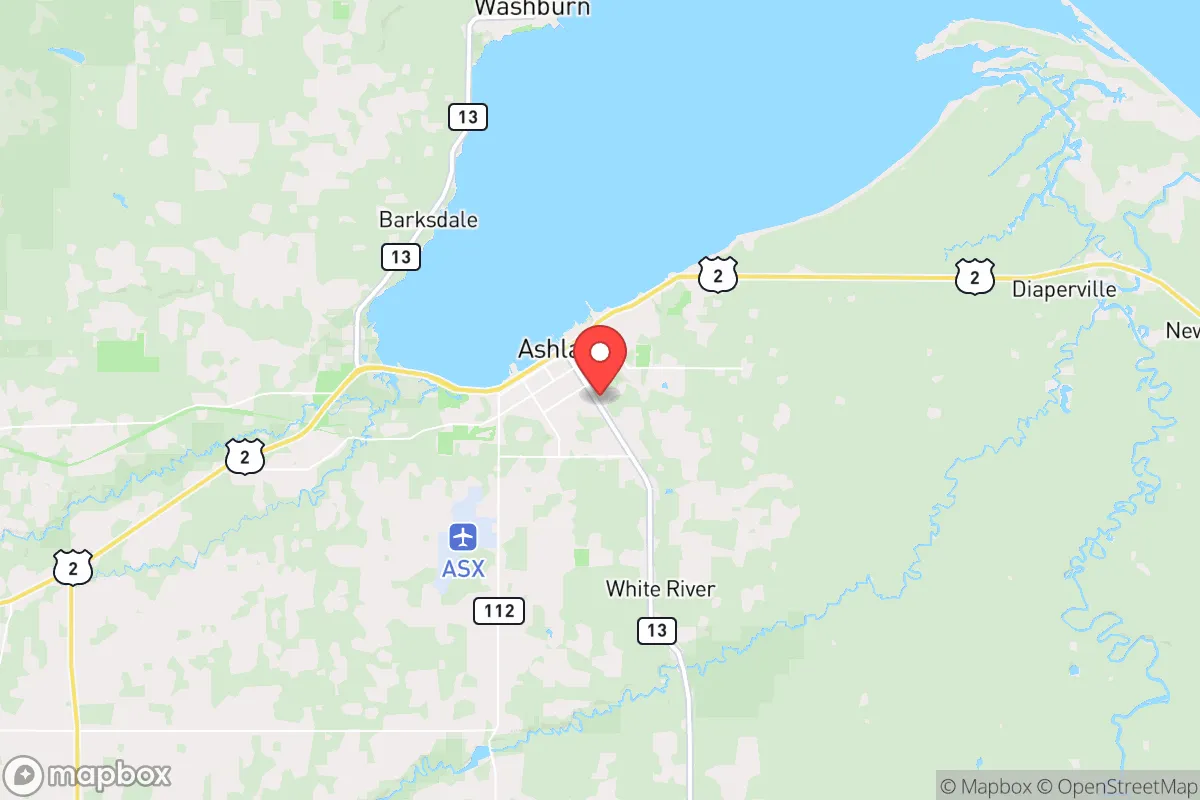
Ashland, Wisconsin is a small, historically rooted city of 7,884 residents on the shore of Lake Superior, characterized by a predominantly white population (84.0%) with a very low foreign-born share (1.0%) and a modest college-educated rate (25.9%). Its people today are a blend of descendants of 19th-century European immigrants and a small but growing Hispanic community (3.2%), creating a quiet, working-class identity shaped by the lake, the forest, and a legacy of industrial boom and bust. The city feels older and more stable than the state average, with a population that has declined from its peak of over 10,000 in the 1920s, giving it a tight-knit, slightly insular character.
How the city was settled and grew
Ashland’s human history begins with the Ojibwe people, who lived along the Chequamegon Bay for centuries before European contact. The first permanent white settlers arrived in the 1850s, drawn by the promise of the Lake Superior iron ore and timber booms. The city was formally platted in 1854 and quickly became a major shipping port for the region’s natural resources. The original population was overwhelmingly Yankee and German, with a significant wave of Scandinavian immigrants—Swedes, Norwegians, and Finns—arriving between 1880 and 1910 to work in the sawmills, docks, and railroad yards. These groups settled in distinct neighborhoods: Finns concentrated in the West End near the ore docks, building the Finnish Hall and the Bethany Lutheran Church, while German and Polish families clustered in the East End around St. Agnes Catholic Church and the old industrial corridor along Ellis Avenue. The city’s peak population of 10,622 in 1920 reflected a bustling, ethnically European working-class town, with a small but notable Black community of railroad porters and dockworkers living near the waterfront.
Modern era (post-1965)
After the 1965 Hart-Cellar Act, Ashland saw virtually no new immigration from Asia, Africa, or Latin America—the foreign-born share today is just 1.0%, among the lowest in Wisconsin. The city’s demographic story since the 1970s has been one of domestic out-migration and aging. The collapse of the iron ore mining industry in the 1960s and the decline of timber processing led to a steady population drop, with many younger families leaving for Duluth, Minneapolis, or the Fox Cities. The small Black population, never more than a few hundred, shrank further as railroad jobs disappeared. The most notable modern shift has been the growth of the Hispanic community, which rose from under 1% in 1990 to 3.2% today, driven by a small number of Mexican and Central American families working in seasonal agriculture, construction, and the local hospital. These newer residents have settled primarily in the Sanborn Avenue area and near the Northland College campus, where affordable rental housing is available. The Indian subcontinent population (0.9%) is almost entirely tied to Northland College and the local medical center, with families living in the Lake Shore Drive corridor near the college. East/Southeast Asian residents (0.1%) are negligible, mostly a handful of faculty or medical professionals. The overall racial and ethnic landscape remains overwhelmingly white and native-born, with little of the suburban diversification seen in larger Wisconsin cities.
The future
Ashland’s population is projected to continue a slow decline, falling below 7,500 by 2040, according to state demographers. The city is not becoming more diverse in a broad sense—the white share is stable, and the Hispanic growth is modest and concentrated in a few rental-heavy blocks. The Indian and Asian populations are likely to remain tiny, tied to specific institutional employers. The biggest demographic change is aging: the median age has risen from 35 in 2000 to over 42 today, as young adults leave for college and careers elsewhere. New residents are mostly retirees and remote workers drawn to the lakefront lifestyle, settling in the historic Bayfront District and the Prentice Park area, where older homes are being renovated. The cultural identity is shifting from a blue-collar industrial town to a quieter, nature-oriented community with a small arts scene centered on Northland College. For a conservative-leaning family or individual, this means a place where traditional values, low crime, and outdoor recreation are constants, but economic opportunity is limited and the social fabric is thin compared to growing suburbs.
Ashland is becoming a stable, aging, predominantly white lakeside town with a very small Hispanic minority and virtually no other ethnic diversity. For someone moving in now, it offers a safe, slow-paced environment with strong community ties among long-time residents, but little job growth, a shrinking tax base, and a population that is more likely to shrink than grow in the coming decades.

* Values derived from national, state, county, city and local statistics and may differ in a specific area. Last updated: 2026-11-22T17:27:39.000Z
Narrative content on this page is AI-generated and may contain mistakes. Verify any details that matter before acting on them.
ReloMaps may earn a commission from affiliate links at no extra cost to you.

