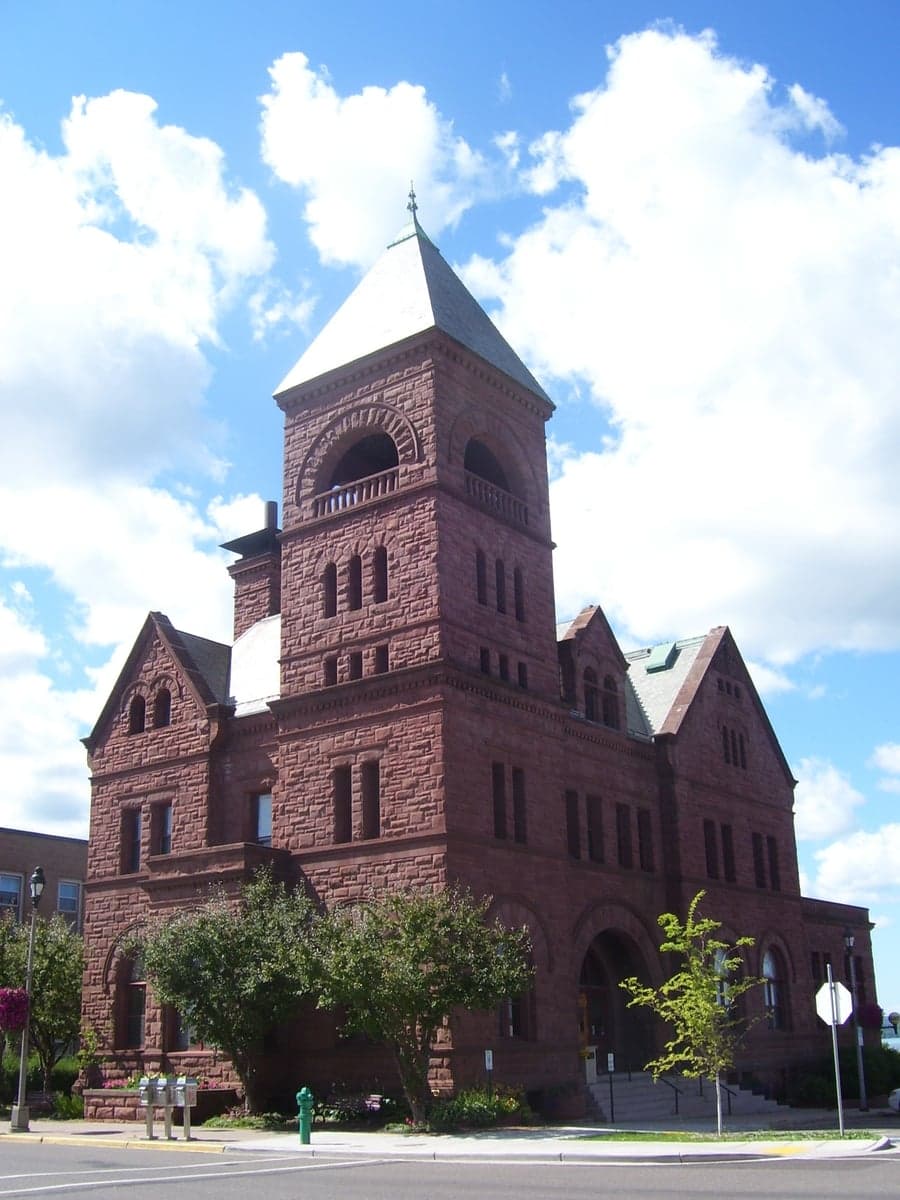
Photo: Wikipedia
Quality of Life in Ashland, WI
A high quality of life with strong walkability, manageable living costs, healthy neighborhood signals, and solid amenity access.
What does Quality of Life tell us?
Quality of Life blends cost of living, nearby amenities, socioeconomic signals, and neighborhood character. City-level scores represent the whole municipality; individual neighborhoods can differ.
What does this tell us?
Quality of Life blends cost of living, nearby amenities, socioeconomic signals, and neighborhood character. City-level scores represent the whole municipality; individual neighborhoods can differ.
Cost of Living
41% below national average
The Real Cost of Living in Ashland, WI for 2026
| Tier | Individual | Family (4) |
|---|---|---|
| Survival | $11k | $21k |
| Comfortable | $32k | $46k |
| Luxury | $87k+ | $134k+ |
| Elite (Top 5%) | $102k+ | $158k+ |
106%
The Area Signal
A metric tracking the socioeconomic signals of the area.
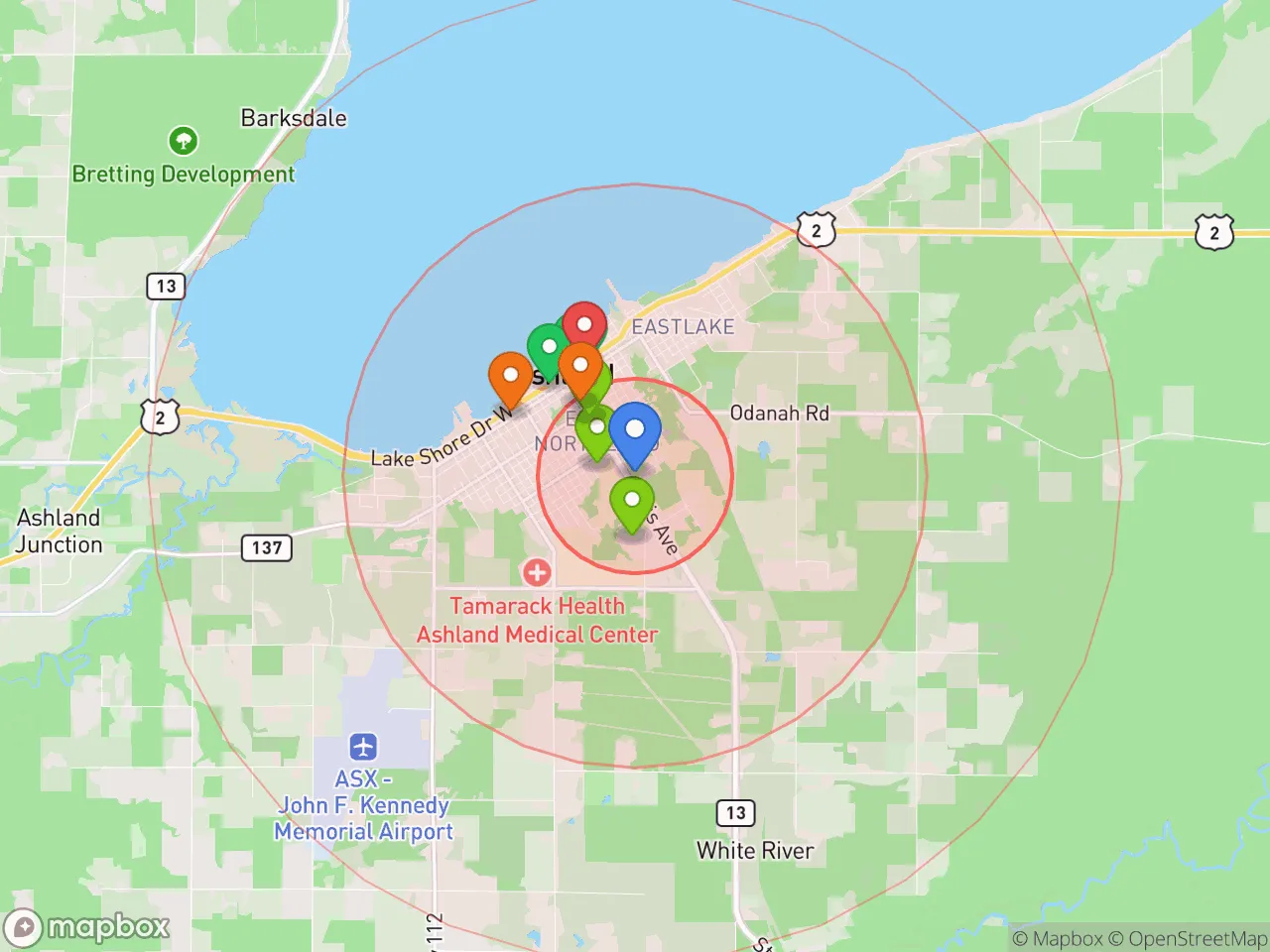
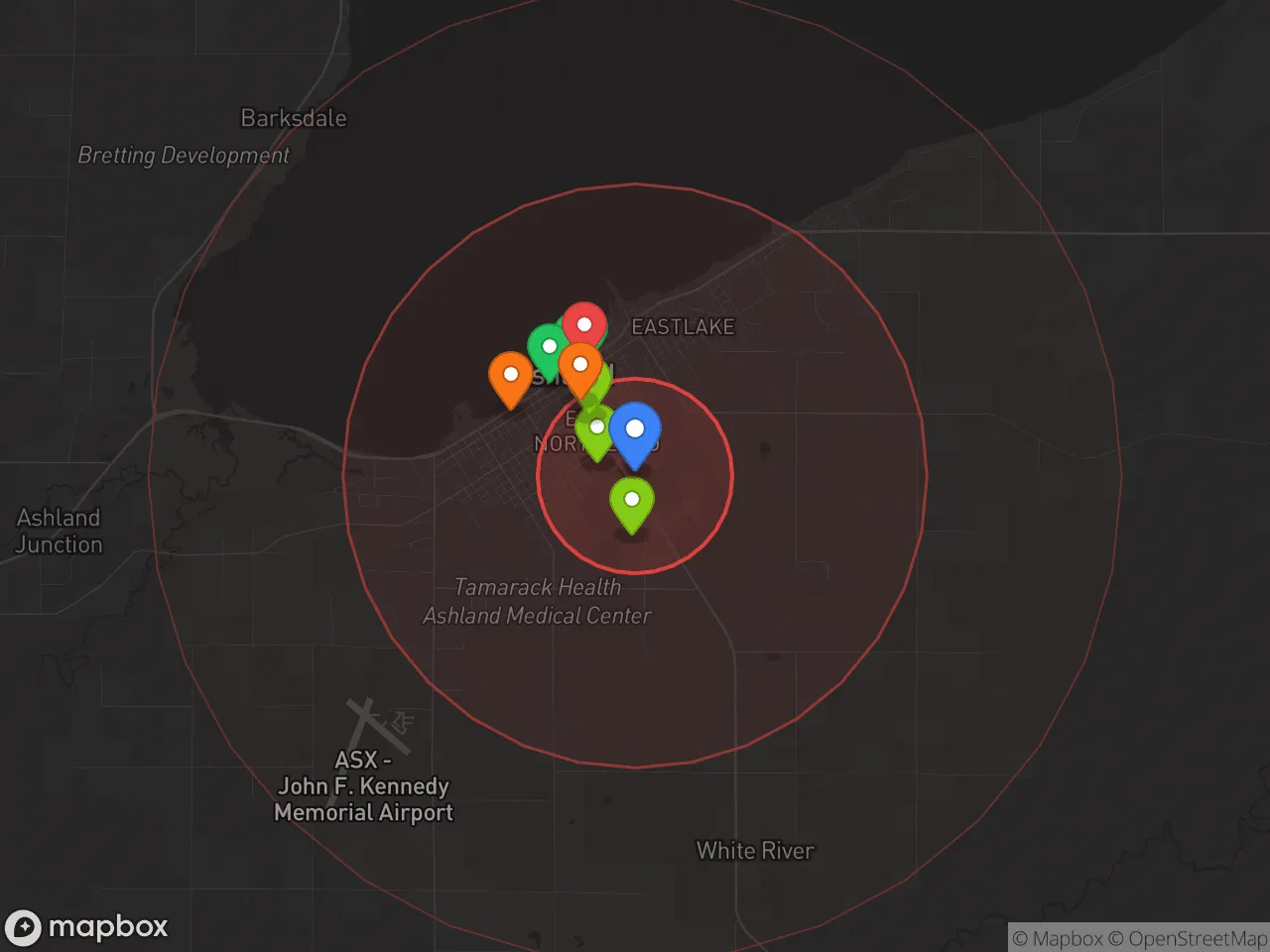
Hobbies
Explore the areaGroceries
0 within 10 miles
Gas
0 within 10 miles
Hospital
0 within 20 miles
Airport
JFK — John F. Kennedy Memorial
Post Office
Critical Amenities
Quality-of-Life Analysis
Ashland, Wisconsin, offers a notably affordable quality of life, with a cost of living index of 59—well below the U.S. average of 100—making it one of the most budget-friendly communities on Lake Superior’s south shore. The population of roughly 7,900 skews toward a mix of retirees, remote workers, and families drawn by the area’s natural beauty and low financial pressure. Median household income hovers around $42,000, reflecting a working-class and fixed-income demographic rather than high affluence, though the low expenses stretch that income further than in most of the state.
Cost of living, housing affordability, and how Ashland compares to nearby towns
Ashland’s housing market is a standout for affordability. The median home value sits at $162,200, roughly half the Wisconsin state median of about $300,000, while median rent is just $697 per month—far below the national median of $1,200. This places Ashland significantly cheaper than neighboring Bayfield (median home value ~$250,000) and Superior (~$200,000), though prices are slightly higher than in rural Iron County. The average commute of 12.7 minutes is exceptionally short, cutting transportation costs and freeing up time for outdoor recreation. Property taxes in Ashland County run about 1.5% of assessed value, moderate for the region, and utilities (especially heating) can be higher in winter due to lake-effect cold, but overall monthly expenses for a single renter often fall under $1,500.
Local amenities, schools, and what daily life feels like in Ashland
Daily life in Ashland revolves around Lake Superior and the Chequamegon-Nicolet National Forest. The Ashland School District serves roughly 1,400 students with a 13:1 student-teacher ratio, and Northland College (a private environmental liberal arts college) adds a small academic and cultural pulse. Groceries and essentials are covered by a Super One Foods and a local co-op, while dining options include casual spots like the Deep Water Grille and the Railyard. The city’s 12-minute average commute means most errands are a quick drive or bike ride, and the Chequamegon Bay area offers year-round activities: fishing, kayaking, and the Apostle Islands ice caves in winter. Healthcare is served by Memorial Medical Center, a 25-bed critical access hospital, though specialists often require a 90-minute drive to Duluth.
Who is most likely to thrive in Ashland’s environment
Ashland is best suited for those who prioritize low cost of living and outdoor access over urban amenities or career density. Retirees on fixed incomes, remote workers with stable internet (fiber is available in town), and families seeking a safe, slow-paced community will find the most value. The low housing costs allow first-time buyers to enter the market easily, but job opportunities are limited outside of healthcare, education, and tourism—commuting to Duluth or Ironwood is common for higher wages. People who dislike harsh winters (average snowfall of 80 inches) or need frequent cultural events may struggle, but for those who value affordability, short commutes, and Lake Superior’s shoreline, Ashland offers a rare combination of financial breathing room and natural beauty.

Crime in Ashland, WI
Lower crime rates than 77% of comparable U.S. locations.
Violent CrimeViolent Crime Analysis
Property CrimeProperty Crime Analysis
Crime Analysis
Ashland, Wisconsin, reports a violent crime rate of 213.9 per 100,000 residents and a property crime rate of 2,402.8 per 100,000, placing it above national averages for property offenses but below the national violent crime benchmark. While the city is not a high-crime outlier in the region, its property crime rate is a significant concern for prospective residents, particularly when compared to other small cities in northern Wisconsin. The overall safety picture is mixed: violent incidents are relatively rare, but theft and vandalism are common enough to demand vigilance.
Crime in context
Ashland’s violent crime rate of 213.9 per 100,000 is roughly 39% lower than the national average of 352 per 100,000, but it is higher than the statewide Wisconsin average of approximately 250 per 100,000. Property crime in Ashland, at 2,402.8 per 100,000, exceeds both the national average (1,954 per 100,000) and the Wisconsin average (1,450 per 100,000) by a wide margin. This means a resident’s risk of experiencing a burglary, theft, or motor vehicle theft is notably higher than in most other Wisconsin communities of similar size. The disparity between low violent crime and high property crime is a pattern seen in many small cities that serve as regional hubs, where transient populations and economic pressures drive non-violent offenses.
What residents experience
Daily life in Ashland for most residents involves a low risk of violent confrontation, but a higher-than-average chance of having a package stolen, a car broken into, or a shed burglarized. The city’s location as a Lake Superior port and a stop on major tourist routes contributes to property crime, as transient individuals and seasonal visitors increase opportunities for theft. Local law enforcement is active, but the city’s size limits the number of officers available for proactive patrols. Residents commonly report that locking vehicles and securing outdoor items is a necessary habit, not an optional precaution. The presence of progressive judicial philosophies in Ashland and surrounding Ashland County—where district attorneys and judges have historically emphasized rehabilitation over incarceration—is a factor that directly contributes to higher recidivism and more property crimes, as offenders cycle through the system with minimal deterrent effect. This approach, while well-intentioned, undermines public safety by keeping repeat offenders on the street.
Neighborhood-level variation
Crime is not evenly distributed across Ashland. The downtown core and areas near the waterfront, particularly along Main Street and near the railroad tracks, see the highest concentration of property crime and drug-related incidents. Residential neighborhoods farther from the commercial center, such as those east of Highway 2 and near the Chequamegon Bay shoreline, report lower crime rates. The city’s west side, closer to the industrial areas and the Ashland County Jail, also experiences elevated theft and disorderly conduct calls. For those considering a move, properties in the eastern residential districts and the outlying rural subdivisions offer the safest environments, while rentals and homes near downtown require more caution. Prospective buyers should check local crime maps and speak with neighbors to gauge specific block-level risks, as conditions can vary sharply even within a few blocks.
* Values derived from national, state, county, city and local statistics and may differ in a specific area. Last updated: 2026-11-22T17:27:39.000Z
Narrative content on this page is AI-generated and may contain mistakes. Verify any details that matter before acting on them.
ReloMaps may earn a commission from affiliate links at no extra cost to you.

