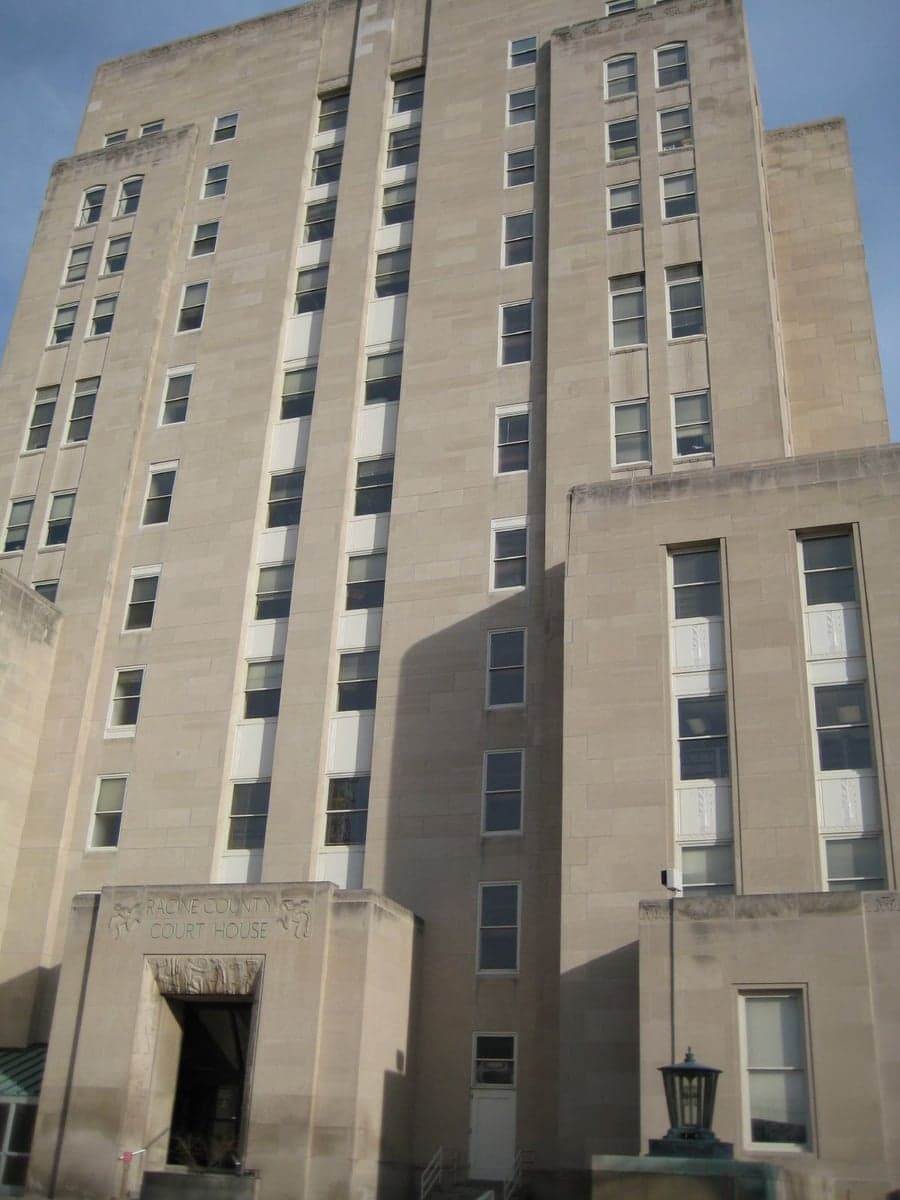
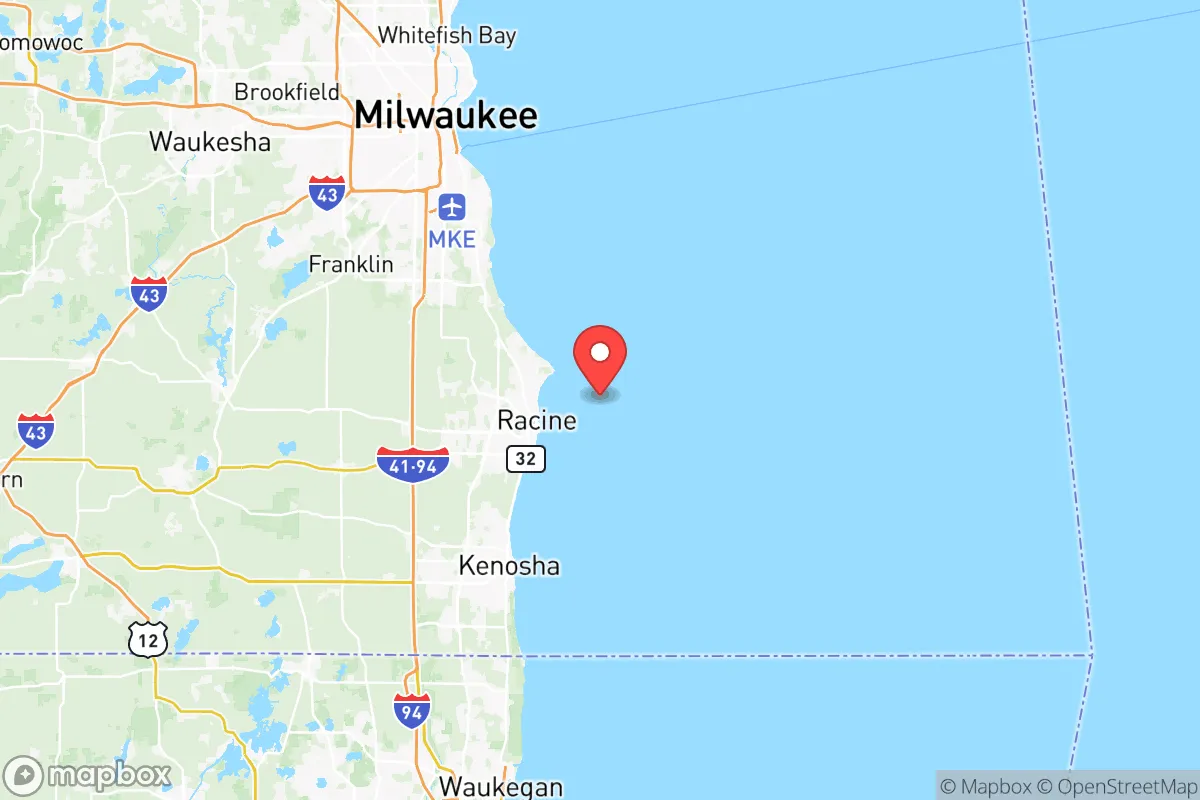
Photo: Wikipedia
Political ClimatePolitical Climate in Racine County
Showing district-level results — no local-only data available.
Local Political AnalysisPolitical Analysis of Racine County
Racine County sits in a fascinating political middle ground, leaning Republican with a Cook PVI of R+2, but it's far from a lock for either party. The county has been drifting rightward in recent cycles, even as the state of Wisconsin as a whole remains a pure toss-up with a Cook PVI of EVEN. This means Racine County is a bellwether within a bellwether state—its results often preview the statewide outcome, but with a slight red tint that has become more pronounced since 2016.
How it compares
The R+2 rating puts Racine County to the right of the state's EVEN rating, but the gap is narrower than you'd see in neighboring counties like Kenosha (R+4) or Waukesha (R+14). The real story is the internal divide. The city of Racine itself, with its industrial base and union history, leans reliably blue—precincts near the lakefront and downtown often go 60-40 Democratic. But drive 15 minutes west to the towns of Burlington, Waterford, or Union Grove, and you'll find deep-red precincts where Republican candidates routinely win 65-70% of the vote. The swing territory is in the suburban and exurban townships like Mount Pleasant, Caledonia, and Raymond, where the vote can flip depending on the candidate and the national mood. In 2020, Mount Pleasant's precincts were nearly split down the middle, making it the county's most watched battleground. That's a big shift from 2012, when the county was closer to EVEN overall; the rightward drift is real, driven largely by white working-class voters in the western towns who have moved away from the Democratic Party.
What this means for residents
For a conservative resident, Racine County feels like a comfortable place to live politically—local offices in the western towns are reliably held by Republicans, and the county board has a conservative majority. For a liberal resident, the city of Racine provides a solid blue base, and the county's purple nature means Democratic candidates still compete seriously for the countywide seats. In practice, this creates a politics of pragmatism. The county executive, for example, has to balance the interests of the blue city with the red towns, which often means moderate fiscal policies and a focus on economic development that appeals across the aisle. The Foxconn saga in Mount Pleasant is a perfect example: it was championed by Republicans at the state level but required local cooperation from both parties, and the resulting infrastructure investments have been a rare point of agreement.
Culturally, the divide is visible in everyday life. The city of Racine has a more diverse population—about 25% Black and 15% Hispanic—and a grittier, post-industrial feel, with a strong sense of community activism around schools and social services. The western towns are overwhelmingly white, more rural, and culturally conservative, with a focus on agriculture, small business, and local churches. There's not much tension between the two worlds; they mostly coexist with a live-and-let-live attitude, though the occasional countywide referendum on a social issue can expose the fault lines. Looking ahead, the county's trajectory is likely to stay R+2 or nudge to R+3, as the western exurbs grow faster than the city. But the city of Racine's population is stabilizing after decades of decline, and if Democratic turnout there continues to improve, the county could remain a genuine swing area for another cycle or two. For now, it's a place where your political experience depends heavily on which side of Highway 11 you call home.

State Political ClimatePolitical Climate in Wisconsin
State Political AnalysisPolitical Environment in the State
Wisconsin is the ultimate swing state, with a Cook PVI of EVEN that perfectly captures its knife-edge political balance. Over the last 20 years, the state has lurched from reliably blue in presidential races (voting for Democrats from 1988 to 2012) to a pure toss-up, flipping for Trump in 2016 by less than 23,000 votes, then flipping back to Biden in 2020 by a similarly razor-thin margin of about 20,000 votes. The dominant coalitions are a shrinking but still potent union-and-college-town Democratic base in the southeast and Dane County, squared off against a growing, energized conservative coalition in the suburban WOW counties (Waukesha, Ozaukee, Washington) and the vast, rural western and northern reaches of the state. The trajectory is a slow, grinding polarization where the old "Blue Dog" Democrats have all but vanished, replaced by straight-ticket party voting that makes every election a statewide nail-biter.
Urban vs. rural divide
The political map of Wisconsin is a textbook study in the urban-rural chasm. Milwaukee and Madison are the two Democratic engines, with Madison (Dane County) being one of the most reliably liberal counties in the entire Midwest, often delivering 75%+ of its vote to Democrats. Milwaukee County, while more diverse and slightly less monolithic, still provides a massive blue vote bank. The real story is the suburban ring around Milwaukee, particularly Waukesha County. Once a moderate Republican stronghold, Waukesha has become a deep-red powerhouse, often giving GOP candidates 60-65% of the vote and effectively canceling out Milwaukee's margin. The rest of the state—the Driftless Region in the southwest, the Northwoods, and the Fox Valley cities like Green Bay and Appleton—are more mixed but trending redder. Brown County (Green Bay) was a bellwether that went for Trump twice after backing Obama, signaling a real shift among working-class and rural voters. The divide isn't just geographic; it's cultural, with urbanites focused on transit and social policy while rural voters prioritize agriculture, gun rights, and local control.
Policy environment
Wisconsin's policy environment is a split-screen reality thanks to divided government. The state has a flat income tax rate of 4.4% (down from a top rate of 7.65% a decade ago), and property taxes are moderate compared to neighboring Illinois and Minnesota. The regulatory posture is generally business-friendly, especially under the long-running Republican legislative majorities, but the governor's office has flipped between parties, creating whiplash. On education, Wisconsin has a robust school choice program—one of the oldest and largest in the nation—with vouchers available in Milwaukee, Racine, and statewide. Healthcare policy is a battleground: the state did not expand Medicaid under the Affordable Care Act until 2019 when Democratic Governor Tony Evers took office, and the program remains a political football. Election laws are a flashpoint: Wisconsin has no-excuse absentee voting, same-day voter registration, and voter ID requirements, a mix that both parties attack and defend depending on the cycle. For a relocator, the practical takeaway is that your experience will vary wildly depending on whether you live in a blue city or a red town.
Recent policy direction
The last five years have seen Wisconsin lurch rightward on cultural and liberty issues, even as the state remains competitive. In 2023, the Republican legislature passed and Governor Evers signed a bill expanding the concealed carry of firearms without a permit, making Wisconsin a "constitutional carry" state. On parental rights and education, the legislature passed Act 20 in 2023, which overhauled reading instruction and mandated the "science of reading," while also banning the teaching of critical race theory and gender identity concepts in K-12 schools (though the latter was partially vetoed by Evers). On medical and bodily autonomy, Wisconsin's 1849 abortion ban was a live issue after Dobbs, but a 2023 court ruling (and a subsequent 2024 ballot initiative) effectively restored abortion access up to 20 weeks, though the fight continues in the courts. Property rights are generally strong, with no statewide rent control and relatively permissive land-use laws outside of the most liberal cities. On voting and ballot access, the state has seen a tug-of-war: the legislature passed stricter voter ID rules and limits on drop boxes, while the Wisconsin Supreme Court (which flipped to a 4-3 liberal majority in 2023) has struck down gerrymandered legislative maps and is likely to weigh in on future election administration. The direction is toward more polarized, court-driven policymaking rather than legislative compromise.
Civil unrest & political movements
Wisconsin has a history of being a flashpoint for political movements. The 2011 Act 10 protests against public sector union bargaining rights drew over 100,000 people to the state capitol in Madison and sparked a national movement. More recently, the 2020 Kenosha unrest following the Jacob Blake shooting—and the subsequent Kyle Rittenhouse trial—put the state in the global spotlight and deepened the urban-rural divide. Immigration politics are less intense than in border states, but there are sanctuary city debates in Madison and Milwaukee, while rural counties have passed resolutions declaring themselves "Second Amendment sanctuaries." Election integrity remains a live issue: the 2020 election saw Trump challenge the results in Wisconsin, leading to a partial recount and ongoing distrust among conservatives. Organized activist movements are strong on both sides: the Wisconsin Institute for Law & Liberty (WILL) is a powerful conservative legal group, while groups like the League of Women Voters and Souls to the Poles drive progressive turnout. A new resident will notice the political intensity most during election season, when the state is flooded with ads and canvassers from both parties.
Projection
Over the next 5-10 years, Wisconsin is likely to remain a battleground, but the demographic trends favor a slow shift toward the Democrats in presidential years, while state-level races could stay Republican for longer. The key factor is in-migration: the state is seeing growth in the Madison and Milwaukee suburbs, driven by remote workers and retirees from Illinois and Minnesota, who tend to be more moderate or liberal. However, the rural areas are depopulating, which hurts the GOP's base. The wild card is the Wisconsin Supreme Court, which now has a liberal majority until at least 2028; this court is likely to uphold abortion access, strike down gerrymandered maps, and potentially reshape election laws. If fair maps are enacted, the state legislature could become competitive for the first time in a decade, leading to more moderate policy. For a relocator, expect the state to remain purple but with a slightly bluer tint in the cities and a redder hue in the countryside. The practical reality is that your local government and school board will matter more than the statehouse.
For a new resident, the bottom line is that Wisconsin offers a genuine choice: live in a deep-blue city like Madison or Milwaukee and enjoy progressive policies on transit, housing, and social issues, or settle in a red-leaning suburb or rural area and experience lower taxes, more school choice, and a culture of self-reliance. The state's political climate means your vote will actually matter, but it also means you'll be living in a place where half your neighbors disagree with you on fundamental issues. If you can handle that tension, Wisconsin is a great place to put down roots—just be prepared for the political ads to follow you everywhere.
* Values derived from national, state, county, city and local statistics and may differ in a specific area. Last updated: 2026-06-15T20:19:34.000Z
Narrative content on this page is AI-generated and may contain mistakes. Verify any details that matter before acting on them.
ReloMaps may earn a commission from affiliate links at no extra cost to you.

