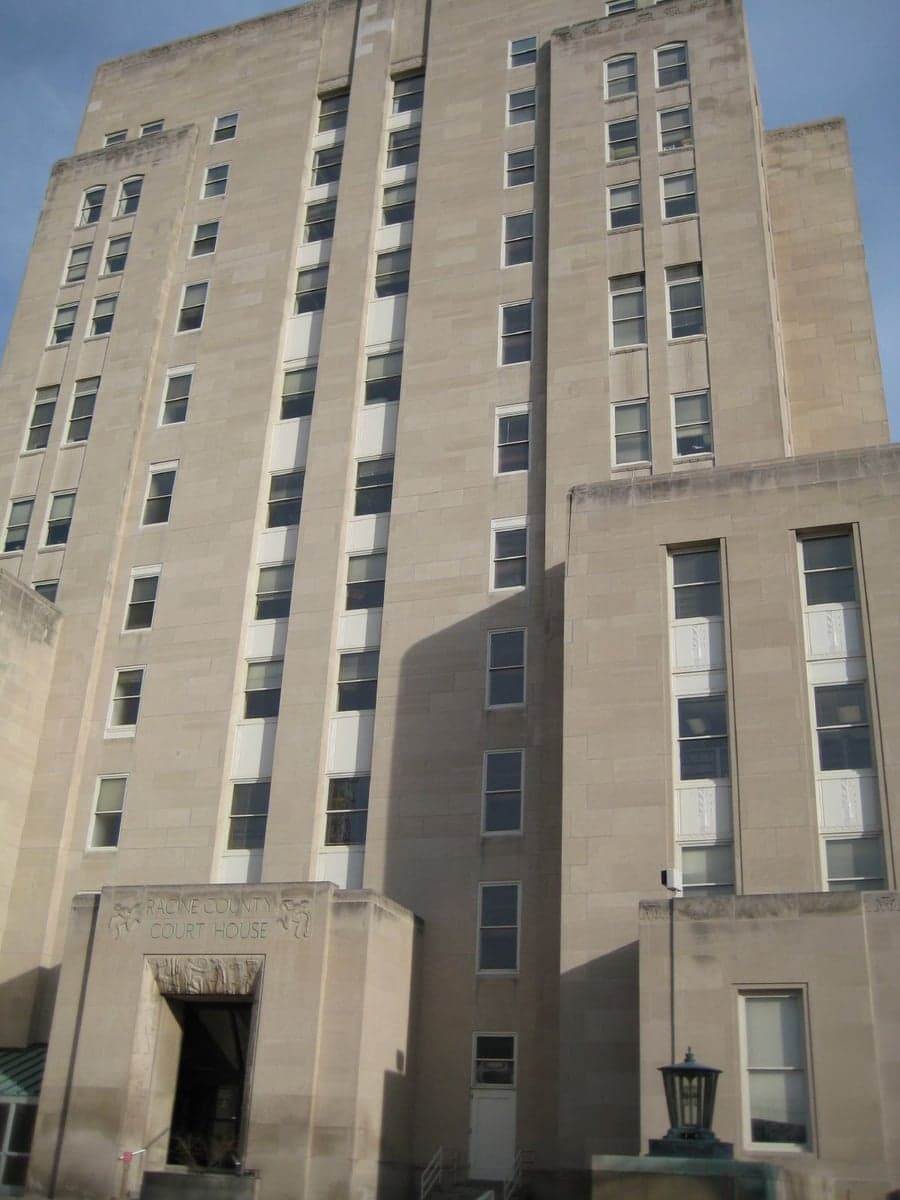
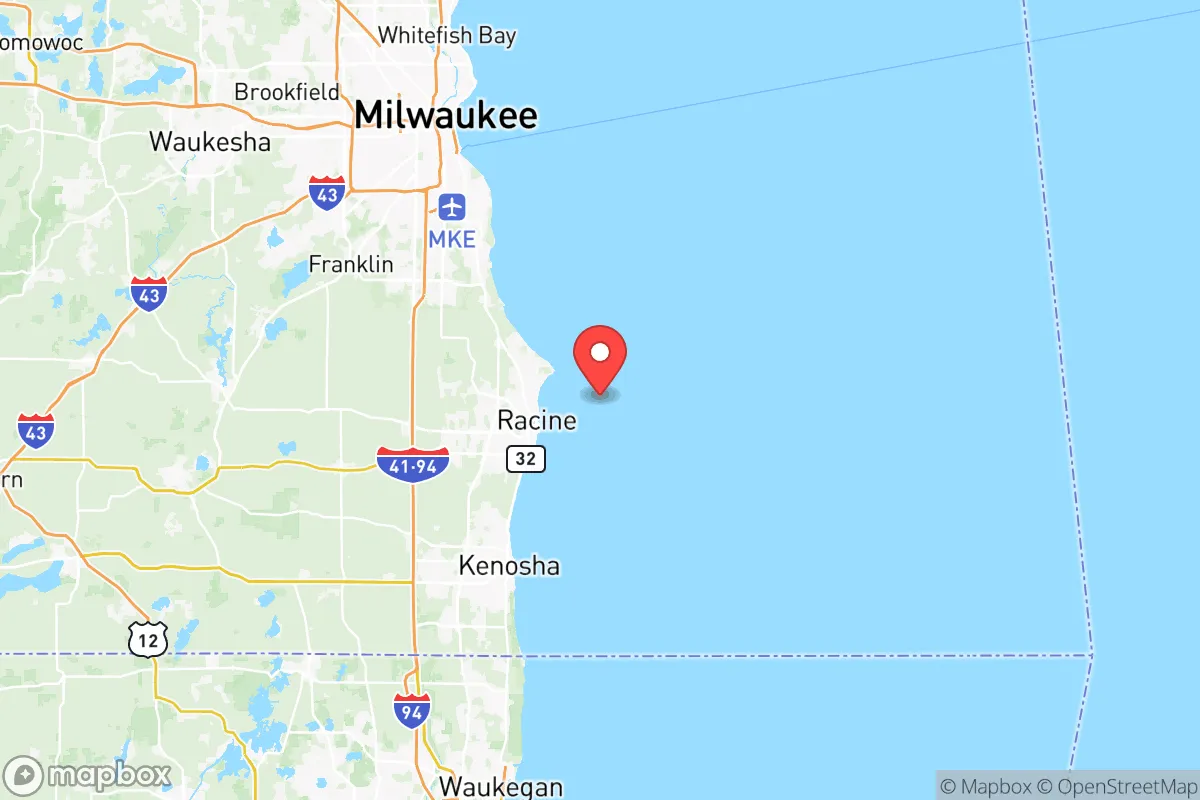
Photo: Wikipedia
Demographics of Racine County
Affluence Level in Racine County
A middle-class area roughly in line with national averages across income, home values, education, and employment.
People of Racine County
Racine County today is home to roughly 197,000 residents, a population shaped by over 150 years of industrial and agricultural settlement. The county is notably less diverse than the national average, with a 69.5% white population, but it holds a significant and growing Hispanic community at 14.6% and a Black population of 10.4%. Its identity is rooted in the manufacturing and maritime history of the Lake Michigan shoreline, with a character that blends small-town Midwestern conservatism with the working-class legacy of its industrial cities like Racine and Burlington.
Settlement & growth (pre-1960)
Before European settlement, the area that is now Racine County was inhabited by the Potawatomi people, who had established villages along the Root River and the Lake Michigan shoreline. The first permanent American settlers arrived in the 1830s, primarily from New England and New York, drawn by the promise of fertile farmland and access to the Great Lakes. These early Yankees established the first communities, including the city of Racine (1834) and the village of Waterford (1836), laying the foundation for the county's agricultural and commercial economy.
The major demographic transformation began in the 1840s and 1850s with a massive wave of German immigrants. These settlers were attracted by cheap land and the growing industrial base along the Root River. They established strong communities in the city of Racine, particularly on the south side, and in rural townships like Raymond and Norway. By 1860, Germans and their descendants made up a substantial plurality of the county's population. A smaller but significant wave of Danish immigrants arrived in the 1850s and 1860s, settling primarily in the town of Denmark (now part of the village of Sturtevant) and the city of Racine's north side, where they established a distinct Lutheran community.
The late 19th and early 20th centuries brought a second major wave: Polish and Czech immigrants, who arrived between 1880 and 1910 to work in the county's booming manufacturing sector. The city of Racine became a hub for farm equipment manufacturing (J.I. Case Company) and later for the production of automobiles and industrial machinery. These Eastern European groups concentrated in the city's central and west-side neighborhoods, establishing Catholic parishes and social clubs that remain active today. A smaller but notable Italian community also formed in Racine during this period, centered around the downtown area.
The Great Migration brought a significant Black population to Racine County between 1940 and 1960. African Americans from the rural South, particularly Mississippi and Arkansas, moved north to fill factory jobs at companies like Case, Western Publishing, and the Walker Manufacturing Company. They settled primarily in the city of Racine's central and east-side neighborhoods, forming the foundation of the county's current 10.4% Black population. This migration was accelerated by World War II-era industrial expansion and continued through the 1950s and 1960s.
Modern era (post-1965)
The post-1965 period brought a new demographic layer to Racine County, though the changes have been more gradual than in many other Midwestern counties. The most significant shift has been the growth of the Hispanic population, which rose from less than 2% in 1980 to 14.6% today. This community is primarily of Mexican origin, with roots in the agricultural labor that has long been a part of the county's economy. Many families first came as migrant workers for the region's vegetable and fruit farms, particularly in the towns of Burlington and Waterford, before settling permanently. Today, the Hispanic population is concentrated in the city of Racine's south side and in the village of Sturtevant, where a growing commercial corridor serves the community.
The Asian population in Racine County remains small at 0.7%, consisting primarily of Hmong and Vietnamese families who arrived as refugees in the 1980s and 1990s. They are concentrated in the city of Racine, with a small but visible presence in the Mount Pleasant area. The Indian subcontinent population is even smaller at 0.4%, composed largely of professionals working in the county's healthcare and manufacturing sectors. The foreign-born population overall is just 2.7%, well below the national average, reflecting the county's limited role as a destination for recent international immigration.
Domestic migration has reshaped the county's internal geography since the 1970s. The city of Racine has experienced population decline, dropping from a peak of 95,000 in 1960 to roughly 77,000 today, as manufacturing jobs left and residents moved to surrounding suburbs. The village of Mount Pleasant has grown substantially, absorbing much of the city's outward expansion, while the town of Caledonia has become a popular destination for families seeking larger lots and lower taxes. Burlington, in the county's western half, has maintained a stable population as a small manufacturing and agricultural center, while Waterford has grown as a bedroom community for commuters working in Milwaukee and Kenosha.
The future
Racine County's population is projected to remain relatively stable over the next decade, with modest growth driven primarily by natural increase and continued suburbanization. The county's white population is expected to decline gradually as older residents age and younger families move to more dynamic metro areas, while the Hispanic and Black populations are likely to grow, particularly in the city of Racine and the southern suburbs. The county's foreign-born population will likely remain low, as the area lacks the economic magnets that draw large numbers of international immigrants to larger cities.
The most significant demographic trend is the continued suburbanization of the county's population. The villages of Mount Pleasant and Caledonia are expected to absorb most new housing development, while the city of Racine will likely continue to lose population unless it can attract new investment and retain young families. The Foxconn project, which promised a major manufacturing facility in Mount Pleasant, has largely failed to materialize, leaving the county without a major new economic driver. As a result, the county's demographic future looks more like a slow evolution than a dramatic transformation.
For someone moving to Racine County now, the area offers a stable, family-oriented environment with a strong sense of local identity. The county's population is older and less diverse than the national average, but it is becoming more Hispanic and more suburban with each passing year. The city of Racine remains the cultural and economic heart of the county, but the future growth is clearly in the surrounding villages and townships, where new housing developments and retail centers are reshaping the landscape. The county's character is likely to remain solidly Midwestern and working-class, with a growing Hispanic influence that is gradually changing the region's cultural and political dynamics.

* Values derived from national, state, county, city and local statistics and may differ in a specific area. Last updated: 2026-06-15T20:19:34.000Z
Narrative content on this page is AI-generated and may contain mistakes. Verify any details that matter before acting on them.
ReloMaps may earn a commission from affiliate links at no extra cost to you.

