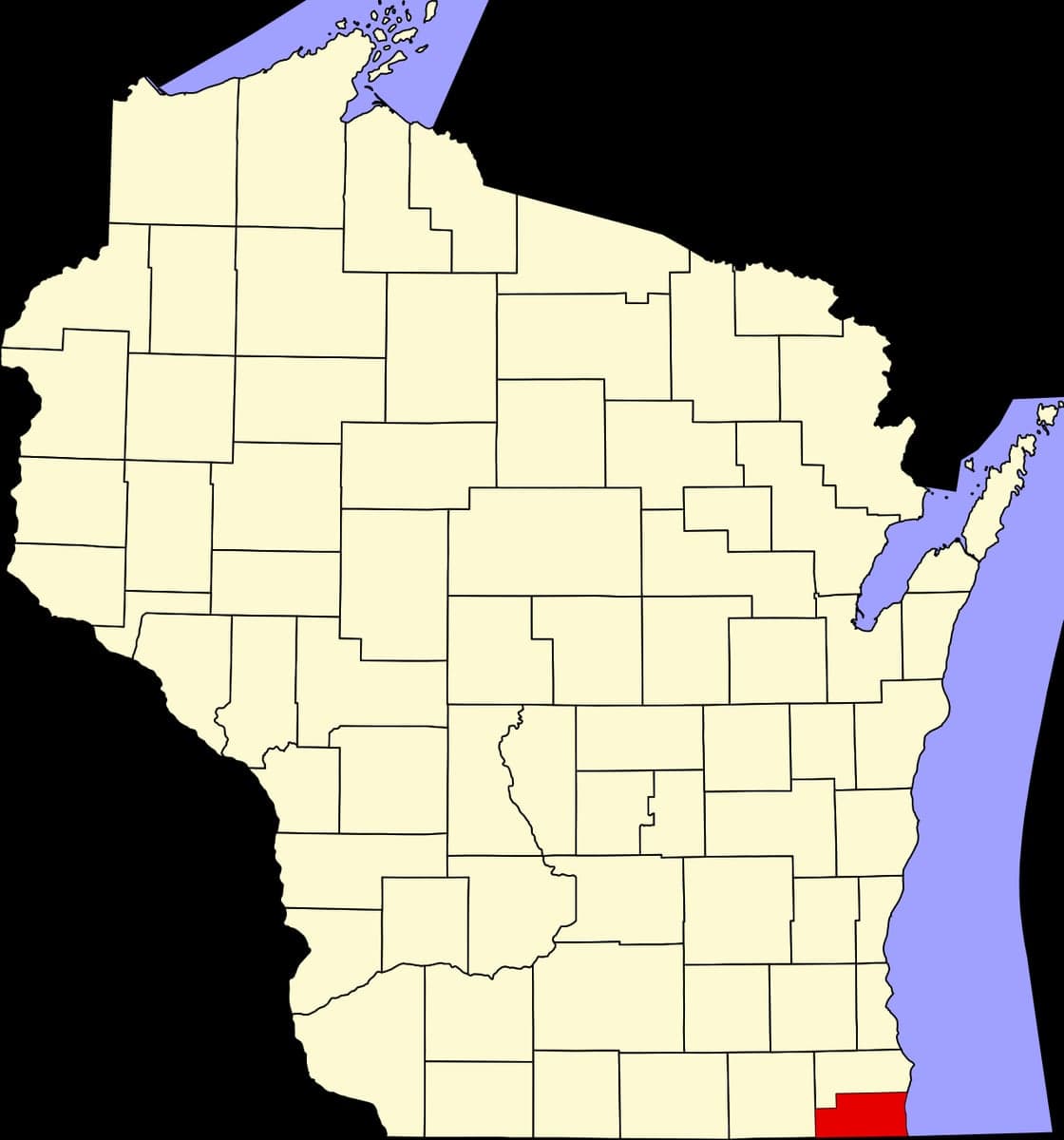
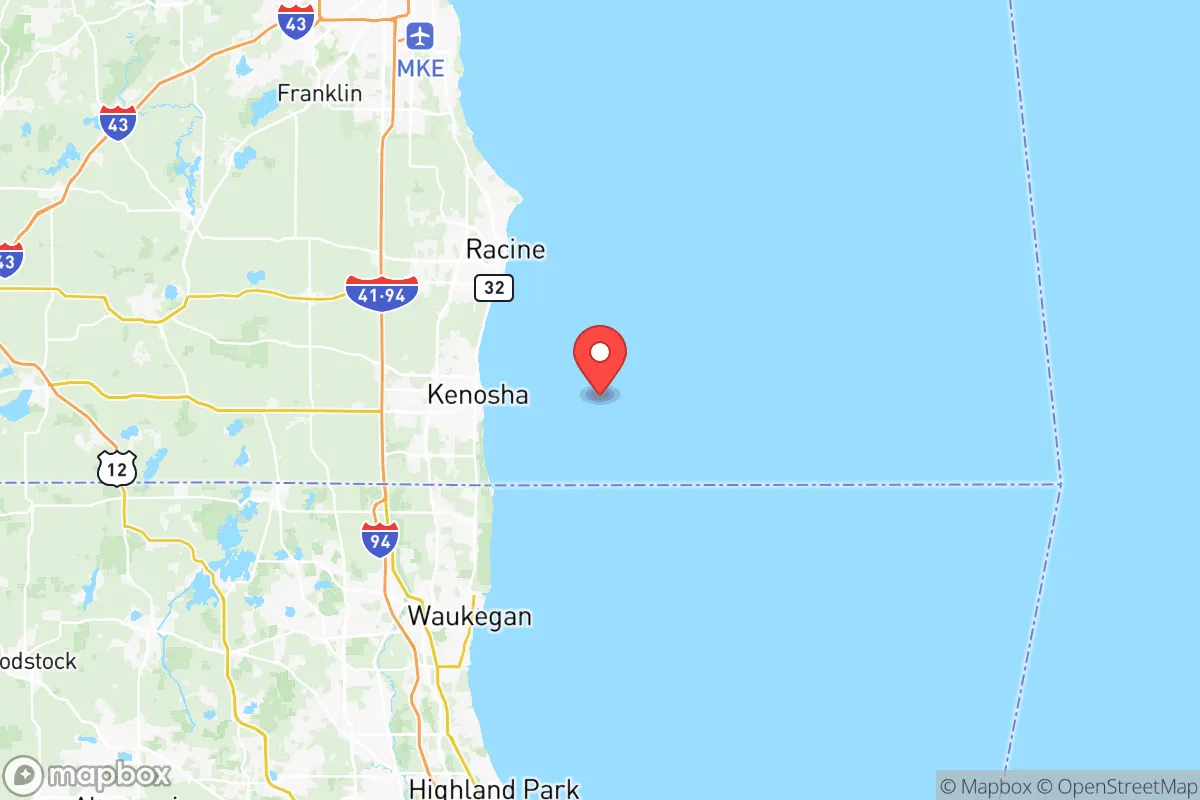
Photo: Wikipedia
Political ClimatePolitical Climate in Kenosha County
Showing district-level results — no local-only data available.
Local Political AnalysisPolitical Analysis of Kenosha County
Kenosha County has shifted from a reliable blue anchor in southeastern Wisconsin to a genuine toss-up, with a Cook Partisan Voting Index of R+2 that barely hints at its volatility. The county backed Donald Trump in 2016 and 2020 by razor-thin margins—less than 1,000 votes each time—while also supporting Democratic Governor Tony Evers in 2018 and 2022. This isn't a deep-red or deep-blue place; it's a battleground where the city of Kenosha itself leans Democratic, the outer suburbs and rural towns like Salem Lakes and Bristol lean Republican, and the unincorporated areas around Pleasant Prairie and Somers often decide the outcome with their swingy, independent-minded voters.
How it compares
Wisconsin statewide carries a Cook PVI of EVEN, meaning the state as a whole is perfectly balanced between the two parties. Kenosha County's R+2 rating is slightly more Republican than the state average, but the real story is how the county's internal divisions mirror the state's urban-rural split. The city of Kenosha, home to roughly 100,000 people, votes about 60% Democratic in most elections, powered by union households at the old Chrysler engine plant and a growing Latino population. Drive 15 minutes west to the town of Wheatland or the village of Twin Lakes, and you'll find precincts that go 65% Republican, driven by exurban commuters to Milwaukee and Chicago who want lower taxes and less regulation. The swing precincts—places like the 5th and 6th wards in Kenosha's north side, or the fast-growing subdivisions in Somers—can flip by 10 points between cycles, which is why both parties pour money into local TV ads and door-knocking here.
What this means for residents
For conservative residents, Kenosha County's rightward drift means their votes actually matter more than in deep-red counties like Waukesha. Local Republican candidates for county board and state assembly have a real shot, and the county's GOP apparatus is well-organized, with active clubs in Salem and Bristol. For liberal residents, the county's competitiveness means they can't take anything for granted—but it also means Democratic turnout efforts are robust, with strong union and environmental groups in the city. The practical effect is that policy debates stay moderate: the county board has a Republican majority, but it's not a rubber stamp, and issues like economic development, lakefront access, and public safety get hashed out in a genuinely bipartisan way. You won't see the kind of hardline cultural fights that dominate in more polarized counties.
The biggest cultural distinction in Kenosha County is its identity as a working-class borderland between the Milwaukee and Chicago metros. The county's politics are shaped less by national culture wars and more by bread-and-butter concerns: property taxes, school funding, and jobs at the Amazon fulfillment center or the Snap-on Tool headquarters. The 2020 unrest after the Jacob Blake shooting did deepen political divides, but most residents—whether they vote red or blue—will tell you they want the same thing: good schools, safe streets, and a local economy that doesn't force their kids to move away. That shared pragmatism is why Kenosha County remains one of the few places in Wisconsin where a moderate Democrat or a pro-union Republican can still get elected, and why the political climate here feels less like a war and more like a long, loud argument among neighbors who still wave to each other at the grocery store.

State Political ClimatePolitical Climate in Wisconsin
State Political AnalysisPolitical Environment in the State
Wisconsin is the ultimate swing state, with a Cook PVI of EVEN that perfectly captures its razor-thin margins and deeply entrenched partisan divide. Over the past 20 years, the state has lurched from reliably blue in presidential elections (voting for Democrats from 1988 to 2012) to a pure toss-up, decided by fewer than 23,000 votes in 2020 and 2024. The dominant coalitions are a shrinking but still potent union-and-urban base in Milwaukee and Madison, pitted against a growing, energized conservative coalition in the WOW counties (Waukesha, Ozaukee, Washington) and the rural north and west. The trajectory is one of hardening polarization, with no sign of either side gaining a durable upper hand.
Urban vs. rural divide
The political map of Wisconsin is a textbook study in geographic sorting. Milwaukee County and Dane County (Madison) together deliver roughly 40% of the statewide Democratic vote, with Milwaukee’s Black and Latino precincts and Madison’s university-and-government workforce producing margins of 70-80% for Democrats. The WOW counties — Waukesha, Ozaukee, and Washington — are the Republican counterweight, routinely giving the GOP 60-65% of the vote. The rural Northwoods (Vilas, Oneida, Lincoln counties) and the Driftless Region in the southwest (Vernon, Crawford, Richland) have shifted hard right over the past decade, with many counties flipping from Obama-won to Trump-won by 15-20 points. The Fox Valley (Appleton, Green Bay, Oshkosh) is the true battleground within the battleground — these areas are evenly split, with working-class voters swinging between populist Democrats and Trump-aligned Republicans. The I-94 corridor from Milwaukee to Madison is the state’s political spine, with the suburbs of Brookfield and Wauwatosa becoming increasingly competitive as educated professionals lean left.
Policy environment
Wisconsin’s policy environment is a study in divided government. The state has a flat income tax of 4.4% (down from 7.65% in 2011), with a sales tax of 5% (local options add up to 0.5-1.5%). Property taxes are above the national median but capped by state levy limits. The regulatory posture is generally business-friendly, with a right-to-work law (2015) and a tort reform system that caps noneconomic damages. Education policy is a flashpoint: Act 10 (2011) effectively ended collective bargaining for most public employees, and the state has one of the nation’s most robust school choice programs, with vouchers available in Milwaukee, Racine, and statewide. Healthcare is a mixed bag — Wisconsin expanded BadgerCare under the Affordable Care Act but did so through a unique waiver that imposes premiums and work requirements. Election laws are moderately restrictive: voter ID is required, same-day registration is allowed, and absentee voting is widely available. The state’s legislative maps, drawn by Republicans in 2011 and again in 2021, have been among the most gerrymandered in the country, though the state supreme court ordered new maps for 2024 that are more competitive.
Recent policy direction
The last five years have seen Wisconsin lurch rightward on several fronts, then pull back slightly on others. Gun and self-defense law: Wisconsin is a shall-issue state for concealed carry (permit required, but no discretion), and in 2023 the legislature passed a bill allowing permitless carry, though Governor Tony Evers vetoed it. Stand-your-ground is not codified, but the castle doctrine applies. Parental and education rights: The 2023-24 session saw a push for “parents’ bill of rights” legislation, which passed the Assembly but stalled in the Senate. Critical race theory and LGBTQ+ curriculum have been hot-button issues in school board races, particularly in Waukesha and Kenosha. Speech and privacy: No major changes — the state has no social media content moderation laws, and data privacy is governed by federal law. Medical and bodily autonomy: Abortion is legal up to 20 weeks post-fertilization, following a 2023 state supreme court ruling that overturned an 1849 ban. The court is now considering a challenge to the state’s parental consent requirement. Property rights: The state has strong eminent domain protections, and a 2023 law limited local governments’ ability to regulate short-term rentals. Taxation: The 2023-25 budget cut the top income tax rate from 5.3% to 4.4% and expanded the child tax credit. Voting and ballot access: The 2024 maps were redrawn by the state supreme court, resulting in more competitive legislative districts. Absentee ballot drop boxes were banned in 2022, then reinstated by the court in 2024.
Civil unrest & political movements
Wisconsin has been a flashpoint for national political movements. The 2020 Kenosha unrest following the shooting of Jacob Blake saw two nights of riots, arson, and the killing of two protesters by Kyle Rittenhouse, whose acquittal in 2021 became a national rallying cry for both gun rights and racial justice activists. The 2011 Act 10 protests in Madison drew over 100,000 people to the state capitol, the largest labor protest in modern U.S. history. The Waukesha Christmas parade attack in 2021, in which a man drove an SUV through a parade, killing six, became a flashpoint for immigration and crime debates. Immigration politics are less visible than in border states, but the state has no sanctuary policies, and local sheriffs in rural counties (especially in the Northwoods) have publicly declared they will not enforce federal immigration detainers. Election integrity controversies have been persistent: the 2020 election was subject to a Republican-ordered audit, and the 2024 election saw lawsuits over absentee ballot procedures. The Wisconsin Supreme Court has become a partisan battleground, with a 4-3 liberal majority after the 2023 election of Janet Protasiewicz, who ran explicitly on abortion rights and redistricting.
Projection
Over the next 5-10 years, Wisconsin will remain a toss-up, but the demographic trends favor a slow leftward drift. In-migration from Illinois (especially from Chicago and its suburbs) is accelerating, with many new residents settling in the Milwaukee suburbs and the Madison area. These newcomers tend to be more educated, more secular, and more Democratic-leaning. The Fox Valley and Green Bay are growing modestly, but the rural north and west are losing population, which will slowly erode the Republican base. The WOW counties are aging and becoming less reliably Republican as younger, more diverse populations move in. The 2024 legislative maps will likely produce a more competitive Assembly and Senate, potentially leading to divided government or even Democratic control by 2030. The state’s political trajectory is one of incremental liberalization on social issues (abortion, marijuana, voting access) combined with continued fiscal conservatism (tax cuts, school choice). A relocator moving in now should expect a state where every election is a nail-biter, where policy swings with the party in power, and where the culture war is fought in school boards, county boards, and the state supreme court.
For a new resident, the bottom line is that Wisconsin offers a genuinely competitive political environment where your vote matters more than in almost any other state. Conservatives will find a state with low taxes, strong school choice, and a gun-friendly legal environment, but they will also face a growing liberal presence in the cities and suburbs. Liberals will find a state with a strong union tradition, legal abortion, and a vibrant urban culture, but they will have to contend with gerrymandered (though improving) maps and a powerful conservative rural bloc. The practical takeaway: if you want to live in a place where politics is a constant, high-stakes game, Wisconsin delivers. If you want a settled political environment, look elsewhere.
* Values derived from national, state, county, city and local statistics and may differ in a specific area. Last updated: 2026-07-17T01:10:50.000Z
Narrative content on this page is AI-generated and may contain mistakes. Verify any details that matter before acting on them.
ReloMaps may earn a commission from affiliate links at no extra cost to you.

