Photo: Wikipedia
Demographics of Kenosha County
Affluence Level in Kenosha County
A middle-class area roughly in line with national averages across income, home values, education, and employment.
People of Kenosha County
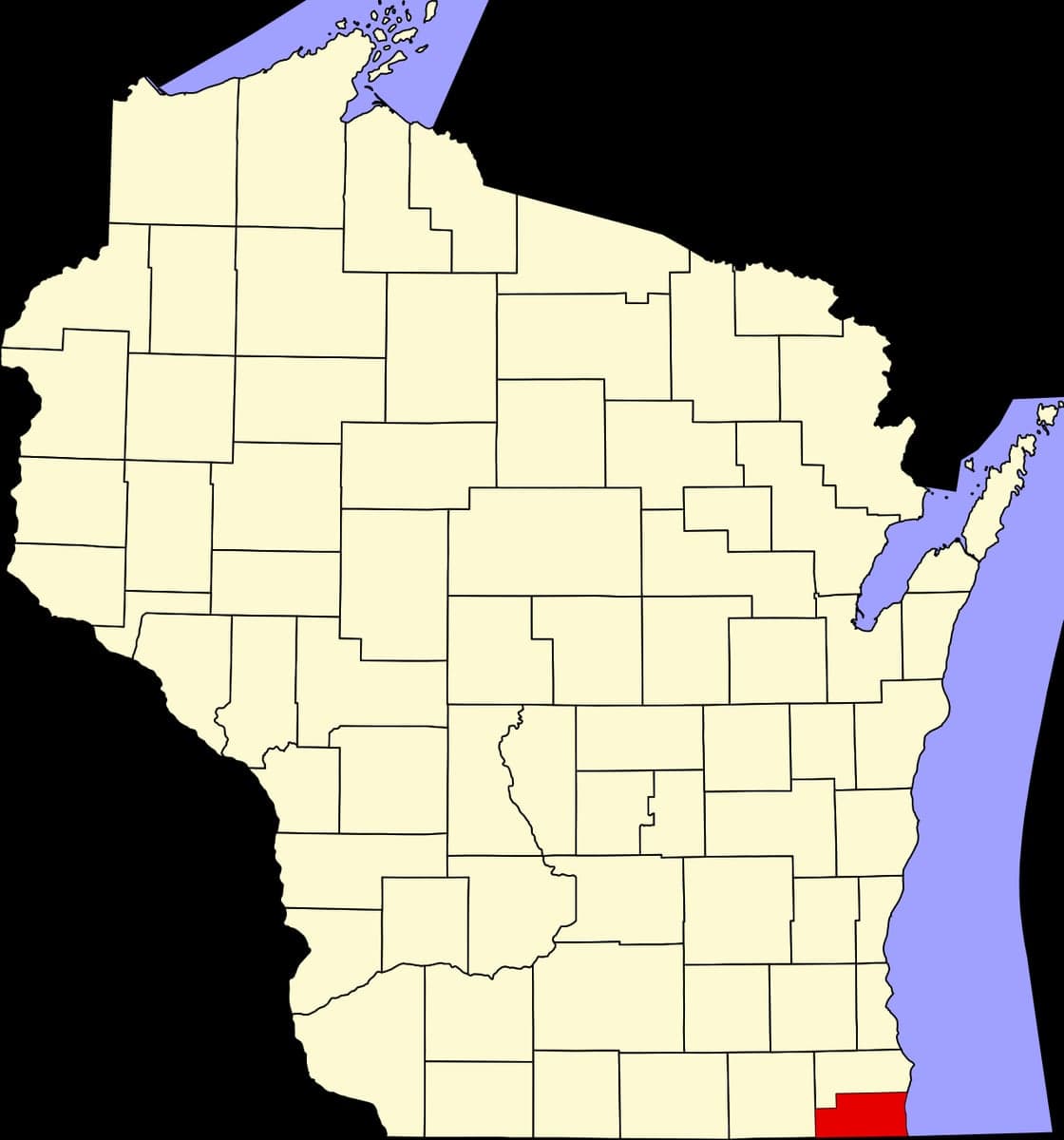
Today, Kenosha County’s 168,413 residents form a working-to-middle-class community with a distinctly Midwestern character, shaped by waves of European immigration and more recent Latino and Black growth. The county is less diverse than the national average—72.2% White, 14.8% Hispanic, 6.1% Black, and 1.3% East/Southeast Asian—but its identity is increasingly split between its historic industrial roots in the city of Kenosha and the suburban-rural expanse of towns like Bristol, Salem, and Randall. With a foreign-born population of just 3.9% and a college attainment rate of 30.8%, Kenosha County remains a place where family ties and local manufacturing jobs still anchor the community, even as commuter spillover from the Chicago and Milwaukee metros reshapes its character.
Settlement & growth (pre-1960)
Long before European settlers arrived, the area now known as Kenosha County was home to the Potawatomi people, who maintained villages along the Pike River and the Lake Michigan shoreline. The Potawatomi ceded the land to the U.S. government in the 1833 Treaty of Chicago, opening the region to Yankee and New England settlement. The first permanent American settlers arrived in 1835, founding the village of Southport (renamed Kenosha in 1850) at the mouth of the Pike River. These early settlers were primarily Yankees from New York and New England, drawn by the promise of fertile farmland and Lake Michigan shipping access.
The biggest demographic wave came with German immigration, which began in the 1840s and accelerated through the 1880s. German farmers and craftsmen settled throughout the county, establishing strong communities in Bristol, Salem, and Wheatland townships. By 1900, Germans and their descendants made up roughly a third of the county’s population, and their influence remains visible in the area’s Lutheran churches, brewery traditions, and family farming operations. A smaller but significant wave of Irish immigrants arrived during the same period, many finding work on the railroad and in the early manufacturing plants of Kenosha city.
The industrial boom of the early 20th century transformed Kenosha County. The establishment of the American Motors Corporation (AMC) plant in Kenosha city in 1902—and its predecessor companies—created a massive demand for factory labor. This drew a second major European wave: Italian immigrants, who arrived in large numbers between 1900 and 1920, settling in Kenosha’s working-class neighborhoods near the factory district. Polish and Slovenian immigrants followed in the 1910s and 1920s, also clustering in the city’s south side and around the industrial corridor along 52nd Street. By 1930, Kenosha city was a classic immigrant industrial town, with ethnic parishes, fraternal halls, and neighborhood grocery stores serving distinct European enclaves.
The Great Depression and World War II slowed immigration but did not stop it. During the 1940s and 1950s, the county saw a modest influx of Black families moving north from the South as part of the Second Great Migration, drawn by auto manufacturing jobs at AMC and other factories. This Black population settled primarily in Kenosha city’s west side and near the industrial plants, forming the foundation of the county’s present-day Black community. By 1960, Kenosha County was overwhelmingly White (over 95%) and heavily German and Italian in ancestry, with a small but established Black population of about 3%.
Modern era (post-1965)
The 1965 Hart-Cellar Act had a limited direct effect on Kenosha County compared to major urban centers, but its indirect consequences reshaped the area. The most significant post-1965 demographic shift has been the growth of the Hispanic population, which rose from negligible levels in 1970 to 14.8% today. This wave began in the 1980s and accelerated in the 1990s and 2000s, driven by Mexican and Puerto Rican families seeking manufacturing and service jobs in Kenosha city and the surrounding area. The Hispanic community is concentrated in Kenosha city’s central and south-side neighborhoods, with growing presence in Pleasant Prairie and Bristol as families move outward into newer subdivisions.
The Black population also grew significantly after 1965, rising from about 3% in 1970 to 6.1% today. This growth came from two sources: continued domestic migration from Chicago and other Midwestern cities, and a smaller number of African immigrants. The Black community remains concentrated in Kenosha city, particularly in the west side and near the former AMC plant site, though some families have moved to Pleasant Prairie and Somers in recent years. The East/Southeast Asian population—primarily Hmong and Vietnamese families—arrived in the 1980s and 1990s as refugees and secondary migrants from other Wisconsin cities, settling mainly in Kenosha city and Pleasant Prairie. The Indian-subcontinent population (0.5%) is a very recent arrival, mostly professionals working in healthcare and manufacturing who live in Pleasant Prairie and Bristol.
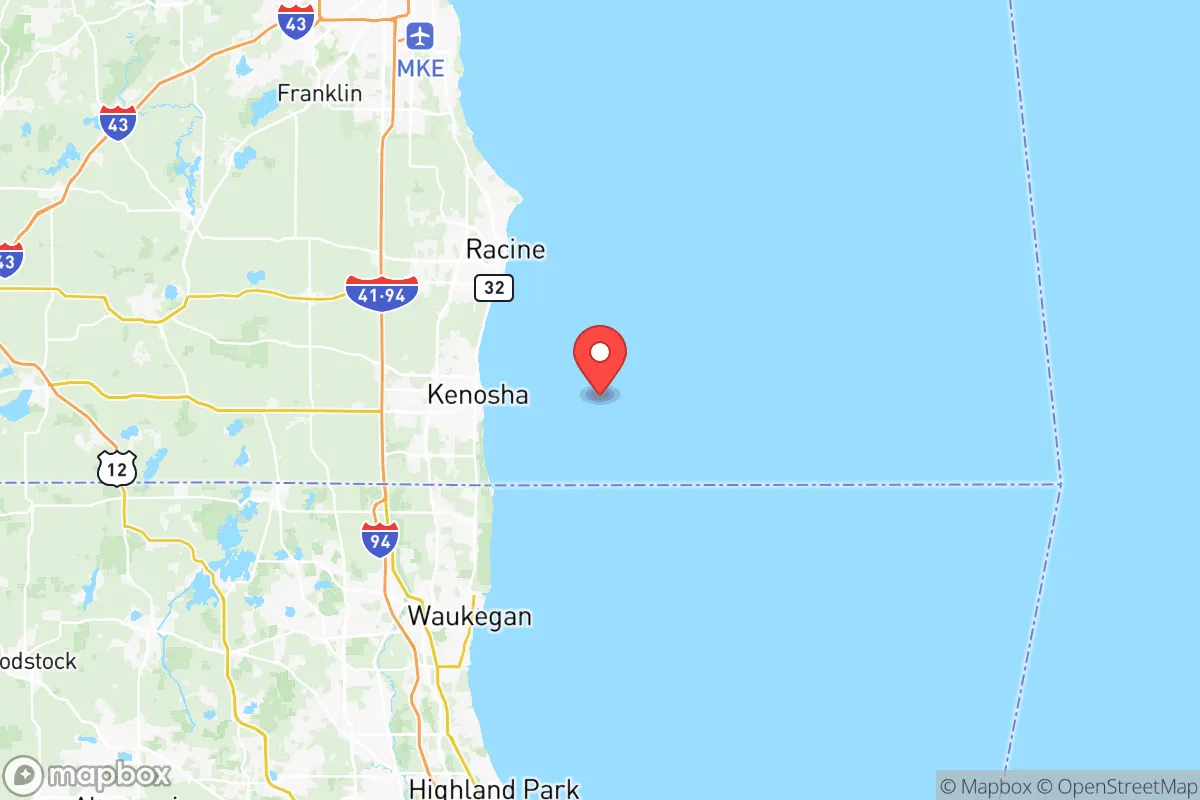
Domestic migration has been equally transformative. The decline of AMC (which closed in 1987) and the broader Rust Belt deindustrialization hit Kenosha city hard, leading to population stagnation in the 1980s and 1990s. However, the county’s location on the I-94 corridor between Chicago and Milwaukee made it a prime target for suburban spillover. Since 2000, Pleasant Prairie has been the fastest-growing municipality in the county, attracting middle-class families—mostly White, but increasingly Hispanic and Black—seeking newer housing and lower taxes than Illinois. Bristol and Salem have also seen steady growth as exurban bedroom communities. The city of Kenosha itself has stabilized and grown modestly, driven by Hispanic and Black families and a small but growing number of young professionals drawn by lower housing costs than Milwaukee or Chicago.
The future
Kenosha County is becoming more diverse, but slowly. The Hispanic share is projected to continue rising, potentially reaching 20-22% by 2040, driven by both natural increase and continued migration from Chicago and Mexico. The Black share is likely to grow modestly, to around 8-9%, as families continue to move from Chicago and Milwaukee. The East/Southeast Asian and Indian populations will remain small but may double as professionals are drawn to the growing logistics and healthcare sectors in Pleasant Prairie and Kenosha city. The White population, while still the majority, will continue to shrink as a share, falling below 65% by 2040.
Geographically, the growth is dispersing. Pleasant Prairie will continue to absorb the largest share of new residents, with its mix of new subdivisions, retail corridors, and industrial parks. Bristol and Salem will see slower but steady exurban growth, attracting families who want rural feel with commuter access. Kenosha city itself will likely see infill development and modest growth, particularly in its downtown and near the lakefront, as the city works to attract young professionals and empty-nesters. The county’s cultural identity is evolving from a classic Rust Belt industrial town to a hybrid: part exurban commuter zone, part working-class city, part rural farming area. This creates some tension between long-time residents who remember the AMC era and newcomers who see Kenosha as a cheaper alternative to Illinois.
For someone moving in now, Kenosha County offers a relatively affordable, family-oriented environment with a growing diversity that is still far from the levels of Chicago or Milwaukee. The county is becoming more suburban and more diverse, but it retains a strong sense of local identity rooted in its industrial past and its European-immigrant heritage. The next 10-20 years will likely see continued slow diversification, steady population growth in the I-94 corridor towns, and a gradual shift toward a more commuter-oriented, less insular community. It is not a place of rapid transformation, but of steady, incremental change—a Midwestern county adapting to the 21st century without abandoning its roots.

* Values derived from national, state, county, city and local statistics and may differ in a specific area. Last updated: 2026-07-17T01:10:50.000Z
Narrative content on this page is AI-generated and may contain mistakes. Verify any details that matter before acting on them.
ReloMaps may earn a commission from affiliate links at no extra cost to you.

