
Photo: Wikipedia
Quality of Life in Dane County
A livable area that tracks near national norms for affordability, walkability, and neighborhood health.
What does Quality of Life tell us?
Quality of Life measures an area by evaluating factors like cost of living, nearby amenities, country club access, airport proximity, socioeconomic signals and neighborhood character. For large states, this is a general average — quality of life can vary dramatically between metro areas, suburbs, and rural communities within the same state.
What does this tell us?
Quality of Life measures an area by evaluating factors like cost of living, nearby amenities, country club access, airport proximity, socioeconomic signals and neighborhood character. For large states, this is a general average — quality of life can vary dramatically between metro areas, suburbs, and rural communities within the same state.
Cost of Living
21% above national average
84%
The Real Cost of Living in Dane County for 2026
| Tier | Individual | Family (4) |
|---|---|---|
| Survival | $21k | $40k |
| Comfortable | $71k | $105k |
| Luxury | $156k+ | $242k+ |
| Elite (Top 5%) | $184k+ | $285k+ |
Quality-of-Life Analysis
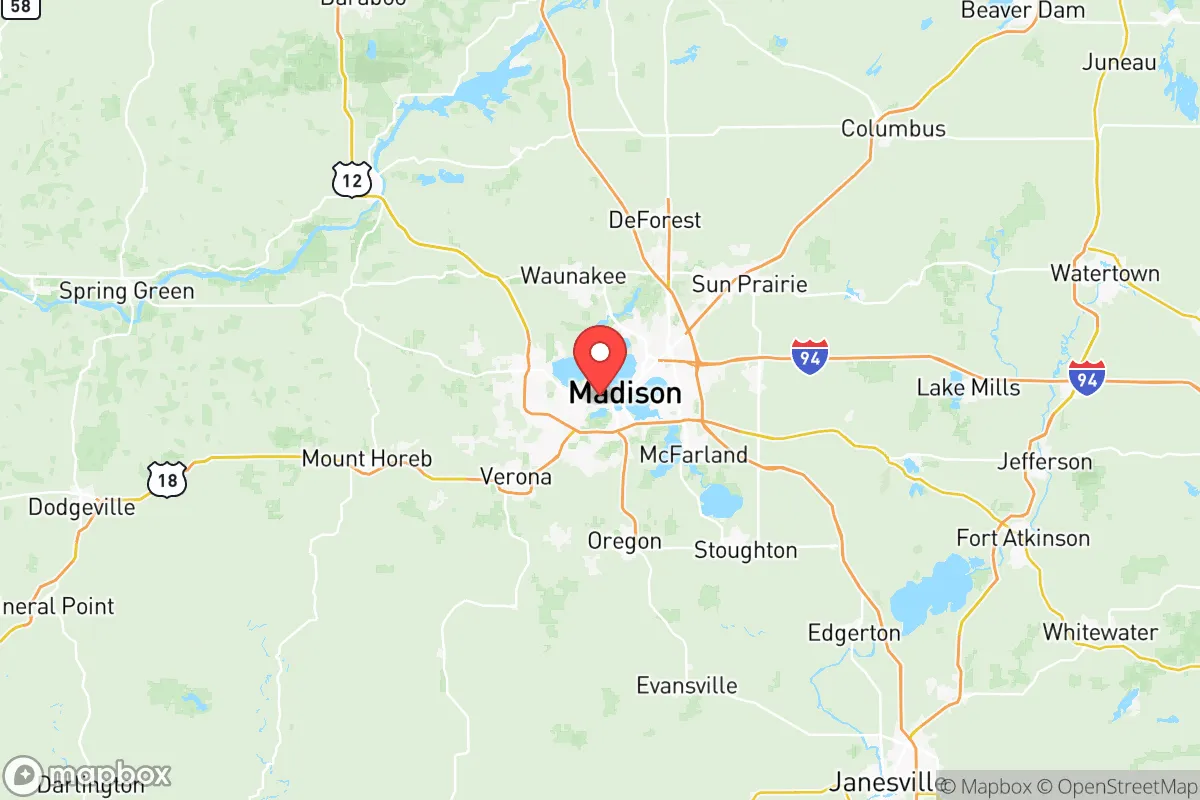
Dane County, Wisconsin, offers one of the most diverse quality-of-life spectrums in the Midwest, anchored by the progressive capital city of Madison and stretching into historic small towns, lakefront villages, and working farm country. The county draws a broad cross-section of residents: university researchers and state government employees cluster in Madison’s urban core, while families seeking lower home prices and more land gravitate toward communities like Stoughton or Mount Horeb, and rural homesteaders and commuters settle in unincorporated pockets like Paoli or Token Creek. This mix of dense urban amenity, walkable small-town Main Streets, and genuine agricultural countryside makes Dane County a rare place where a single county can satisfy vastly different lifestyle preferences within a 30-minute drive.
Largest town(s) & population centers
Madison dominates Dane County as both the state capital and home to the University of Wisconsin–Madison, with a population exceeding 270,000. Daily life here is defined by a dense network of bike paths, a robust farmers’ market on the Capitol Square, and a job market anchored by state government, the UW health system, and tech employers like Epic Systems and Exact Sciences. The isthmus neighborhoods—downtown, the near east side, and the near west side—offer walkable access to restaurants, live music venues, and Lake Mendota and Lake Monona waterfronts, but come with the county’s highest home prices and a competitive housing market. Suburban cities like Middleton (ranked repeatedly among America’s best places to live) and Fitchburg provide newer housing stock, top-rated school districts, and shorter commutes to Epic’s Verona campus, while Sun Prairie has grown rapidly as a family-oriented satellite with its own downtown revival and direct access to Interstate 94.
Smaller towns & rural pockets
Beyond the Madison orbit, Dane County’s smaller communities preserve distinct identities and slower paces. Mount Horeb, known as the “Troll Capital of the World,” retains a walkable downtown with independent shops and breweries, drawing residents who want small-town character with a 25-minute commute to Madison. Stoughton, with its Norwegian heritage and Syttende Mai festival, offers a historic downtown and more affordable housing stock. Waunakee consistently ranks among Wisconsin’s safest and best-run small villages, appealing to families willing to pay a premium for its schools and low crime rates. Cross Plains, DeForest, and McFarland each function as bedroom communities with their own downtown cores, while unincorporated areas like Paoli (a tiny former mill town with a celebrated cheese shop and tavern) and Token Creek offer true rural living—farmhouses on gravel roads, no streetlights, and direct access to agricultural land—yet remain within 20 minutes of Madison’s grocery stores and hospitals.
Cost & lifestyle range
Dane County’s overall cost of living index of 121 (21% above the U.S. average) masks wide internal variation. At the high end, Shorewood Hills and Maple Bluff—exclusive lakefront villages bordering Madison—post median home values well above the county’s $366,100 median, often exceeding $700,000, with property taxes to match. Middleton and Waunakee also command premiums for their school systems and low crime rates. At the lower end, Stoughton and DeForest offer median home prices closer to $300,000–$330,000, while rural areas in the county’s northern and western townships (such as the Town of Vermont or Town of Black Earth) still contain older farmhouses and fixer-uppers under $250,000. Median rent countywide is $1,345, but studio apartments in downtown Madison routinely exceed $1,500, while a two-bedroom in Stoughton or Cross Plains can be found for $1,100–$1,200. The average commute of roughly 21 minutes is remarkably low for a county of this size, meaning a resident living in rural Dane or Vienna can reach downtown Madison in under 30 minutes—a trade-off that makes rural living feasible for professionals who want land without a long drive.
Dane County works best for people who value access to urban amenities—a major research university, state government employment, nationally recognized dining and music—but want the option of living in a small town or on an actual farm. Young professionals and academics thrive in Madison’s dense neighborhoods; families with school-age children gravitate toward Waunakee, Middleton, or Sun Prairie for their school ratings and recreation programs; and those seeking acreage, privacy, or a slower pace find genuine rural options in the county’s unincorporated townships, all within a commute that most metro areas cannot match. The county’s political culture leans heavily Democratic, which shapes local policy on land use, transit, and schools, and that alignment is an important consideration for anyone evaluating the social environment of their chosen neighborhood.

Crime in Dane County
Generally safer than 61% of comparable U.S. locations.
Violent CrimeViolent Crime Analysis
Property CrimeProperty Crime Analysis
Crime Analysis
Dane County, Wisconsin, presents a complex safety picture where overall crime rates sit below national averages but above state medians, with significant variation between the urban core of Madison and its surrounding suburbs. The county's violent crime rate of 236.8 incidents per 100,000 residents is roughly 35% lower than the national average, while the property crime rate of 996.9 per 100,000 tracks closer to the national figure. However, these aggregate numbers mask a growing concern for residents: the county's progressive judicial philosophy, particularly in the Dane County District Attorney's office, has led to a pattern of reduced sentences and alternative diversion programs that critics argue embolden repeat offenders and erode public confidence in the justice system.
Crime in context
Dane County's violent crime rate is roughly half that of Milwaukee County, but it runs about 15% higher than the Wisconsin state average when excluding Milwaukee. Property crime in the county is notably elevated compared to neighboring counties like Jefferson or Columbia, where rates hover around 700 per 100,000. The disparity is largely driven by Madison, which accounts for the majority of reported incidents. The city of Madison's violent crime rate sits near 300 per 100,000, while suburbs like Middleton, Verona, and Waunakee report rates below 100 per 100,000. The presence of a progressive district attorney in Dane County, who has implemented policies such as presumptive non-prosecution for certain drug offenses and reduced charging for property crimes, has been cited by local law enforcement as a factor in rising recidivism. In contrast, Sun Prairie and Fitchburg maintain moderate crime rates, though both have seen upticks in theft and vehicle break-ins since 2022.
What residents experience
For most residents, the daily experience of crime in Dane County is dominated by property offenses rather than violent encounters. Car thefts and burglaries from vehicles are the most common complaints, particularly in Madison's near-east and near-west neighborhoods. The progressive policies of the Dane County District Attorney's office have resulted in a 35% increase in property crime cases being diverted or dismissed since 2021, according to county court data. This has led to a perception among residents that property crimes carry minimal consequences, with many offenders cycling through the system multiple times. Violent crime, while less common, is concentrated in specific Madison neighborhoods such as the Darbo-Worthington area and parts of the Allied Drive corridor. In contrast, residents in McFarland, Oregon, and Stoughton report feeling very safe, with violent crime rates below 50 per 100,000 in those communities. The county's approach to juvenile justice has also drawn scrutiny, with a focus on restorative justice programs that some victims' advocates argue fail to hold young offenders accountable.
Neighborhood-level variation in Dane County is stark and predictable. The safest areas are the affluent western suburbs of Middleton and Waunakee, where crime is rare and police response times are under five minutes. The highest-risk areas are in Madison's central and south-side neighborhoods, particularly around the East Towne Mall area and the Badger Road corridor. In these areas, residents report frequent encounters with panhandling, drug activity, and theft. The progressive judicial environment means that even when arrests are made, sentences are often light: the average sentence for a felony property crime in Dane County is 18 months, compared to 36 months in neighboring Waukesha County. For families considering a move to the area, the safest strategy is to target the outer-ring suburbs or the smaller towns in the county's northern and western reaches, where the influence of Madison's justice policies is less pronounced and community policing remains the norm.
* Values derived from national, state, county, city and local statistics and may differ in a specific area. Last updated: 2026-07-04T08:06:21.000Z
Narrative content on this page is AI-generated and may contain mistakes. Verify any details that matter before acting on them.
ReloMaps may earn a commission from affiliate links at no extra cost to you.

