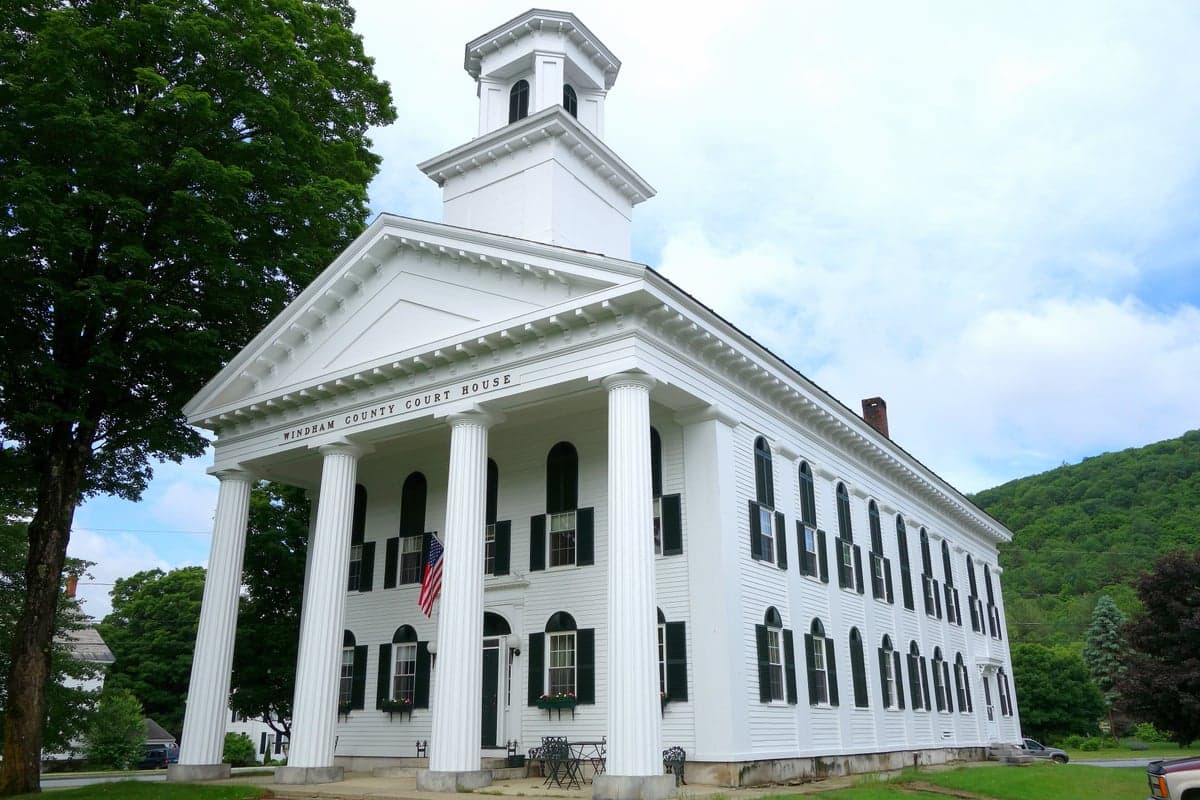
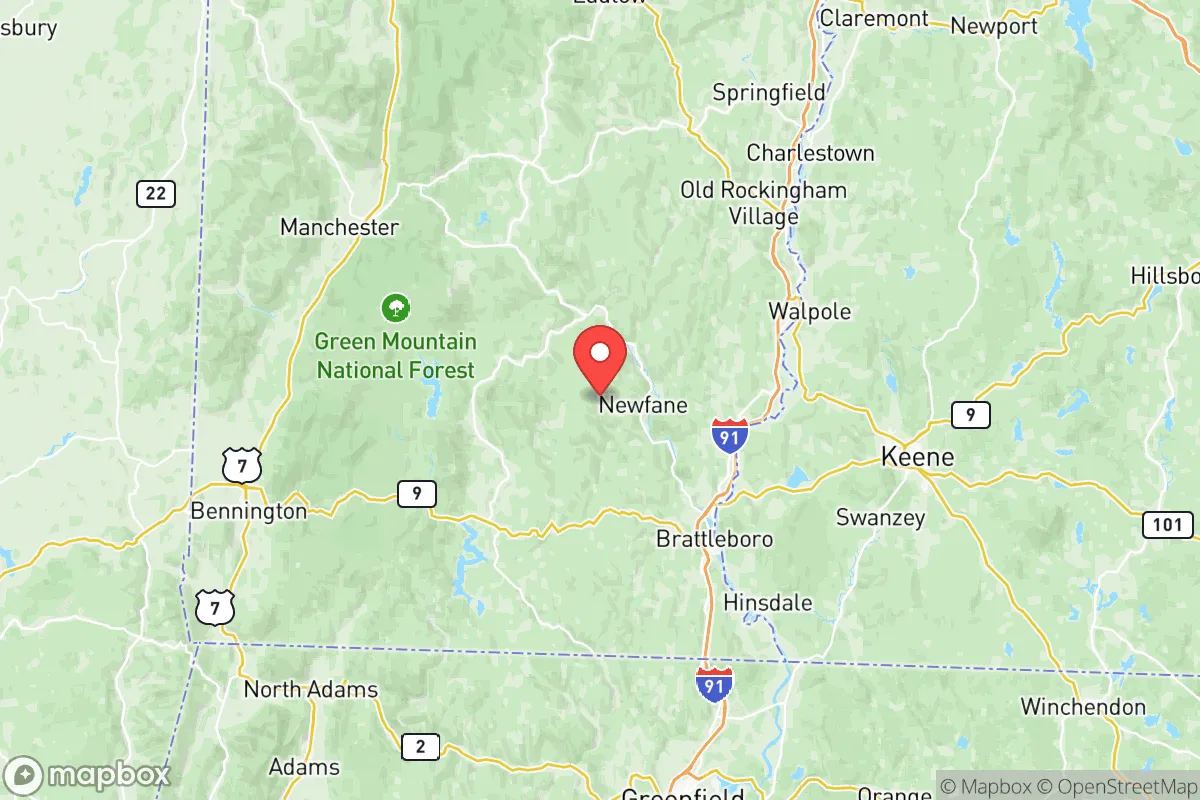
Photo: Wikipedia
Political ClimatePolitical Climate in Windham County
Showing state-level results — no local-only data available.
Local Political AnalysisPolitical Analysis of Windham County
Windham County is one of the most reliably Democratic corners of Vermont, carrying a Cook PVI of D+17 — identical to the state as a whole, but the local story is more textured than that single number suggests. The county has been trending bluer for decades, but the real action is in the growing divide between the progressive strongholds like Brattleboro and the more moderate, historically Republican-leaning towns like Wilmington and Dover. If you moved here in the 1990s, you’d have seen a county that was purple-ish; now it’s solidly blue, but with some stubborn red pockets that keep things interesting.
How it compares
On paper, Windham County and Vermont share the same D+17 PVI, but the county is actually a bit more polarized than the state average. Vermont’s blue vote is spread evenly across Chittenden County (Burlington) and the more rural areas, but Windham’s Democratic margin is heavily concentrated in Brattleboro, where precincts routinely vote 80%+ Democratic. Meanwhile, towns like Whitingham and Readsboro still lean Republican — not by huge margins, but enough to flip a local selectboard race. The swing precincts are in places like Newfane and Townshend, where independent voters decide things. In the 2024 presidential primary, for example, Newfane’s results were within 5 points of the statewide average, while Brattleboro was 15 points to the left. So if you’re comparing Windham to Vermont, think of it as the state’s political bellwether — but with a sharper edge on both sides.
What this means for residents
For liberal residents, especially in Brattleboro, the political climate feels like a safe space for progressive policy experiments — the town has a reputation for being a hub for climate activism, affordable housing initiatives, and LGBTQ+ advocacy. You’ll find local ordinances that go beyond state law, like stricter short-term rental regulations or plastic bag bans. For conservative residents, particularly in the southern and eastern towns like Guilford and Vernon, the reality is more about feeling outnumbered at the county level but still having a voice in local affairs. School board races and town meeting votes in those areas often see heated debates over spending and property taxes, where conservative voices can actually win. The practical takeaway: if you’re liberal, you’ll feel at home in most of the county; if you’re conservative, you’ll want to pick a town like Wilmington or Dover, where the local culture is more libertarian-leaning and less activist-driven.
Culturally, Windham County stands apart from the rest of Vermont in a few ways. The presence of Marlboro College (now closed, but its alumni network remains) and the Brattleboro Retreat mental health center give the area a distinctly intellectual, artsy vibe that you don’t get in, say, rural Essex County. Policy-wise, the county has been a testing ground for Vermont’s universal healthcare push — Brattleboro Memorial Hospital was an early adopter of community health initiatives. But the trade-off is higher property taxes to fund those services, which is a perennial complaint in the more conservative towns. If you’re moving here, expect a place where politics is personal — your neighbor might be a climate activist or a gun-rights advocate, and both will show up at the same town meeting to argue it out. That’s Windham County in a nutshell: blue on the map, but with enough local nuance to keep things from feeling like a monolith.

State Political ClimatePolitical Climate in Vermont
State Political AnalysisPolitical Environment in the State
Vermont is one of the most reliably Democratic states in the country, with a Cook Partisan Voting Index of D+17, meaning it votes about 17 points more Democratic than the national average in presidential elections. The state hasn’t voted for a Republican presidential candidate since George H.W. Bush in 1988, and the Democratic lean has only deepened since the 1990s, when it was a competitive swing state. That said, the political reality is far more nuanced than the statewide numbers suggest — Vermont’s politics are shaped by a deep urban-rural split, a strong libertarian streak, and a tradition of independent-minded governance that can surprise both conservatives and liberals.
Urban vs. rural divide
The political map of Vermont is a tale of two landscapes. The Democratic stronghold is the Chittenden County metro area, anchored by Burlington and its suburbs like South Burlington and Winooski. Burlington itself is a progressive bastion — home to the University of Vermont, a thriving arts scene, and a city council that has pushed policies like ranked-choice voting and a $15 minimum wage. In 2020, Chittenden County gave Joe Biden over 70% of the vote, and it’s the engine driving the state’s blue tilt. Outside of that corridor, the picture flips. Rutland County and Franklin County are more conservative, with Trump winning several towns there in 2020. Essex County in the remote Northeast Kingdom is deeply red — Trump took nearly 60% of the vote there in 2020, a stark contrast to Burlington’s margins. Even within liberal counties, there are pockets of conservatism: Stowe and Manchester are wealthy resort towns that lean Republican in local races, while Montpelier, the state capital, is reliably progressive. The divide isn’t just about party — it’s about lifestyle. Rural towns often feel ignored by Montpelier, leading to a simmering resentment that fuels local GOP candidates and independent movements.
Policy environment
Vermont’s policy environment is a mix of progressive ambition and fiscal pragmatism. The state has no sales tax, but it makes up for it with high property taxes — the effective property tax rate is about 1.8%, among the highest in the nation. Income taxes are progressive, with a top marginal rate of 8.75% on income over $213,000. The regulatory posture is generally business-friendly for small-scale operations but can be burdensome for larger developments, especially in environmental permitting. Education policy is centralized: the state funds schools through a statewide property tax system, which means rural districts often get more per-pupil funding than their tax base would support. Healthcare is a perennial issue — Vermont attempted a single-payer system in 2014 but abandoned it due to cost, and now operates a public option called Green Mountain Care. Election laws are among the most accessible in the country: same-day voter registration, no-excuse absentee voting, and automatic voter registration at the DMV. Gun laws are relatively strict — a 2018 law raised the purchase age to 21 for long guns, banned magazines over 10 rounds, and required background checks for private sales. There’s also a “red flag” law allowing temporary seizure of firearms from individuals deemed a risk.
Recent policy direction
Over the past five years, Vermont has moved decisively left on several fronts. In 2023, the legislature passed Act 47, which codified abortion rights into state law and removed several restrictions, including the requirement for parental notification for minors. The same year, Act 76 created a paid family and medical leave program funded by a payroll tax, set to launch in 2025. On education, Act 1 (2023) overhauled the state’s education funding formula, shifting more costs to the state level and capping local property tax increases. On gun rights, the 2018 law has held up in court, but a 2024 challenge to the magazine ban is pending before the state Supreme Court. For conservatives, the policy direction is concerning: parental rights took a hit in 2024 when the legislature overrode Governor Phil Scott’s veto of Act 18, which requires schools to adopt policies supporting transgender students, including allowing them to use preferred names and pronouns without parental consent. On property rights, Act 250, the state’s landmark land-use law, was updated in 2024 to streamline permitting for housing but still imposes strict environmental reviews. Voting access expanded further in 2023 with automatic voter registration at state agencies. The overall trajectory is toward a more regulated, higher-tax, and socially liberal state — but with a pragmatic governor who has vetoed some of the most aggressive proposals, like a 2024 bill to create a state-run universal health care system.
Civil unrest & political movements
Vermont is not a hotbed of civil unrest, but it has its flashpoints. The most visible political movement in recent years has been the Rural Vermont group, which advocates for small-scale agriculture and has clashed with state regulators over raw milk sales and pesticide bans. On the left, the Vermont Progressive Party has a strong presence in Burlington and Montpelier, pushing for rent control and a Green New Deal-style energy transition. Immigration politics are relatively quiet — Vermont has no sanctuary city policies, but Burlington has a “welcoming city” ordinance that limits cooperation with federal immigration enforcement. The state has seen occasional protests over police reform, particularly after the 2020 murder of George Floyd, but they were small compared to larger states. Election integrity controversies are minimal — Vermont uses paper ballots and has a strong track record of clean elections. One notable flashpoint: in 2023, a group of parents sued the state over Act 18, arguing it violated their constitutional rights to direct their children’s education. The case is ongoing. For a new resident, the political climate is generally civil — you’ll see more yard signs than angry confrontations, but the divide between Burlington progressives and Northeast Kingdom conservatives is real and occasionally surfaces in town meeting debates.
Projection
Over the next 5-10 years, Vermont’s political trajectory is likely to continue leftward, but at a slower pace than the last decade. The key demographic driver is in-migration from out of state — many new residents are remote workers from New York and Boston, who tend to be younger and more liberal. This is already shifting the balance in traditionally red towns like Stowe and Wilmington, where housing prices have surged and new arrivals are voting for Democratic candidates. However, the state’s population is also aging rapidly — Vermont has the second-oldest median age in the country (43.2 years), and older voters tend to be more fiscally conservative. The Republican Party is struggling to adapt; it’s increasingly a rural, older, and more populist party, while the Democratic coalition is urban, educated, and younger. Expect continued battles over property taxes, education funding, and gun laws. The biggest wild card is housing — if the state can’t build enough affordable homes, the in-migration may slow, and the political balance could stabilize. For a conservative relocator, the next decade will likely mean living in a state where your vote for president won’t matter, but your local vote — especially in town government and school board races — can still have real impact.
For a new resident, the bottom line is this: Vermont is a blue state with a red streak, and your experience will depend heavily on where you land. If you move to Burlington, you’ll be in a progressive bubble where conservative views are a minority. If you settle in Newport or Bennington, you’ll find a more conservative community that feels disconnected from Montpelier. The taxes are high, the gun laws are strict, and the social policies are liberal — but the state is also safe, clean, and politically stable. For conservatives, it’s a place where you can live your life without much interference, but you won’t find a political majority. For liberals, it’s a place where your values are reflected in state law, but you’ll pay for it. Either way, Vermont rewards those who engage locally — town meeting day is still a real thing here, and your voice carries more weight than in most states.
* Values derived from national, state, county, city and local statistics and may differ in a specific area. Last updated: 2026-07-01T00:02:17.000Z
Narrative content on this page is AI-generated and may contain mistakes. Verify any details that matter before acting on them.
ReloMaps may earn a commission from affiliate links at no extra cost to you.

