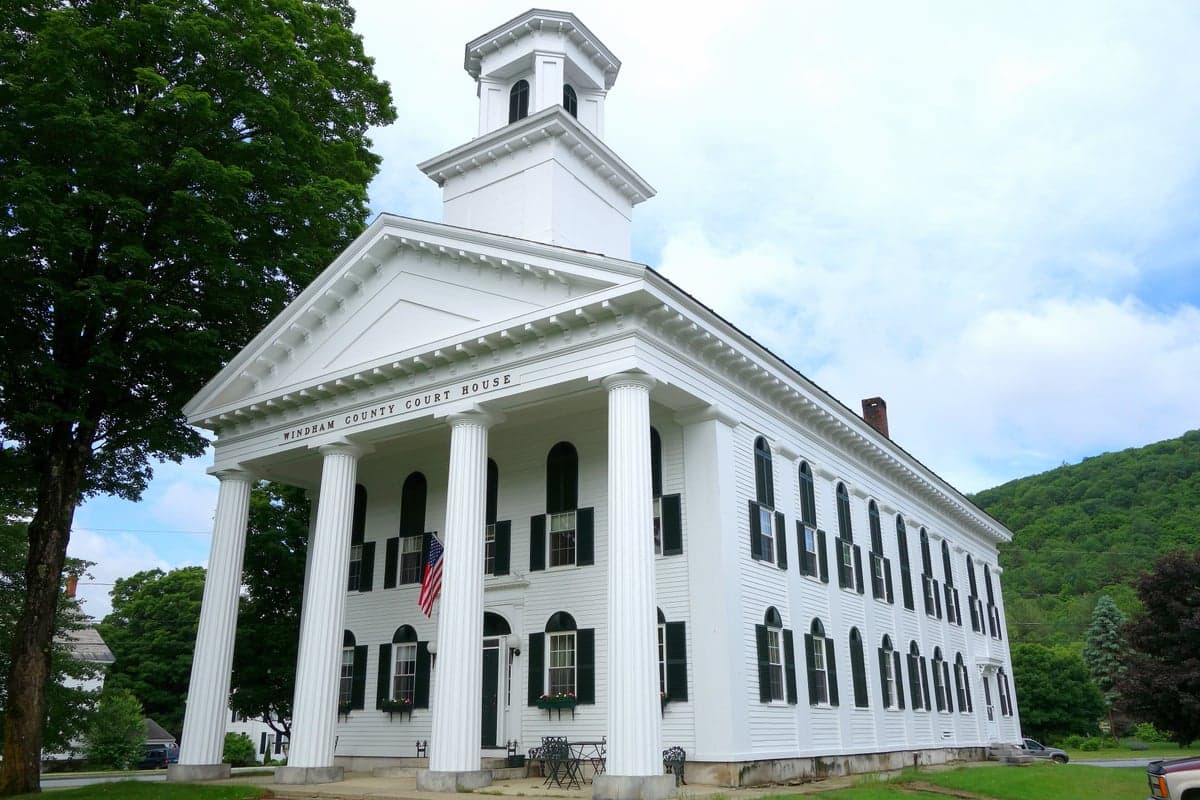
Photo: Wikipedia
Personal Sovereignty in Windham County
Moderate friction. Expect trade-offs in some aspect of personal liberty and independence.
What does Personal Sovereignty tell us?
Personal Sovereignty measures your capacity for self-reliance and independence with minimal government friction. Higher scores mean fewer barriers between you and the way you want to live... but it assumes you have the space you need and good neighbors.
What does this tell us?
Personal Sovereignty measures your capacity for self-reliance and independence with minimal government friction. Higher scores mean fewer barriers between you and the way you want to live... but it assumes you have the space you need and good neighbors.
State Policy
Energy independence: Importer (15% of energy produced in-state)
Personal Liberty
Homesteading

Personal Liberty Analysis
Windham County, Vermont presents a nuanced personal sovereignty environment that blends the state’s famously live-and-let-live ethos with a progressive regulatory framework that can chafe conservatives seeking maximal autonomy. The county’s rural character—spanning from the artsy hub of Brattleboro to the remote hill towns of Halifax and Readsboro—offers genuine space and privacy, but state-level policies on taxes, gun laws, and land use create a mixed bag for individuals and families prioritizing self-reliance. You’ll find more breathing room in the county’s less populated northern and western towns, while Brattleboro and the southern corridor near the Massachusetts border enforce stricter local ordinances that reflect a more collectivist outlook.
Tax burden and regulatory posture for residents and property owners
Vermont’s overall tax burden is among the highest in the nation, and Windham County residents feel that acutely. The state imposes a progressive income tax with a top marginal rate of 8.75% on income over $231,250, plus a statewide property tax that averages roughly 1.8% of assessed home value—though rates vary significantly by town due to local education spending. In Brattleboro and Wilmington, property tax rates hover around the county average, while in more rural towns like Athens or Brookline, rates can be slightly lower but still exceed national medians. The regulatory posture is decidedly heavy-touch: Vermont has no right-to-work law, mandates paid family leave, and imposes stringent Act 250 land-use permits on nearly any development impacting 10+ acres or on steep slopes. Small businesses in Guilford report that state-level permitting for home-based enterprises can take months, discouraging the kind of entrepreneurial self-sufficiency some relocators seek. For a conservative-leaning household, the tax and regulatory climate here is a net negative unless offset by the county’s lower housing costs relative to southern New England or the appeal of Vermont’s social safety net.
Self-defense rights and gun law specifics in Windham County
Gun owners relocating to Windham County must contend with some of the strictest firearm regulations in New England. Vermont requires a five-day waiting period for handgun purchases, universal background checks for all firearm sales (including private transactions), and a red-flag Extreme Risk Protection Order law that allows authorities to temporarily seize weapons. The state also bans magazines over 10 rounds for long guns and 15 rounds for handguns, and prohibits carrying firearms in public buildings, schools, and bars. Windham County’s sheriff’s office in Newfane and local police departments generally enforce these laws neutrally, but the county’s culture around self-defense feels more restrictive than in neighboring New Hampshire or even rural New York counties. However, the county’s landscape—heavily forested and sparsely populated north of Route 9—means that responsible gun owners in towns like Jamaica or Marlboro rarely encounter friction with neighbors or law enforcement when using firearms for hunting or target shooting on private land. Concealed carry permits are no longer required for residents (Vermont is a constitutional carry state), though the state’s legal landscape limits where you can exercise that right. For self-defense prioritization, the county is defensible but not optimal compared to more permissive jurisdictions.
Self-reliance and homesteading viability across local zoning and lot sizes
Windham County offers genuine homesteading potential, but zoning varies dramatically by town. In the more rural towns like Halifax, Readsboro, and Stamford, minimum lot sizes for single-family homes are typically 1 to 5 acres, and land can be purchased for $2,000 to $5,000 per acre—significantly cheaper than in Chittenden County near Burlington. Towns such as Brookline and Athens have minimal zoning ordinances, making it feasible to build a small off-grid cabin without endless bureaucratic hurdles, though Act 250 still applies to larger parcels. Off-grid viability is high: most rural properties have access to well water, and solar installers are common in the Brattleboro area. However, the state mandates connection to the electrical grid for new construction in many towns unless you can demonstrate that grid connection costs exceed 200% of a self-sufficient system—a bar that often requires professional engineering reports. Composting toilets are legal for single-family homes, and rainwater collection is unrestricted. Heavier zoning in Brattleboro and Wilmington (which require building permits, septic reviews, and occupancy inspections) means homesteaders should target the county’s unincorporated areas or towns with limited land-use codes. A family seeking maximum self-reliance should look north of Route 9 in the mountains of Wardsboro or Dover, where county enforcement is light and neighbors are sparse.
Personal liberties: parental rights, medical autonomy, speech, and property
Windham County’s legal environment on personal liberties is a study in contrasts. Parental rights are partially protected under state law, but Vermont does not have a parental bill of rights like many conservative states. Public schools in Brattleboro and Putney follow a progressive curriculum on gender identity and sexual health, and parents who object have limited opt-out options beyond homeschooling—which is legally straightforward in Vermont with a simple notice to the local superintendent. Medical autonomy is constrained: Vermont mandates childhood vaccinations for school attendance (with medical and religious exemptions but no philosophical exemption), and telemedicine abortion is legal and accessible. The state has strong tenant protections and rent control in Brattleboro, limiting a property owner’s ability to manage their own rental units as they see fit. Free speech is broadly protected under state and federal law, and though local officials in Brattleboro tend toward progressive social norms, actual censorship of political speech is rare. Property rights are the most significant liberty concern: Vermont’s land-use regulations and the 10-acre trigger for Act 250 give state officials substantial control over how you develop your own land, making Windham County less appealing for those who want to build a large compound or operate a commercial farm without state interference.
Overall, personal sovereignty in Windham County is a trade-off: the county offers low population density, affordable rural land, and genuine off-grid feasibility in its hill towns, but the state-level tax, regulatory, and gun-law environment places it firmly in the “limited sovereignty” category compared to states like New Hampshire, Montana, or Idaho. For a conservative-leaning family that values quiet privacy and modest self-sufficiency and can navigate Vermont’s regulatory demands, towns like Halifax, Athens, or Wardsboro provide a plausible homesteading life. For those who prioritize lower taxes, fewer land-use restrictions, and stronger self-defense laws, Windham County will feel constraining—especially relative to the autonomy available just a few hours south in Pennsylvania or west in upstate New York. The county’s charm lies in its natural beauty and community scale, not in its commitment to individual sovereignty as a primary policy value.

* Values derived from national, state, county, city and local statistics and may differ in a specific area. Last updated: 2026-07-01T00:02:17.000Z
Narrative content on this page is AI-generated and may contain mistakes. Verify any details that matter before acting on them.
ReloMaps may earn a commission from affiliate links at no extra cost to you.

