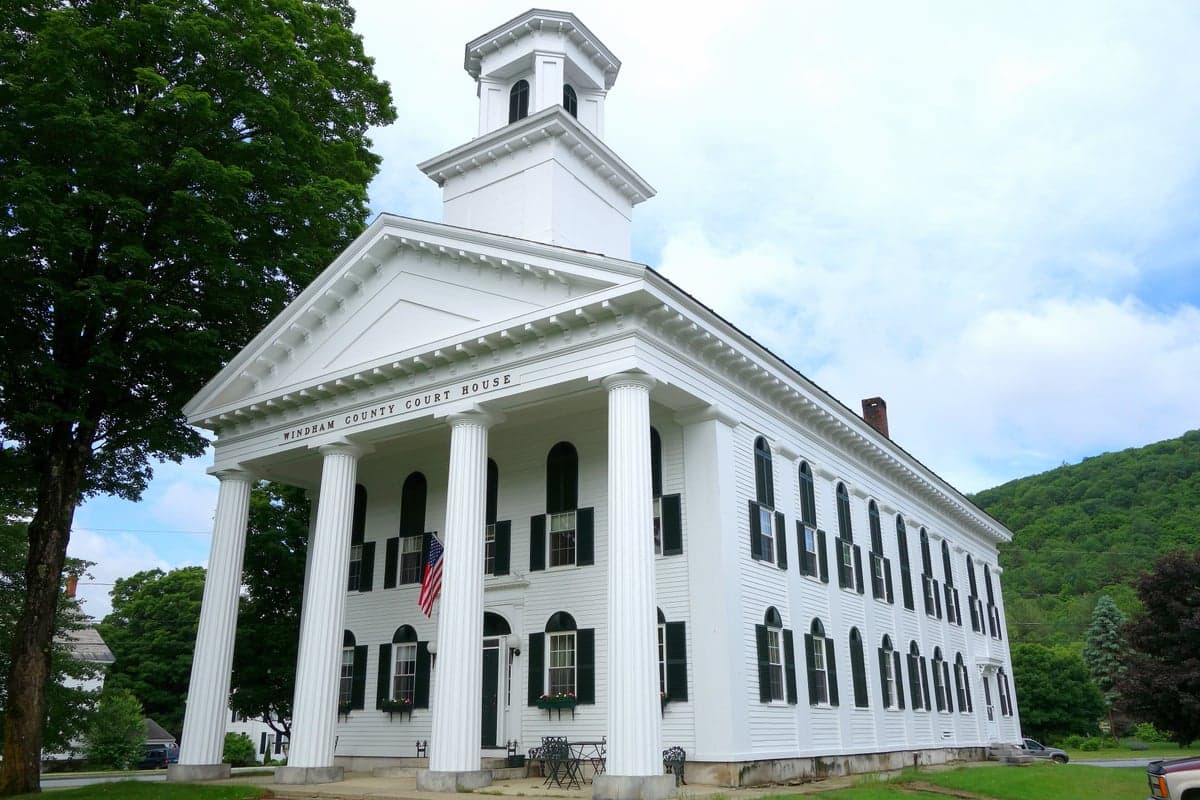
Photo: Wikipedia
Quality of Life in Windham County
A livable area that tracks near national norms for affordability, walkability, and neighborhood health.
What does Quality of Life tell us?
Quality of Life measures an area by evaluating factors like cost of living, nearby amenities, country club access, airport proximity, socioeconomic signals and neighborhood character. For large states, this is a general average — quality of life can vary dramatically between metro areas, suburbs, and rural communities within the same state.
What does this tell us?
Quality of Life measures an area by evaluating factors like cost of living, nearby amenities, country club access, airport proximity, socioeconomic signals and neighborhood character. For large states, this is a general average — quality of life can vary dramatically between metro areas, suburbs, and rural communities within the same state.
Cost of Living
8% below national average
90%
The Real Cost of Living in Windham County for 2026
| Tier | Individual | Family (4) |
|---|---|---|
| Survival | $17k | $32k |
| Comfortable | $52k | $76k |
| Luxury | $123k+ | $190k+ |
| Elite (Top 5%) | $152k+ | $235k+ |
Quality-of-Life Analysis
Windham County, Vermont, offers a quality-of-life spectrum that ranges from the walkable, arts-driven hub of Brattleboro to the remote, off-grid homesteads of towns like Winhall and Stratton, attracting everyone from remote workers and retirees to back-to-the-landers and seasonal resort employees. The county’s character is defined by this tension: a single, relatively dense population center surrounded by vast stretches of forested hill towns, each with its own distinct economic base and social rhythm. With a cost of living index of 92 (100 being the US average), the county is more affordable than much of New England, but the trade-offs between convenience and solitude vary dramatically depending on where you settle.
Largest town(s) & population centers
Brattleboro is the county’s undisputed hub, home to roughly 12,000 residents and the region’s primary commercial, cultural, and transportation center. Daily life here centers on the compact downtown along the Connecticut River, where the Brattleboro Food Co-op, the Latchis Theatre, and a dense cluster of independent bookstores and galleries create a distinctly progressive, walkable environment. The town’s Amtrak station and I-91 access make it the most connected part of the county, drawing commuters who work at Brattleboro Memorial Hospital, the World Learning/SIT Graduate Institute, or the C&S Wholesale Grocers distribution center. The next-largest population center, Bellows Falls (part of Rockingham), is a smaller, grittier mill town with a revitalizing downtown anchored by the Bellows Falls Opera House and the Great Falls on the Connecticut River. Both towns offer the highest density of rental housing in the county, with median rent at $1,056, but Brattleboro’s rents skew higher, especially near the downtown core.
Smaller towns & rural pockets
Beyond the two main river towns, Windham County is a patchwork of small villages and unincorporated areas that define the rural Vermont experience. Wilmington, near the Mount Snow ski area, functions as a seasonal resort town with a walkable village green, while Newfane and Grafton are classic picture-postcard villages with white clapboard churches, town commons, and a slower pace driven by second-home owners and retirees. Dummerston and Putney are more agricultural, with Putney hosting the well-known Landmark College and a strong organic farming community. The most remote pockets are in the county’s northern and western hill towns: Winhall, Stratton, and Jamaica are heavily forested, with large tracts of state and national forest land, where homes are often on unpaved roads and cell service is unreliable. Marlboro, home to the Marlboro Music Festival, is another high-elevation community where year-round residents are outnumbered by seasonal visitors.
Cost & lifestyle range
The cost of living and amenities vary sharply across the county. At the higher end, Brattleboro’s West Brattleboro neighborhood and the Putney village center command median home values above the county average of $265,100, with historic homes and walkable access to shops and schools. At the lower end, the rural hill towns of Halifax, Readsboro, and Stamford offer significantly cheaper housing — often under $200,000 for a fixer-upper — but with minimal services, no public transportation, and long drives to grocery stores or hospitals. The average commute across the county is just 22 minutes, but that figure masks a wide gap: a Brattleboro resident might commute 10 minutes to work, while a Readsboro resident commuting to Bennington or North Adams, MA, faces 40+ minutes one way. Property taxes in Windham County are among Vermont’s highest, often exceeding 2% of assessed value, which is a critical factor for budget-conscious buyers. For renters, the median rent of $1,056 is manageable compared to Burlington or Boston, but availability is extremely tight in Brattleboro and Bellows Falls, with vacancy rates below 2% in 2025.
The people who thrive in Windham County are those who can match their lifestyle expectations to a specific town’s reality. Remote workers and retirees who value community and walkability do well in Brattleboro or Bellows Falls. Seasonal recreationists and second-home owners gravitate to Wilmington, Stratton, and Winhall for ski access. Homesteaders, artists, and those seeking deep solitude find their niche in the hill towns of Halifax, Marlboro, and Readsboro, where land is cheap and neighbors are few. The county’s overall affordability — a COL index of 92 — makes it accessible to a wider range of incomes than much of southern Vermont, but the trade-off between convenience and seclusion is the defining choice every newcomer must make.

Crime in Windham County
Generally safer than 71% of comparable U.S. locations.
Violent CrimeViolent Crime Analysis
Property CrimeProperty Crime Analysis
Crime Analysis
Windham County, Vermont, presents a nuanced public safety profile that balances a relatively low violent crime rate against a property crime rate that significantly exceeds the state's median, creating a safety picture that varies considerably by town. With a violent crime rate of 216.7 per 100,000 residents, the county is generally safer than the national average for serious personal crimes. However, its property crime rate of 1,438.3 per 100,000 is notably higher than Vermont's statewide figure, driven largely by theft and burglary in specific population centers. SafeWise and Vermont State Police data consistently show that the county's overall statistics are heavily influenced by conditions in the city of Brattleboro.
Crime in context
To understand Windham County's safety, it's essential to compare its data against both state and national benchmarks. The violent crime rate of 216.7 per 100,000 sits well below the 2023 national average of approximately 380 per 100,000, positioning the county as a relatively low-risk area for violent offenses like assault, robbery, and homicide. Property crime, however, is a more pressing concern: the 1,438.3 per 100,000 rate is about 20% higher than the Vermont state average and approaches the national median for property crime, which hovers around 1,900 per 100,000. The disparity largely stems from the county's economic geography: Brattleboro, as the largest commercial hub, experiences the bulk of larceny and vehicle theft, while more rural towns like Wilmington and Newfane report significantly lower property crime numbers. The county does not have its own police force outside of the Vermont State Police barracks and local municipal departments, meaning enforcement resources are thin across its 789 square miles.
What residents experience
Daily life in Windham County is shaped by the sharp contrast between property crime prevalence and a generally low threat of personal violence. Residents in Brattleboro and the immediate vicinity report a persistent problem with theft, including bicycle theft, package theft, and break-ins of unoccupied seasonal homes. These incidents are disproportionately linked to property crimes of opportunity, often associated with substance use disorder issues that are more concentrated in the county's downtown areas. By contrast, in towns like Putney and Dummerston, the most common safety complaints revolve around wildlife encounters and trespassing rather than violent confrontations. The political and judicial environment in Windham County—which leans heavily progressive—has led to a criminal justice approach that prioritizes diversion and restorative justice over incarceration. While this policy aims to address root causes like addiction, critics argue it results in repeat property offenders cycling through the system without meaningful accountability, directly increasing the risk of future property crime for residents. The Windham County State's Attorney's office in Brattleboro has gained a reputation for pursuing alternative sentencing, which some observers believe emboldens chronic property criminals.
Neighborhood-level variation
Safety in Windham County is not uniform; it hinges on where you live and the proximity to commercial corridors. The safest areas are generally the smaller, more remote towns like Marlboro, Jamaica, and Wardsboro, where population density is low and community surveillance is high. In these locations, property crime rates drop by 40-60% compared to the county average. The most challenging environments for safety are concentrated in downtown Brattleboro and denser residential zones along Route 9. Even within Brattleboro, there is a stark divide: neighborhoods east of the Connecticut River (the West Brattleboro area) report fewer incidents than the central downtown blocks near the transportation hub. For those considering relocation, it is prudent to prioritize towns with their own local police presence—Bellows Falls and Brattleboro have municipal departments—while recognizing that more isolated towns rely exclusively on state police response, which can be delayed by up to 30 minutes in rural pockets. The county's lack of a unified, conservative law enforcement strategy means that residents in more progressive jurisdictions may experience higher rates of recidivism among property crime offenders, a factor worth weighing against the scenic and recreational benefits of the region.
* Values derived from national, state, county, city and local statistics and may differ in a specific area. Last updated: 2026-07-01T00:02:17.000Z
Narrative content on this page is AI-generated and may contain mistakes. Verify any details that matter before acting on them.
ReloMaps may earn a commission from affiliate links at no extra cost to you.

