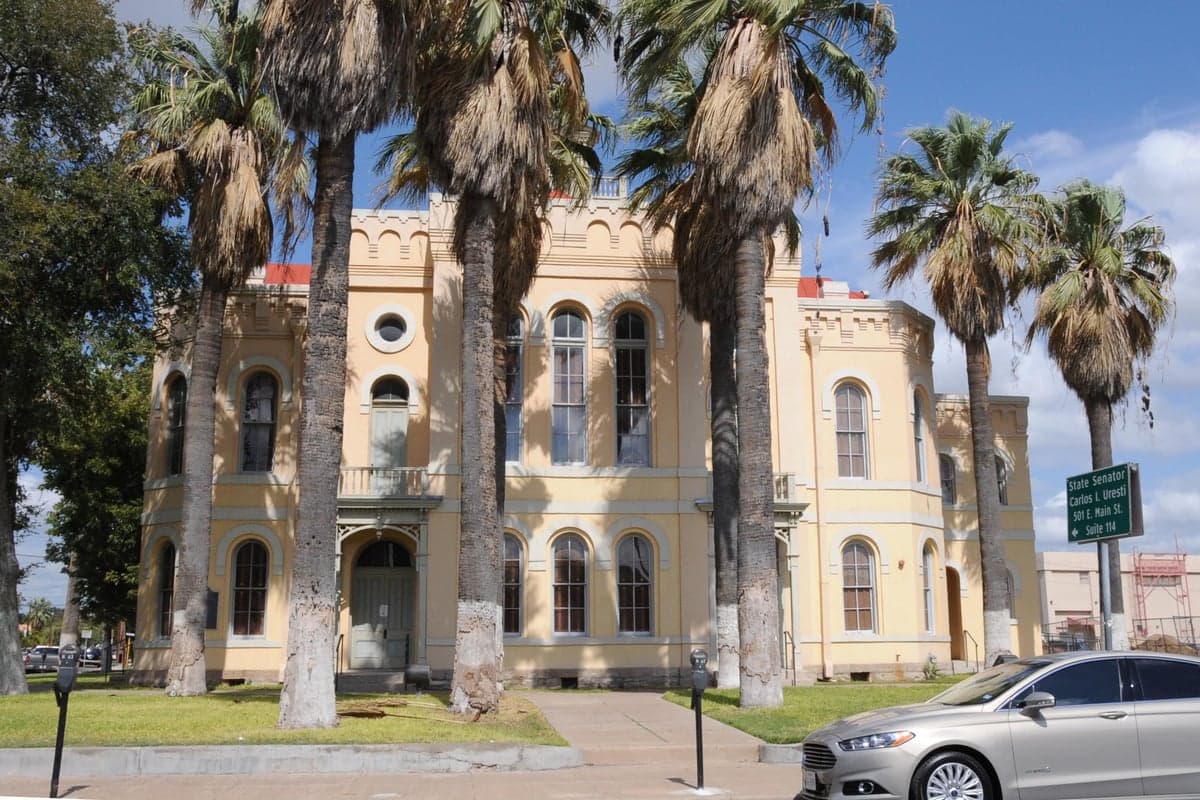
Photo: Wikipedia
Political ClimatePolitical Climate in Maverick County
Showing county-level results — no local-only data available.
Lean and PVI are calculated from this county’s 2020 and 2024 presidential results, Cook-style.
Political rankings in Texas
- Most Conservative Cities in Texas
- Most Liberal Cities in Texas
- Best Liberal-Leaning Towns in the South
- Safest Liberal-Leaning Towns in the South
- Safest Conservative-Leaning Towns in the South
- Affordable Small Towns for Conservatives
- Most Affordable Liberal-Leaning Small Towns in the U.S.
- Safest Conservative-Leaning Cities in the U.S.
- Most Conservative Counties in Texas
- Most Liberal Counties in Texas
Local Political AnalysisPolitical Analysis of Maverick County
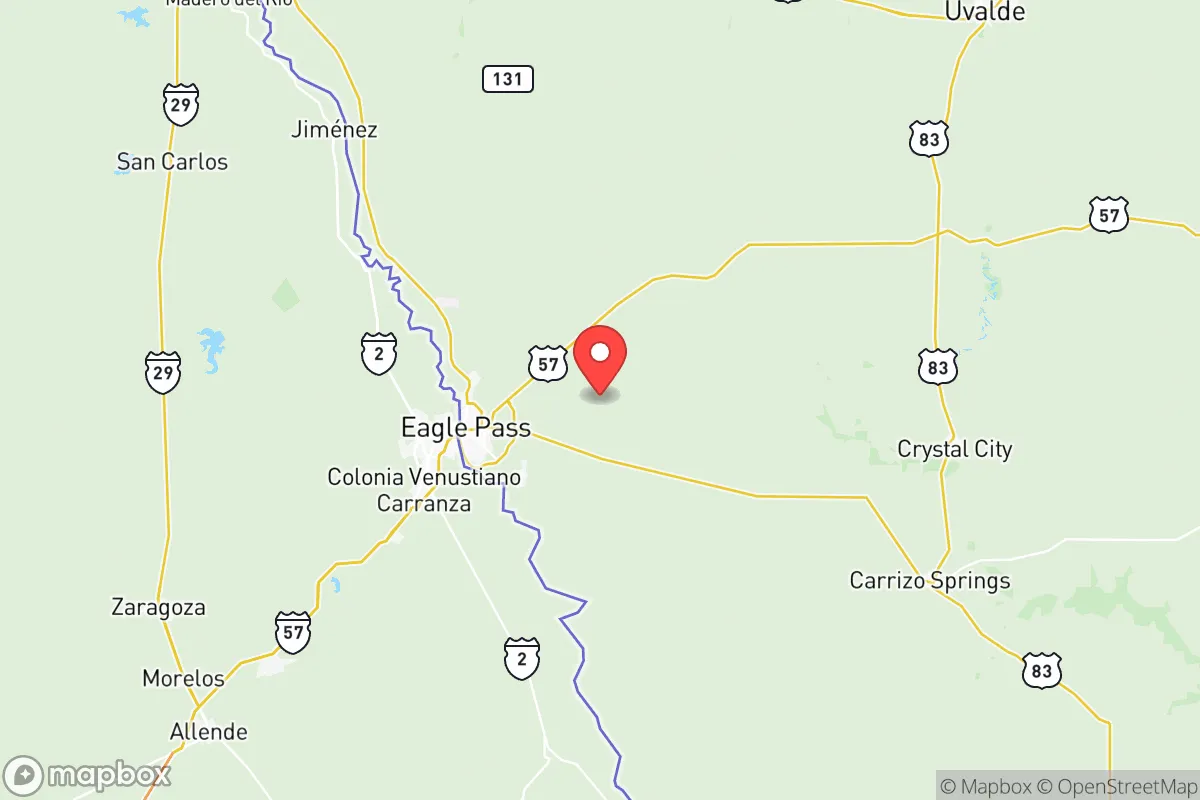
Maverick County, anchored by the border city of Eagle Pass, has long been a Democratic stronghold in Texas, but its political trajectory is shifting noticeably rightward. The county’s Cook Partisan Voting Index (PVI) of R+3 reflects a recent trend where Republican candidates have become competitive, though local elections still often favor Democrats. In the 2024 presidential race, Donald Trump lost Maverick County by only about 2 points—a dramatic swing from 2020 when Joe Biden won it by 12 points. This rapid realignment is driven by a mix of economic anxiety, border security concerns, and a growing conservative-leaning population in outlying areas like El Indio and Quemado, while Eagle Pass itself remains a Democratic hub, especially among older Hispanic voters and union households.
How it compares
Compared to Texas as a whole, Maverick County is an outlier in its historical Democratic loyalty but is now converging with the state’s broader rightward shift. Texas statewide has a Cook PVI of R+3 (the same as Maverick County), meaning the county’s partisan lean now mirrors the state average—a stark change from a decade ago when Maverick was D+15 or more. The key difference is that Maverick County’s shift is more volatile and concentrated: while Texas suburbs like Collin County have been reliably red for years, Maverick’s swing precincts are in rural areas like the community of Normandy, where Trump gained 15 points between 2020 and 2024. In contrast, Eagle Pass’s urban core (precincts around the downtown and the port of entry) still votes Democratic by 20+ points, creating a sharp urban-rural divide that is less pronounced in the rest of Texas.
What this means for residents
For conservative residents, the county’s rightward trend means they are no longer a voiceless minority—local Republican candidates now regularly win county commissioner seats in precincts 2 and 4, and the Maverick County GOP has grown from a handful of members in 2016 to over 200 active volunteers by 2025. Conservative homeowners in areas like the Las Quintas subdivision report feeling more comfortable displaying yard signs and attending school board meetings without pushback. For liberal residents, especially in Eagle Pass’s older neighborhoods like Rosita Valley, the shift has created a sense of urgency. Democratic organizers have doubled down on voter registration drives at the county’s colonias and among the large population of dual-citizen families who cross daily to work in Piedras Negras, Mexico. The practical effect is that local policy debates—especially around property taxes, school funding, and border infrastructure—are now genuinely contested, with neither side able to take victory for granted.
Culturally, Maverick County remains distinct from much of Texas due to its deep ties to Mexico and its status as a major border crossing. The county’s politics are uniquely shaped by the daily reality of the international bridge: residents on both sides of the aisle tend to support efficient port operations and oppose federal policies that slow cross-border commerce. This creates a pragmatic, issue-driven political culture where a Republican candidate who champions trade infrastructure can win votes in Democratic precincts, and a Democrat who focuses on local jobs can hold off a GOP challenger. The long-term trajectory likely points toward a competitive swing county, with Eagle Pass staying blue and the rural precincts trending red, making Maverick a bellwether for border-region politics in Texas.

State Political ClimatePolitical Climate in Texas
State Political AnalysisPolitical Environment in the State
Texas has been a reliably Republican state in presidential elections since 1980, but its political reality is far more complex than a simple red-state label. The dominant coalition has long been a mix of social conservatives, business interests, and rural voters, but rapid population growth and demographic shifts have made the state a genuine battleground — Donald Trump won Texas by 5.6 points in 2024, down from 9 points in 2016, and Democrats have flipped several suburban state House seats in the last two cycles. Over the past 20 years, the state has moved from deep-red to lean-red, with the biggest changes happening in the fast-growing suburbs of Dallas-Fort Worth, Houston, and San Antonio.
Urban vs. rural divide
The political map of Texas is a study in contrasts. The state's five largest metros — Houston, Dallas-Fort Worth, San Antonio, Austin, and El Paso — are all Democratic-leaning, with Austin and El Paso being the most liberal. Harris County (Houston) and Dallas County have trended blue for years, while Tarrant County (Fort Worth) flipped to Biden in 2020 and stayed Democratic in 2024. Meanwhile, rural West Texas, the Panhandle, and East Texas are deeply Republican — Lubbock County gave Trump 75% of the vote in 2024, and rural counties like Hudspeth and Loving routinely vote 80-90% Republican. The suburbs are the real battleground: Collin County (north of Dallas) was once a GOP stronghold but has become competitive as tech workers and families move in, while Williamson County (north of Austin) flipped from red to purple in the last decade. The divide isn't just geographic — it's cultural, with urban and suburban voters prioritizing different issues than the rural base.
Policy environment
Texas has no state income tax, which is a major draw for relocators, but it relies heavily on property taxes and sales tax to fund services. The regulatory posture is generally business-friendly, with limited zoning in many cities and a right-to-work law that weakens union power. Education policy is a flashpoint: the state uses a school voucher-like program (the Texas Education Savings Account) passed in 2023, and the State Board of Education has been at the center of debates over curriculum content, particularly around race and gender. Healthcare policy is notable for its limited Medicaid expansion — Texas is one of 10 states that has not expanded Medicaid under the Affordable Care Act, leaving roughly 1.5 million low-income adults uninsured. Election laws have been tightened: Senate Bill 1 (2021) added ID requirements for mail-in voting, limited drive-through and 24-hour voting, and gave partisan poll watchers more access. The state also has a constitutional carry law (permitless carry of handguns) passed in 2021, and abortion is effectively banned with few exceptions under the state's trigger law and Heartbeat Act (SB 8).
Recent policy direction
Over the last five years, Texas has moved decisively in a conservative direction on several fronts. On gun rights, the 2021 permitless carry law (HB 1927) allows most adults to carry a handgun without a license or training — a significant expansion of self-defense law. On education and parental rights, the 2023 "Parental Bill of Rights" (HB 900) requires schools to get parental consent before students can access library materials deemed "sexually explicit," and the state has banned diversity, equity, and inclusion (DEI) offices at public universities. On speech and privacy, the state passed a law (HB 20) in 2023 that restricts social media platforms from moderating content based on viewpoint, though it's been tied up in court. On medical and bodily autonomy, the state's near-total abortion ban has no exceptions for rape or incest, and the 2023 law (SB 14) bans gender-affirming care for minors. Property rights remain strong, with no state-level rent control and relatively few land-use restrictions outside of incorporated cities. On voting, the 2021 election law (SB 1) added new ID requirements and limited local initiatives to expand voting access. Taxation remains a key selling point: the state has no personal or corporate income tax, and the 2023 property tax cut (SB 2) increased the homestead exemption to $100,000.
Civil unrest & political movements
Texas has seen significant protest activity in recent years, particularly around abortion rights and racial justice. The 2021 "People's March" in Austin drew tens of thousands after the Heartbeat Act passed, and the 2020 George Floyd protests in Houston, Dallas, and Austin were among the largest in the country. On the right, the "Texas Nationalist Movement" has pushed for secession referendums, though it remains a fringe effort with no serious legislative traction. Immigration politics are a constant flashpoint: Governor Greg Abbott's Operation Lone Star has deployed state troopers and National Guard to the border, bused migrants to Democratic-led cities, and installed razor wire along the Rio Grande, leading to ongoing legal battles with the Biden administration. Sanctuary city policies are banned by state law (SB 4, 2017), which requires local law enforcement to cooperate with federal immigration authorities. Election integrity remains a live issue: the 2020 and 2024 elections saw widespread Republican claims of fraud, though no evidence of systemic problems has been found, and the state's new voting laws have been challenged in court. A new resident would notice the political polarization in everyday life — bumper stickers, yard signs, and local news coverage are heavily partisan, especially in the suburbs and rural areas.
Projection
Over the next 5-10 years, Texas is likely to become more competitive at the statewide level, but not necessarily blue. The key demographic driver is the continued growth of the suburbs: places like Collin County, Williamson County, and Fort Bend County are attracting a mix of young families, tech workers, and Hispanic voters who are less partisan than either party's base. The Hispanic vote, in particular, is shifting rightward — Trump improved his share of the Hispanic vote in Texas by about 10 points between 2020 and 2024, especially in the Rio Grande Valley. Meanwhile, rural areas are depopulating, which hurts the GOP's base. The state legislature will likely remain Republican-controlled through at least 2030 due to gerrymandering, but the margin will shrink. A new resident moving in now should expect a state that is politically volatile — capable of passing conservative legislation on guns and abortion, but also electing Democrats in suburban districts and potentially flipping a Senate seat in 2026. The policy environment will remain business-friendly and low-tax, but social issues will continue to be a battleground, especially around education, healthcare, and immigration.
For a new resident, the bottom line is that Texas offers a low-tax, business-friendly environment with strong property rights and a conservative tilt on social issues, but the political landscape is shifting. Conservatives will find a state that largely aligns with their values on guns, taxes, and education, while liberals will find themselves in a minority that is growing in influence, especially in the cities and suburbs. The practical takeaway is that where you live in Texas matters enormously — a family in Lubbock will experience a very different political climate than one in Austin or Houston. If you're moving for economic opportunity and prefer a hands-off government, Texas is a strong fit. If you're looking for a state where your vote will reliably swing elections, you'll want to pay attention to the suburban battlegrounds that will decide the state's future.
* Values derived from national, state, county, city and local statistics and may differ in a specific area. Last updated: 2026-11-20T20:00:47.000Z
Narrative content on this page is AI-generated and may contain mistakes. Verify any details that matter before acting on them.
ReloMaps may earn a commission from affiliate links at no extra cost to you.

