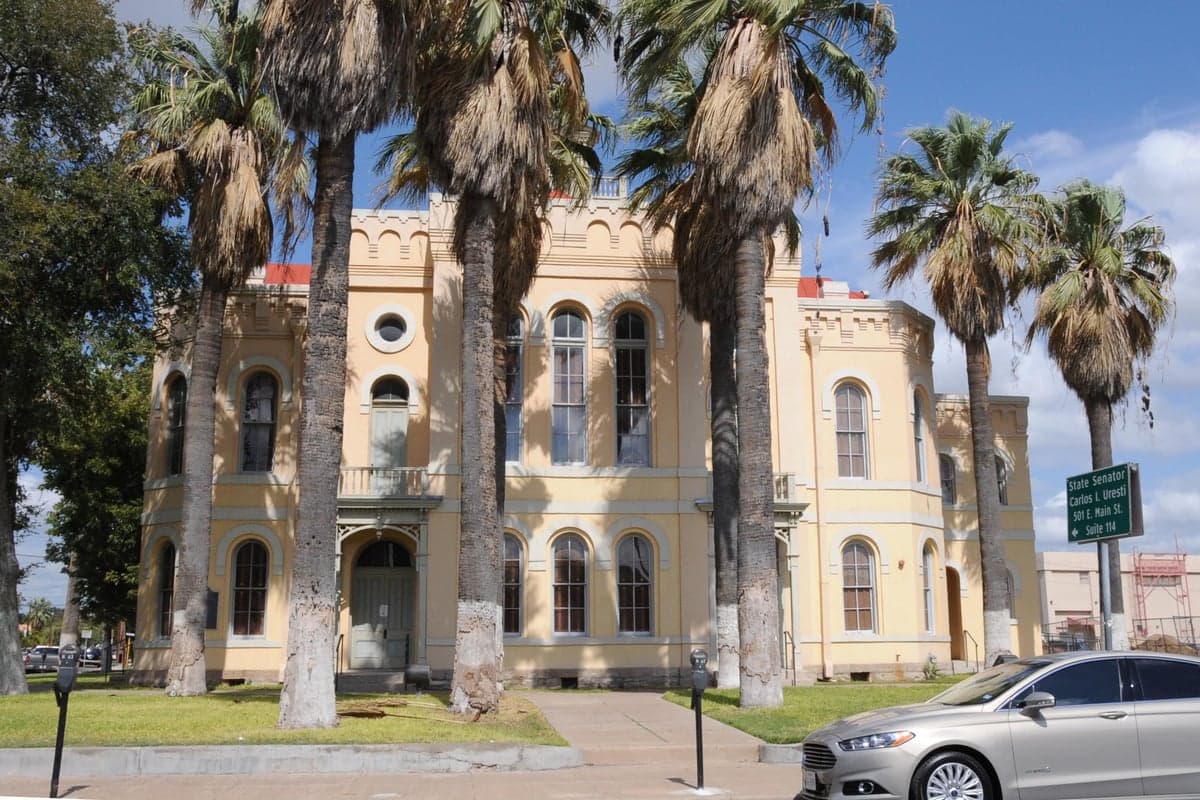
Photo: Wikipedia
Personal Sovereignty in Maverick County
Viable for self-reliance. Generally workable, though some barriers may limit total independence.
What does Personal Sovereignty tell us?
Personal Sovereignty measures your capacity for self-reliance and independence with minimal government friction. Higher scores mean fewer barriers between you and the way you want to live... but it assumes you have the space you need and good neighbors.
What does this tell us?
Personal Sovereignty measures your capacity for self-reliance and independence with minimal government friction. Higher scores mean fewer barriers between you and the way you want to live... but it assumes you have the space you need and good neighbors.
State Policy
Energy independence: Net exporter (195% of energy produced in-state)
Personal Liberty

Personal Liberty Analysis
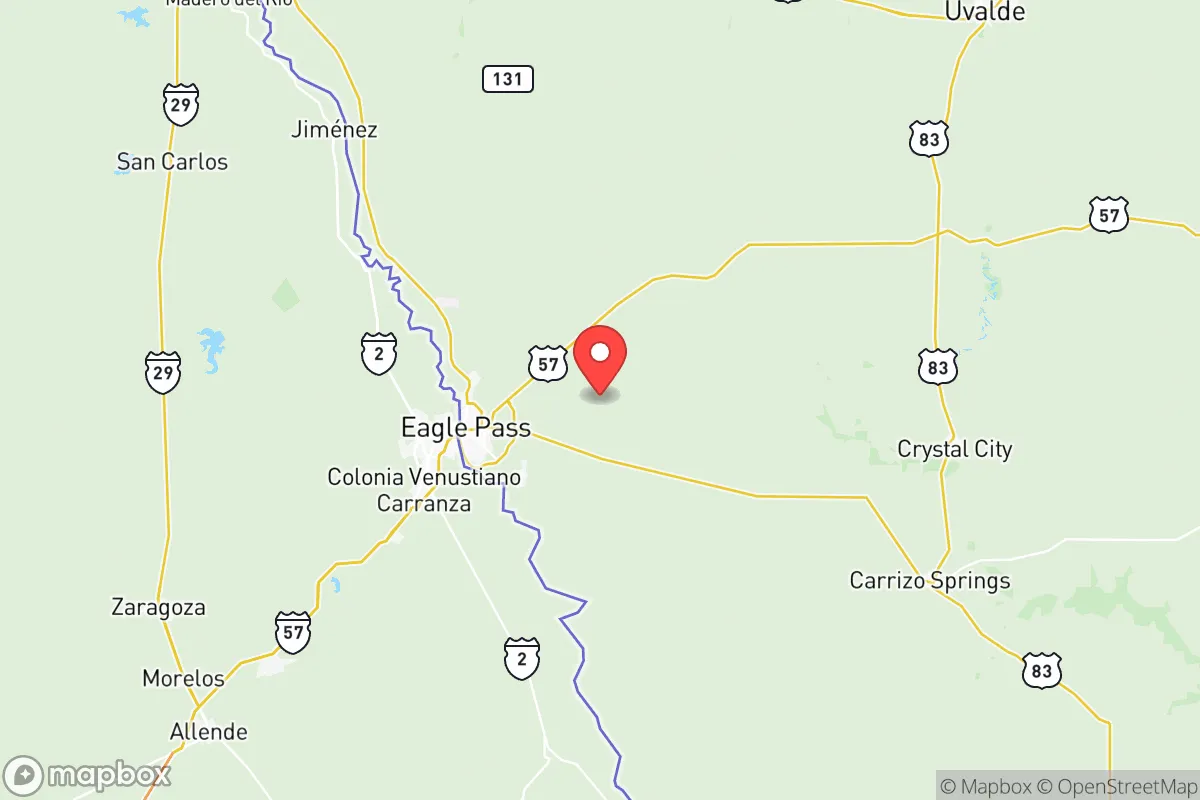
Maverick County, anchored by the border city of Eagle Pass and stretching across the South Texas plains, offers a personal sovereignty environment that is distinctly shaped by its rural character, proximity to the international border, and Texas state law. For individuals and families prioritizing autonomy, the county presents a mixed landscape: a very low tax burden and permissive state-level gun laws are counterbalanced by federal border security dynamics and a limited local economy that can constrain self-reliance. The county's regulatory posture is generally light-touch, but the practical realities of living in a remote, border region create a unique sovereignty calculus that differs markedly from both urban Texas and other rural counties.
Tax burden and regulatory posture in Maverick County
Maverick County's tax environment is among the most favorable in Texas for those seeking to minimize government overhead. The county's property tax rate is approximately 0.75% of assessed value, well below the state average of 1.1%, and there is no county-level sales tax on top of the state's 6.25% rate. This low burden is a direct result of the county's limited public services and infrastructure—roads are often unpaved outside of Eagle Pass, and there is no county-wide zoning ordinance. The regulatory posture is genuinely light-touch: building permits are rarely required for structures under 200 square feet in unincorporated areas, and the county does not enforce a uniform building code. However, this permissiveness comes with a caveat: the city of Eagle Pass itself has a more structured regulatory environment, including a city building code and zoning districts that restrict certain uses like auto repair or livestock keeping within residential neighborhoods. For those seeking maximum autonomy, the unincorporated communities of El Indio and Quemado offer near-total regulatory freedom, with no city taxes and minimal county oversight on land use. The trade-off is that these areas lack municipal services like water, sewer, and police patrols, placing the burden of self-provision squarely on the resident.
Self-defense and gun law specifics in a border county
Texas's permissive firearm laws apply fully in Maverick County, with no additional county-level restrictions. Constitutional carry (permitless carry) is legal for individuals 21 and older, and the county does not impose any waiting periods, magazine capacity limits, or firearm registration requirements. The county sheriff's office is publicly supportive of Second Amendment rights, and there are no local ordinances restricting open carry or the discharge of firearms on private property, provided the discharge is not within 150 feet of a public road or occupied building. This is a significant advantage for self-reliant individuals, as the county's remote areas—particularly around Brundage and Normandy—allow for practical firearms training and hunting on private land without the noise restrictions found in suburban Texas. However, the border location introduces a unique sovereignty concern: federal law enforcement presence is heavy, with Border Patrol checkpoints on major highways (including US 57 and US 277) and frequent patrols in the county. While these checkpoints do not typically enforce state gun laws, they do create a federal presence that some residents perceive as an erosion of local autonomy. For those who prioritize self-defense, the practical reality is that state law provides strong protections, but the federal overlay is unavoidable in Maverick County.
Self-reliance and homesteading viability across the county
Maverick County offers substantial opportunities for homesteading and off-grid living, but the feasibility varies dramatically by location. The county's land is predominantly ranchland, with average parcel sizes in unincorporated areas exceeding 10 acres—far larger than the typical suburban lot. Zoning is essentially nonexistent outside Eagle Pass, meaning residents can keep livestock, build structures, and install alternative energy systems without county permits. Off-grid feasibility is high: the region receives over 220 sunny days per year, making solar power a practical primary energy source, and many properties have existing wells or access to the Edwards-Trinity Aquifer for water. The communities of Rosita and Chula Vista are particularly attractive for homesteaders, with larger lots (often 5-20 acres) and a sparse population that minimizes neighbor disputes. However, the county's aridity—averaging only 20 inches of rainfall annually—means that rainwater catchment systems require substantial storage capacity, and gardening requires irrigation. The cost of land is a major advantage: raw acreage in Maverick County typically sells for $1,500 to $3,000 per acre, a fraction of the cost in Central Texas. For families seeking to build a self-sufficient homestead, the county's low land prices and permissive regulations are compelling, but the harsh climate and distance from supply centers (the nearest Home Depot is 45 miles away in Del Rio) demand a high level of preparedness.
Personal liberties: parental rights, medical autonomy, speech, and property
Maverick County reflects Texas's broader conservative stance on personal liberties, with strong protections for parental rights and property ownership. The county does not have any local ordinances that infringe on parental decision-making in education or healthcare, and the school district (Maverick County ISD) has a conservative board that has resisted state-level mandates on curriculum transparency. Medical autonomy is largely unregulated at the county level, though the practical reality is that healthcare options are limited—the county has only one hospital (Maverick County Hospital District) and few specialists, meaning that residents seeking alternative or elective medical care often must travel to San Antonio (140 miles east). Speech and assembly are protected under state law, and the county does not impose any local restrictions on political signage, public gatherings, or expressive conduct. Property rights are robust: the county does not enforce a homestead exemption cap beyond the state's $40,000 school tax exemption, and there are no local rent control or landlord licensing ordinances. The primary constraint on personal liberty in Maverick County is the federal border security apparatus, which can affect property access and create a sense of surveillance in areas near the Rio Grande. For residents in Eagle Pass proper, the city's noise ordinance and animal control regulations are moderate, but for those in unincorporated areas, personal liberties are largely unfettered by local government.
Overall, Maverick County offers a personal sovereignty environment that is among the most permissive in Texas for those who can tolerate its remote location and federal border presence. The combination of low taxes, minimal zoning, strong gun rights, and affordable land creates a foundation for genuine self-reliance that is increasingly rare in the state's growing urban corridors. Compared to counties like Bexar (San Antonio) or Travis (Austin), Maverick County is far more accommodating to off-grid living, homesteading, and regulatory independence. However, the trade-offs are real: limited healthcare, a harsh climate, and the omnipresent federal border enforcement mean that personal sovereignty here requires not just legal freedom but also practical resilience. For the self-reliant individual or family who values autonomy over convenience, Maverick County is a strong contender—but it is not a place for those who depend on government services or proximity to urban amenities.

* Values derived from national, state, county, city and local statistics and may differ in a specific area. Last updated: 2026-11-20T20:00:47.000Z
Narrative content on this page is AI-generated and may contain mistakes. Verify any details that matter before acting on them.
ReloMaps may earn a commission from affiliate links at no extra cost to you.

