
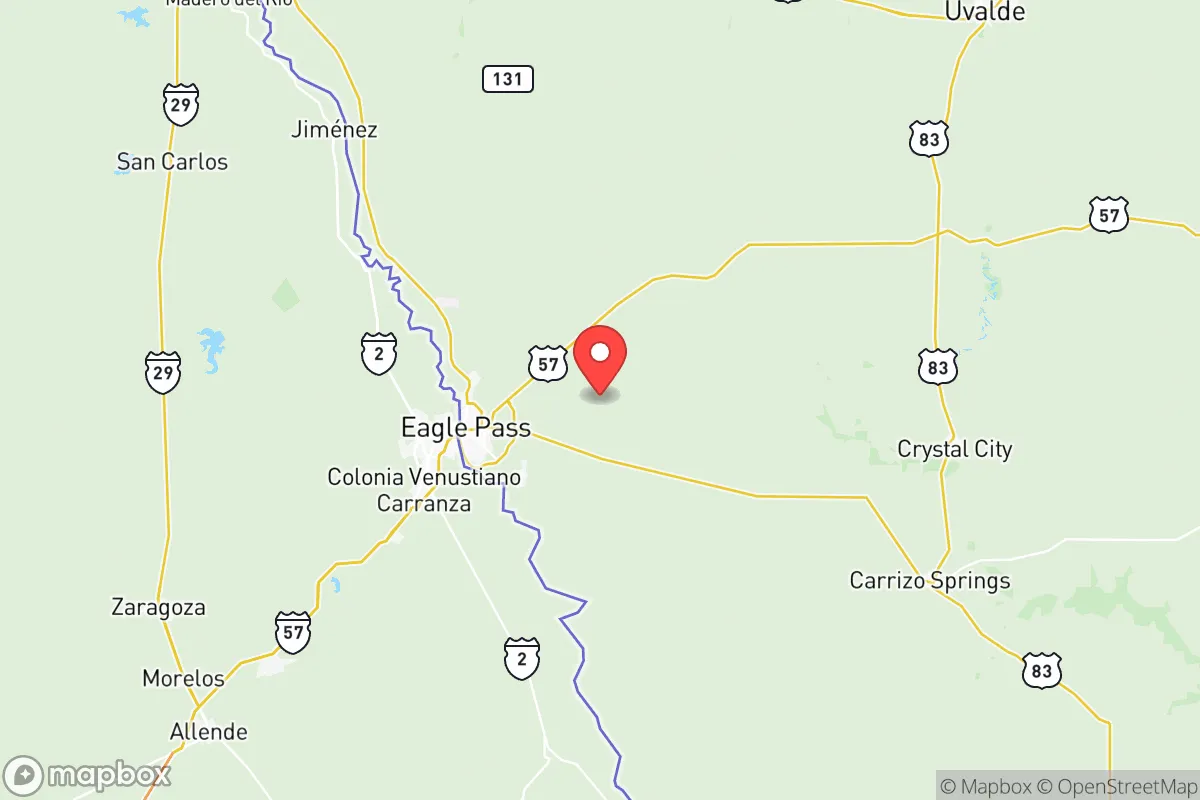
Photo: Wikipedia
Quality of Life in Maverick County
A livable area that tracks near national norms for affordability, walkability, and neighborhood health.
What does Quality of Life tell us?
Quality of Life measures an area by evaluating factors like cost of living, nearby amenities, country club access, airport proximity, socioeconomic signals and neighborhood character. For large states, this is a general average — quality of life can vary dramatically between metro areas, suburbs, and rural communities within the same state.
What does this tell us?
Quality of Life measures an area by evaluating factors like cost of living, nearby amenities, country club access, airport proximity, socioeconomic signals and neighborhood character. For large states, this is a general average — quality of life can vary dramatically between metro areas, suburbs, and rural communities within the same state.
Cost of Living
38% below national average
118%
The Real Cost of Living in Maverick County for 2026
| Tier | Individual | Family (4) |
|---|---|---|
| Survival | $13k | $24k |
| Comfortable | $29k | $43k |
| Luxury | $87k+ | $135k+ |
| Elite (Top 5%) | $102k+ | $159k+ |
Quality-of-Life Analysis
Maverick County, Texas, offers a quality-of-life spectrum anchored by its sole incorporated city, Eagle Pass, and extending into unincorporated rural pockets along the Rio Grande and inland ranchlands. The county draws a mix of border commuters, families seeking affordable housing, and those who prefer a slower, more isolated lifestyle. With a cost of living index of 62 — well below the U.S. average of 100 — the county provides significant financial breathing room, though amenities and services are heavily concentrated in its main population center.
Largest town(s) & population centers
Eagle Pass is the county seat and by far the largest population center, home to over 28,000 residents. Daily life here revolves around the international border crossing at the Eagle Pass-Piedras Negras International Bridge, which drives a binational economy of retail, logistics, and cross-border commerce. The town offers the county’s only hospital (Fort Duncan Medical Center), a Walmart Supercenter, and a range of local grocery stores and restaurants. Housing is notably affordable: the median home value in the county is $151,500, and median rent sits at $789, making Eagle Pass one of the more budget-friendly border towns in Texas. The average commute is about 23 minutes, short by national standards, though traffic at the port of entry can add time for those who cross regularly for work or shopping in Piedras Negras.
Smaller towns & rural pockets
Outside Eagle Pass, Maverick County is largely rural and unincorporated. El Indio, a small community about 30 miles southeast of Eagle Pass along U.S. Highway 277, has a population under 200 and offers little more than a post office and a few homes. Quemado, further south near the Rio Grande, is another unincorporated area with scattered residences and ranch properties. These pockets lack municipal services like public water systems or police departments, relying instead on county services and private wells. The landscape is dominated by brush country and cattle ranches, with the Rio Grande providing a green corridor for wildlife and limited recreational access. Residents in these areas typically commute to Eagle Pass for work, groceries, and medical care, accepting longer drives in exchange for privacy and lower land costs.
Cost & lifestyle range
The cost spread across Maverick County is narrow compared to urban metros, but meaningful differences exist. Eagle Pass represents the high end of the local spectrum: homes in established neighborhoods near downtown or the river can reach $200,000–$250,000, while newer subdivisions on the north side offer modern floor plans in the $180,000–$220,000 range. Rentals in town average $789, but two-bedroom apartments near the border can go for $650–$750. At the low end, rural properties in El Indio or Quemado can be purchased for under $100,000, especially if they require well and septic system installation. Utility costs are slightly higher in unincorporated areas due to reliance on propane and private water systems. Amenities drop off sharply outside Eagle Pass: there are no sit-down restaurants, grocery stores, or gas stations in El Indio or Quemado, so residents must plan trips to town. The trade-off is space — rural lots of 1–10 acres are common, and property taxes remain low relative to Texas averages.
This county works best for people who prioritize affordability and a slower pace over urban convenience. Border workers, remote employees, and retirees on fixed incomes are the most common profiles. Families with school-age children will find the Eagle Pass Independent School District adequate but limited in advanced coursework and extracurriculars compared to larger Texas districts. Those seeking nightlife, cultural institutions, or high-end retail will need to drive to Del Rio (about 50 miles northwest) or Laredo (about 120 miles southeast). For anyone comfortable with a self-sufficient, car-dependent lifestyle and a strong binational community, Maverick County offers one of the lowest cost-of-living options in the state.

Crime in Maverick County
Crime rates similar to the national median for U.S. locations.
Violent CrimeViolent Crime Analysis
Property CrimeProperty Crime Analysis
Crime Analysis
Maverick County, located along the Texas-Mexico border in the Eagle Pass area, presents a mixed safety picture with crime rates that exceed both state and national averages. The county's violent crime rate of 346.5 incidents per 100,000 residents and property crime rate of 1,798.7 per 100,000 place it in a higher-risk category compared to safer Texas communities like Frisco or McKinney. These figures reflect the challenges of a border region with significant cross-border traffic and socioeconomic pressures, though crime is not evenly distributed across the county's communities.
Crime in context
Maverick County's violent crime rate of 346.5 per 100,000 is notably higher than the Texas state average of approximately 280 per 100,000 and the national average of around 230 per 100,000. The property crime rate of 1,798.7 per 100,000 also exceeds the Texas average of roughly 1,600 per 100,000 and the national figure of about 1,500 per 100,000. These elevated rates are driven primarily by conditions in the county's largest city, Eagle Pass, which accounts for the vast majority of reported offenses. Smaller communities such as El Indio and Quemado report far fewer incidents, though their populations are minimal. The county's proximity to the border introduces unique crime dynamics, including drug trafficking and human smuggling, which inflate both violent and property crime statistics. The judicial environment in Maverick County is a significant concern: the county's district attorney and judges operate under a legal framework that, in recent years, has shown progressive tendencies toward leniency in sentencing and diversion programs. This ideological approach, while well-intentioned, has been linked to higher recidivism rates and a perception among residents that offenders face insufficient consequences, ultimately contributing to the area's elevated crime levels.
What residents experience
Residents of Maverick County, particularly in Eagle Pass, report a heightened awareness of property crimes such as burglary, vehicle theft, and vandalism, which occur at a frequency that disrupts daily life. Violent crimes, including aggravated assault and robbery, are concentrated in specific neighborhoods and often tied to gang activity or drug-related disputes. The county's law enforcement resources are stretched thin, with the Maverick County Sheriff's Office and Eagle Pass Police Department handling a caseload that exceeds what would be typical for a county of this size. Residents in outlying areas like Norma and Rosita experience lower crime rates but still face risks from transient criminal elements moving through the region. The progressive judicial policies in Maverick County, including reduced bail amounts and early release programs, have eroded public confidence in the justice system. Many residents express frustration that repeat offenders are quickly returned to the streets, undermining deterrence and increasing the likelihood of victimization. This is particularly acute in Eagle Pass, where property crime rates have remained stubbornly high despite local law enforcement efforts.
Neighborhood-level variation is significant within Maverick County. The downtown and commercial corridors of Eagle Pass, especially areas near the international bridge and along Main Street, see the highest concentrations of both violent and property crime. Residential neighborhoods on the outskirts of Eagle Pass, such as those near the airport and along Highway 277, tend to be safer, with lower incident rates. The unincorporated communities of Fabens and Brundage (though Fabens is technically in El Paso County, it is sometimes confused with Maverick County areas) are not part of Maverick County, but within the county, Eagle Pass remains the primary concern. For those considering relocation, the safest housing options are found in newer subdivisions on the northern and western edges of Eagle Pass, away from the border crossing and high-traffic areas. However, even these areas are not immune to the broader crime trends driven by the county's progressive justice system, which prioritizes offender rehabilitation over public safety. Prospective residents should weigh these factors carefully, as the current trajectory suggests crime rates may remain elevated without significant shifts in judicial philosophy.
* Values derived from national, state, county, city and local statistics and may differ in a specific area. Last updated: 2026-11-20T20:00:47.000Z
Narrative content on this page is AI-generated and may contain mistakes. Verify any details that matter before acting on them.
ReloMaps may earn a commission from affiliate links at no extra cost to you.

