Photo: Wikipedia
Political ClimatePolitical Climate in Saint Petersburg, FL
District shown is the primary district for this city’s centroid. Cities may span multiple districts.
Political rankings in Florida
- Most Conservative Cities in Florida
- Most Liberal Cities in Florida
- Best Liberal-Leaning Towns in the South
- Safest Liberal-Leaning Towns in the South
- Safest Conservative-Leaning Towns in the South
- Safest Liberal-Leaning Towns on the East Coast
- Safest Conservative-Leaning Towns on the East Coast
- Affordable Small Towns for Conservatives
- Most Conservative Counties in Florida
- Most Liberal Counties in Florida
Local Political AnalysisPolitical Analysis of Saint Petersburg, FL
Saint Petersburg sits in a politically interesting spot: the city itself has trended Democratic in recent cycles, but it’s anchored in Pinellas County and a broader Tampa Bay region that leans Republican overall, with a Cook PVI of R+7 for the surrounding area. That R+7 rating means the district is about seven points more Republican than the national average, but it doesn’t tell the whole story of a city that has shifted leftward since the early 2000s, especially in its downtown and coastal neighborhoods. The real political reality here is a split personality—blue pockets inside a red county, with the balance of power often decided by a few thousand swing voters in midterm and presidential years.
How it compares
Compared to the rest of Florida, Saint Petersburg is noticeably more liberal than the state’s rural north and central regions, but it’s not as uniformly blue as Miami-Dade or Broward. The city’s Democratic lean is most visible in precincts around the waterfront, Old Northeast, and the Grand Central District, where voters consistently back Democrats by 20-point margins. Drive a few miles inland or north into unincorporated Pinellas County, and you’ll hit neighborhoods like Feather Sound or East Lake that vote Republican by similar margins. The contrast is even sharper when you look at nearby cities: Clearwater to the north and Largo to the east are more conservative, while Tampa across the bay has a similar urban-suburban split. In the 2022 gubernatorial race, for example, Saint Petersburg’s precincts favored Charlie Crist, but the county as a whole went for Ron DeSantis—a pattern that repeats in most statewide contests.
What this means for residents
For conservative residents, living in Saint Petersburg means accepting that local city council races and mayoral elections will likely go to Democrats, but it also means your vote carries real weight in countywide and statewide races where the margins are tight. The city’s Republican voters tend to be concentrated in the more affluent, older neighborhoods, and they’ve historically had influence on issues like property taxes, development approvals, and public safety funding—even when they lose the popular vote citywide. For liberal residents, the practical upside is that city policy has moved left on issues like affordable housing, climate resilience, and police reform, but the downside is that state preemption laws from Tallahassee can override local ordinances on everything from rent control to gun regulations. Both sides live with the reality that Florida’s statewide politics are more conservative than Saint Petersburg’s local politics, which creates a constant push-and-pull between city resolutions and state statutes.
What daily life is like for families
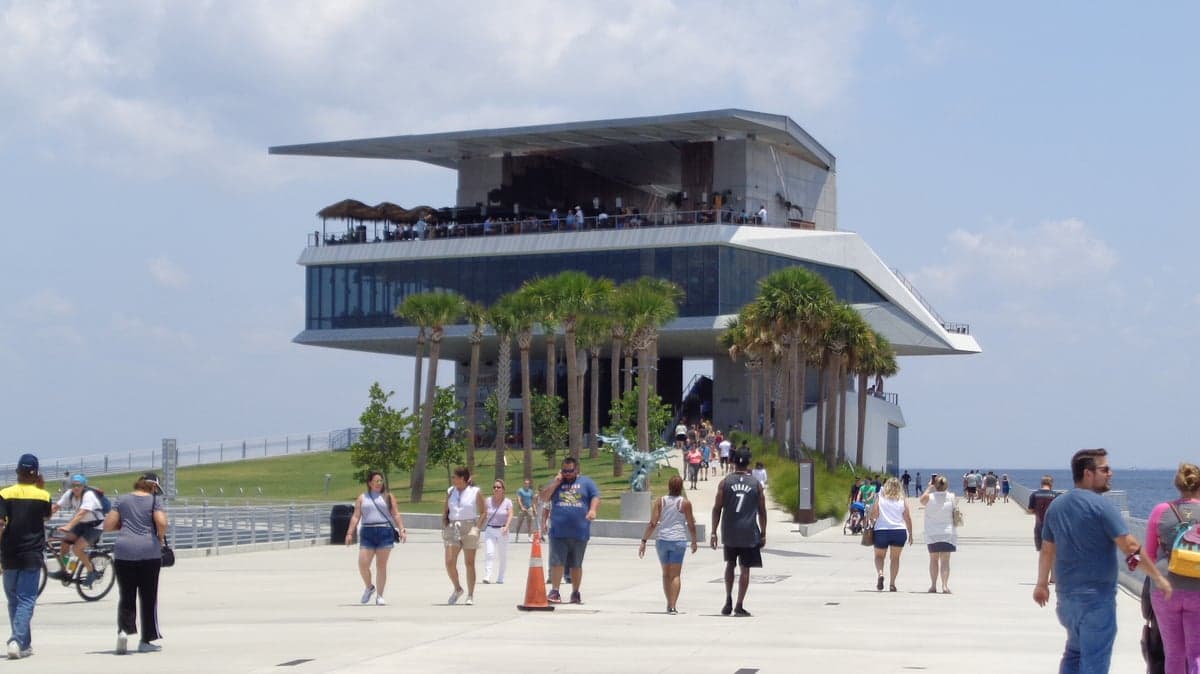
In practice, the political climate affects daily life less than you might think, but it does shape the texture of the city. You’ll see more Pride flags and “In This House We Believe” signs in the historic Kenwood district than you will in the suburban neighborhoods south of Central Avenue, and the local news cycle is dominated by city council debates over short-term rentals and the pier redevelopment rather than national culture wars. The city has also become a magnet for remote workers and retirees from blue states, which has accelerated the leftward drift—newcomers from Chicago and New York tend to register as Democrats, while long-time Florida families often lean Republican. That demographic churn is the single biggest factor in how the city votes today versus twenty years ago, and it’s likely to continue as the waterfront redevelopment and tech sector growth draw more out-of-state transplants.
Looking ahead, Saint Petersburg’s political trajectory is probably more of the same: the city will keep voting blue locally, the county will remain a swing area, and the state will stay red. The cultural distinction is that this is one of the few places in Florida where you can have a genuinely mixed political social circle—where a neighborhood block party includes both a Trump flag and a Biden yard sign, and people still talk to each other. That’s increasingly rare in Florida, and it’s part of what makes Saint Petersburg feel different from the rest of the state, even as its politics remain firmly contested.

State Political ClimatePolitical Climate in Florida
State Political AnalysisPolitical Environment in the State
Florida has transformed from a quintessential swing state into a solidly Republican-leaning powerhouse over the past two decades, driven by a massive influx of conservative-leaning transplants from the Northeast and Midwest, as well as a significant shift among Hispanic voters, particularly in Miami-Dade County. The state now operates under unified Republican control, with Governor Ron DeSantis winning re-election by a nearly 20-point margin in 2022, a stark contrast to the 2000 recount drama that defined Florida for a generation. For a relocator, this means the state’s political trajectory is firmly set toward conservative governance, with policies that prioritize low taxes, parental rights in education, and a business-friendly regulatory environment, though the urban centers like Miami, Orlando, and Tampa still provide blue strongholds for liberal residents.
Urban vs. rural divide
The political map of Florida is a textbook study in geographic polarization. The rural Panhandle, from Pensacola to Tallahassee’s outskirts, and the interior counties like Sumter and Lake are deeply Republican, often voting 70-80% for GOP candidates. The major metros, however, are more complex. Miami-Dade County, once a Democratic bastion, flipped hard to the right in 2020 and 2022, with Cuban-American and Venezuelan-American voters driving a historic shift that made the county competitive for Republicans. Meanwhile, Orlando’s Orange County and Tampa’s Hillsborough County remain Democratic-leaning but are shrinking as margins tighten. The Jacksonville area, Duval County, has trended purple but leans slightly red. The most politically distinct suburbs are places like The Villages (Sumter County), which is one of the most reliably Republican voting blocs in the nation, and Pinecrest in Miami-Dade, an affluent suburb that has swung hard toward the GOP. For a liberal relocator, the urban cores of Miami, Orlando, and St. Petersburg still offer blue enclaves, but the surrounding suburbs are increasingly conservative.
Policy environment
Florida’s policy environment is defined by its lack of a state income tax, a constitutional cap on property tax increases (the Save Our Homes amendment), and a strong preemption law that prevents local governments from enacting their own regulations on everything from firearms to rental properties. The state has a right-to-work law, meaning union membership is not mandatory for employment, and it operates under a “stand your ground” self-defense statute that has been in place since 2005. Education policy is a major flashpoint: Florida has the nation’s largest school voucher program (the Family Empowerment Scholarship), and it passed the Parental Rights in Education Act (HB 1557, often called the “Don’t Say Gay” law) in 2022, which restricts classroom instruction on sexual orientation and gender identity in early grades. Healthcare policy is notably hands-off, with no state-level certificate-of-need laws for hospitals and a heavy reliance on private insurance, though the state did not expand Medicaid under the Affordable Care Act. Election laws have been tightened: the 2021 SB 90 law added stricter voter ID requirements, limited drop boxes, and restricted third-party ballot collection, while the 2023 SB 7050 law further restricted voter registration drives. For a conservative relocator, this environment is a feature; for a liberal one, it’s a significant drawback.
Recent policy direction
The last three years have seen an aggressive push on cultural and liberty-related legislation. On gun rights, Florida enacted permitless carry (HB 543) in 2023, allowing residents to carry concealed firearms without a permit, though open carry remains illegal. On parental and education rights, the state expanded the “Don’t Say Gay” law to all grades in 2023 (HB 1069) and banned DEI programs at public universities (SB 266). On speech, the state passed the “Stop WOKE Act” (HB 7) in 2022, which restricts workplace and classroom discussions about race and privilege, though parts of it have been blocked by federal courts. On privacy and surveillance, Florida banned TikTok on government devices and state-owned phones in 2022, and it passed a broad data privacy law (the Florida Digital Bill of Rights) in 2023. On medical and bodily autonomy, the state enacted a six-week abortion ban (HB 5) in 2023, which took effect after the Florida Supreme Court upheld the state’s 15-week ban in 2024. On property rights, the state has aggressively preempted local rent control ordinances and limited local governments’ ability to regulate short-term rentals like Airbnb. On taxation, the state has repeatedly cut the corporate income tax rate and provided recurring sales tax holidays. On voting, the 2023 SB 7050 law made it a crime for third-party organizations to handle voter registration applications if they are not registered with the state, a move that has been challenged in court. The direction is unmistakably toward a more conservative, limited-government framework, with a strong emphasis on individual liberty in the traditional sense (guns, property, speech) and a heavy hand on social issues (abortion, education, DEI).
Civil unrest & political movements
Florida has seen its share of political flashpoints, but large-scale civil unrest has been relatively contained compared to states like Oregon or Minnesota. The 2020 George Floyd protests in Miami, Orlando, and Tampa were significant but did not result in the widespread property destruction seen elsewhere, partly due to aggressive law enforcement responses. The state has been a battleground for immigration politics: Governor DeSantis’s 2022 migrant flights to Martha’s Vineyard and the 2023 SB 1718 law (which cracks down on undocumented immigration by requiring E-Verify for employers and banning local sanctuary policies) have made Florida a national symbol of hardline immigration enforcement. There is no sanctuary city movement of note; the state preempts any such local ordinances. Election integrity controversies have been a recurring theme, with the 2020 and 2022 cycles seeing intense scrutiny of mail-in ballots and drop boxes, though no widespread fraud has been proven. The most visible political movement is the “Free Florida” conservative activist network, which has successfully pushed for school board takeovers and local GOP party purges. For a new resident, the political atmosphere is palpable: you will see “Don’t Tread on Me” flags and DeSantis signs in rural areas, while urban neighborhoods display Pride flags and Black Lives Matter yard signs. The divide is visible but rarely spills into daily life in a disruptive way.
Projection
Over the next 5-10 years, Florida is likely to become even more Republican, driven by continued in-migration from high-tax, high-regulation states like New York, California, and Illinois. The Hispanic vote, particularly in Miami-Dade, is expected to continue its rightward shift, as younger Cuban-American and Venezuelan-American voters prioritize economic freedom and anti-socialism rhetoric over Democratic Party appeals. The Democratic Party’s base will increasingly be confined to the urban cores of Miami, Orlando, Tampa, and St. Petersburg, plus the college town of Gainesville (Alachua County). The state’s population is projected to grow by another 3-4 million people by 2035, with most new residents settling in the I-4 corridor (Tampa to Orlando) and Southwest Florida (Naples to Fort Myers), areas that are trending red. Climate change and insurance costs could slow growth in coastal areas, but the political trajectory seems locked in. For a relocator, this means Florida will remain a low-tax, low-regulation state with a conservative cultural tilt for the foreseeable future, though the urban blue islands will persist and may even become more culturally distinct.
For a new resident, the bottom line is that Florida offers a clear political identity: if you value low taxes, limited government, parental control in education, and strong Second Amendment rights, you will find a state that actively legislates in your favor. If you prioritize progressive social policies, strong public sector unions, or expansive abortion access, you will find yourself in a political minority, though not an isolated one, as the urban centers provide communities that share your values. The practical takeaway is that Florida is a state where your vote matters less in statewide elections (which are increasingly non-competitive) but matters a great deal in local races, where school boards, county commissions, and city councils are the true battlegrounds for the state’s cultural future. Choose your county and city carefully, as the political experience in Miami Beach versus The Villages versus downtown Orlando is night and day.
* Values derived from national, state, county, city and local statistics and may differ in a specific area. Last updated: 2026-11-20T05:17:55.000Z
Narrative content on this page is AI-generated and may contain mistakes. Verify any details that matter before acting on them.
ReloMaps may earn a commission from affiliate links at no extra cost to you.

