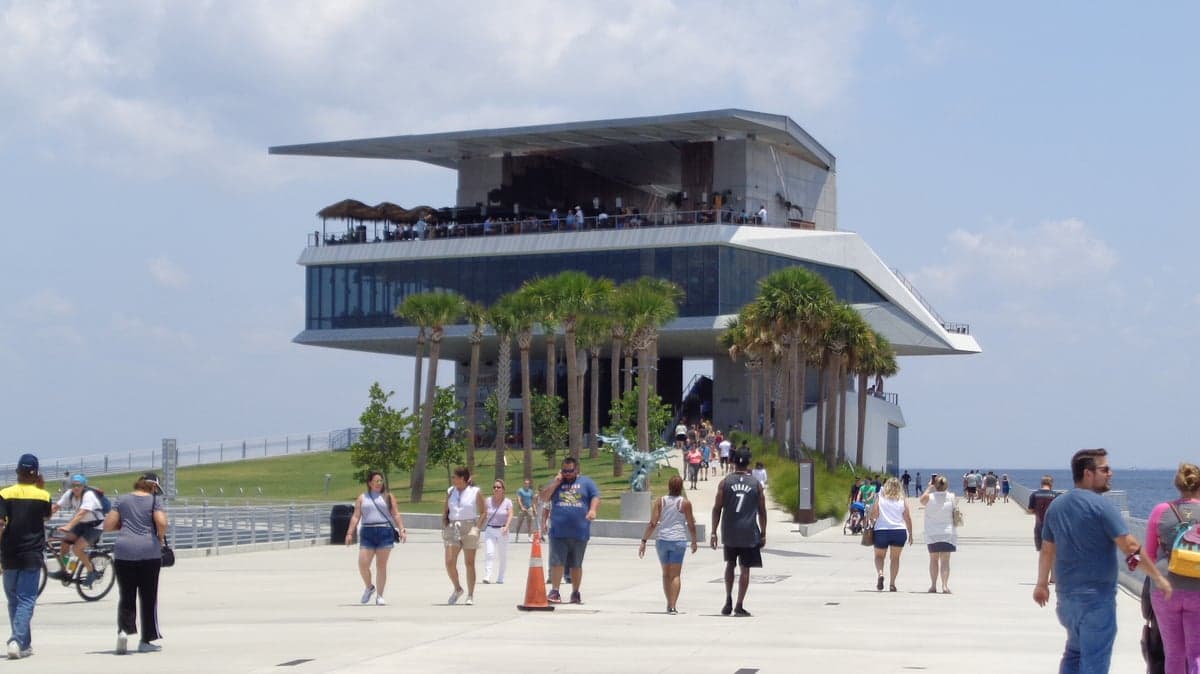
Photo: Wikipedia
Quality of Life in Saint Petersburg, FL
A high quality of life with strong walkability, manageable living costs, healthy neighborhood signals, and solid amenity access.
What does Quality of Life tell us?
Quality of Life blends cost of living, nearby amenities, socioeconomic signals, and neighborhood character. City-level scores represent the whole municipality; individual neighborhoods can differ.
What does this tell us?
Quality of Life blends cost of living, nearby amenities, socioeconomic signals, and neighborhood character. City-level scores represent the whole municipality; individual neighborhoods can differ.
Cost of Living
27% above national average
The Real Cost of Living in Saint Petersburg, FL for 2026
| Tier | Individual | Family (4) |
|---|---|---|
| Survival | $25k | $46k |
| Comfortable | $64k | $95k |
| Luxury | $132k+ | $205k+ |
| Elite (Top 5%) | $183k+ | $284k+ |
77%
The Area Signal
A metric tracking the socioeconomic signals of the area.
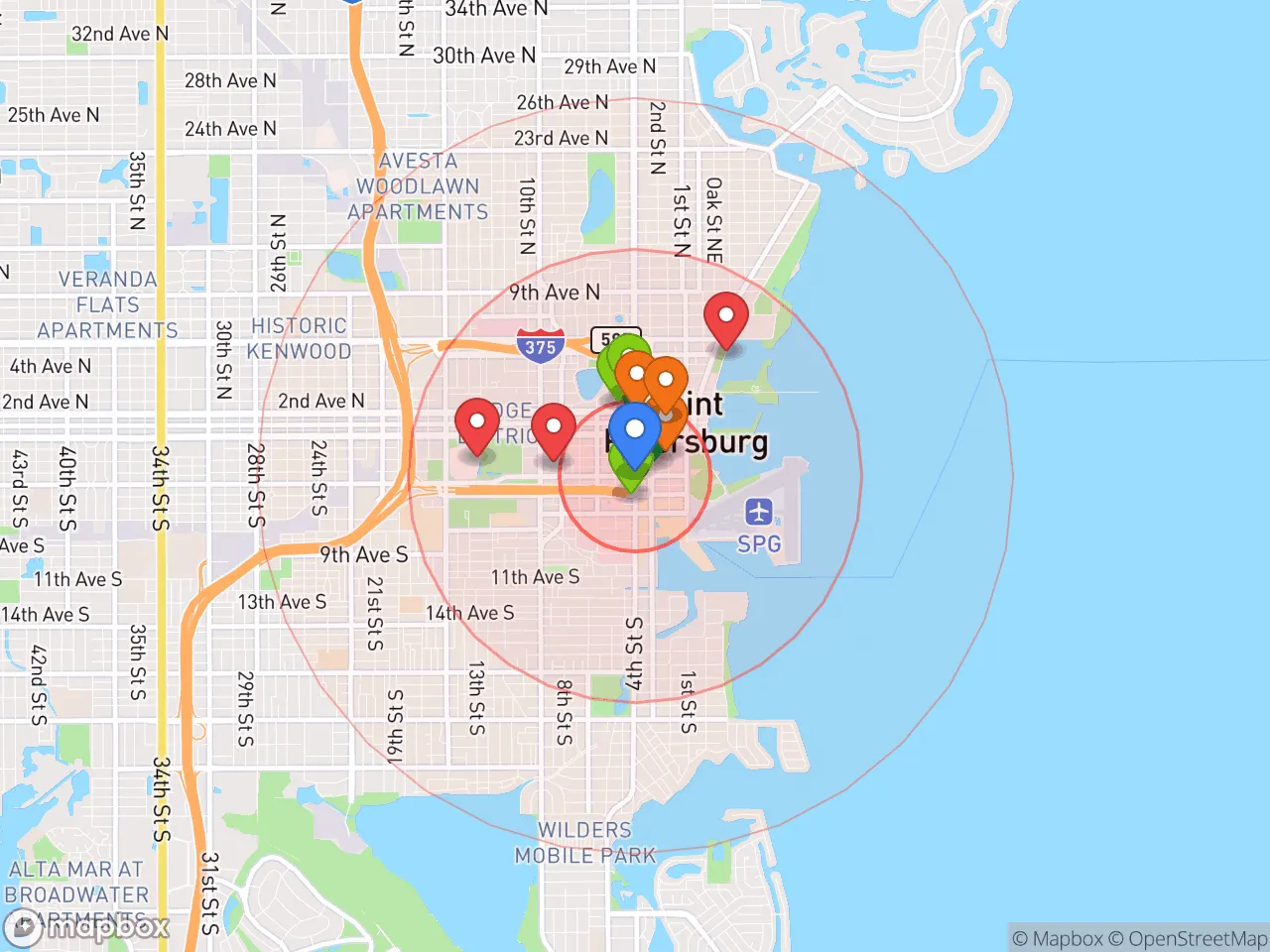
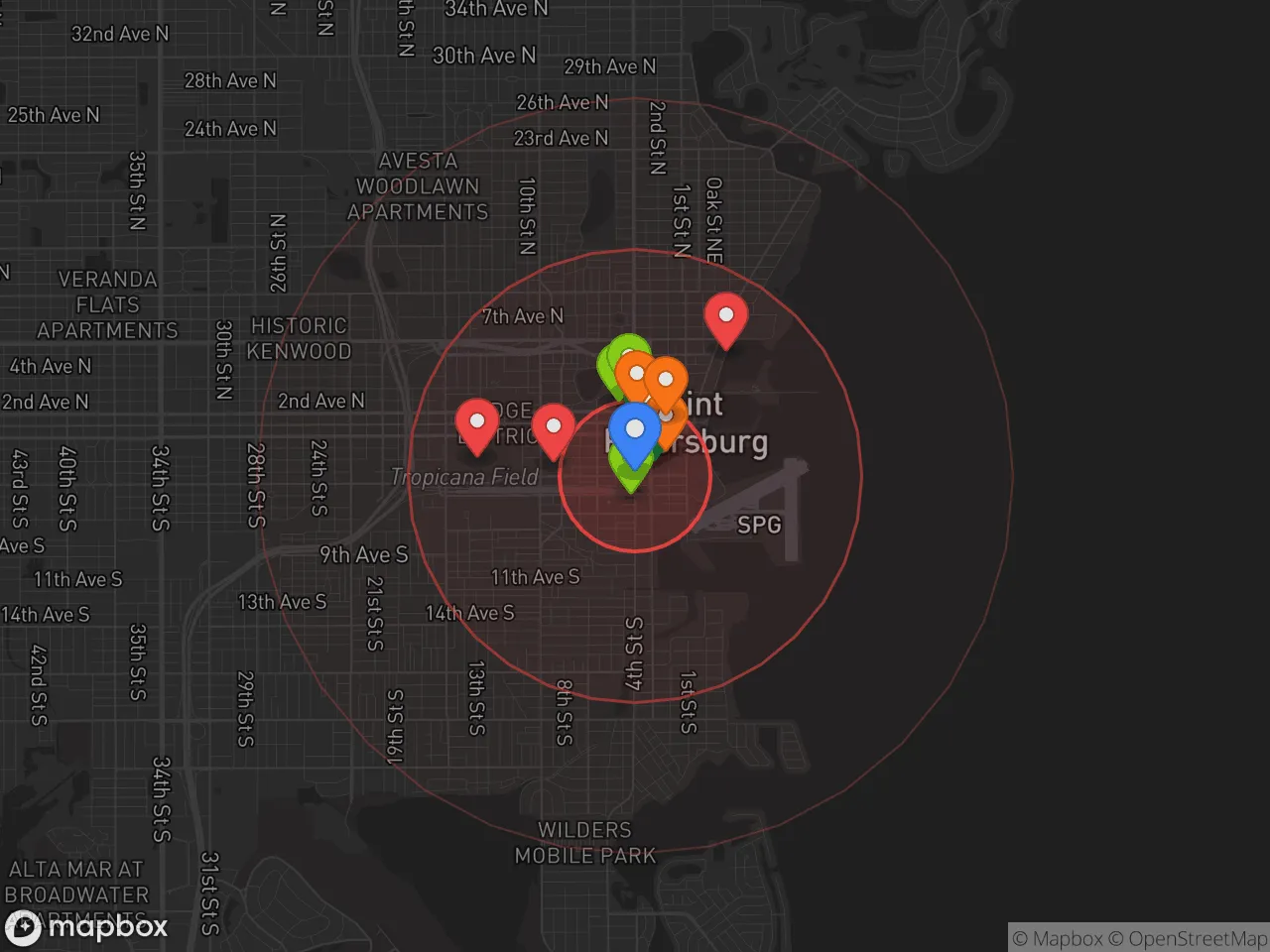
Hobbies
Explore the areaGroceries
0 within 10 miles
Gas
0 within 10 miles
Hospital
0 within 20 miles
Airport
TPA — Tampa International
Post Office
Critical Amenities
Quality-of-Life Analysis
Saint Petersburg, Florida, is an affluent coastal city where the cost of living runs about 27% above the national average, attracting a mix of young professionals, remote workers, and retirees drawn to its waterfront lifestyle. With a median home value of $331,500 and a median rent of $1,542, the city sits notably pricier than inland Florida metros yet remains more accessible than neighboring Tampa or the barrier-island enclaves of St. Pete Beach. The typical resident here is college-educated, earns a comfortable six-figure household income, and prioritizes outdoor recreation, arts, and a slower-paced but polished urban rhythm over the hustle of Miami or Orlando.
How housing costs and affordability compare to Tampa and the Gulf beaches
Saint Petersburg’s cost-of-living index of 127 means everyday expenses—groceries, utilities, and healthcare—run roughly a quarter higher than the U.S. norm, but the housing gap is where the real story lies. The median home value of $331,500 is about 8% below Tampa’s median of roughly $360,000, yet it is dramatically cheaper than the $700,000-plus price tags common in nearby beach communities like Pass-a-Grille or Treasure Island. Renters fare similarly: the median rent of $1,542 is competitive with Tampa’s $1,600 average but undercuts the $2,200-plus monthly rates seen for comparable units on the Pinellas County barrier islands. For buyers, the trade-off is clear—you sacrifice a few minutes of commute time for significantly more square footage and a yard, while renters can find two-bedroom apartments in historic neighborhoods like Old Northeast or Kenwood for under $1,800. Property taxes in Pinellas County hover around 1.0% of assessed value, which is moderate for Florida, though flood insurance premiums in low-lying zones near the bay can add $1,500 to $3,000 annually—a cost many newcomers underestimate.
What daily life is like for families, remote workers, and retirees
Daily life in Saint Petersburg revolves around its 244 parks, the 3.2-mile waterfront Pier District, and a calendar packed with festivals like the Grand Prix and the Mainsail Art Festival. The Pinellas County Schools system serves the city, with standout options including St. Petersburg High School’s International Baccalaureate program and Shorecrest Preparatory School for private families; the average student-teacher ratio in district schools is about 16:1. The average commute of 25.4 minutes is manageable—longer than the national 26-minute average but far better than Tampa’s 30-plus-minute crawl—and most residents drive, though the SunRunner bus rapid transit line connects downtown to St. Pete Beach in under 30 minutes. Remote workers thrive here thanks to gigabit fiber coverage in most neighborhoods and a dense cluster of coworking spaces like The Greenhouse and Station House. Retirees gravitate toward the golf courses of Lakewood Estates and the medical hub around Johns Hopkins All Children’s Hospital, while families favor the A-rated elementary zones of North Shore and Riviera Bay. The rhythm is distinctly unhurried: coffee shops open by 7 a.m., yoga classes fill by 9, and the downtown dining scene peaks on weekend evenings rather than weeknights.
Saint Petersburg suits buyers and renters who value coastal access without the premium of beachfront living, and who can absorb a 27% cost-of-living premium in exchange for year-round mild weather and a vibrant cultural scene. It is less ideal for budget-conscious singles or those needing a sub-20-minute commute, since the city’s spread-out layout and bridge traffic to Tampa add time. For families with school-age children, remote workers with stable incomes, and active retirees, the combination of sub-$350,000 homes, a 25-minute average commute, and a walkable downtown makes it one of Florida’s most balanced quality-of-life picks on the Gulf Coast.

Crime in Saint Petersburg, FL
Generally safer than 68% of comparable U.S. locations.
Violent CrimeViolent Crime Analysis
Property CrimeProperty Crime Analysis
Crime Analysis
Saint Petersburg, Florida, reports a violent crime rate of 210.9 incidents per 100,000 residents and a property crime rate of 914.3 per 100,000, placing it below the national average for violent offenses but slightly above the national property crime benchmark. While the city is not among Florida's most dangerous metros, its justice system operates under the influence of progressive prosecutors and judges, a factor that directly impacts how crime is prosecuted and how many offenders remain on the street. For families and individuals weighing a move to the Tampa Bay area, understanding these enforcement dynamics is as critical as reviewing the raw statistics.
Crime in context
Saint Petersburg's violent crime rate of 210.9 per 100,000 is roughly 40% lower than the U.S. average of approximately 380 per 100,000, and it compares favorably to nearby Tampa, which consistently reports higher violent offense numbers. Property crime, however, tells a different story: at 914.3 per 100,000, the city exceeds the national rate of about 800 per 100,000, driven largely by vehicle break-ins and package thefts in denser neighborhoods like Downtown and the Grand Central District. Statewide, Florida's violent crime average sits near 250 per 100,000, meaning St. Pete is safer than the state norm on violent offenses but lags on property protection. The gap between these two metrics suggests a city where opportunistic theft is a more realistic daily concern than physical assault.
What residents experience
Residents in St. Petersburg's core neighborhoods report a noticeable disconnect between official statistics and lived reality, particularly regarding repeat offenders. The Pinellas-Pasco State Attorney's Office has adopted diversion-heavy policies and reduced cash bail recommendations for nonviolent property crimes, a progressive approach that critics argue puts habitual thieves back on the street within hours of arrest. Local news outlets have documented multiple cases where the same individual was arrested three or four times in a single month for auto burglaries, only to be released pending trial. For newcomers, this translates into practical precautions: never leaving valuables in parked cars, installing doorbell cameras, and avoiding ground-floor units in older apartment complexes near Central Avenue. Violent incidents are heavily concentrated in specific corridors—notably the south side around 22nd Street South and the Midtown area—while waterfront neighborhoods like Old Northeast and Snell Isle experience near-zero violent crime but still see occasional porch thefts.
Neighborhood-level variation is stark. The 33701 and 33705 zip codes, which include downtown and southern districts, account for a disproportionate share of reported assaults and robberies, while the 33704 and 33710 areas north of 30th Avenue North report violent crime rates below 100 per 100,000. Prospective residents should verify block-level data through the St. Petersburg Police Department's public crime map before signing a lease, as a two-block difference can mean the difference between a quiet street and one with regular police presence. The city's progressive bail reform and prosecutor leniency mean that even in safer zones, residents should assume that a reported crime may not result in a conviction, making proactive security measures a necessary part of daily life rather than an optional precaution.
* Values derived from national, state, county, city and local statistics and may differ in a specific area. Last updated: 2026-11-20T05:17:55.000Z
Narrative content on this page is AI-generated and may contain mistakes. Verify any details that matter before acting on them.
ReloMaps may earn a commission from affiliate links at no extra cost to you.

