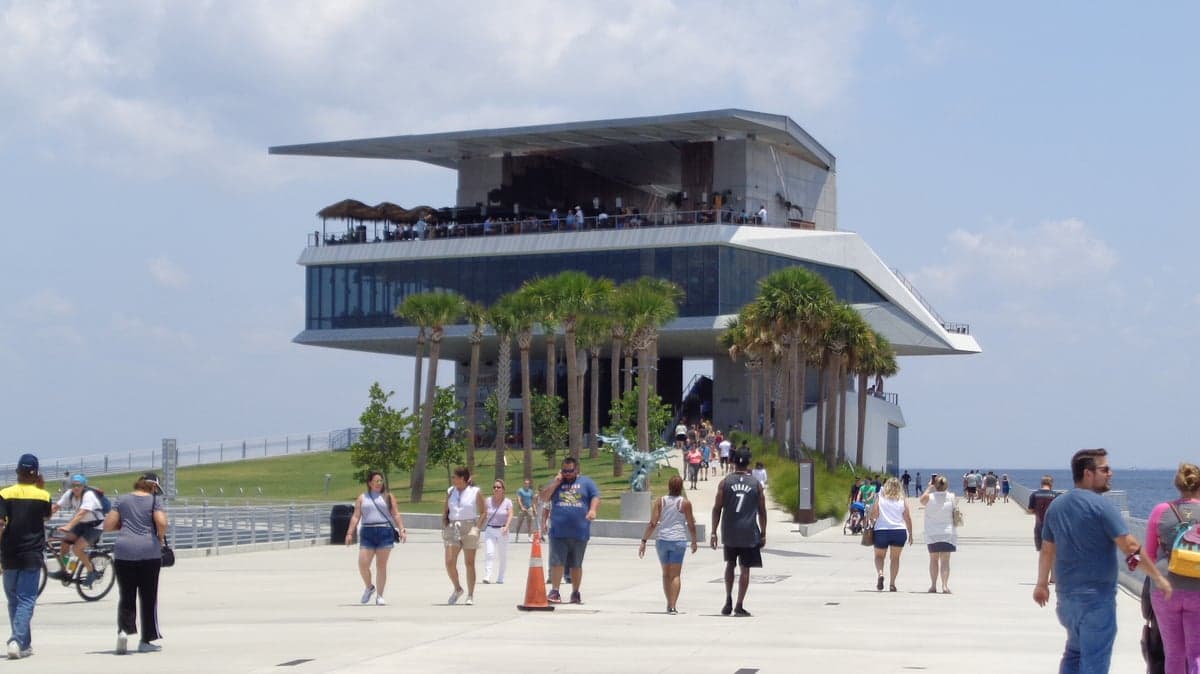
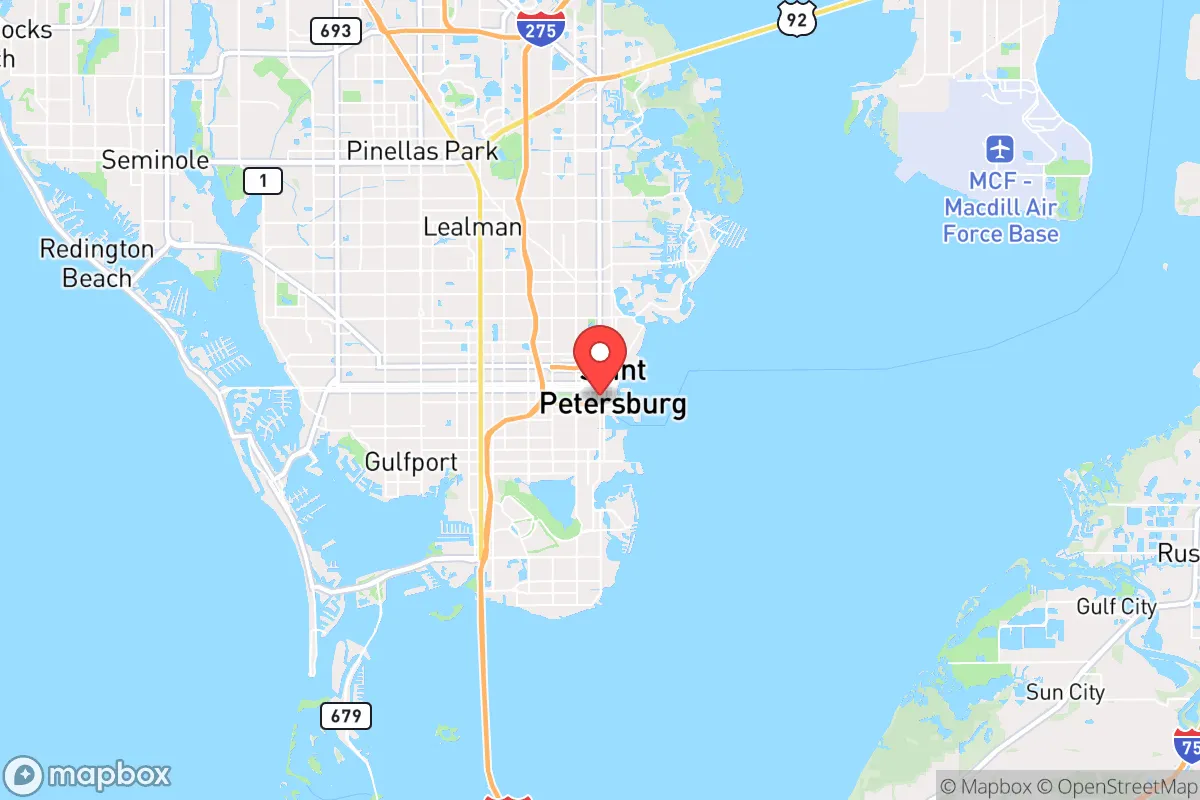
Photo: Wikipedia
Personal Sovereignty in Saint Petersburg, FL
Viable for self-reliance. Generally workable, though some barriers may limit total independence.
What does Personal Sovereignty tell us?
Personal Sovereignty measures your capacity for self-reliance and independence with minimal government friction. Higher scores mean fewer barriers between you and the way you want to live... but it assumes you have the space you need and good neighbors.
What does this tell us?
Personal Sovereignty measures your capacity for self-reliance and independence with minimal government friction. Higher scores mean fewer barriers between you and the way you want to live... but it assumes you have the space you need and good neighbors.
State Policy
Energy independence: Importer (12% of energy produced in-state)
Personal Liberty
Homesteading
Personal Liberty Analysis
Saint Petersburg offers a notably lighter-touch autonomy environment than most of coastal Florida, thanks to a combination of Florida’s statewide preemption laws, a relatively modest local tax structure, and a regulatory culture that leans permissive on property use and self-defense. While the city itself votes reliably Democratic and enforces some urban-density rules, the legal framework that governs your daily life — taxes, guns, homeschooling, and backyard self-reliance — is set largely in Tallahassee, not City Hall. For a single individual or family weighing personal sovereignty, the practical question is less about St. Pete’s politics and more about how far the state’s preemption shield extends into the city’s code.
Tax burden and regulatory posture: how much the state and city take
Florida has no state income tax, which immediately puts more of your earnings in your pocket than in high-tax states like California or New York. In St. Pete, the combined state and local sales tax rate is 8.5% (6% state plus 2.5% Pinellas County surtax), which is on the higher end for Florida but still below the national average for combined rates in many metro areas. Property taxes are governed by the state’s $25,000 homestead exemption, and Pinellas County’s millage rate lands around 19-20 mills, translating to roughly $1,900 annually per $100,000 of assessed value after the exemption — a moderate figure compared to Northeast counties but higher than rural Florida counties.
The regulatory posture is where St. Pete diverges from its reputation. The city has a streamlined permitting process for accessory dwelling units (ADUs), and as of 2024, it allows them by right on single-family lots, which is a meaningful win for homeowners seeking rental income or multigenerational living. However, the city enforces a strict land development code on short-term rentals — only owner-occupied properties can get a vacation rental license, and non-owner-occupied STRs are effectively banned in residential zones. If your sovereignty goal involves Airbnb income, that’s a hard constraint. Business licensing is straightforward, with no city-level occupational tax for most home-based businesses, but the county does require a $30 annual business tax receipt.
Self-defense and gun law specifics: what the Second Amendment actually looks like here
Florida is a shall-issue state, and Pinellas County issues concealed carry licenses with a typical turnaround of 30-45 days. As of July 2023, Florida became a permitless carry state, meaning anyone 21 or older who can legally possess a firearm may carry it concealed without a license — though a permit still offers reciprocity in 37 other states, which matters if you travel. Open carry of handguns remains illegal except for hunting, fishing, or camping, so the practical carry mode is concealed.
Self-defense law in Florida is among the most protective in the nation. The state’s Stand Your Ground statute (Fla. Stat. § 776.013) removes any duty to retreat in any place you have a right to be, and it provides civil immunity from lawsuits for justified use of force. Castle Doctrine protections extend to your vehicle and workplace, not just your home. One nuance: St. Pete police have a reputation for aggressive enforcement of brandishing complaints, so while the law is on your side, the optics of a defensive display matter more here than in rural counties. Gun ranges are plentiful — the Pinellas County Sheriff’s Office operates a public range in St. Pete, and there are several indoor ranges within a 15-minute drive.
Self-reliance and homesteading viability: lot sizes, zoning, and off-grid feasibility
True homesteading in St. Pete is a stretch, but partial self-reliance is very achievable. The city’s minimum lot size in most single-family zones is 5,000 square feet, and many older neighborhoods like Historic Kenwood and Old Northeast have lots of 6,000-8,000 square feet — enough for a substantial vegetable garden, a few fruit trees, and a chicken coop. Backyard chickens are legal in St. Pete (up to 4 hens, no roosters, with a free permit), and the city allows beekeeping with registration. Rainwater harvesting is unregulated for non-potable use, and composting is explicitly encouraged by the city’s waste management program.
Off-grid feasibility is limited by two factors: Florida’s building code and the city’s utility hookup requirements. Solar panels are permitted and net metering is available through Duke Energy, but the city requires grid connection for any habitable structure — fully off-grid living is not legal within city limits. If you want true independence, look to unincorporated Pinellas County or adjacent counties like Pasco or Hernando, where rural zoning allows larger lots (1-5 acres) and well/septic systems. Within St. Pete, the realistic sovereignty play is a high-yield urban garden, solar offset, and water catchment for irrigation — not full self-sufficiency.
Personal liberties: parental rights, medical autonomy, speech, and property
Florida has become a national leader in parental rights in education. The Parental Rights in Education Act (HB 1557) requires schools to notify parents of any changes in a student’s physical or mental health, and it prohibits classroom instruction on sexual orientation or gender identity in grades K-3. St. Pete’s school district (Pinellas County Schools) has complied with these statutes, though the city’s progressive politics mean you’ll find more cultural friction than legal obstruction. Homeschooling is lightly regulated: you file a notice of intent with the county superintendent, maintain a portfolio, and submit an annual evaluation — no curriculum approval, no state testing mandates.
Medical autonomy is a mixed bag. Florida has no vaccine mandate for adults, and a 2023 law prohibits employer vaccine mandates without broad exemption options. However, the state maintains strict prescription monitoring and has not legalized recreational marijuana — medical cannabis is available with a qualifying condition and a $75 state card fee. On speech, Florida’s HB 701 (2022) gives residents a private right of action against social media platforms that deplatform them, and the state has preempted local governments from enacting their own content moderation rules. Property rights are strongly protected by the Bert J. Harris Act, which requires government compensation for regulatory takings that diminish property value by 40% or more — a powerful shield against overzealous zoning enforcement.
Relative to other Florida metros, St. Pete sits in the middle of the sovereignty spectrum. It’s far more permissive than Miami-Dade on guns and ADUs, but more restrictive than rural counties on off-grid living and short-term rentals. The state preemption framework means your core liberties — self-defense, homeschooling, tax burden, and property protection — are solid and enforceable. The city’s density rules and utility requirements are the main friction points. For a family that wants legal protection and low taxes with an urban lifestyle, St. Pete delivers. For a homesteader seeking true off-grid independence, the surrounding counties offer better soil. Either way, Florida’s legal architecture ensures your autonomy is defined by state law, not local whim.

* Values derived from national, state, county, city and local statistics and may differ in a specific area. Last updated: 2026-11-20T05:17:55.000Z
Narrative content on this page is AI-generated and may contain mistakes. Verify any details that matter before acting on them.
ReloMaps may earn a commission from affiliate links at no extra cost to you.

