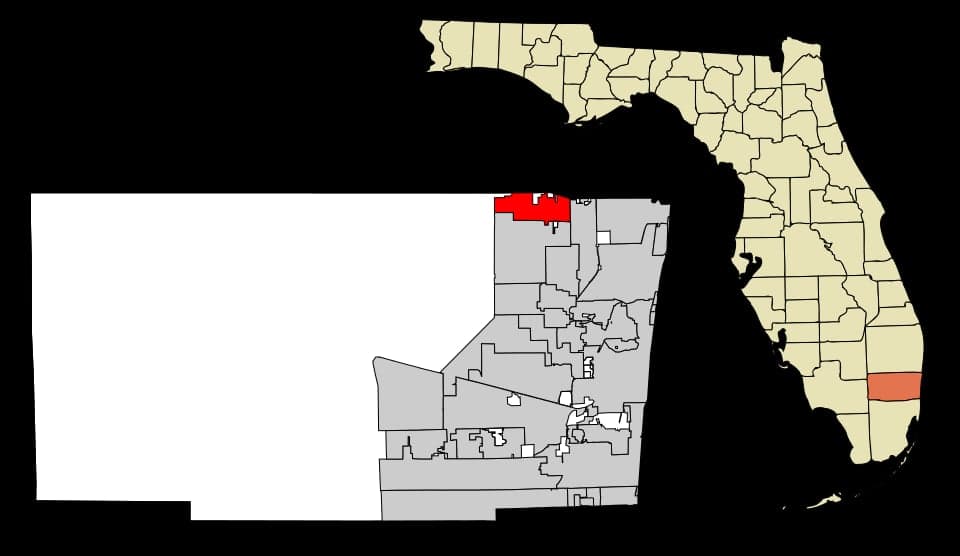
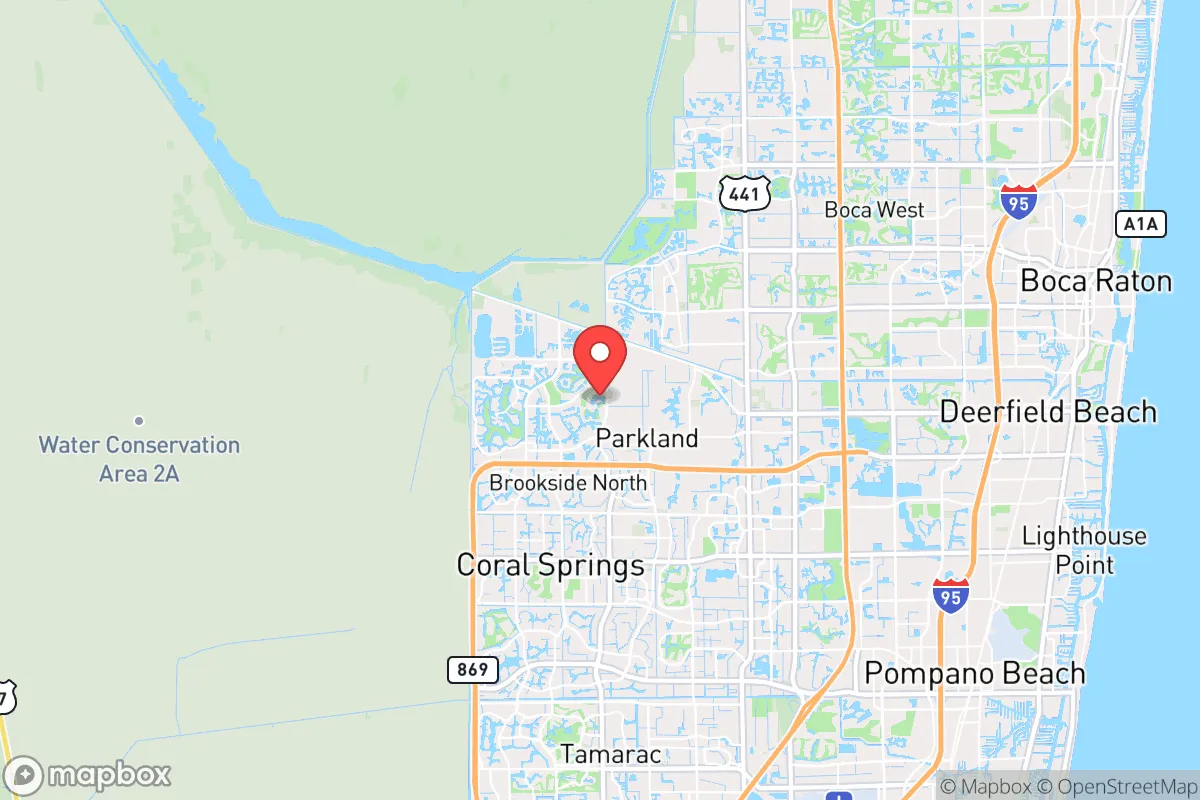
Photo: Wikipedia
Political ClimatePolitical Climate in Parkland, FL
District shown is the primary district for this city’s centroid. Cities may span multiple districts.
Local Political AnalysisPolitical Analysis of Parkland, FL
Parkland, Florida, is a politically moderate-to-liberal enclave in a state that has trended steadily red over the past decade. With a Cook Partisan Voting Index (PVI) of D+4, the city leans Democratic by a modest margin, but its politics are shaped more by local issues like school quality, development, and public safety than by national partisan battles. Over the last two election cycles, Parkland has shifted slightly leftward, mirroring the broader suburban drift seen in parts of Broward County, even as the surrounding state of Florida remains a toss-up with no fixed PVI. This makes Parkland a distinct blue dot in a purple-to-red state, where local elections often feel more consequential than presidential ones.
How it compares
Parkland’s D+4 rating places it squarely in the moderate Democratic camp, a stark contrast to the deeply conservative towns just a few miles west. Neighboring Coral Springs, also in Broward, leans similarly Democratic (D+6), while cities like Tamarac and Sunrise are more reliably blue. But drive 15 minutes west to Parkland’s border with Palm Beach County, and you hit the redder suburbs of Wellington and Royal Palm Beach, which trend Republican by small margins. Further west, in rural Palm Beach County, towns like Loxahatchee Groves and The Acreage are solidly conservative. The real contrast, however, is with the state of Florida as a whole. Florida’s Cook PVI is unknown because it’s a true swing state—it voted for Trump in 2016 and 2020, but by razor-thin margins, and it backed DeSantis by 19 points in 2022. So while Parkland is D+4, the state is essentially a coin flip, meaning residents here live in a local bubble that doesn’t always reflect the broader political winds.
What this means for residents
For liberal residents, Parkland feels like a safe space where progressive policies on education, environmental conservation, and gun safety are taken seriously. The city council has consistently supported stricter building codes and green space preservation, and the local school board—covering the highly rated Broward County Public Schools—tends to lean left on curriculum and funding. Conservative residents, however, aren’t marginalized. They hold seats on the city commission and are vocal in civic groups, especially around property taxes and development density. The political reality is that Parkland’s D+4 lean means neither side dominates; it’s a place where you can have a DeSantis yard sign next to a Biden one without anyone calling the HOA. That said, the city’s high property values and affluent demographics mean that tax policy and zoning debates often trump partisan identity. In practice, both liberals and conservatives here tend to prioritize quality of life over party loyalty, which keeps the local discourse relatively civil.
Cultural and policy distinctions
Parkland’s political culture is shaped by its history as a master-planned community and its response to the 2018 Marjory Stoneman Douglas High School shooting. That tragedy galvanized a generation of student activists and made the city a national symbol for gun control advocacy, which has deepened its Democratic lean among younger residents. Yet the city’s older, wealthier homeowners often vote Republican on fiscal issues, creating a tension that plays out in local elections. Unlike many Florida suburbs, Parkland has resisted the kind of rapid, high-density development seen in nearby Coral Springs or Boca Raton, preserving its rural feel with large lots and equestrian trails. This slow-growth ethos appeals to both conservatives who want low taxes and liberals who want environmental stewardship. The result is a community where the political climate is less about red vs. blue and more about how to manage growth without losing what makes Parkland unique. For anyone moving here, expect a place where your vote matters locally, but where the national drama feels a little more distant than in the rest of Florida.

State Political ClimatePolitical Climate in Florida
State Political AnalysisPolitical Environment in the State
Florida has transformed from a quintessential swing state into a solidly Republican-leaning powerhouse over the past decade, driven by a massive influx of conservative-leaning domestic migrants and a decisive rightward shift among Hispanic voters, particularly in South Florida. The state hasn't voted for a Democratic presidential candidate since Barack Obama in 2012, and Republicans now hold a supermajority in the state legislature and control every statewide office. This isn't a purple state anymore — it's a red state with a few stubbornly blue urban islands, and the trajectory has been accelerating since 2020.
Urban vs. rural divide
The political map of Florida is a study in stark contrasts. The major metropolitan areas of Miami-Dade County, Orlando (Orange County), and Tampa (Hillsborough County) still lean Democratic, but their margins have shrunk dramatically. Miami-Dade, once a Democratic fortress, flipped to Trump in 2020 and again in 2024, driven by a massive shift among Cuban-American and Venezuelan-American voters who respond strongly to anti-socialist messaging. Meanwhile, the fast-growing I-4 corridor counties like Polk County (Lakeland) and Volusia County (Daytona Beach) have become reliably red, while the rural Panhandle — places like Panama City and Pensacola — is deep crimson. The Jacksonville metro area (Duval County) has also trended right, flipping from blue to purple and now leaning red. The only real blue strongholds left are Tallahassee (Leon County), home to state government and two universities, and Gainesville (Alachua County), anchored by the University of Florida. If you're moving to a suburb like St. Augustine or Fort Myers, you're in solidly conservative territory; if you're in downtown Miami or Orlando, you'll find a more mixed environment.
Policy environment
Florida's policy environment is aggressively conservative and business-friendly. There is no state income tax, which is the single biggest draw for relocators from high-tax states like New York and California. The state has a 6% sales tax, though many counties add their own surcharges. Property taxes are moderate, with a $50,000 homestead exemption and a 3% annual cap on assessed value increases (Save Our Homes). The regulatory climate is light-touch, particularly for construction and development — you can get a building permit in weeks, not months. Education policy has shifted sharply right: the state has one of the nation's largest school voucher programs (the Family Empowerment Scholarship), and Governor DeSantis signed the "Don't Say Gay" law (HB 1557) restricting classroom instruction on sexual orientation and gender identity. Healthcare is a mixed bag: Florida did not expand Medicaid under the ACA, leaving roughly 800,000 residents in the coverage gap, but the state has a robust private insurance market. Election laws have tightened significantly: the 2023 SB 7050 imposed stricter voter ID requirements, limited drop boxes, and restricted third-party voter registration drives. For a conservative relocator, this environment is nearly ideal; for a liberal one, it can feel like swimming upstream.
Recent policy direction
The last three years have seen a flurry of legislation that signals where Florida is headed. On gun and self-defense law, Florida became a "constitutional carry" state in 2023 (HB 543), allowing permitless concealed carry for adults 21 and older — a major win for Second Amendment advocates. On parental and education rights, the state passed the "Parental Rights in Education" law (HB 1557) and the "Stop WOKE Act" (HB 7), which restricts how race and gender can be taught in schools and workplaces. On speech and privacy, the state has taken on Big Tech with SB 7072, which prohibits social media platforms from deplatforming political candidates, though it's been tied up in court. On medical and bodily autonomy, Florida enacted a 6-week abortion ban (HB 5) in 2023, one of the strictest in the nation, with no exceptions for rape or incest. On property rights, the state has strengthened homeowners' rights against HOAs and local governments, including the "Live Local Act" (SB 102) which preempts local zoning to allow more affordable housing development. On taxation, the state has cut the corporate income tax rate and expanded the sales tax holiday for back-to-school and disaster preparedness. On voting and ballot access, the trend is toward restriction: shorter mail-in ballot windows, stricter signature matching, and a ban on ballot harvesting. For a relocator, the bottom line is that Florida is moving decisively toward a model of maximum personal liberty on guns, property, and speech, but with significant constraints on abortion and LGBTQ+ expression.
Civil unrest & political movements
Florida has seen its share of political flashpoints, but they tend to be more organized and less chaotic than in states like Oregon or California. The most visible recent movement has been the parental rights movement, which mobilized heavily around school board elections and curriculum battles, particularly in Miami-Dade and Palm Beach County. On the left, the Dream Defenders and other racial justice groups have organized protests in Tallahassee and Orlando, but they've struggled to gain traction outside of college towns. Immigration politics are a constant undercurrent: Florida passed the nation's toughest anti-sanctuary city law (SB 1718) in 2023, which requires businesses with 25+ employees to use E-Verify and makes it a felony to transport undocumented immigrants into the state. This has created real tension in agricultural areas like Immokalee and Homestead, where many farmworkers are undocumented. There's been no serious secession or nullification rhetoric — Florida is too integrated into the national economy for that. Election integrity remains a live issue: the 2020 and 2022 cycles saw intense scrutiny of mail-in ballots and drop boxes, and the state has purged voter rolls aggressively. A new resident won't see daily street protests, but they will feel the political temperature in conversations at the grocery store and in local news coverage.
Projection
Over the next 5-10 years, Florida is likely to become even more conservative, but with important nuances. The in-migration pattern is overwhelmingly from blue states — roughly 1,000 people move to Florida every day — and while many are retirees, a growing share are remote workers and families who are explicitly fleeing high taxes and progressive policies. This demographic wave will continue to push the state rightward, particularly in the I-4 corridor and Southwest Florida. However, the Hispanic vote is not monolithic: while Cuban-Americans and Venezuelan-Americans lean heavily Republican, Puerto Ricans in Orlando and Tampa still lean Democratic, and the gap is narrowing. The biggest wildcard is climate change: rising sea levels and stronger hurricanes could eventually slow migration to coastal areas, but for now, the trend is unabated. Expect the state to continue passing culturally conservative legislation on education, abortion, and immigration, while maintaining its low-tax, low-regulation economic model. A relocator moving in now should expect to find a state that is more conservative than it was five years ago and will be even more so in a decade.
For a new resident, the practical takeaway is straightforward: if you're conservative, you'll feel like the state is built for you — low taxes, strong gun rights, school choice, and a government that shares your values. If you're liberal, you'll find a vibrant cultural life in the cities and a strong network of like-minded people, but you'll be swimming against the political tide. The key is to choose your location carefully: St. Augustine and Fort Myers are deeply red; Tallahassee and Gainesville are blue islands; Miami and Orlando are purple and getting redder. Know your neighborhood, and you'll find your people.
* Values derived from national, state, county, city and local statistics and may differ in a specific area. Last updated: 2026-09-25T12:50:22.000Z
Narrative content on this page is AI-generated and may contain mistakes. Verify any details that matter before acting on them.
ReloMaps may earn a commission from affiliate links at no extra cost to you.

