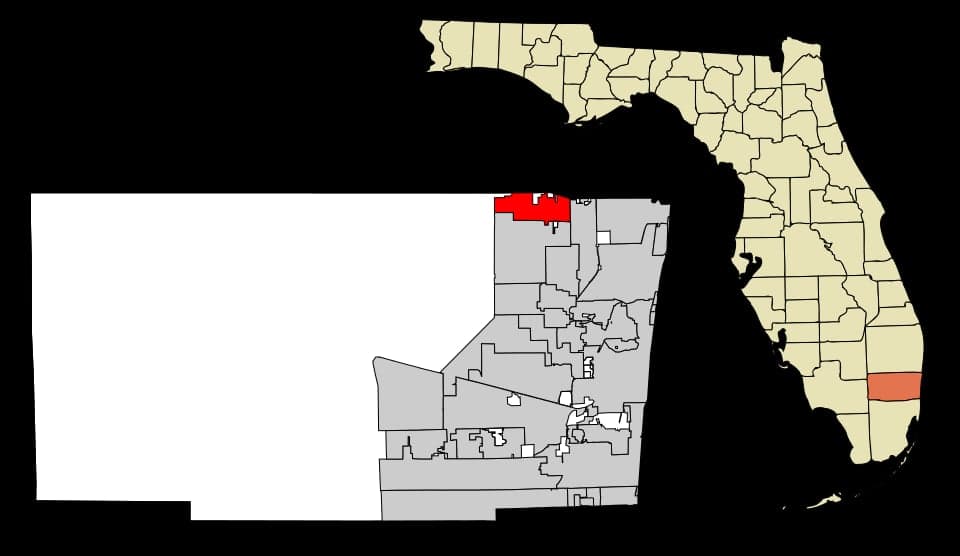
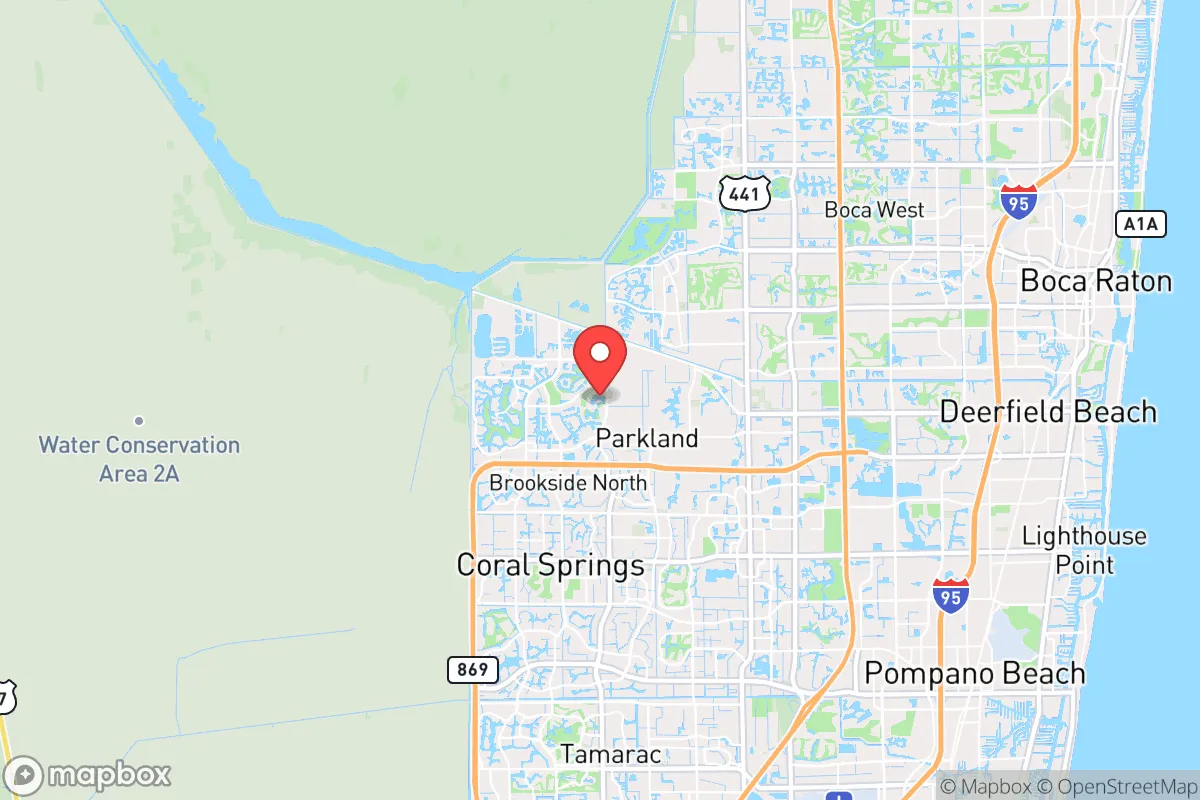
Photo: Wikipedia
Quality of Life in Parkland, FL
A high quality of life with strong walkability, manageable living costs, healthy neighborhood signals, and solid amenity access.
What does Quality of Life tell us?
Quality of Life blends cost of living, nearby amenities, socioeconomic signals, and neighborhood character. City-level scores represent the whole municipality; individual neighborhoods can differ.
What does this tell us?
Quality of Life blends cost of living, nearby amenities, socioeconomic signals, and neighborhood character. City-level scores represent the whole municipality; individual neighborhoods can differ.
Cost of Living
198% above national average
The Real Cost of Living in Parkland, FL for 2026
| Tier | Individual | Family (4) |
|---|---|---|
| Survival | $53k | $99k |
| Comfortable | $174k | $256k |
| Luxury | $268k+ | $416k+ |
| Elite (Top 5%) | $316k+ | $489k+ |
78%
The Area Signal
A metric tracking the socioeconomic signals of the area.
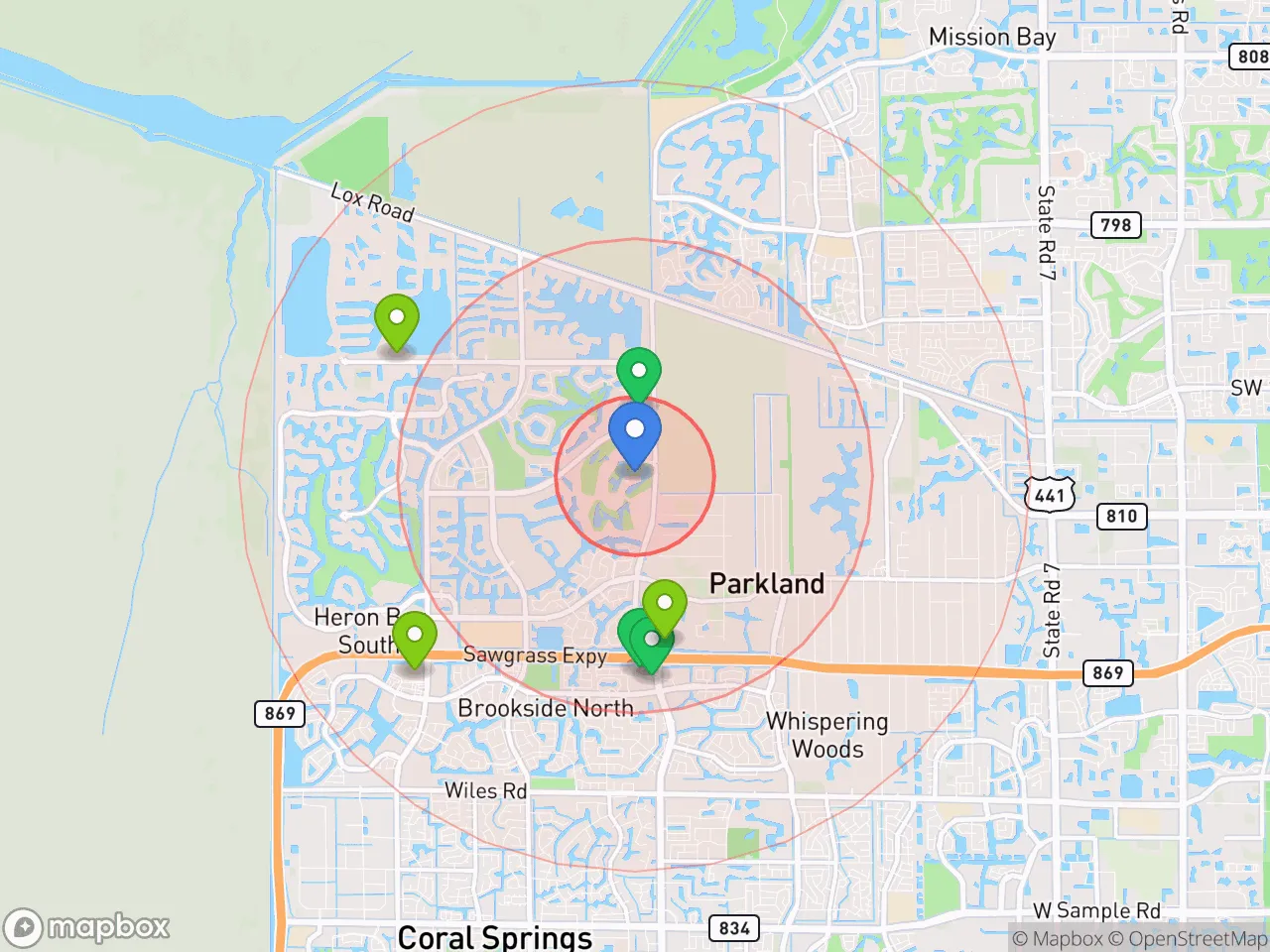
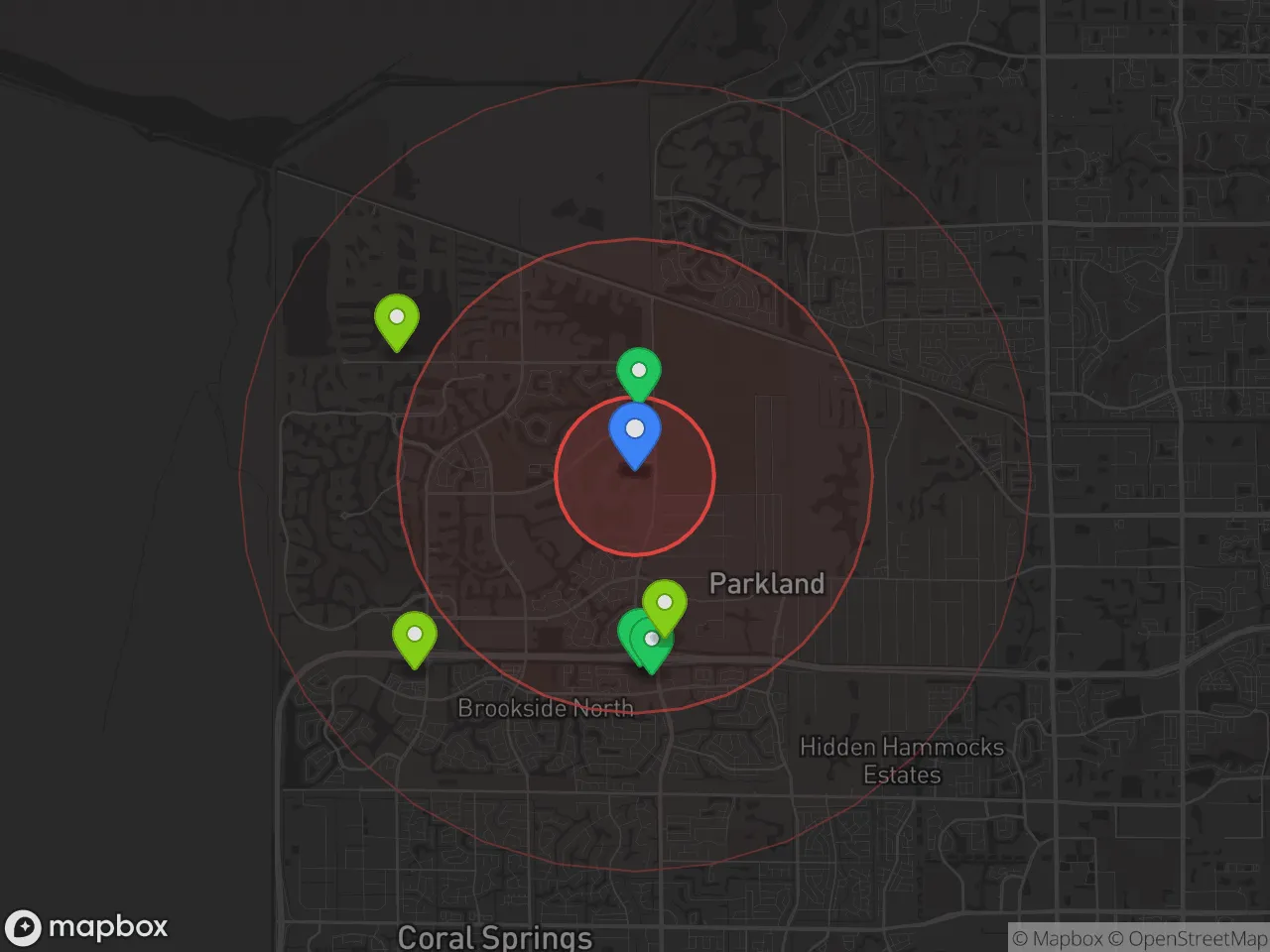
Hobbies
Explore the areaGroceries
6 within 10 miles
Gas
20 within 10 miles
Hospital
20 within 20 miles
Airport
FLL — Fort Lauderdale–Hollywood
Post Office
USPS — Boca Raton, FL
Critical Amenities
Quality-of-Life Analysis
Parkland, Florida, is an affluent, master-planned community in northern Broward County that consistently ranks among the most desirable suburbs in the Miami-Fort Lauderdale metropolitan area. With a cost-of-living index of 298—nearly three times the national average—the city attracts established professionals, executives, and families who prioritize top-tier schools, low crime rates, and spacious homes over urban proximity or nightlife. The population skews toward married couples with children, and the median household income exceeds $150,000, reflecting a community built around stability, education, and long-term investment.
Cost of living, housing prices, and how Parkland compares to Coral Springs and Boca Raton
Parkland’s cost of living is among the highest in Broward County, driven almost entirely by housing. The median home value sits at $896,300, roughly double the national median and significantly above nearby Coral Springs ($550,000) and Parkland’s western neighbor, Boca Raton ($650,000). Median rent is $3,306 per month, which is about 40% higher than the Fort Lauderdale metro average. Property taxes are moderate for Florida—around 1.8% of assessed value—but homeowners’ association fees in gated communities like Parkland Isles and Heron Bay can add $200–$500 monthly. For buyers, the trade-off is clear: Parkland offers larger lots (typically 0.25–0.5 acres) and newer construction (most homes built after 2000) compared to the older, denser housing stock in Coral Springs or Boca Raton. Renters face a tight market; single-family rentals under $3,500 are rare, and most available units are in townhome-style developments near Pine Trails Park.
Schools, parks, and what daily life is like for families in Parkland
Daily life in Parkland revolves around its A-rated public schools, extensive park system, and low-key suburban rhythm. The city is served by Broward County Public Schools, with Parkland’s zoned elementary (Park Trails, Riverglades), middle (Westglades), and high schools (Stoneman Douglas) all earning A ratings from the Florida Department of Education. Marjory Stoneman Douglas High School, while infamous for the 2018 tragedy, remains academically strong and is the focal point of community resilience efforts. Outside of school, residents use the 200-acre Pine Trails Park for sports leagues, dog parks, and the annual Parkland Farmers Market. The average commute of 31.3 minutes is manageable by South Florida standards—most workers drive west on the Sawgrass Expressway (SR 869) to corporate hubs in Sunrise, Plantation, or Boca Raton, or south to Fort Lauderdale. There is no downtown or nightlife district; instead, the commercial spine along State Road 7 features Publix, Target, and chain restaurants. For dining and entertainment, residents typically drive 15–20 minutes to Boca Raton’s Mizner Park or Coral Springs’ Main Street.
Parkland is best suited for families and professionals who value safety, school quality, and space over walkability or cultural amenities. The city’s violent crime rate is less than one-third the national average, and the gated-community model provides a level of security that appeals to parents of young children. Empty-nesters and retirees may find the area too quiet and car-dependent, while singles and young professionals will likely prefer the energy of Fort Lauderdale or downtown Boca Raton. For those who can afford the entry price—and who prioritize a predictable, family-oriented environment with excellent schools—Parkland delivers a quality of life that few South Florida suburbs can match.

Crime in Parkland, FL
Generally safer than 68% of comparable U.S. locations.
Violent CrimeViolent Crime Analysis
Property CrimeProperty Crime Analysis
Crime Analysis
Parkland, Florida, is a notably safe city within the Broward County metro area, with violent and property crime rates significantly below both state and national averages. However, its location within a large, progressive-leaning metro area introduces systemic risks that residents should weigh carefully. The city’s violent crime rate of 209.9 per 100,000 residents is roughly half the national average, while its property crime rate of 909.6 per 100,000 is about 40% lower than the U.S. figure. These numbers reflect a community that benefits from high median incomes, strong neighborhood watch programs, and a well-funded local police department.
Crime in context
Parkland’s crime statistics place it among the safest municipalities in Florida. For comparison, the national violent crime rate stands at approximately 380 per 100,000, and Florida’s state rate hovers around 380 as well. Parkland’s violent crime rate of 209.9 is thus 45% lower than the national benchmark. Property crime in Parkland (909.6 per 100K) is also well below the national rate of roughly 1,950 per 100K and the Florida state rate of about 1,800 per 100K. These low figures are partly attributable to the city’s demographics—median household income exceeds $130,000—and its proactive policing strategies. However, residents should note that Parkland is part of Broward County, which has a history of progressive criminal justice policies, including bail reform and sentencing alternatives, that critics argue can reduce deterrence and increase recidivism across the broader metro area.
What residents experience
For daily life, Parkland feels exceptionally secure. The city has no high-crime districts, and violent incidents are rare—typically isolated domestic disputes or occasional robberies rather than random street crime. Property crime, while more common, is largely opportunistic: package thefts from porches, unlocked vehicle entries, and occasional burglaries in newer subdivisions. Parkland’s violent crime rate is roughly one-third that of nearby Coral Springs and about one-fifth that of Fort Lauderdale. The city’s low density, gated communities, and active civic engagement contribute to a strong sense of safety. That said, the broader Broward County environment—with its progressive district attorneys and judges—means that offenders arrested in Parkland may face lighter consequences than in more conservative jurisdictions, potentially emboldening repeat property crime.
Neighborhood-level variation
Parkland is remarkably uniform in its safety profile, with no statistically significant variation between neighborhoods. The entire city is zoned for low-density residential use, and all areas benefit from the same high level of police patrol and community oversight. The most affluent enclaves, such as those around Parkland Golf & Country Club, report virtually zero violent crime. Even the few apartment complexes near the city’s eastern edge maintain low incident rates. Parkland’s crime is so evenly distributed that the safest and least-safe blocks differ by less than 10% in incident rates—a rarity in metro-area suburbs. For families prioritizing security, this homogeneity is a major advantage, though the shadow of Broward County’s progressive justice system remains a concern for those who believe lenient policies undermine long-term public safety.
* Values derived from national, state, county, city and local statistics and may differ in a specific area. Last updated: 2026-09-25T12:50:22.000Z
Narrative content on this page is AI-generated and may contain mistakes. Verify any details that matter before acting on them.
ReloMaps may earn a commission from affiliate links at no extra cost to you.

