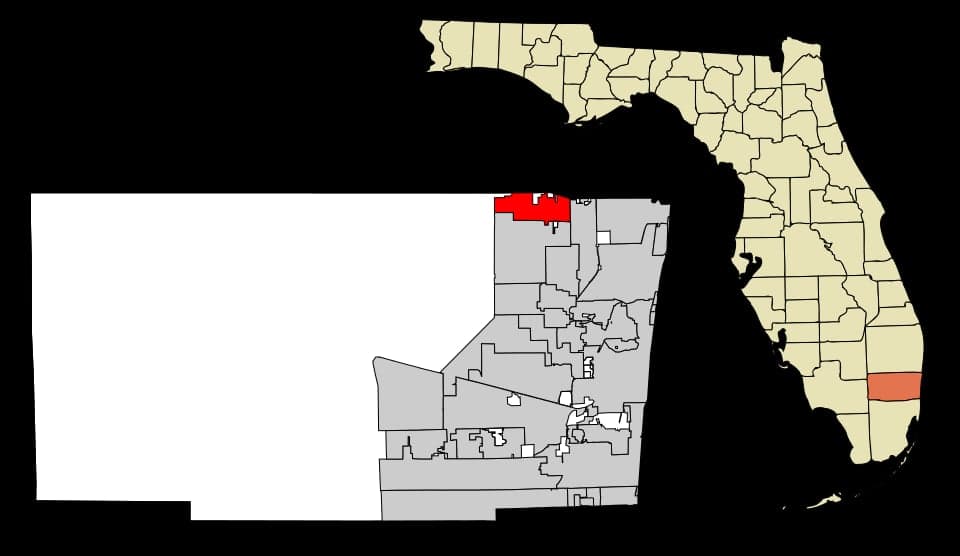
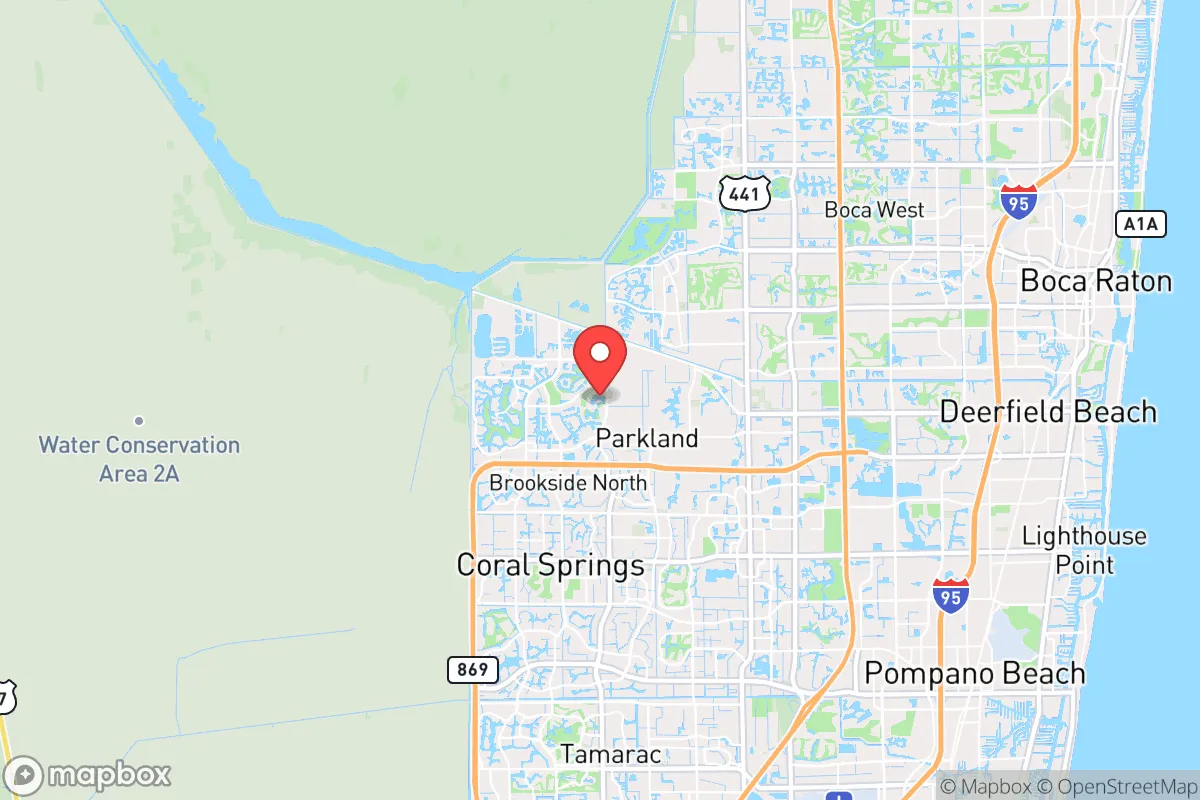
Photo: Wikipedia
Personal Sovereignty in Parkland, FL
Viable for self-reliance. Generally workable, though some barriers may limit total independence.
What does Personal Sovereignty tell us?
Personal Sovereignty measures your capacity for self-reliance and independence with minimal government friction. Higher scores mean fewer barriers between you and the way you want to live... but it assumes you have the space you need and good neighbors.
What does this tell us?
Personal Sovereignty measures your capacity for self-reliance and independence with minimal government friction. Higher scores mean fewer barriers between you and the way you want to live... but it assumes you have the space you need and good neighbors.
State Policy
Energy independence: Importer (10% of energy produced in-state)
Personal Liberty
Homesteading

Personal Liberty Analysis
Parkland, Florida, offers a notably high degree of personal sovereignty within a structured suburban framework, blending Florida’s strong state-level protections for individual rights with a local environment that prioritizes order and property autonomy. For a conservative-leaning individual or family, the city presents a strategic balance: you gain the legal latitude of a low-tax, pro-self-defense state while living within a community that enforces clear, predictable rules on land use and development. The trade-off is that this is not a frontier for off-grid living or regulatory minimalism—it is a planned, affluent suburb where personal freedom is exercised within a well-defined, homeowner-friendly code.
Tax burden and regulatory posture: How Florida’s framework shapes local autonomy
Parkland benefits from Florida’s famously light tax environment, which is a cornerstone of personal financial sovereignty. There is no state income tax, meaning residents keep 100% of their earned income—a direct advantage over states like New York or California. Property taxes in Parkland are moderate for the region, with a millage rate typically around 4.5 to 5.0 per $1,000 of assessed value, though this can vary slightly by year and specific neighborhood. The Save Our Homes amendment caps annual assessed value increases at 3% for homesteaded properties, providing long-term predictability and protecting against tax spikes as property values rise. This is a significant benefit for families planning to stay for a decade or more.
On the regulatory side, Parkland is a city that leans toward order and enforcement rather than laissez-faire minimalism. The city’s zoning code is detailed and actively enforced, with strict rules on lot sizes, building setbacks, and landscaping. This creates a predictable, high-quality environment but limits the ability to make radical changes to one’s property without city approval. For example, home-based businesses are permitted but subject to specific restrictions on signage, traffic, and noise—a reasonable middle ground that allows side ventures without disrupting the residential character. The overall regulatory posture is best described as structured freedom: you have wide latitude to live as you choose within a clear, consistently applied framework, but you cannot ignore the rules without facing fines or liens.
Self-defense and gun law specifics: What Florida’s statutes mean for Parkland residents
Florida is a strong Second Amendment state, and Parkland residents enjoy the full spectrum of state-level self-defense rights. Florida is a shall-issue state for concealed carry permits, meaning the county sheriff must issue a permit to any qualified applicant who passes a background check and completes a training course. As of 2023, Florida also enacted permitless (constitutional) carry for law-abiding residents, allowing the open or concealed carry of a firearm without a permit. This is a major expansion of personal sovereignty, removing a bureaucratic barrier to self-defense.
State law also provides a robust Stand Your Ground statute, which eliminates any duty to retreat before using deadly force if a person is in a place they have a legal right to be and reasonably believes force is necessary to prevent death or great bodily harm. This applies to homes, vehicles, and public spaces. Parkland itself is a low-crime city—violent crime rates are well below national averages—but the legal framework ensures residents are not disarmed or legally hamstrung in the rare event of a threat. It is worth noting that the city’s own ordinances do not add additional gun restrictions beyond state law, so local regulation is minimal. For a family prioritizing self-defense, Parkland offers a legal environment that fully supports the right to carry and defend oneself.
Self-reliance and homesteading viability: Lot sizes, zoning, and off-grid feasibility
Parkland is not a homesteading or off-grid destination. The city is a master-planned suburb with minimum lot sizes typically ranging from one-quarter acre to one acre, depending on the neighborhood. While this is larger than many dense suburban developments, it does not allow for significant agricultural or self-sufficiency operations. Zoning codes restrict livestock—chickens are generally not permitted in most residential zones, and larger animals like goats or horses are only allowed on properties of two acres or more, which are rare within city limits. Gardening for personal use is allowed, but front-yard vegetable gardens may be subject to HOA or city aesthetic standards.
Off-grid living is effectively impossible within Parkland. The city requires connection to municipal water and sewer systems, and building codes mandate modern electrical and plumbing infrastructure. Solar panels are permitted but must comply with setback and aesthetic guidelines, and net metering is available through Florida Power & Light, the dominant utility. However, going fully off-grid—disconnecting from the grid entirely—would violate city codes. For those seeking true self-reliance, rural areas of western Palm Beach County or neighboring Hendry County offer larger parcels and fewer restrictions. Parkland is better suited for families who value self-reliance through financial independence and emergency preparedness rather than subsistence living. The city’s strong HOA and city code enforcement ensure a tidy, uniform appearance, which some residents appreciate as a form of collective property-rights protection.
Personal liberties: Parental rights, medical autonomy, speech, and property
Florida has become a national leader in protecting parental rights, and Parkland families benefit directly from this. The state’s Parental Bill of Rights (enacted in 2021) gives parents explicit authority over their children’s education, healthcare, and upbringing, including the right to opt out of school curricula or medical treatments they find objectionable. This is reinforced by local school board policies in Broward County, which, while generally progressive, must comply with state law. Parents in Parkland have successfully challenged school policies on library books and curriculum transparency, and the legal framework supports their ability to do so.
Medical autonomy is a mixed picture. Florida has no state-level vaccine mandate for adults, and the state banned vaccine passports in 2021. However, the state did not pass broad medical freedom legislation beyond that. For children, school vaccine requirements remain in place, though religious and medical exemptions are available. Telehealth and direct-primary-care arrangements are legal and growing, offering an alternative to traditional insurance-based care. On speech and assembly, Florida law protects the right to speak freely in public spaces, and Parkland’s parks and common areas are open for gatherings with standard permitting. Property rights are strongly protected: Florida’s homestead exemption shields a primary residence from creditors, and the state has no inheritance tax. Eminent domain is limited by state statute, and homeowners have strong recourse against overreach.
Overall, Parkland offers a high degree of personal sovereignty relative to most suburban areas in the Northeast or West Coast, but it is not a libertarian enclave. The city’s strength lies in its predictable, rule-of-law environment that protects property values and family autonomy while keeping taxes low and self-defense rights intact. For a conservative-leaning family, the trade-off is clear: you sacrifice the ability to do whatever you want with your land in exchange for a community that actively enforces the rules that make suburban life stable and safe. Compared to rural Florida counties, Parkland is more regulated; compared to cities like Portland or New York, it is a bastion of personal freedom. The net assessment is that Parkland is an excellent choice for those who value financial independence, self-defense, and parental rights within a structured, low-tax community.

* Values derived from national, state, county, city and local statistics and may differ in a specific area. Last updated: 2026-09-25T12:50:22.000Z
Narrative content on this page is AI-generated and may contain mistakes. Verify any details that matter before acting on them.
ReloMaps may earn a commission from affiliate links at no extra cost to you.

