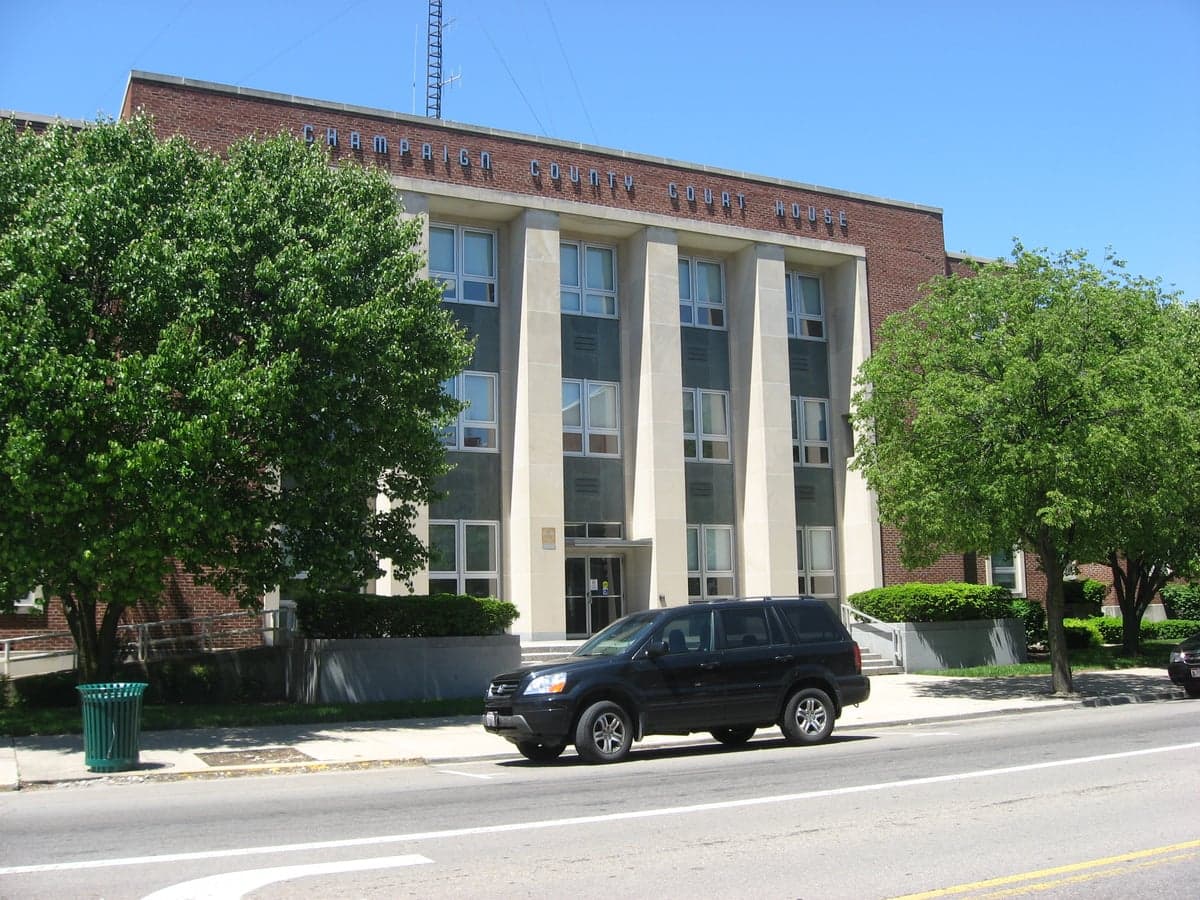
Photo: Wikipedia
Political ClimatePolitical Climate in Champaign County
Showing district-level results — no local-only data available.
Local Political AnalysisPolitical Analysis of Champaign County
Champaign County, Ohio, is a reliably conservative corner of the state, carrying a Cook Partisan Voting Index (PVI) of R+18 — meaning it votes about 18 points more Republican than the national average. That’s a stark contrast to Ohio as a whole, which sits at R+5, and it means the county has been a solid red anchor in presidential and statewide races for decades. The trajectory here is steady: while the rest of Ohio has seen some suburban shifts toward Democrats, Champaign County’s rural and small-town character has kept it firmly in the GOP column, with no signs of a major realignment on the horizon.
How it compares
The R+18 PVI puts Champaign County in the top tier of Ohio’s most Republican-leaning counties, alongside places like Mercer and Holmes. To put that in perspective, the statewide R+5 index means Ohio as a whole is a competitive swing state, but Champaign County is a deep-red stronghold within it. In the 2024 presidential race, the county likely gave the Republican candidate a margin of victory well over 30 points, while the state overall was decided by a much narrower single-digit spread. This gap isn’t new — it’s been consistent for at least two decades, driven by the county’s agricultural base and lack of major urban centers. Even within the county, there’s variation: the city of Urbana, the county seat, leans slightly less conservative than the surrounding townships, with some precincts near the downtown and the university’s satellite campus showing a modest Democratic tilt. Meanwhile, communities like Mechanicsburg and St. Paris are among the most reliably red, often delivering 70% or more of their votes to GOP candidates. The swing precincts are few and far between, but they tend to cluster around the more suburban edges of Urbana, where newer residents from nearby Columbus or Dayton have brought slightly more diverse political views.
What this means for residents
For conservative residents, Champaign County feels like a natural fit — local offices, school boards, and county commissions are overwhelmingly held by Republicans, and the political culture aligns with their values on issues like gun rights, taxes, and limited government. Liberal residents, on the other hand, often find themselves in a clear minority, but they’re not invisible. In Urbana, there’s a small but active Democratic club that coordinates with the county party, and local issues like school funding or infrastructure can sometimes transcend party lines. The practical reality is that political conversations here are less polarized than in a swing district — most people agree on the basics, so debates tend to focus on local matters like road repairs or the county fair rather than national culture wars. That said, the county’s deep-red lean means that progressive policy proposals rarely gain traction, and liberal residents often feel they have to pick their battles carefully.
Culturally, Champaign County is more traditional and community-oriented than Ohio’s urban centers. The county’s strong agricultural roots mean that issues like land use, farming regulations, and rural broadband access dominate local politics more than, say, urban development or public transit. There’s also a notable libertarian streak — many residents are wary of government overreach, whether from Columbus or Washington, D.C. This creates a political environment that’s less about party loyalty and more about practical, local concerns. For anyone moving here, the key takeaway is that the county’s politics are stable and predictable, but not monolithic — the small-town feel means that personal relationships and community involvement often matter more than party affiliation when it comes to getting things done.

State Political ClimatePolitical Climate in Ohio
State Political AnalysisPolitical Environment in the State
Ohio is a classic swing state that has shifted decisively toward the Republican column over the past decade, now carrying a Cook PVI of R+5. The state voted for Donald Trump by 8 points in both 2016 and 2020, and by a similar margin in 2024, a stark contrast from the 2000s and 2010s when it was the ultimate presidential bellwether, backing the winner in every election from 1964 to 2020. This rightward drift is driven by a combination of working-class white voters abandoning the Democratic Party in former industrial strongholds and a growing rural-urban polarization that has left Democrats dominant only in a handful of major metro counties.
Urban vs. rural divide
The political map of Ohio is a textbook study in the urban-rural chasm. The Democratic base is concentrated in the "Three C's": Cuyahoga County (Cleveland), Franklin County (Columbus), and Hamilton County (Cincinnati). These three counties alone account for roughly 40% of the state's Democratic vote. Columbus, in particular, has become a blue island in a red sea, with Franklin County delivering margins of 30+ points for Democrats. Meanwhile, the rest of the state is overwhelmingly Republican. The rural counties of Mercer, Holmes, and Putnam in the northwest routinely give Republicans 75-80% of the vote. The real story, however, is the collapse of Democratic support in the Appalachian southeast and the industrial Mahoning Valley. Trumbull County (Warren) and Mahoning County (Youngstown), once reliably blue union strongholds, have flipped to become competitive or even lean Republican. Stark County (Canton) and Lorain County (west of Cleveland) are now true battlegrounds, often deciding statewide races. The suburbs of Delaware County (north of Columbus) and Warren County (north of Cincinnati) are among the most reliably Republican in the nation, while the inner-ring suburbs of Cleveland and Cincinnati—like Shaker Heights and Wyoming—remain deeply Democratic.
Policy environment
Ohio's policy environment is a mix of conservative governance on social and economic issues, tempered by a populist streak that occasionally bucks national GOP orthodoxy. The state has a flat income tax of 3.5% (down from 4.8% in 2020), with a phase-out to 2.75% by 2026. Sales tax is 5.75% at the state level, with local add-ons pushing it to 7-8% in most cities. Property taxes are relatively low, with effective rates around 1.5% of home value. The state is a "right-to-work" state in practice, though not by statute; union membership has fallen to about 12% of the workforce. Education policy is dominated by a robust school choice system: Ohio has one of the largest voucher programs in the country (the EdChoice program), serving over 100,000 students, and a thriving charter school sector. Healthcare is a mixed bag: the state expanded Medicaid under the Affordable Care Act, but has also imposed work requirements for able-bodied adults (currently tied up in court). Election laws have been tightened: voter ID is now required (with a free state ID available), drop boxes are limited to one per county, and early voting hours have been standardized. The state has a Republican supermajority in the legislature, which has overridden several gubernatorial vetoes on social issues.
Recent policy direction
Ohio's recent legislative output has been aggressively conservative on cultural and regulatory fronts. On gun and self-defense law, Ohio became a permitless carry state in 2022 (SB 215), meaning any adult who can legally possess a firearm can carry it concealed without a license. "Stand your ground" was codified in 2021 (HB 228). On parental and education rights, the state passed the "Parents' Bill of Rights" (HB 8) in 2023, requiring schools to notify parents of any changes to a student's health or well-being and banning instruction on sexual orientation or gender identity in K-3 (the "Save Adolescents from Experimentation" Act, HB 68). On speech and privacy, Ohio has no broad privacy law, but a 2024 law (SB 29) restricts social media platforms from censoring political speech, though it's likely unconstitutional. On medical and bodily autonomy, abortion is banned after detection of a fetal heartbeat (about 6 weeks), with no exceptions for rape or incest, though a 2023 ballot initiative (Issue 1) enshrined a right to abortion in the state constitution, creating a legal conflict that is currently being litigated. On property rights, Ohio is a "Dillon's Rule" state, meaning local governments have only powers granted by the state, but a 2024 law (HB 99) preempts local bans on natural gas hookups in new construction. On taxation, the trend is toward lower rates: the income tax is being phased down, and the state eliminated its business franchise tax in 2023. On voting and ballot access, the 2023 law (SB 109) shortened the absentee ballot application window and tightened ID requirements, but early voting remains robust at 28 days.
Civil unrest & political movements
Ohio has seen its share of political flashpoints. The 2020 protests in Columbus and Cincinnati over George Floyd's death were large but largely peaceful, though the state saw significant property damage in downtown Columbus. The 2023 "Issue 1" abortion rights campaign drew massive grassroots organizing on both sides, with over $40 million spent. The state has a visible and organized "Moms for Liberty" chapter network, particularly active in suburban school board races. Immigration politics are less heated than in border states, but the 2023 influx of Haitian migrants in Springfield (Clark County) became a national story after a school bus crash and local housing shortages. There is no sanctuary city policy in Ohio; the state passed a law in 2024 (HB 180) requiring local law enforcement to cooperate with ICE. Election integrity remains a live issue: the 2020 and 2022 elections saw no widespread fraud, but the state's Republican secretary of state, Frank LaRose, has been a vocal advocate for voter ID and ballot security measures. The "nullification" movement is marginal, though some rural counties have passed symbolic resolutions asserting Second Amendment sanctuary status.
Projection
Over the next 5-10 years, Ohio is likely to become more reliably Republican at the state level, but the margin of GOP dominance may narrow slightly as Columbus continues to grow and diversify. The Columbus metro area is adding population at a rate of about 1% per year, driven by tech and logistics jobs (Intel's $20 billion chip plant in Licking County is a major catalyst). This influx is likely to make Franklin County even more Democratic, while the rest of the state continues to age and shrink. The state's political trajectory is toward a "Texas-style" model: a Republican-dominated legislature that sets conservative policy statewide, with Democratic strongholds in a few urban islands. The ongoing legal battle over abortion rights will likely be resolved by the courts, but the 2023 constitutional amendment gives Democrats a powerful organizing tool. The income tax phase-out will continue, making Ohio more attractive to high-earners, but the state's aging infrastructure and opioid crisis remain long-term drags. A new resident moving to Dublin or Mason can expect a stable, low-tax environment with strong school choice options, while someone moving to Cleveland Heights or Clintonville will find a politically engaged community fighting to preserve abortion access and public education funding.
For a new resident, the bottom line is that Ohio offers a clear trade-off: low taxes, strong gun rights, and school choice for conservatives, balanced against a robust abortion rights amendment, a growing urban core, and a vibrant civic culture for liberals. The state is no longer a swing state in presidential elections, but it remains a competitive battleground for state-level offices and ballot initiatives. If you're moving to Ohio, expect to live in a place where your vote matters less in the presidential race but still counts heavily in local school board, city council, and state legislative contests. The political climate is stable, predictable, and increasingly polarized by geography—choose your county wisely, and you'll find a community that matches your values.
* Values derived from national, state, county, city and local statistics and may differ in a specific area. Last updated: 2026-08-19T01:47:36.000Z
Narrative content on this page is AI-generated and may contain mistakes. Verify any details that matter before acting on them.
ReloMaps may earn a commission from affiliate links at no extra cost to you.

